Cable Kickback
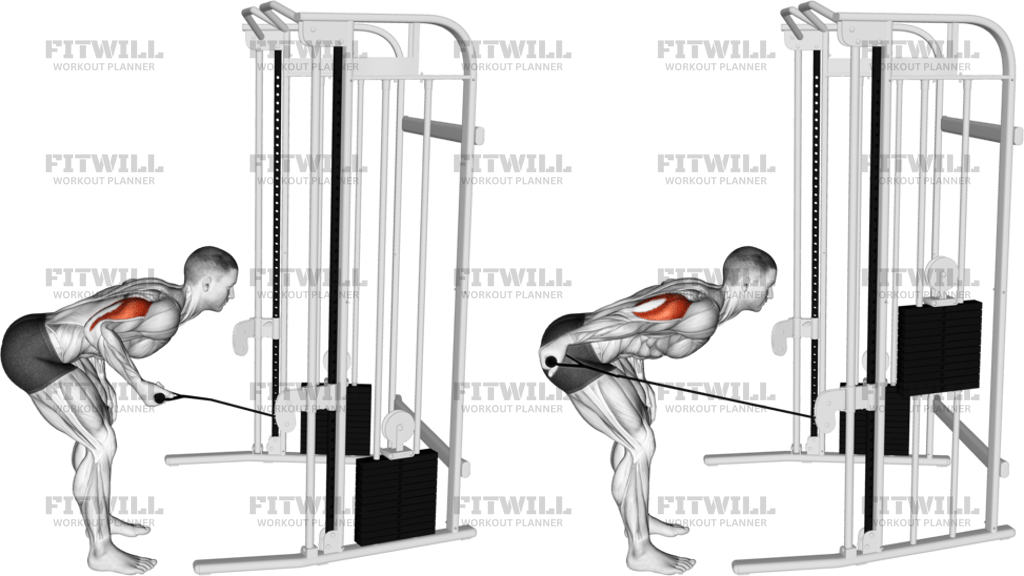
Cable Kickback is a bent-over triceps isolation exercise performed with a low cable and single handle. The image shows the torso hinged forward, the upper arm held close to the body, and the forearm moving back from a loaded bent-elbow position to a straightened finish. That setup matters because the triceps only get a clear line of tension when the upper arm stays stable and the elbow is the joint doing the work.
This movement mainly trains the triceps brachii, especially the lockout function that extends the elbow against cable resistance. The forearms help grip the handle, the rear shoulder helps hold the upper arm still, and the trunk muscles keep the torso fixed while you lean over the stack. In practice, that makes Cable Kickback useful as an accessory lift for arm size, elbow extension strength, and cleaner pressing support without needing a heavy compound movement.
The best version of the exercise starts with a stable hinge. Step away from the stack, take the handle in one hand, fold at the hips, and keep your spine long rather than rounded. From there, pin the upper arm against your side or slightly behind your torso, then set the elbow at about a right angle before you begin the rep. The more the upper arm drifts or the torso rises and falls, the more the load shifts away from the triceps and into body English.
On each rep, drive the handle back until the arm is nearly straight, then briefly squeeze the triceps before returning under control. The handle should travel in a smooth arc driven by elbow extension, not by swinging the shoulder or snapping the wrist. Because the cable keeps tension on the muscle through most of the range, a controlled return is just as important as the hard finish. Exhale as you press back and inhale as you let the handle come forward.
Cable Kickback fits well at the end of an upper-body workout, in an arm-focused session, or anywhere you want high-quality triceps volume with low joint stress. It is also easy to scale for beginners by reducing the stack, shortening the range slightly, or using a slower tempo until the hinge and elbow position feel automatic. If the lower back, shoulder, or wrist starts taking over, the load is too heavy or the setup has drifted out of position.
[ Workout Log & Planner ]
Put your next workout in Fitwill
Keep your plan and training log ready when you are.


Instructions
- Set the cable pulley low and attach a single handle.
- Stand facing the stack, then hinge forward at the hips until your torso is angled over and your back stays long.
- Hold the handle in one hand and tuck your upper arm close to your side with the elbow bent about 90 degrees.
- Set your feet for balance and keep the working-side shoulder quiet instead of reaching forward.
- Brace your trunk so your torso stays fixed while the arm moves.
- Extend the elbow to kick the handle back until the arm is nearly straight behind you.
- Squeeze the triceps at the back end of the rep without twisting the wrist or shoulder.
- Return the handle forward slowly, keeping tension on the cable and the upper arm in place.
- Repeat for the planned reps, then step in carefully and reset before switching sides.
Tips & Tricks
- If your torso rises as you kick back, lower the stack and keep the hinge locked in place.
- Keep the elbow slightly above or level with the torso so the triceps stay loaded instead of letting the shoulder take over.
- Use a handle that sits comfortably in your palm; a bulky grip can make the wrist extend and shorten the rep.
- Think about moving only the forearm. The upper arm should look almost frozen from the side.
- Do not let the cable pull your shoulder forward on the return. Stay organized through the full eccentric.
- A brief squeeze at lockout is useful, but do not slam into a hard elbow snap at the end.
- Choose a lighter weight than you would for a pressing movement; kickbacks reward precision more than load.
- If your lower back feels the set more than your arm, shorten the set or support yourself with the free hand on a bench or rack.
Frequently Asked Questions
What muscle does Cable Kickback target most?
The triceps are the main target, with the elbow extending against the cable as you kick the handle back.
Can beginners perform this exercise?
Yes. Beginners usually do best with a very light stack and a strict hip hinge so the elbow and upper arm stay easy to control.
Where should my upper arm be during the rep?
Keep the upper arm tucked close to your torso and mostly still. The forearm should do the moving while the elbow opens and closes.
Should I stand upright or hinge forward?
Hinge forward. The bent-over position shown in the image gives you room to kick the handle back without the weight stack bumping your body.
Why does the exercise feel better with a lighter weight?
Cable kickbacks work best when the upper arm stays fixed. Too much load usually turns the movement into a swing, which shifts tension away from the triceps.
Can I do this with both arms at once?
Usually it is easier to control one arm at a time. That makes it simpler to keep the elbow position, hinge, and cable path consistent.
What should I do if my lower back starts working too hard?
Reduce the weight, shorten the set, and keep the torso braced in the same hinge. If needed, support your free hand on a bench for extra stability.
What is the best tempo for Cable Kickback?
A controlled press back and slower return work well. The goal is to keep tension on the triceps instead of using momentum.