Band Twist
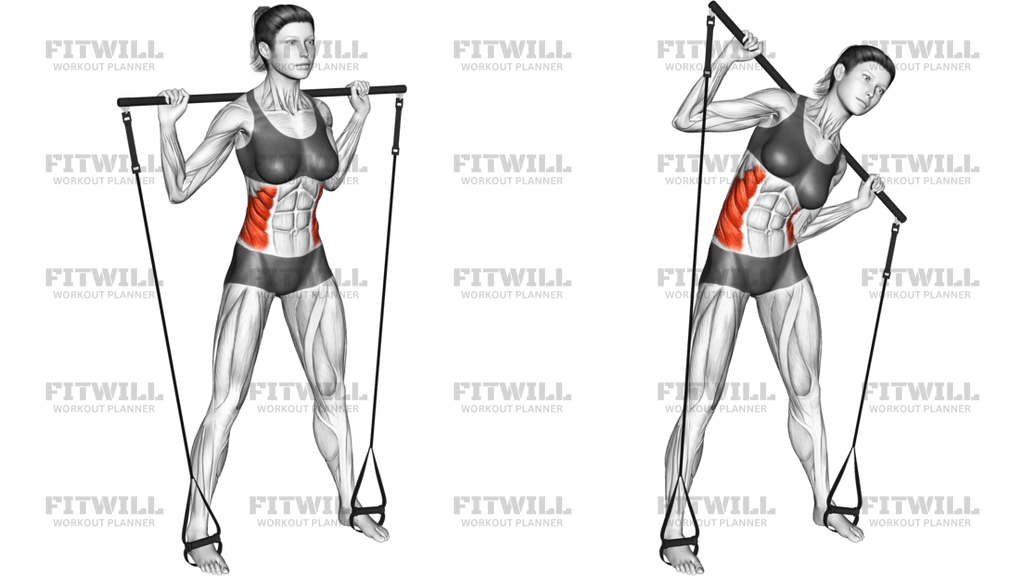
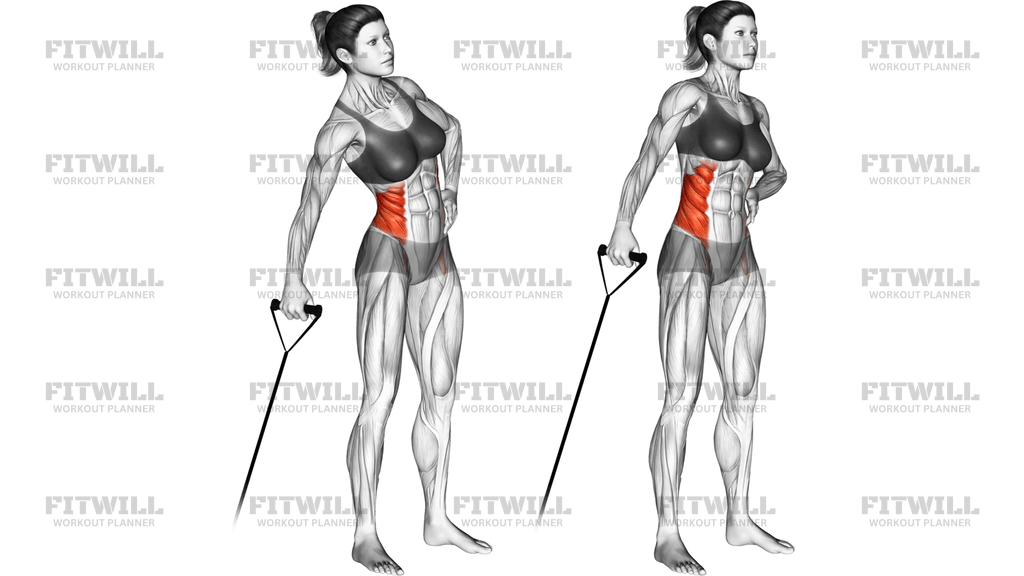
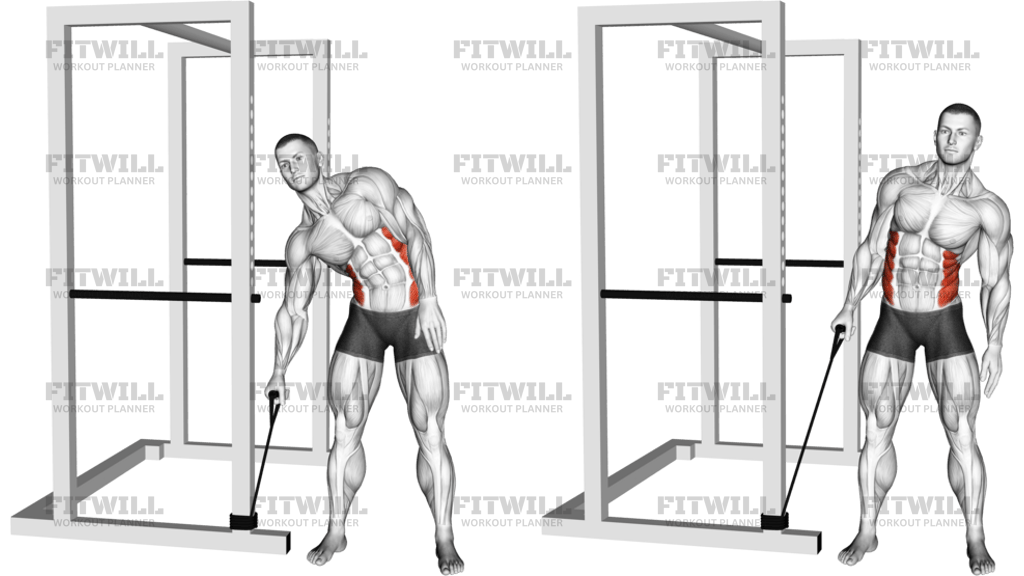
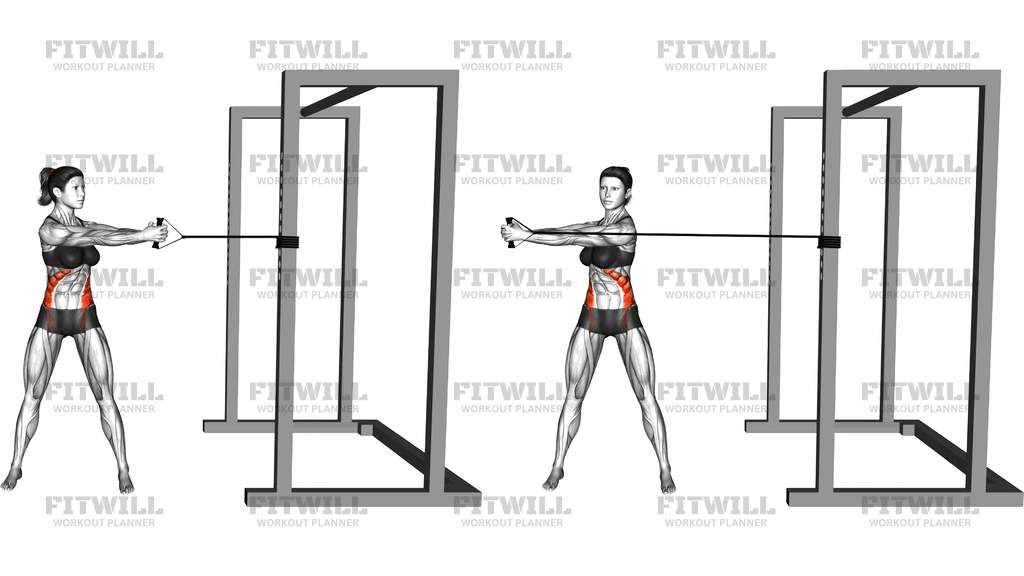
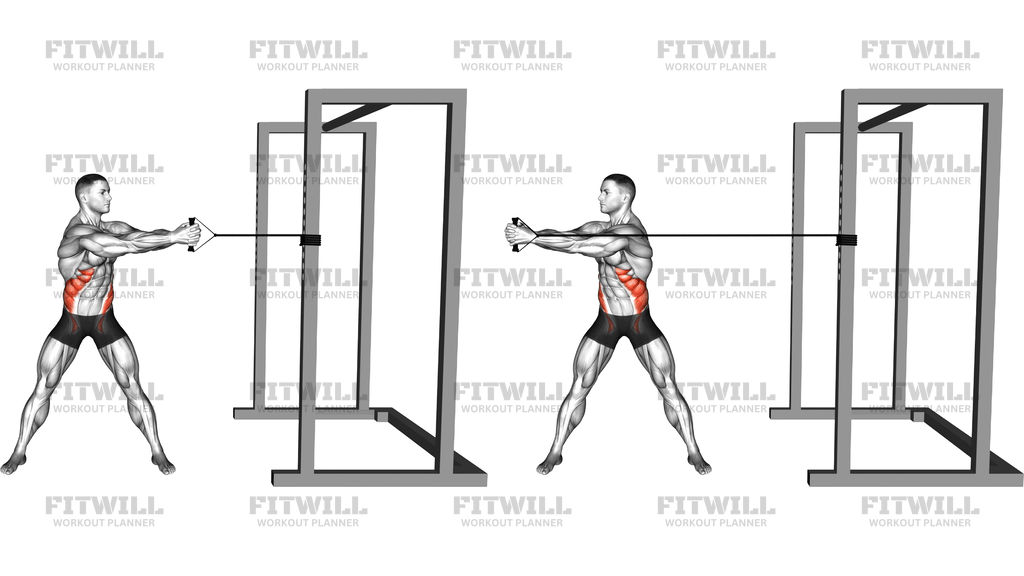
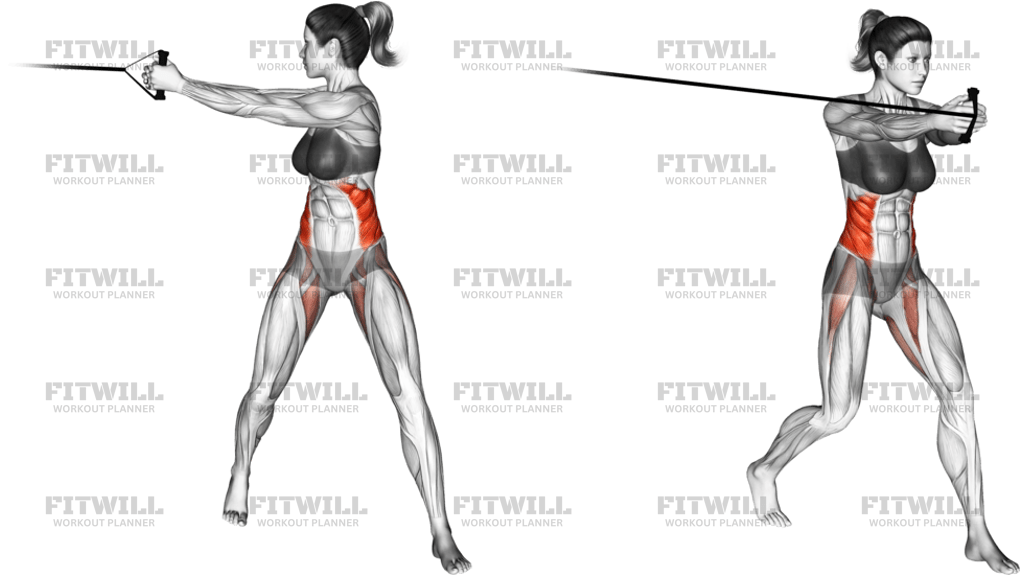
Band Twist is a standing band-resisted rotation drill for the waist and core. The setup in the image uses a side anchor at chest height, straight arms, and a stable stance so the torso can rotate against constant tension. The goal is not to fling the band across the body; it is to train the obliques to turn the ribcage cleanly while the hips and lower back stay organized.
That side pull changes where the challenge lives. When the band is anchored beside you, the obliques have to manage rotation, resist being pulled off line, and slow the return with control. The exercise is especially useful when you want rotational strength and trunk control together, since the body has to keep the head, shoulders, ribs, and pelvis stacked while the arms stay connected to the handle.
A good setup matters more than people expect. Stand far enough from the anchor to feel steady tension before you start, then square the chest, soften the knees, and brace the midsection. If the band is too heavy or the stance is too narrow, the movement turns into a lean or a yank. With the right distance and posture, the twist comes from the waist and upper trunk instead of from momentum.
Each repetition should feel smooth from start to finish. Rotate the torso and shoulders away from the anchor, pause briefly at the end range, and then return under control without letting the ribs flare or the low back arch. Keep the arms long enough that they act like a connected lever, not a separate row or press. Breathe through the rep and stop the set if the band starts pulling your posture apart.
Band Twist fits well in warm-ups, accessory work, athletic core sessions, and rotational training blocks. It is easy to scale with band tension, stance width, and range of motion, so beginners can use a light band and a shorter turn while experienced lifters can use slower tempo and firmer tension. The main standard is simple: the waist should do the work, not the shoulders, not the lower back, and not a big sway from the legs.
Fitwill
Log Workouts, Track Progress & Build Strength.
Achieve more with Fitwill: explore over 9600 exercises with images and videos, access built-in and custom workouts, perfect for both gym and home sessions, and see real results.
Start your journey. Download today!




Instructions
- Anchor the band at about chest height and stand sideways to it, holding the handle or band ends with both hands at chest level.
- Step far enough from the anchor to create steady tension, then set your feet shoulder-width or in a light stagger so you can stay balanced.
- Keep your arms mostly straight, soften the elbows slightly, and square your ribs over your pelvis before you start the rep.
- Brace your midsection and rotate your torso and shoulders away from the anchor in a smooth arc.
- Let the hips turn only as much as needed to stay controlled, but do not let the lower back arch or the chest drift forward.
- Pause briefly at the end of the twist where the band is most taut and the side waist is working hardest.
- Return slowly to the starting position and let the band pull you back under control instead of snapping you back.
- Reset your posture before the next rep and keep breathing steady for the full set.
Tips & Tricks
- Set the anchor at chest height; a low anchor changes the pull and makes the twist harder to control.
- Choose a band that creates tension at the start position, not only at the end, so the rep stays smooth.
- Keep the hands connected to the handle and avoid turning the movement into an arm pull or shoulder shrug.
- Pivot the rear foot if needed so the knees and hips can follow the torso without forcing the low back.
- Exhale as you twist away from the anchor and inhale as you return to help the ribs stay stacked.
- Shorten the range if the band starts snapping you back or if your chest opens and your ribs flare.
- A slight staggered stance usually gives better balance than standing perfectly square for every rep.
- If you feel the low back more than the side waist, reduce tension and slow the return phase.
- Stop the set when the band starts pulling your shoulders out of line or the movement turns into a sway.
Frequently Asked Questions
What does Band Twist train most?
It mainly trains the obliques, with the abs and deeper core muscles helping keep the trunk controlled against the side pull.
Where should I anchor the band for this twist?
A chest-height anchor beside you matches the line shown in the image and keeps the rotation smooth instead of dragging the shoulders down or up.
Should my arms bend during the twist?
Keep the arms mostly straight with only a soft elbow bend so the handle stays connected to the torso instead of becoming a row.
Do my hips have to stay perfectly still?
No, the hips can turn a little, but they should follow the torso rather than lead the movement or drift into a big sway.
Is Band Twist appropriate for beginners?
Yes, as long as the band is light and the rotation is short enough to keep the ribs, shoulders, and pelvis stacked.
What is the main mistake with the handle or band?
People often let the band yank the handle through the rep or shrug the shoulders; both usually mean the resistance is too heavy.
How heavy should the band be?
Use a tension that lets you twist and return under control for every rep; if the first rep is already jerky, the band is too heavy.
What should I feel working during the exercise?
You should feel the side waist and deep trunk muscles working to rotate and control the return, not the low back or neck.
Is this the same as a seated Russian twist?
No. Band Twist is a standing, side-anchored rotation, so balance and posture matter much more than on a floor-based twist.