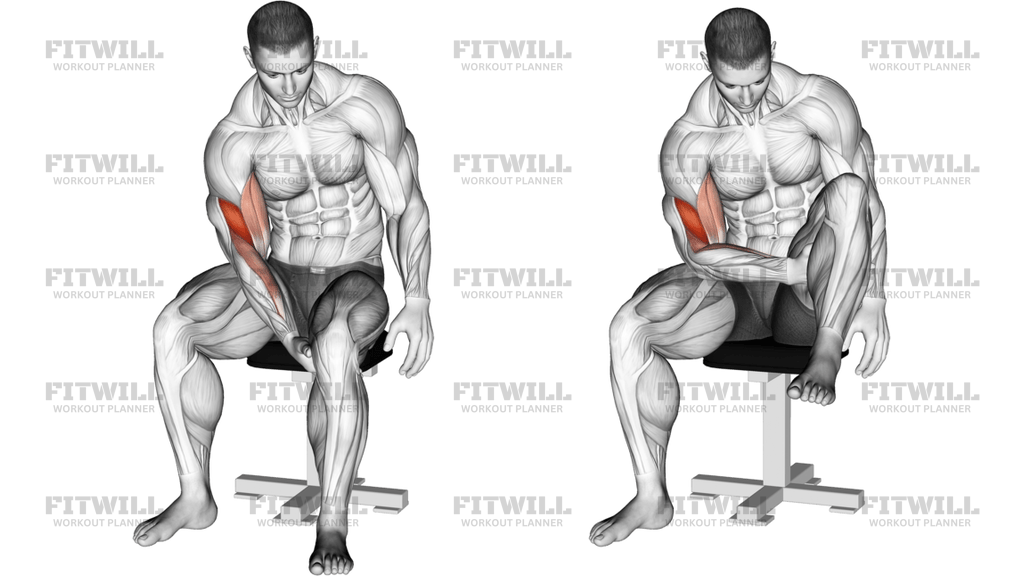
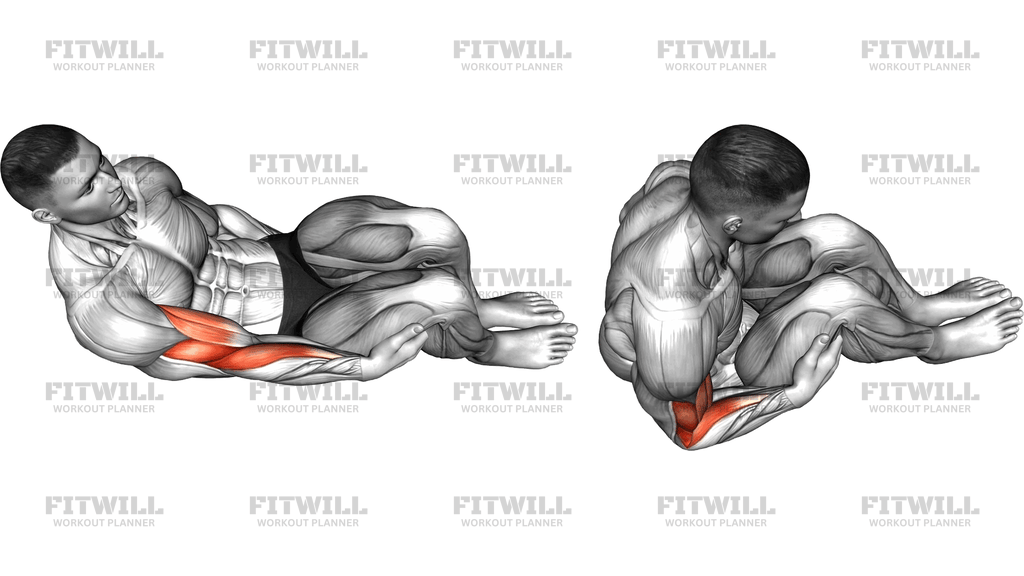
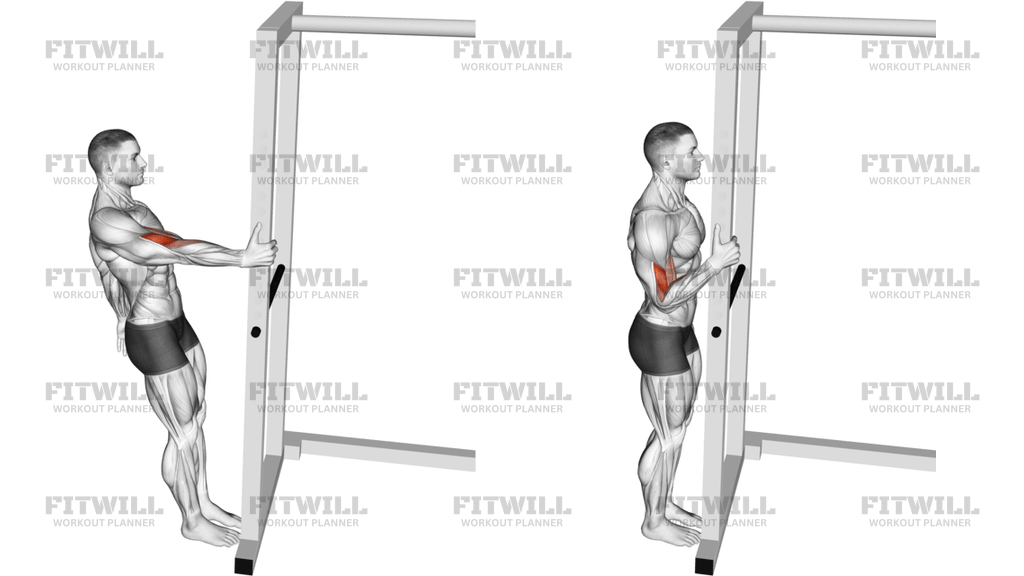
Standing Isometric Biceps Hold
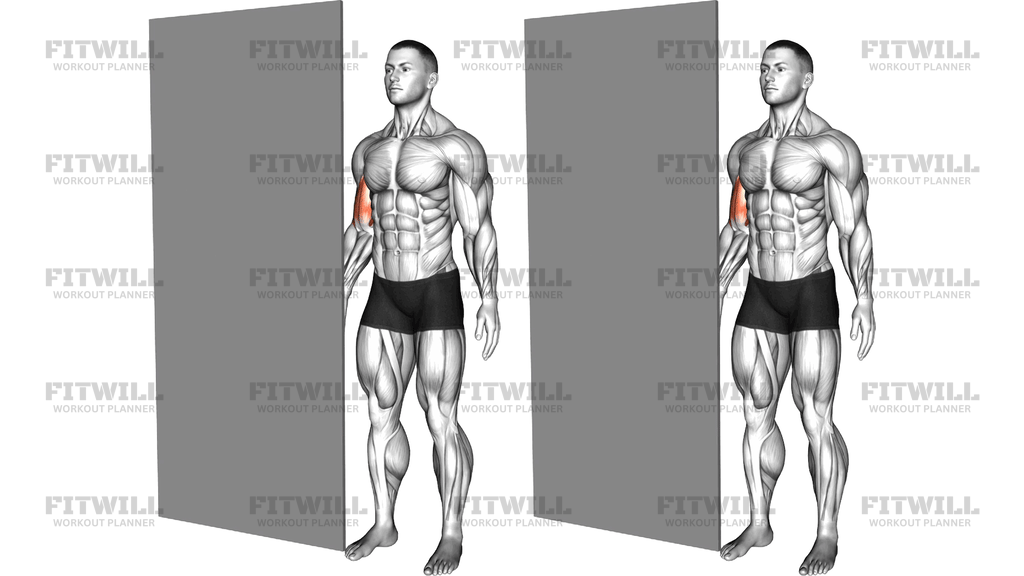
The Standing Isometric Biceps Hold is a static strength exercise where you brace your arm against a wall with the elbow bent and actively press into it, forcing the biceps to contract hard without any visible movement. Instead of lifting a weight through a range of motion, you create tension by pushing against an immovable object, which keeps the muscle under constant load for the entire set. The highlight area in the demonstration shows exactly where the work happens: the front of the upper arm.
This movement is useful in several situations. It works well when you have no equipment available, when you want to add finishing volume to an arm day without extra joint stress, or during rehab-style training where controlled, low-speed loading is preferred. Because the elbow stays fixed at roughly 90 degrees, the tendons around the elbow are loaded in a stable position, which many lifters find more comfortable than heavy curling when they are managing nagging elbow discomfort.
The main muscles working are the biceps brachii along with the brachialis underneath it and the brachioradialis of the forearm. Your grip muscles, shoulders, and core also contribute by keeping your body rigid as you press. The intensity of the exercise is almost entirely self-regulated: the harder you push into the wall, the more tension the biceps must produce, so the same setup serves both beginners and advanced trainees.
Setup matters more than it might seem. Your elbow angle determines the strength of the contraction, your stance determines whether you can actually press hard without losing balance, and your shoulder position determines whether the tension stays in the arm or leaks into the neck and upper back. Take a few seconds to plant your feet and align your forearm before every hold.
To execute it well, place your fist or forearm flat against a sturdy wall with the elbow bent about 90 degrees, brace your torso, and push forward as if trying to bend the wall, breathing steadily instead of holding your breath. Hold the maximum effort you can sustain with clean technique, typically 15 to 30 seconds, then release deliberately rather than collapsing out of the press. A common use case is two to four holds per arm at the end of an upper-body session or as part of a minimal-equipment routine.
From a safety standpoint, the key is gradual effort. Ramp up your press over the first few seconds instead of exploding into the wall, and ease off if you feel sharp pain in the elbow or shoulder. Since there is no weight to drop and no range of motion to lose control of, the main risks are overexertion during the hold and straining while getting into or out of position, both of which are easy to avoid with a controlled approach.
[ Workout Log & Planner ]
Put your next workout in Fitwill
Keep your plan and training log ready when you are.


Instructions
- Stand facing a sturdy, flat wall and place your fist or the flat of your forearm against it at roughly mid-chest height.
- Bend your elbow to about 90 degrees so your forearm is vertical and your upper arm hangs close to your ribs.
- Set your feet hip-width to shoulder-width apart, staggered slightly if that helps you brace, and keep a soft bend in both knees.
- Tighten your core and pull your shoulder blade down and back so your torso does not twist when you start pressing.
- Exhale and drive your fist forward into the wall, ramping up to a firm effort over two to three seconds rather than jabbing at it.
- Hold the press at a hard but sustainable effort, keeping the elbow angle fixed and the shoulder from hiking up toward your ear.
- Breathe in a steady, shallow rhythm throughout the hold; avoid holding your breath or bearing down hard.
- Keep tension in your grip and forearm the whole time, as if your hand is trying to punch through the wall.
- When the hold ends, ease off the pressure over a second or two before lowering your arm, then shake out the arm briefly.
- Reset your stance and repeat on the other arm, matching the hold time on each side.
Tips & Tricks
- If you feel the work shifting into your shoulder or neck, your elbow is probably too high or too low; rebuild the position with the upper arm resting against your side.
- Push at about 70 to 80 percent of your maximum effort on your first hold to find the level you can keep for the full duration without form breaking down.
- A slight lean of the torso into the press is fine, but if your whole body is rotating around the arm, you are pushing from your trunk instead of contracting the biceps.
- Vary the elbow angle between sets, such as 90 degrees on one set and slightly sharper on the next, to emphasize different points in the biceps strength curve.
- Do not lock your knees or lean back as fatigue builds; staying stacked over your feet keeps the press honest and protects your lower back.
- If your wrist aches during the press, make a looser fist or press with the forearm instead of the knuckles so the load stays on the upper arm.
- A quality hold feels like steady burning in the front of the upper arm by the last five seconds; if you feel nothing there, your effort level or arm position needs adjusting.
- Rest about 45 to 60 seconds between holds so each set is a genuine maximal-effort contraction rather than a fading one.
- Keep the working arm's shoulder relaxed and down throughout; shrugging into the press is one of the most common ways tension escapes from the biceps.
Frequently Asked Questions
Which muscles does the Standing Isometric Biceps Hold work?
The biceps brachii on the front of the upper arm does most of the work, supported by the brachialis and brachioradialis. The forearm and grip muscles also stay engaged to keep the fist firm against the wall.
How long should I hold each Standing Isometric Biceps Hold?
Aim for 15 to 30 seconds of hard effort per hold, and stop the set when you can no longer maintain steady pressure with good arm position. Two to four holds per arm is a practical starting dose.
Why does the Standing Isometric Biceps Hold use a 90-degree elbow angle?
A 90-degree bend puts the biceps at a strong point in its length-tension relationship, so you can produce a forceful contraction without needing external weight. It also keeps the elbow joint in a stable, comfortable position under load.
Can beginners do the Standing Isometric Biceps Hold?
Yes, and it is actually a good beginner exercise because the effort is self-regulated and there is no weight to control. Beginners should start at moderate effort with shorter holds of about 10 to 15 seconds.
Should I press with my fist or my forearm against the wall?
Both work; pressing with the forearm spreads the contact over a larger area and is easier on the wrist, while a fist press adds grip involvement. Choose the version that lets you press hard without wrist discomfort.
Why do I feel the Standing Isometric Biceps Hold in my shoulder instead of my arm?
That usually means the elbow has drifted away from your side or the shoulder is shrugging up during the press. Reset with the upper arm against your ribs, pull the shoulder blade down, and restart the hold at slightly lower effort.
What can I use instead of a wall for the Standing Isometric Biceps Hold?
Any sturdy immovable surface at chest height works, such as a doorframe, squat rack upright, or post. A partner who resists your curl at a fixed angle can also provide the same isometric challenge.
How hard should I push during the Standing Isometric Biceps Hold?
Push hard enough that the front of your upper arm feels strong, steady tension by mid-hold, but not so hard that your breathing, position, or arm angle breaks down. Build to maximum effort gradually over the first few seconds.
Is it safe to hold my breath during isometric biceps holds?
No, keep breathing in a steady rhythm throughout the hold. Breath-holding with a hard press spikes blood pressure and tends to cause dizziness, especially as holds approach maximum effort.
How does the Standing Isometric Biceps Hold differ from a regular dumbbell curl?
A curl moves the elbow through a range of motion against a weight, while this hold produces maximum tension at one fixed joint angle with no movement. Isometric strength gains are most pronounced near the angle you train, so it complements rather than replaces full-range curling.