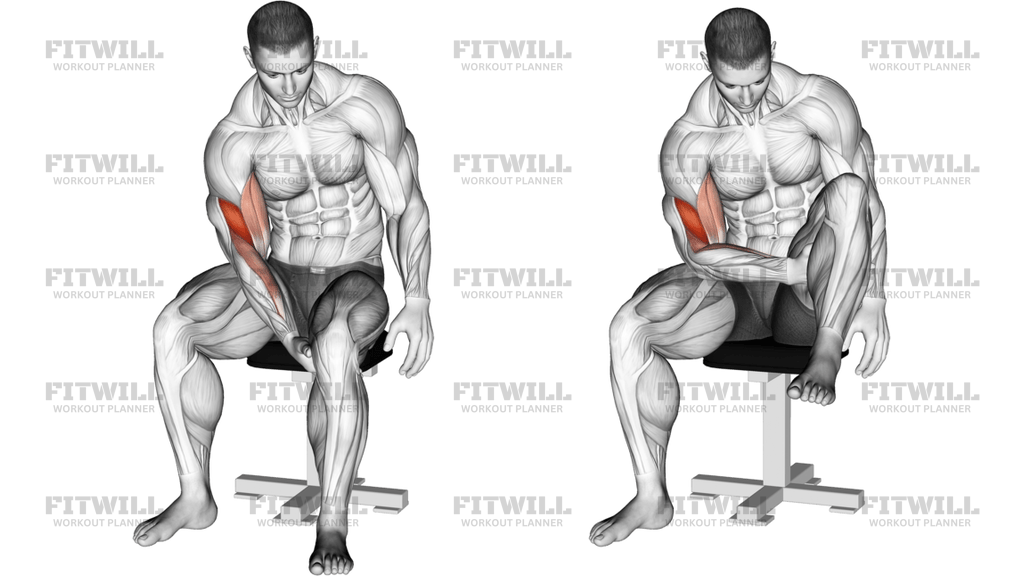
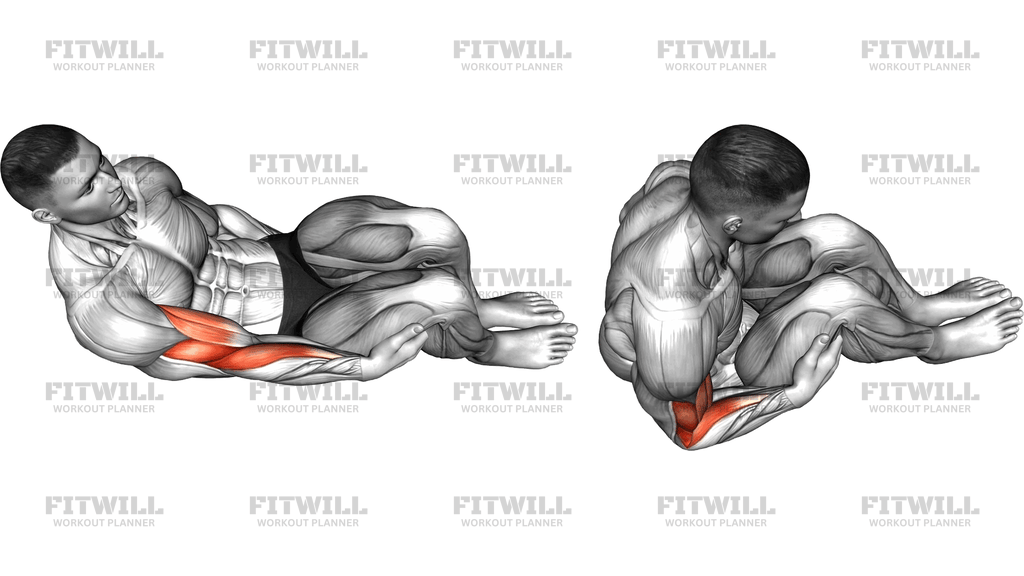
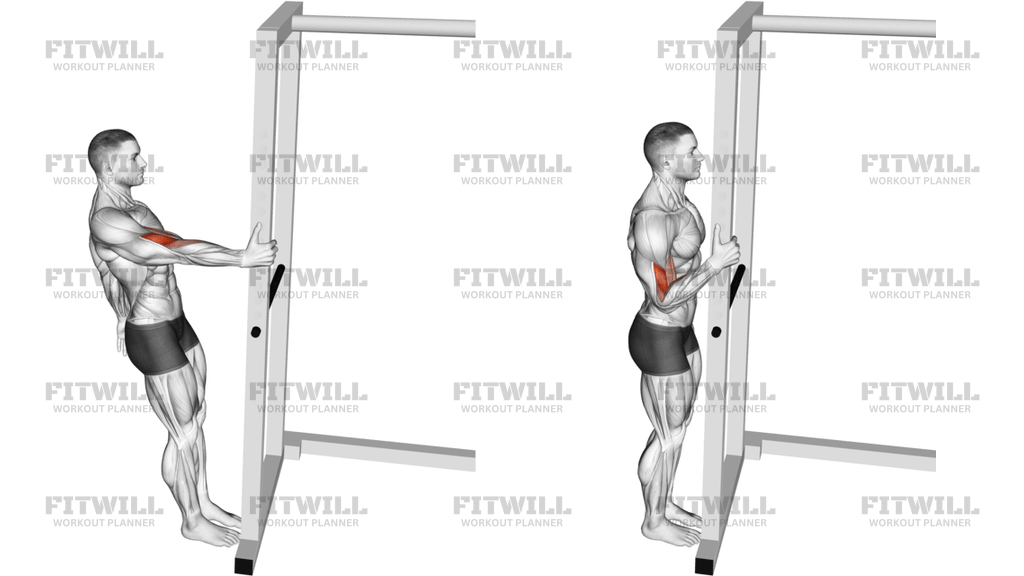
Elbow Flexion
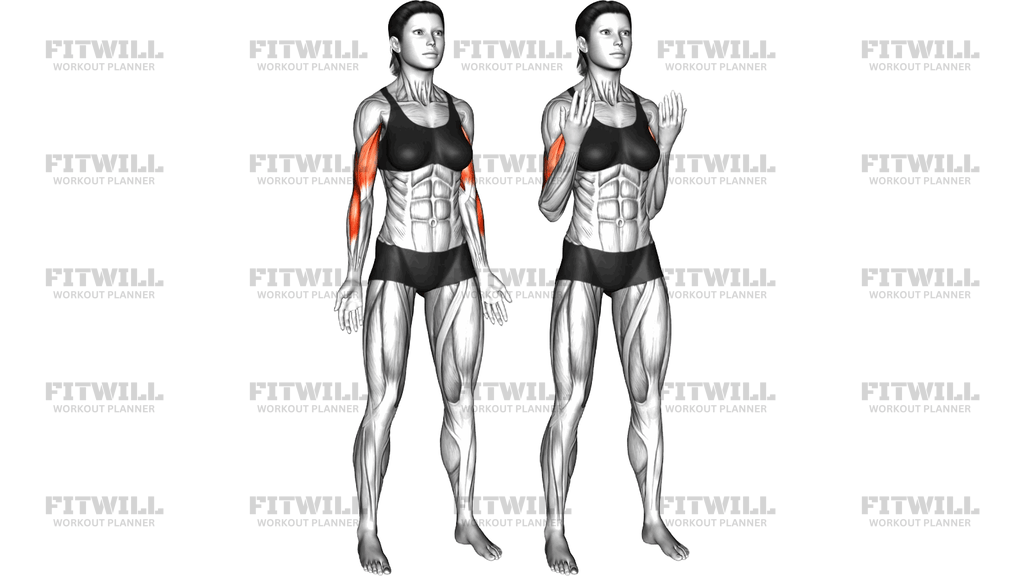
Elbow Flexion is the fundamental bending movement of the arm, performed here standing with no equipment at all. From a relaxed position with your arms hanging at your sides, you bend both elbows to raise your forearms up toward your shoulders, then lower them back down under control. Because it uses only the weight of your own forearms as resistance, it works well as a teaching movement, a warm-up, or a high-repetition activation drill rather than a heavy strength builder.
The muscles doing the work are the elbow flexors on the front of the upper arm: the biceps brachii sits most visibly on top, the brachialis lies underneath it and pushes the biceps up when developed, and the brachioradialis runs down the top of the forearm and contributes strongly when the hands are turned so the palms face forward or inward. The wrist and forearm muscles also stay lightly active to control the position of your hands.
Setup matters even in a bodyweight movement like this. Standing tall with your feet about hip-width apart, ribs stacked over your pelvis, gives your elbows a stable reference point. When the upper arms stay pinned to your sides, all of the bending happens at the elbow joint, which is exactly what you want. If the shoulders creep forward or the elbows drift behind the body, the shoulder muscles start compensating and the biceps lose their clean line of work.
To execute it well, think of drawing your hands up in a smooth arc until your elbows are fully but not forcefully bent, pausing briefly at the top, then taking noticeably longer on the way down. The lowering phase is where most of the training value lives in a bodyweight flexion, so resist gravity instead of letting your arms drop. Exhale as you bend the elbows and inhale as you extend them.
This movement is especially useful for beginners learning what a biceps contraction should feel like, for warming up the elbows before curling with dumbbells, cables, or a barbell, and for rehabilitation or return-to-training settings where external load is not yet appropriate. It also serves as a self-assessment tool: doing it in front of a mirror immediately reveals whether your elbows stay put or swing forward when you flex.
From a safety standpoint, the risk is low because there is no added load, but the joints still deserve respect. Avoid snapping the elbows into full extension at the bottom or shrugging your shoulders toward your ears as you lift. If you have a recent elbow injury or experience pinching at the front of the shoulder, keep the range shorter and move slower, and check with a qualified professional before progressing to weighted versions.
[ Workout Log & Planner ]
Put your next workout in Fitwill
Keep your plan and training log ready when you are.


Instructions
- Stand upright with your feet hip-width apart, weight balanced evenly across both feet, and your arms relaxed at your sides.
- Turn your hands so your palms face forward or slightly inward, fingers relaxed and gently open rather than clenched into fists.
- Draw your shoulder blades down and back slightly so your shoulders sit away from your ears, and brace your trunk lightly.
- Keeping your upper arms glued to your sides, bend both elbows at the same time to raise your forearms toward your shoulders.
- Continue bending until your elbows are fully flexed and your hands are near shoulder height, pausing for a beat at the top.
- Lower your forearms slowly back toward your sides, taking about two to three seconds and stopping just short of locking the elbows hard.
- Breathe out as you bend the elbows and breathe in as you straighten them, keeping the rhythm steady throughout the set.
- Keep your wrists neutral and your hands open the entire time so the forearms do not take over the movement.
- Complete your repetitions, then shake out the arms and gently straighten the elbows between sets to reset.
Tips & Tricks
- The most common fault is letting the elbows drift forward as you bend, which turns it into a partial front raise; picture your upper arms taped to your ribs for the whole rep.
- If you catch yourself shrugging, drop your shoulders deliberately before the first rep and re-check them at the top of every fifth repetition.
- A bodyweight flexion only challenges you if you slow it down; a two-second lift with a three-second lowering will feel far different from quick, bouncy reps.
- Keep the hands open and fingers soft. Clenching your fists shifts tension into the forearms and grips and can mask the feeling of the biceps working.
- Watch yourself from the side in a mirror: if your torso leans back as the hands come up, you are substituting body sway for elbow movement.
- To bias the brachioradialis slightly, try the same motion with the thumbs leading and palms facing each other, as in a hammer-style curl path.
- Use this as a warm-up before loaded curls, aiming for smooth, pain-free reps rather than fatigue; if the elbows feel grindy, reduce the range at the bottom.
- Pause for a full second at the top of each rep with the elbows fully bent, which helps you feel the peak contraction without needing any weight.
Frequently Asked Questions
Which muscles does Elbow Flexion work?
The main movers are the biceps brachii, brachialis, and brachioradialis, the three primary elbow flexors. The forearm muscles also work lightly to keep the wrists and hands steady.
Can Elbow Flexion build muscle without any equipment?
Because the only resistance is the weight of your forearms, it is best suited to learning the pattern, warming up, and muscular endurance with higher repetitions. For meaningful hypertrophy, progress later to dumbbell, cable, or barbell curls.
Is Elbow Flexion a good exercise for beginners?
Yes, it is one of the simplest ways to learn what a biceps contraction feels like before adding load. Mastering the habit of keeping the upper arms still carries directly over to every curling variation.
Why do my shoulders rise when I bend my elbows?
That is usually the upper traps compensating, often because you are moving too quickly or shrugging out of habit. Set the shoulders down first, slow the tempo, and re-check your shoulder position at the top of each rep.
How many repetitions of Elbow Flexion should I do?
For warm-up or activation, 15 to 25 smooth reps work well. As a standalone endurance drill, you can go to 30 or more reps as long as the elbows stay comfortable and the form holds.
What can I use instead of Elbow Flexion if I want more resistance?
Dumbbell curls, cable curls, or resistance band curls all use the same joint path with added load. Standing dumbbell curls are the most direct progression since the body position is nearly identical.
Should my elbows stay at my sides during Elbow Flexion?
Yes, in this version the upper arms stay pinned to your sides so the movement comes only from the elbow joint. Allowing the elbows to swing forward shifts work to the shoulders and shortens the biceps range.
Is it safe to do Elbow Flexion every day?
For most people, yes, since the load is very light and the movement is natural. If you have a recent elbow injury or feel persistent discomfort at the joint, reduce the range and frequency and consult a qualified professional.
How fast should I lower my arms during Elbow Flexion?
Take roughly two to three seconds on the way down, stopping just before the elbows snap into full lockout. The controlled eccentric is where most of the training stimulus comes from in an unloaded version.