Suspension Triceps Dip
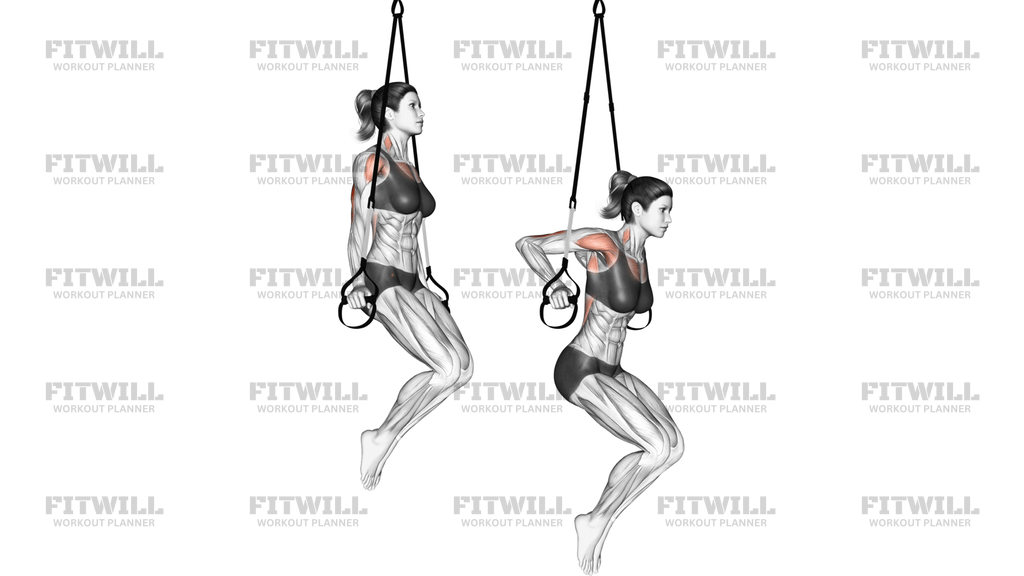
Suspension Triceps Dip uses suspension straps to train elbow extension against a changing body angle, so the triceps have to produce force while the shoulders and trunk keep the line of the body stable. The movement looks simple, but the straps make the exercise more demanding than a fixed bench dip because every rep has to be controlled in space. That makes it useful for building triceps strength, shoulder stability, and clean pressing mechanics at the same time.
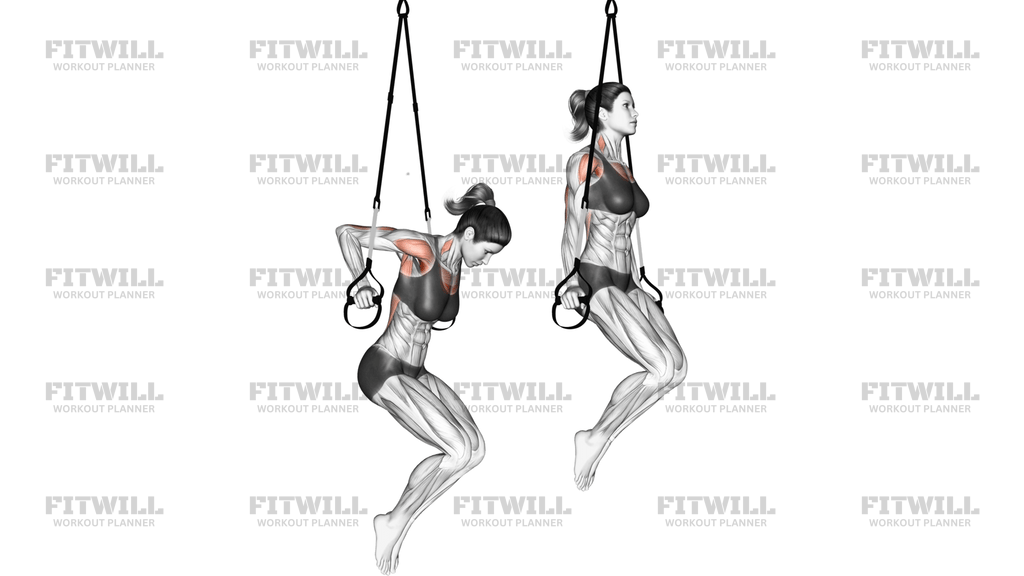
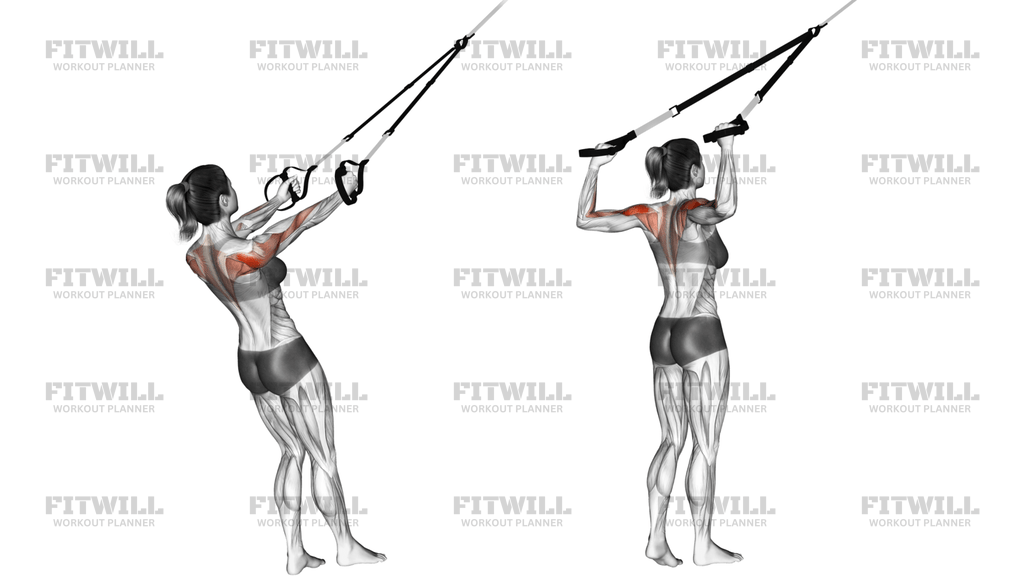
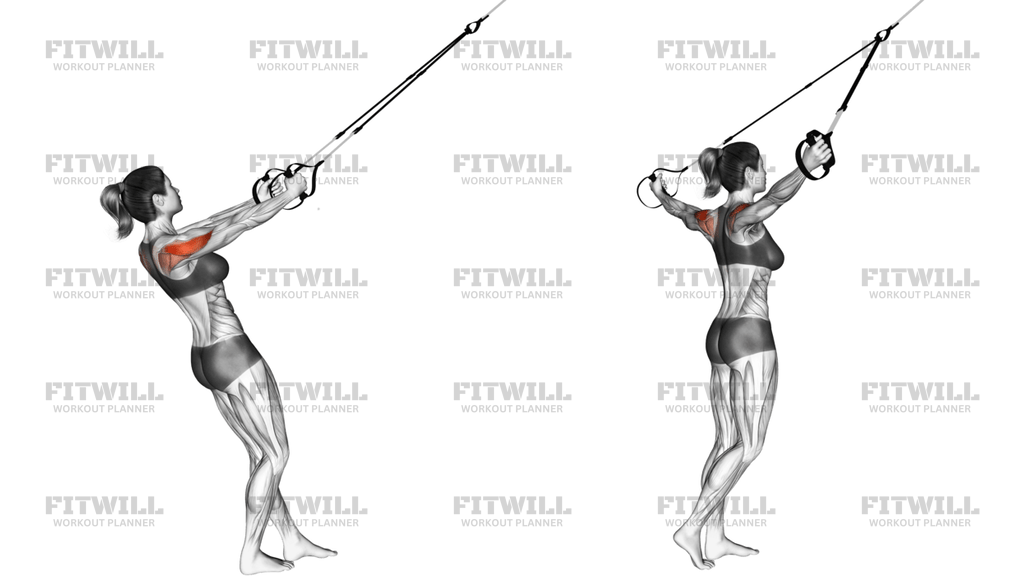
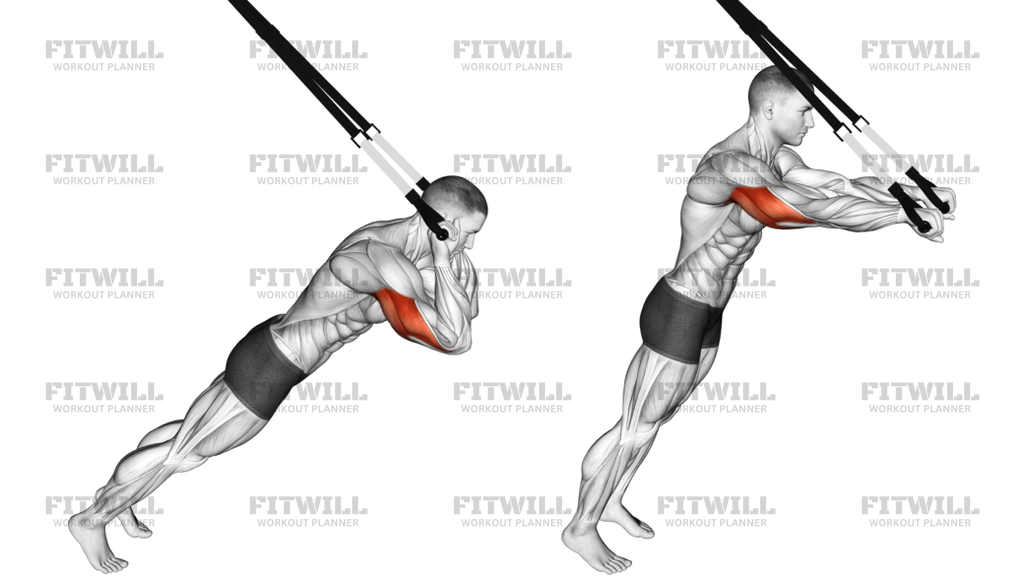
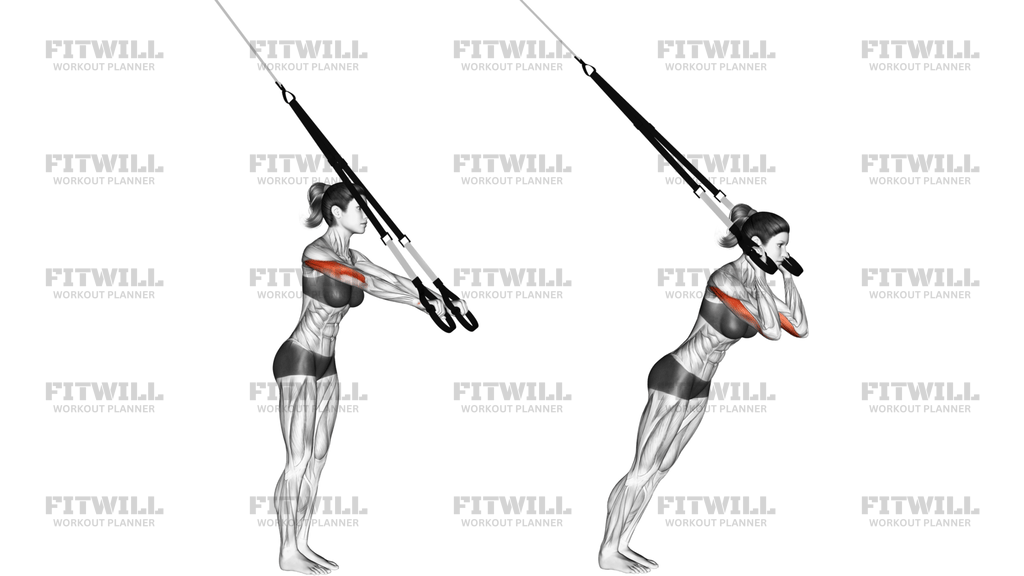
In the setup shown here, the handles sit at your sides and your body stays tall with a slight lean, bent knees, and feet light on the floor. The straps should stay taut throughout the set. When you lower, the elbows bend behind the torso instead of flaring wide, and the shoulders stay packed down rather than shrugging toward the ears. At the top, the arms finish straight without letting the rib cage flare or the shoulders roll forward.
This is primarily a triceps exercise, with the anterior deltoids, forearms, and core helping control the suspension angle and keep the body from swinging. Because the straps can move, the exercise rewards a smooth path and punishes sloppy changes in shoulder position. The best reps look controlled from start to finish: lower with the elbows traveling back, press the handles down and slightly back, then return slowly to the bottom position without dropping into the stretch.
Exercise selection matters here. A more upright torso and shorter body angle make the movement easier, while a deeper lean or a longer suspension line increase the demand on the triceps. That gives you an easy way to scale the exercise without changing equipment. For beginners, the priority is learning to keep the handles steady and the elbows tracking close. For stronger lifters, the challenge comes from maintaining tension and resisting swing through the full range.
Use Suspension Triceps Dip when you want direct arm work that also challenges balance and shoulder control. It fits well in accessory blocks, upper-body sessions, or circuits where you want triceps focus without loading a heavy barbell. Keep the repetition quality high, stop before the straps start to swing, and use only the depth your shoulders can control comfortably. If the front of the shoulder feels pinched or the torso starts collapsing, shorten the range and reduce the leverage before adding more volume.
[ Workout Log & Planner ]
Put your next workout in Fitwill
Keep your plan and training log ready when you are.


Instructions
- Hold the suspension handles at your sides, step or lean back until the straps are taut, and set a tall torso with soft knees and feet lightly grounded for balance.
- Start with your elbows bent behind you, chest lifted, shoulders down, and wrists stacked under the straps so the handles do not drift forward.
- Brace your midsection and keep your ribs from flaring as you prepare to press.
- Press the handles down and slightly back by straightening your elbows, keeping them close to your sides instead of letting them flare out.
- Finish the rep with straight arms, an upright chest, and the straps still under tension rather than hanging loose.
- Lower under control by bending the elbows back behind the torso until you feel a strong triceps stretch without letting the shoulders roll forward.
- Keep your upper arms quiet during the descent so the motion comes from elbow extension and not from swinging the whole body.
- Exhale as you press up, inhale as you lower, and keep every rep smooth enough that the suspension straps stay steady.
- Reset your posture before the next rep if the handles start to wobble, the knees drift, or the shoulders shrug.
Tips & Tricks
- Keep the straps vertical and taut; if they go slack at the top, the body angle is too easy or the rep is finishing too high.
- Think about pushing the handles toward the floor rather than forward so the elbows finish the press behind the line of your torso.
- A tall chest helps, but do not turn this into a rib-flared backbend; the triceps should move the handles, not the lower back.
- If your shoulders creep toward your ears, shorten the range and reset with the shoulder blades pulled down before the next rep.
- Keep the elbows narrow enough that the back of the arms, not the front of the shoulders, is doing most of the work.
- Use a smaller lean if the straps start swinging; body sway steals tension from the triceps and usually means the rep is too hard.
- A slow two- to three-second lowering phase makes the exercise much more effective than dropping into the bottom position.
- Do not chase depth if the front of the shoulder feels strained; stop just before the shoulders roll forward and the handles move ahead of your torso.
- Choose a stance that lets you own the top position first, then increase the lever by stepping farther forward or lowering the hands only after the pattern stays clean.
Frequently Asked Questions
What does Suspension Triceps Dip train most?
It mainly trains the triceps through elbow extension, with the shoulders, forearms, and core helping stabilize the straps.
How should the handles move during the press?
Press the handles down and slightly back while keeping them close to your sides so the elbows stay tucked.
What is the best torso position for this exercise?
Keep the chest tall and the torso mostly upright with only a small lean, which lets the triceps work without excess shoulder strain.
How deep should I lower on the suspension straps?
Lower only until you still control the shoulders and the straps stay steady; stop before the front of the shoulder rounds forward.
Can beginners use Suspension Triceps Dip?
Yes, beginners can use a more upright body angle and a shorter range of motion while they learn to keep the handles stable.
Why do the straps make this harder than a fixed dip?
Because the straps can move, your body has to control both the press and the balance of the handles at the same time.
What are common mistakes with the elbows and shoulders?
The most common mistakes are letting the elbows flare, shrugging the shoulders, or dropping too deep and losing control of the straps.
How can I make this exercise easier or harder?
Make it easier by standing more upright and keeping the knees closer under you; make it harder by leaning farther back or increasing the lowering control.
Should I feel this in my chest or core too?
A little chest, shoulder, and core work is normal, but the main effort should stay in the back of the upper arm.