Cable Seated High Row (Version 3)
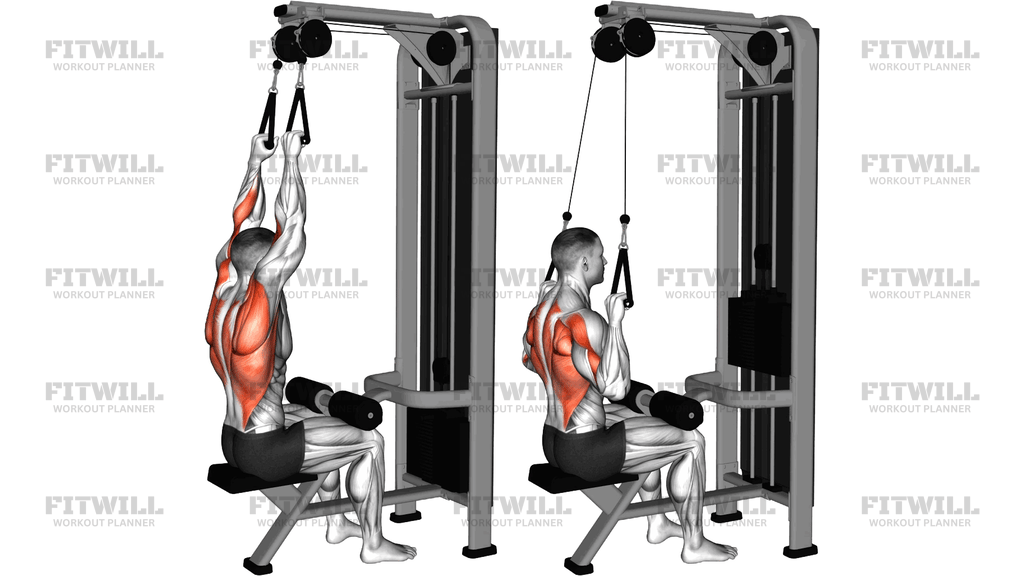
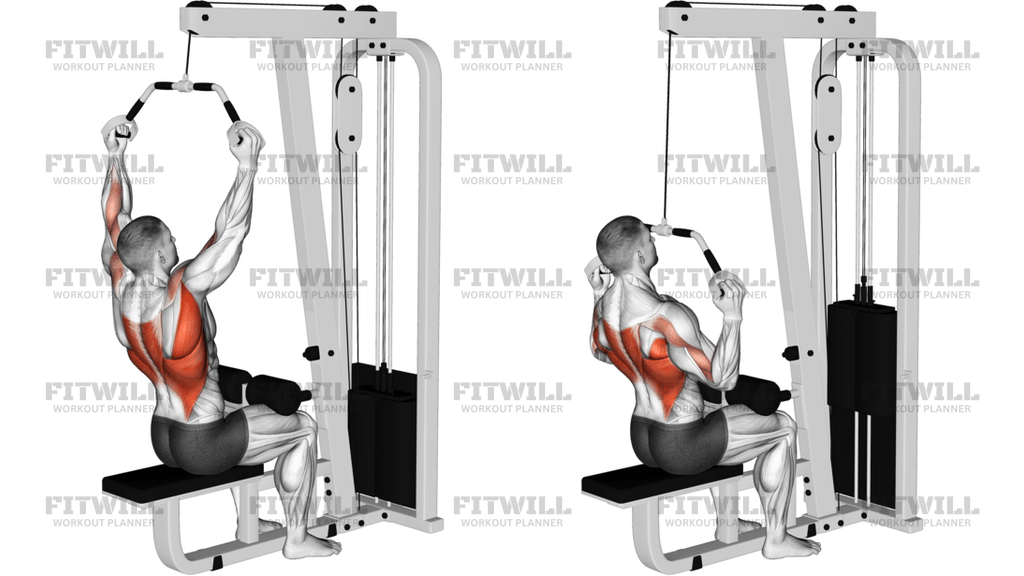
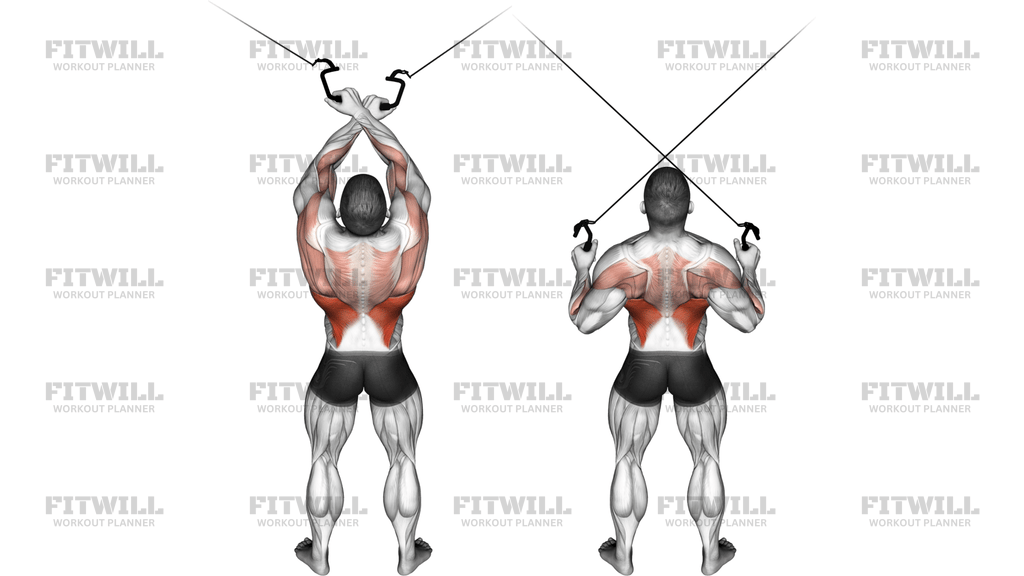
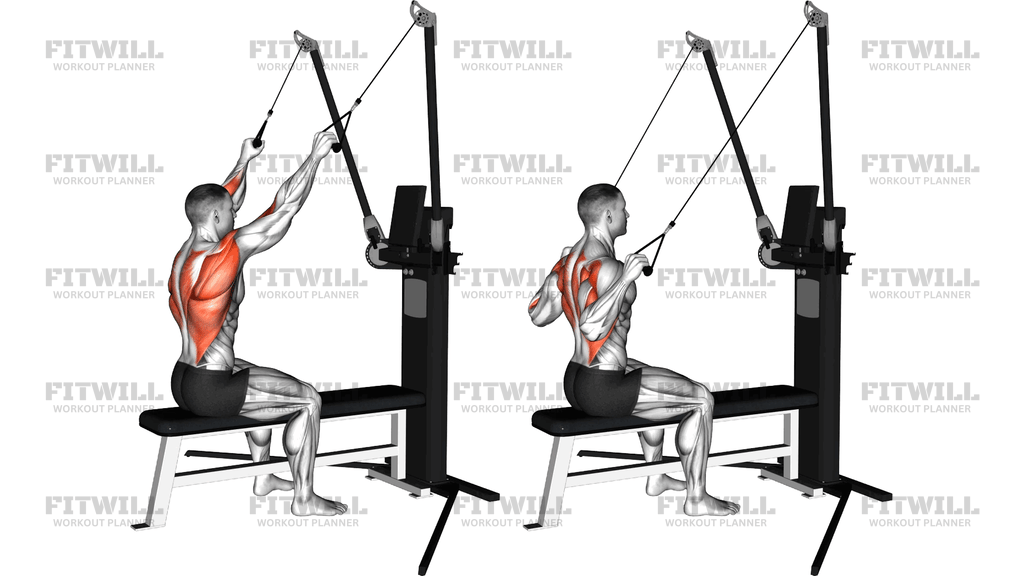
The Cable Seated High Row is a cable-based back exercise performed while sitting on a flat bench facing a cable machine with the pulleys set at or above head height. You hold a handle in each hand, start with your arms extended overhead and slightly forward, and pull the handles down and back until they arrive alongside your shoulders or upper chest. Because the resistance comes from above rather than straight ahead, the movement blends elements of a pulldown and a seated row, sweeping the elbows down and outward through a long arc.
This version is especially useful for lifters who want more vertical-path back work without loading the spine the way a barbell row does. The overhead start position lengthens the lats fully, while the pull toward the shoulders recruits the rhomboids, mid traps, and rear delts as the shoulder blades retract. You also get a meaningful contribution from the biceps and forearms, though the goal is to let the back drive the movement.
Setup matters more than people expect. Sitting on a bench facing the machine, your distance from the pulley determines the angle of pull: too close and the cable scrapes your face with the arms stuck overhead, too far and you lose tension at the top. Position yourself so the cables run diagonally from the high pulleys down to your hands with your arms nearly straight at the start. Keep your torso tall and only allow a small, controlled lean back as you pull.
To execute well, lead with the elbows rather than the hands, driving them down and slightly out until the handles reach shoulder height. Squeeze the shoulder blades together at the bottom, pause briefly, then let the arms travel back up under control until you feel a full stretch through the lats and upper back. Avoid turning this into a shrug or a swinging bodyweight pulldown; the cable should move because your shoulders and elbows moved, not because your torso rocked.
The Cable Seated High Row fits well as a secondary back movement after heavier rows or pulldowns, or as a primary high-volume exercise for hypertrophy-focused training. It is also a practical choice for people who struggle to feel their back in traditional rows, since the diagonal cable path and independent handles make it easier to find and isolate the mid-back contraction.
[ Workout Log & Planner ]
Put your next workout in Fitwill
Keep your plan and training log ready when you are.


Instructions
- Set a flat bench facing a cable machine and position the pulleys at or just above head height, with a single handle attached to each cable.
- Sit on the bench with your feet flat on the floor, grab one handle in each hand, and slide back until your arms are almost fully extended overhead and slightly forward, with light tension in the cables.
- Sit tall with your chest up, brace your core, and keep your neck neutral rather than jutting your chin toward the cables.
- Pull the handles down and back by driving your elbows toward your sides and slightly outward, keeping your wrists straight.
- Continue until the handles reach shoulder height alongside your head or upper chest, and squeeze your shoulder blades together at the end of the pull.
- Hold the contracted position for a brief count, feeling the tension across your upper back and lats.
- Slowly return the handles up along the same diagonal path until your arms are extended overhead again and you feel a stretch, without letting the weights slam the stack.
- Exhale as you pull down, and inhale as you let the handles travel back up.
- Complete your repetitions, then release one handle at a time and let the stack settle fully before standing up.
Tips & Tricks
- If the cable drags across your face or head at the top, you are sitting too close to the machine; shift the bench back until your hands clear comfortably with arms extended.
- Keep the lean of your torso small and consistent. If your upper body rocks backward with every rep, the weight is too heavy and your back is no longer doing the work.
- Think about pulling your elbows to your back pockets, not pulling the handles to your chest. This keeps the emphasis on the lats and mid-back instead of turning it into an arm curl.
- Avoid shrugging your shoulders toward your ears as you pull; if your traps take over, lower the weight slightly and consciously keep your shoulders down away from your neck.
- Let your shoulder blades move at the top. Allowing them to protract slightly into a stretch, then retracting at the bottom, gives you a fuller range than pulling with locked-down blades.
- Because each cable works independently, watch for one arm finishing ahead of the other; match the range on both sides or use your weaker arm to set the standard.
- Do not fully lock out and relax at the top of every rep. Keeping slight tension in the cables protects the shoulder and keeps the muscle engaged.
- If your grip fails before your back does, use a controlled tempo and a brief pause at the bottom rather than rushing reps, or switch to handles with a more comfortable diameter.
Frequently Asked Questions
Which muscles does the Cable Seated High Row work the most?
The lats and upper back, including the rhomboids and mid traps, do most of the work, with the rear delts assisting during the pull. The biceps and forearms contribute as supporting muscles since you are gripping and bending the elbows.
How is the Cable Seated High Row different from a standard seated cable row?
A standard seated row pulls the handles toward your torso from a low or mid pulley, while the high row starts with the arms extended overhead and pulls down along a diagonal path. This longer arc places a bigger stretch on the lats and adds more vertical shoulder movement.
Is the Cable Seated High Row suitable for beginners?
Yes, as long as you start with a light weight and focus on the pulling path. Because the cables guide the movement and your torso is supported by the bench, it is easier to learn than free-weight rows, though the overhead start position requires decent shoulder mobility.
Why should I sit facing the machine instead of facing away?
Facing the machine lets the cables run diagonally from the high pulleys down to your hands, which matches the natural arc of the pull and keeps tension through the whole range. Facing away would turn it into a different exercise, closer to a straight-arm pull or face pull variation.
How far should the bench be from the cable machine?
Sit far enough back that your arms can extend overhead and slightly forward with the cables under light tension and no contact with your head or face. If you have to strain forward at the top or the cable scrapes you, adjust the distance before adding weight.
What is the most common mistake in this exercise?
Leaning far back and rocking with each rep, which shifts the work to momentum and the lower back. Another frequent error is shrugging the shoulders up toward the ears, which shifts tension away from the lats and mid-back.
Can I do this exercise with one arm at a time?
Yes, working one side at a time can help if one arm is stronger or you have trouble feeling the contraction on one side. Keep your torso square and avoid twisting toward the working arm.
What can I substitute if my gym has no dual high pulleys?
A single high pulley with one handle, alternating arms, works well, and a lat pulldown with a close or neutral grip covers a similar pulling pattern. Resistance band pulldowns anchored overhead are another option when no cable station is available.
Are there any safety concerns with the overhead start position?
If you have limited shoulder mobility or discomfort when reaching overhead, reduce the range slightly by not extending as far up, or choose a standard seated row instead. Always let the stack return under control rather than letting it snap back, which yanks the shoulders into extension.
Where should I place the Cable Seated High Row in my workout?
It works best as a secondary back movement after heavier compound pulls like barbell rows or weighted pulldowns, typically for moderate to higher repetitions. Placing it late in the session lets you focus on the squeeze without fatigue compromising your heavier lifts.