Weighted Inverted Row
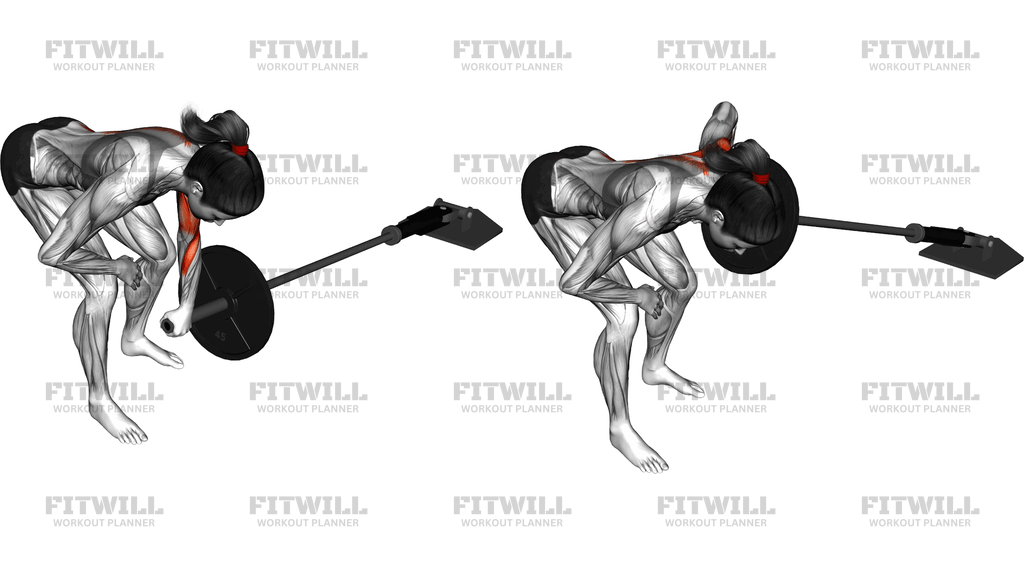
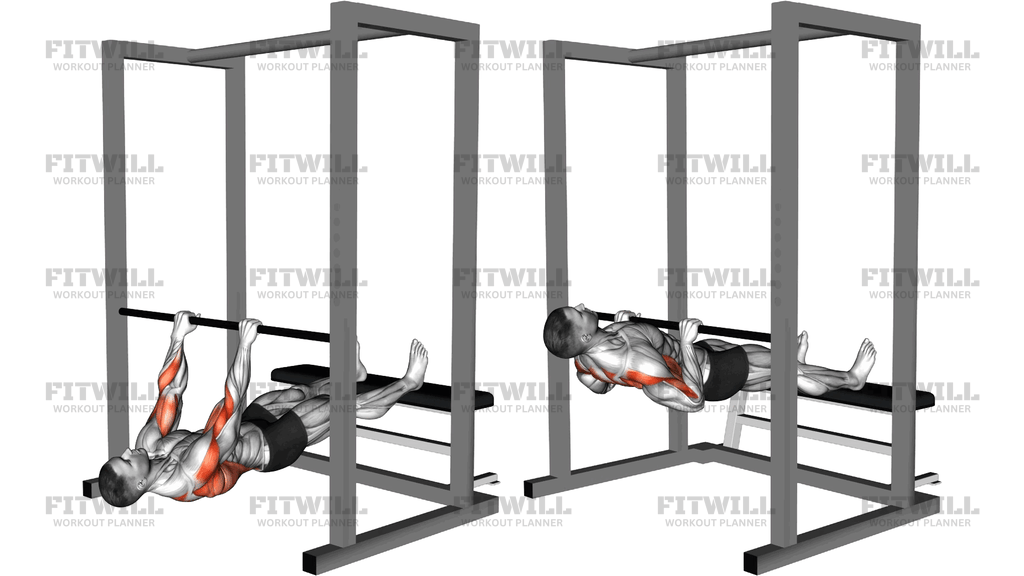
Weighted Inverted Row is a chest-supported horizontal pulling exercise performed under a fixed bar with the heels elevated on a bench and a weight plate added to the torso. It trains the upper back, lats, traps, rear shoulder girdle, and biceps while also demanding a rigid trunk so the body stays in one line throughout the pull.
The added load makes the row more demanding than a standard bodyweight version, but the movement quality still depends on the same basics: a stable setup, a neutral spine, and a clean pull toward the lower chest or upper ribs. Because the torso is held almost parallel to the floor, small changes in body position have a big effect on how much tension reaches the back versus how much is stolen by momentum.
Use the bench to elevate the heels so the body can stay long and straight, then position the plate so it rests securely on the midsection without shifting as you row. A shoulder-width overhand grip usually keeps the elbows tracking in a strong path and helps the shoulder blades move smoothly as you pull. The goal is to bring the chest up to the bar, not to crank the neck forward or turn the rep into a hip hinge.
This exercise is useful when you want a heavy horizontal pull without needing a full row machine. It fits well in back-focused strength work, upper-body accessory blocks, or paired with pressing exercises to balance shoulder workload. Beginners can use it by removing the weight plate first and earning consistent bodyweight reps before adding load.
Keep each rep controlled from the bottom stretch to the top squeeze, and stop the set when the torso starts sagging, the plate slides, or the feet press so hard into the bench that the body loses its straight line. That is usually the sign that the load is too high or the setup is no longer stable enough to train the intended muscles well.
[ Workout Log & Planner ]
Put your next workout in Fitwill
Keep your plan and training log ready when you are.


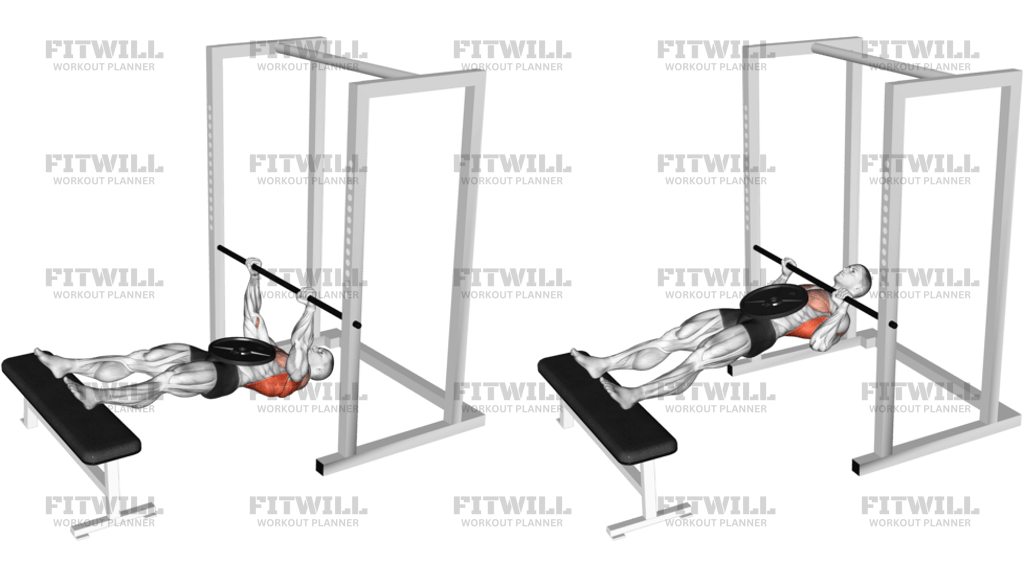
Instructions
- Set a bar in a rack at about waist to chest height and place a flat bench so your heels can rest on it while your body stays straight under the bar.
- Lie under the bar with your shoulders just below it, grasp the bar with a shoulder-width overhand grip, and place the weight plate securely on your torso.
- Set your heels on the bench, squeeze your legs together, and lock in a long line from ankles to head without letting the hips drop.
- Brace your midsection and keep your chest lifted slightly before you start the first pull.
- Pull the chest toward the bar by driving the elbows back and letting the shoulder blades move together.
- Keep the neck neutral and stop the pull when the bar reaches your lower chest or upper ribs.
- Pause briefly at the top without shrugging your shoulders toward your ears.
- Lower yourself under control until the arms are straight and the shoulders are opened again.
- Reset your brace before the next rep and keep the plate from shifting on the way down.
- Continue for the planned reps, then lower your feet and clear the bar carefully.
Tips & Tricks
- A small change in bar height changes the difficulty a lot; a lower bar makes the row harder because your body angle is flatter.
- Keep the plate centered on the torso so it does not roll toward the hips or chest as you pull.
- Think about pulling the elbows back and slightly down, not just yanking the hands toward the bar.
- If your shoulders shrug at the top, the load is probably too heavy or the rep is being cut short.
- Keep the ribs down so the chest rises from the row instead of the lower back arching to fake the rep.
- Do not kick through the heels or use leg drive to start each repetition; the bench is only there for support.
- A brief squeeze at the top is enough; holding too long usually makes the neck tense and the plate shift.
- Lower in a controlled 2-3 second eccentric so the upper back and lats stay under tension.
- If the body starts to twist, reduce the load or take the plate off before the set gets sloppy.
Frequently Asked Questions
What muscle does Weighted Inverted Row target most?
It mainly targets the upper back, especially the traps, rhomboids, and lats, with the biceps helping during the pull.
Can beginners perform this exercise?
Yes, but beginners should usually master the bodyweight version first and add the plate only when the torso stays stable for full reps.
Where should my chest touch at the top?
Aim to bring the lower chest or upper ribs to the bar without jutting the head forward or losing the straight body line.
Why are my heels on a bench?
The elevated heels help keep the body level under the bar so the row stays strict and the added plate does not force an awkward angle.
Should I use an overhand or underhand grip?
The image shows a shoulder-width overhand grip, which is a solid choice for keeping the elbows in a strong path and emphasizing the upper back.
What if the weight plate slides during the set?
Reduce the load or use a more secure setup, because a sliding plate usually means the torso is losing its brace and the rep is no longer strict.
Is this a substitute for a barbell row?
It can be a strong horizontal-pull substitute when you want less spinal loading than a bent-over row and more body control than a machine row.
What is the biggest mistake to avoid?
Letting the hips sag or the shoulders shrug at the top usually turns the row into a sloppy pull instead of a clean upper-back rep.