Barbell Shrug
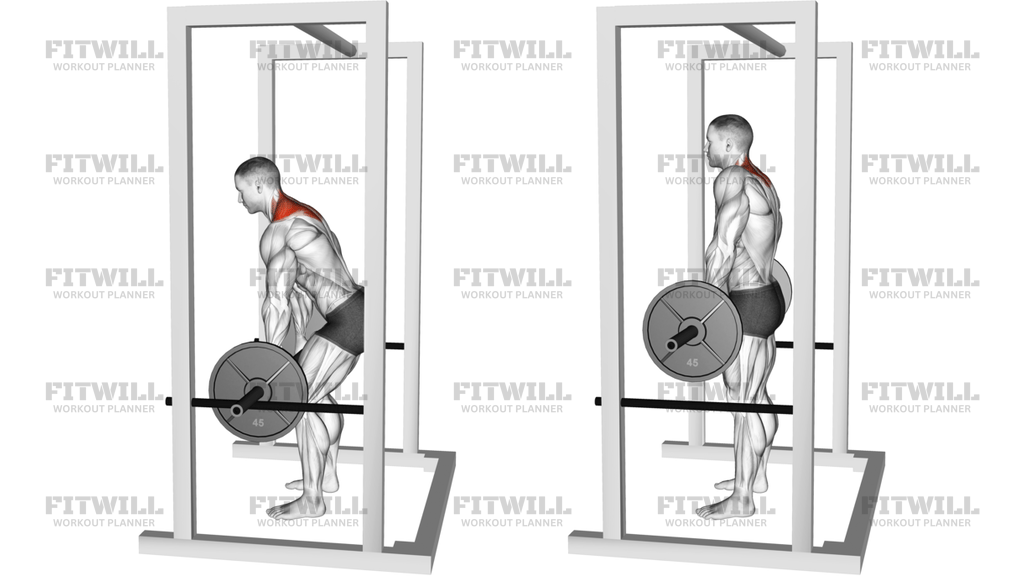
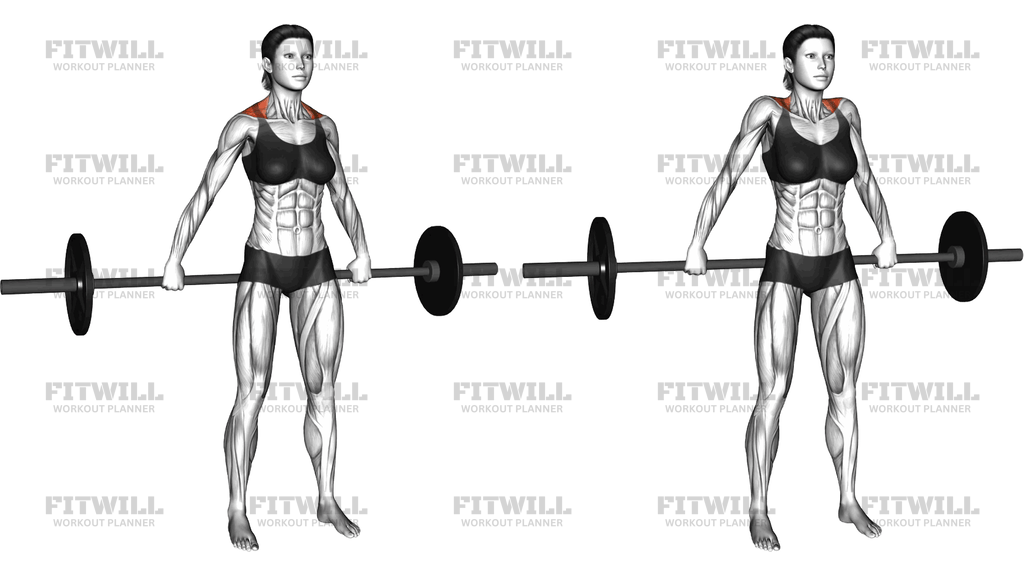
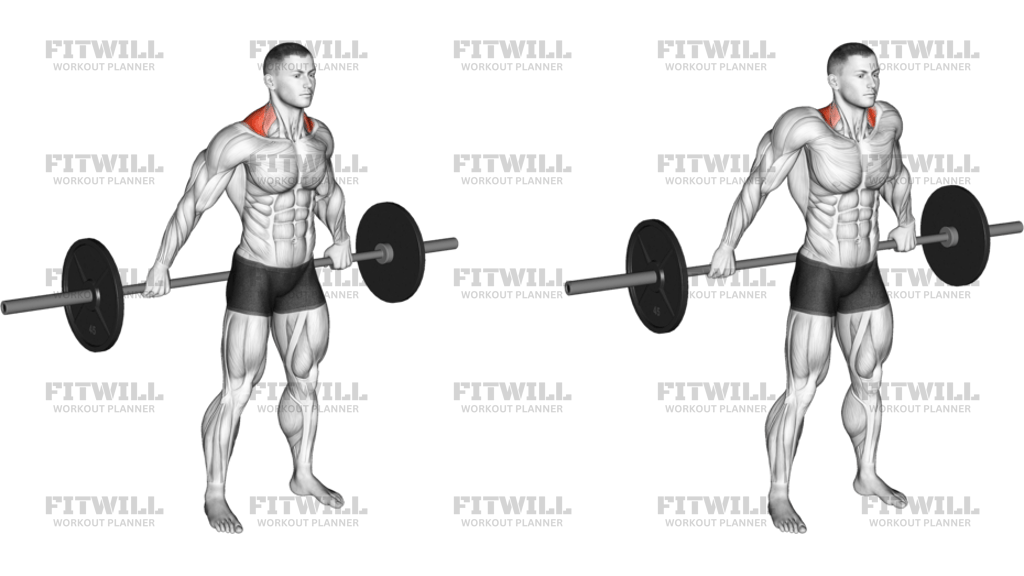
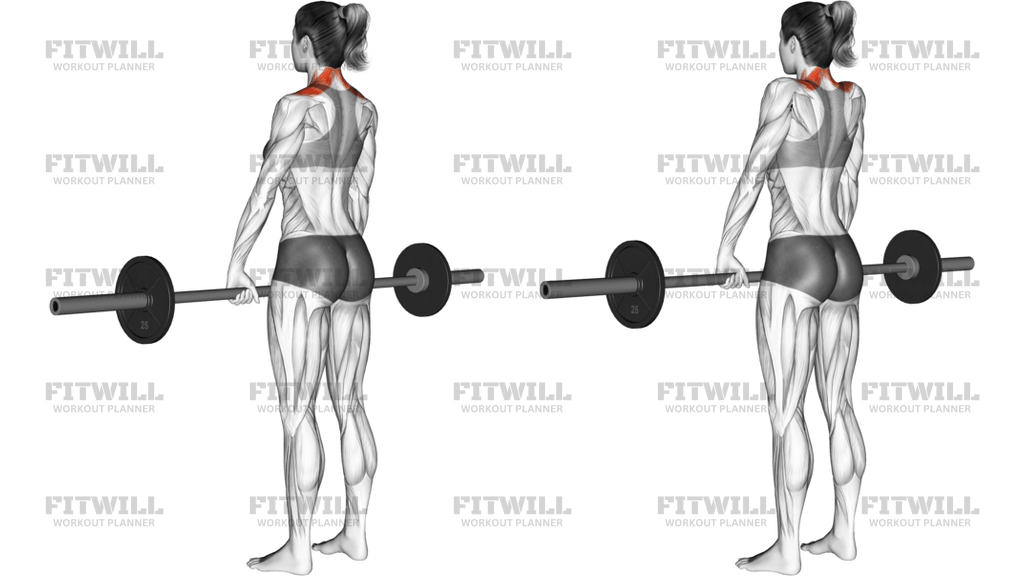
The Barbell Shrug is a standing trap-focused lift performed with the bar held behind the body, usually with an overhand grip and straight arms. This version emphasizes vertical shoulder elevation without turning the movement into a row, curl, or bounce. The goal is simple: raise the shoulders straight up, hold the top briefly, and lower the bar under control while keeping the torso still.
Because the bar stays behind the hips, setup matters more than it does in a standard front-loaded shrug. A tall posture, soft knees, and a neutral spine keep the bar path clean and help the upper traps do the work. The arms should stay long and relaxed, with the hands acting like hooks rather than pulling the weight upward. If the shoulders drift forward or the torso sways, the set usually becomes more about momentum than trap tension.
This exercise mainly trains the upper trapezius, with the rhomboids, levator scapulae, rear shoulder stabilizers, and forearms helping to steady the bar and control the shoulder girdle. In practice, that makes it useful for building stronger-looking traps, improving scapular control, and adding targeted accessory work after deadlifts, rows, carries, or other pulling sessions. It is also a simple way to challenge the upper back without needing a machine.
The best reps are short and precise. Think about lifting the shoulders straight toward the ears, not circling them, rolling them back, or leaning backward to cheat the range. A brief squeeze at the top and a slow return keep the tension where it belongs. The bar should stay close to the body path you set at the start, and the neck should stay long and relaxed instead of craned forward.
Use a load that lets you keep the torso fixed and the elbows straight for every rep. This is not a movement that benefits from a huge range or aggressive speed. It works best as controlled accessory work, generally with moderate to higher repetitions and a smooth tempo. If the rear-bar position pinches the shoulders or forces the chest to flare, reduce the load or switch to a more comfortable shrug variation.
[ Workout Log & Planner ]
Put your next workout in Fitwill
Keep your plan and training log ready when you are.


Instructions
- Stand tall with your feet about hip-width apart and hold the barbell behind your hips with an overhand grip, hands just outside your thighs.
- Let your arms hang straight, soften your knees slightly, and set your ribs over your pelvis so your lower back stays neutral.
- Keep the bar close to the back of your thighs and let your shoulders rest low before the first rep.
- Brace your midsection and keep your neck long without jutting your chin forward.
- Lift both shoulders straight up toward your ears without bending the elbows or leaning back.
- Pause for a brief squeeze at the top while the bar stays still in your hands.
- Lower the shoulders smoothly until they return to the starting level and the traps stay under control.
- Repeat for the planned reps, inhaling on the way down and exhaling as you shrug up.
Tips & Tricks
- If the bar drifts away from your thighs, reset your stance; a close bar path keeps the shrug from turning into a swing.
- Think about moving the shoulders up, not the hands, so the elbows stay locked and the lats do not take over.
- A short top hold of one second usually gives better trap tension than a fast, bouncing rep.
- Do not roll the shoulders in circles; that changes the exercise and can irritate the neck or shoulders.
- Keep the chest tall but avoid overextending the lower back to fake a bigger shrug.
- Use straps if your grip gives out before your traps, especially on heavier sets.
- Stop the set when the neck starts to tense up or the torso begins to sway side to side.
- If the behind-the-body position feels awkward, reduce the load and shorten the range before changing the exercise.
Frequently Asked Questions
What muscle does Barbell Shrug target most?
The upper traps are the primary target, with the rhomboids, levator scapulae, rear shoulders, and forearms helping stabilize the bar.
Can beginners perform this exercise?
Yes, beginners can use it as long as the load is light and the shoulders stay in a straight up-and-down path.
Why is the bar held behind the body here?
The behind-the-body position changes the line of pull and keeps the arms long, which helps isolate the traps if your posture stays strict.
Should I roll my shoulders during the rep?
No. Roll-free vertical shrugs are safer and more effective than circling the shoulders, which can shift stress into the neck.
How heavy should I train this movement?
Use a weight that lets you keep the bar steady behind your thighs and pause cleanly at the top without leaning back.
What is a common mistake with the rear-bar setup?
Letting the bar drift away from the legs or flaring the ribs to create space usually turns the rep into a body swing.
Is this a good accessory after deadlifts or rows?
Yes. It fits well after pulling exercises when you want direct trap work without adding another heavy compound lift.
What if the behind-the-body position bothers my shoulders?
Lower the load, shorten the range, or switch to a standard front-held shrug if the rear position causes pinching or discomfort.