Kettlebell Sit-Up
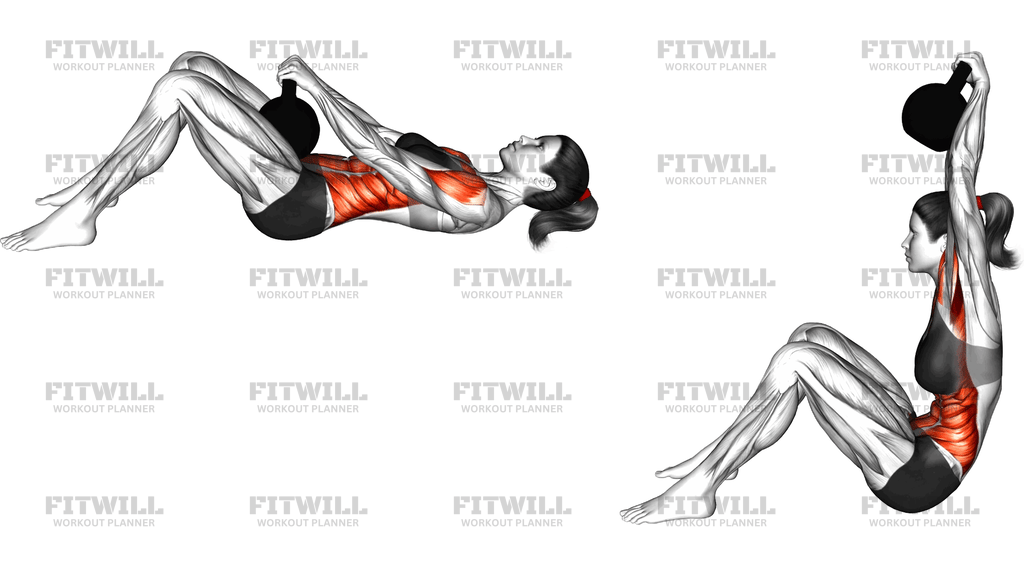
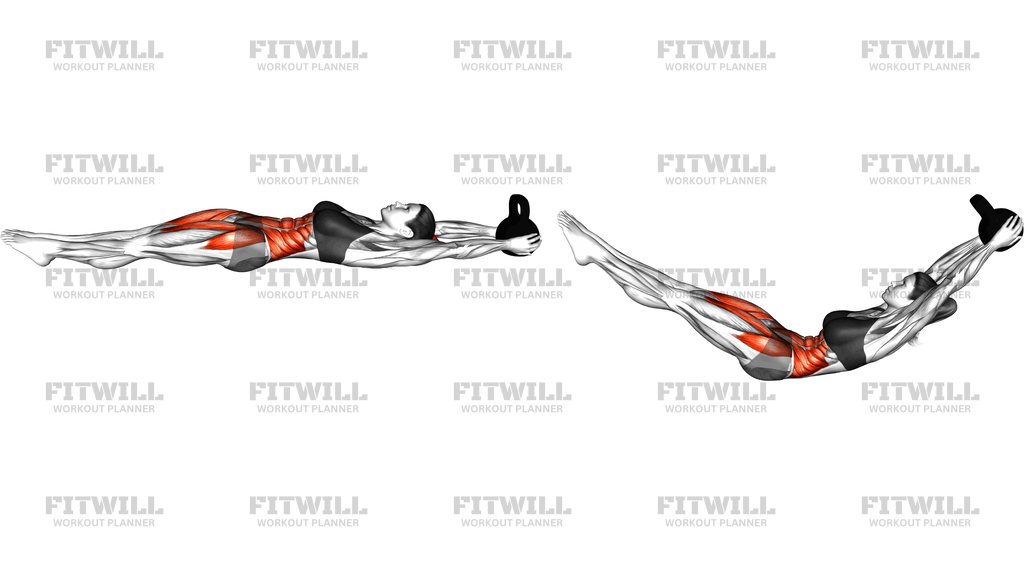
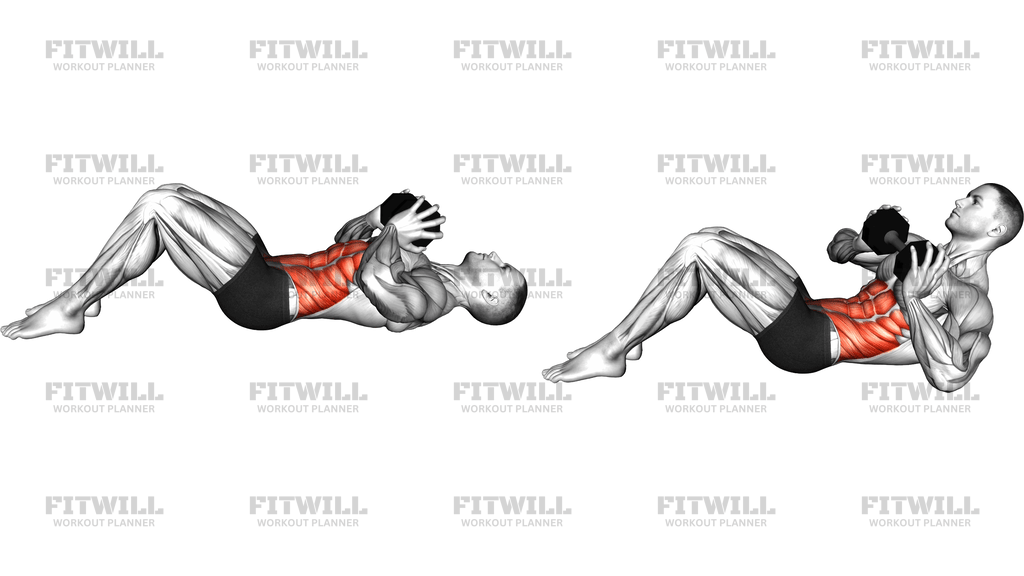
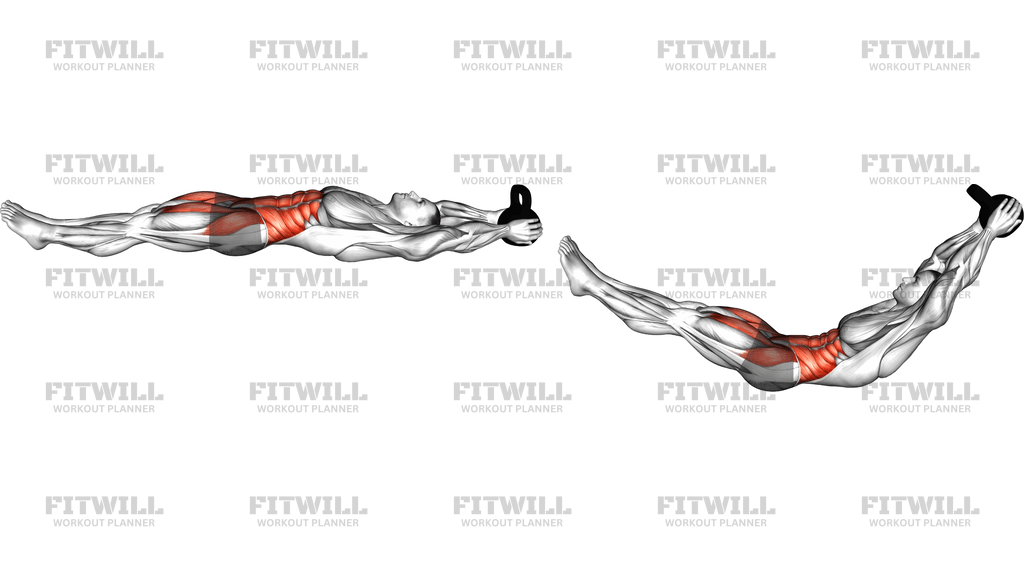
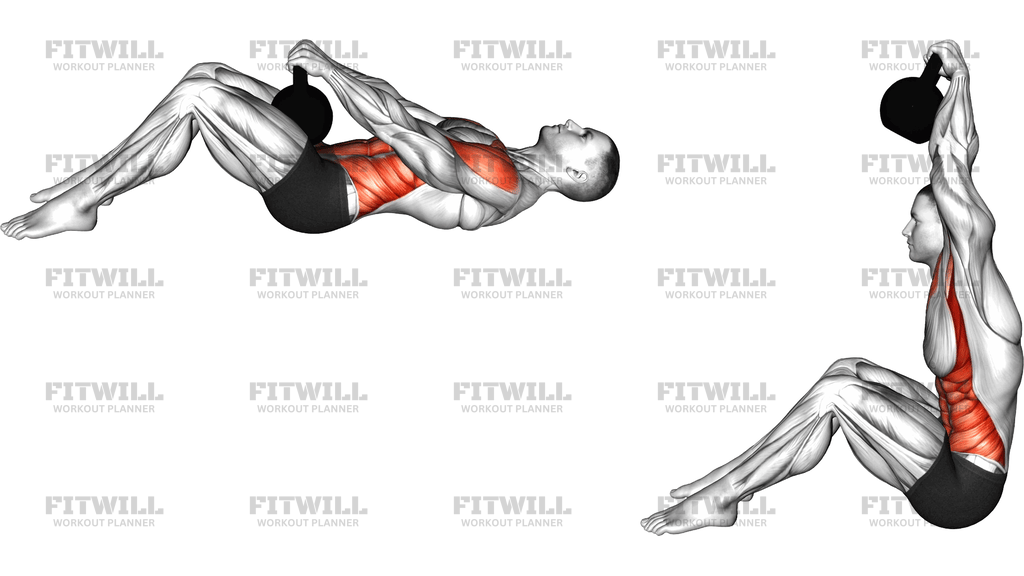
Kettlebell Sit-Up is a loaded floor core exercise that challenges the abs through a full sit-up while holding a kettlebell with both hands. In the image, the lifter starts lying on the floor with the knees bent, feet planted, and the kettlebell held close to the chest before sitting all the way up and finishing tall with the arms reaching overhead. That long lever makes the movement more demanding than a bodyweight sit-up and shifts the focus toward controlled trunk flexion, anti-extension at the top, and smooth breathing under load.
The exercise primarily trains the rectus abdominis, with the obliques and transversus abdominis helping to keep the torso organized as the body rises and lowers. The hip flexors contribute as the torso passes through the middle of the rep, which is why a clean setup matters. If the feet slide, the lower back arches, or the kettlebell drifts away from the midline, the work quickly shifts from the abs to momentum and compensation. Keeping the load centered and the ribcage controlled makes each rep more productive.
Because this is a loaded sit-up, the setup should be deliberate. Lie back with the shoulders down, knees bent, and the kettlebell secured with both hands. Before you start, brace lightly so the ribs do not flare and the lower back does not yank off the floor. As you sit up, roll through the spine segment by segment instead of jerking off the ground. At the top, finish tall rather than collapsing forward, and let the kettlebell travel upward under control instead of swinging it to generate extra momentum.
This movement is useful in core-focused sessions, accessory blocks, and strength workouts where you want more than a basic crunch but less instability than a full weighted decline sit-up or an explosive dynamic drill. It works well for athletes and general trainees who can already control a bodyweight sit-up and want a clearer loading stimulus. The main objective is not speed; it is keeping the torso honest while the kettlebell increases the demand on the trunk, shoulders, and breathing pattern.
Use a lighter kettlebell than you think at first, especially if your sit-up pattern is new or your hip flexors tend to dominate. The best repetitions look smooth on both the way up and the way down, with no neck strain and no flinging of the weight. If you cannot keep the arms stacked and the torso controlled, the load is too heavy or the range is too ambitious. Done well, this is a strict abdominal exercise with a clear start, a clear top position, and a controlled return to the floor.
Fitwill
Log Workouts, Track Progress & Build Strength.
Achieve more with Fitwill: explore over 9600 exercises with images and videos, access built-in and custom workouts, perfect for both gym and home sessions, and see real results.
Start your journey. Download today!




Instructions
- Lie on your back on the floor with your knees bent, feet flat, and the kettlebell held with both hands over your chest.
- Set your shoulders down, keep your neck long, and brace so your ribs stay tucked instead of flaring upward.
- Keep the kettlebell centered and close to your body before you begin the first rep.
- Exhale and curl your head and shoulders off the floor, then continue rolling your torso up in one smooth motion.
- Keep the kettlebell steady as you sit up, letting the arms travel overhead only as your torso reaches the top position.
- Finish tall with your hips grounded or lightly stacked, and avoid collapsing into a rounded slump at the top.
- Pause briefly at the top without swinging the weight or yanking with the neck.
- Inhale as you lower under control, placing each part of the spine back onto the floor one section at a time.
- Reset with the kettlebell held securely before starting the next repetition.
Tips & Tricks
- Keep the kettlebell close to the midline; if it drifts away from your chest, the sit-up becomes much harder to control.
- Use a lighter bell than a regular goblet sit-up would allow, because the long overhead finish increases leverage at the top.
- Drive the rep with your abs, not with a violent hip snap or a throw of the arms.
- If your feet lift or slide, plant them harder or reduce the load before adding more reps.
- Keep your chin slightly tucked so you do not lead every rep with your head and neck.
- Stop the descent before your lower back arches off the floor, then control the return instead of dropping back.
- A smooth exhale on the way up usually helps keep the ribcage down and the torso tighter.
- If the top position feels unstable, shorten the range before trying to add speed or weight.
Frequently Asked Questions
What muscles work most in a kettlebell sit-up?
The rectus abdominis does most of the work, with the obliques and deep core muscles helping control the torso.
Why hold the kettlebell with two hands?
A two-hand grip keeps the load centered so the rep stays symmetrical and easier to control through the full sit-up.
Should the kettlebell stay over my chest or go overhead?
In this variation it travels overhead as you sit tall, which increases the leverage demand at the top of the rep.
Is this the same as a regular sit-up?
No. The kettlebell adds resistance and changes the lever arm, so it becomes a more demanding trunk-strength exercise.
What is the most common mistake with this exercise?
Most people rush the movement, yank with the neck, or let the kettlebell drift so far forward that momentum takes over.
Can beginners do kettlebell sit-ups?
Yes, but they should start very light and only use a range they can lower and raise without losing control of the spine.
How heavy should the kettlebell be?
Choose a bell that still lets you sit up smoothly and finish tall without pressing, swinging, or straining your neck.
What should I feel at the top of the rep?
You should feel the abs working hard to keep the torso stacked while the hips and ribcage stay organized.
Can I use this in a core circuit?
Yes, it fits well in core circuits or accessory work as long as the repetitions stay strict and controlled.