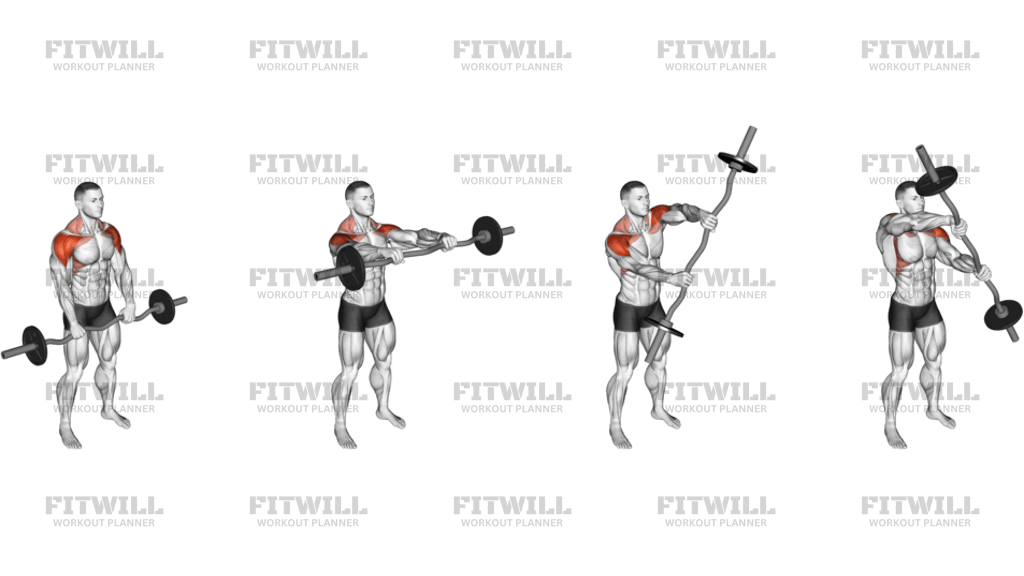
EZ-Bar Standing Overhead Press
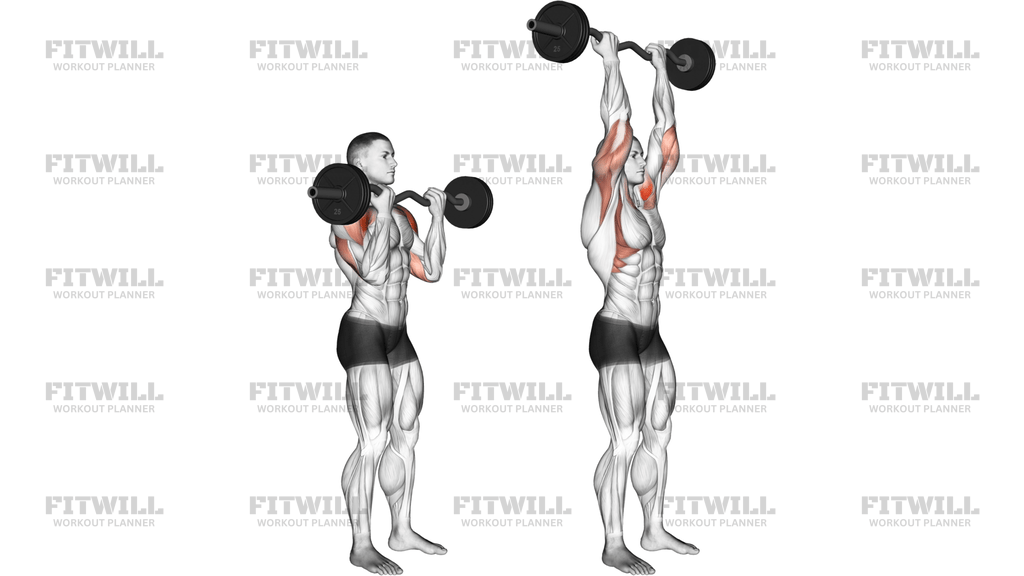
EZ-Bar Standing Overhead Press is a standing shoulder press that uses the angled grips of an EZ bar to train the delts, triceps, and upper back while demanding honest trunk control. The bent handle is the main difference from a straight barbell: it can make the wrists feel more comfortable for some lifters, but it still requires the bar to stay stacked over the shoulders and midfoot so the press does not turn into a standing lean-back.
The exercise mainly targets the deltoids, with the triceps, upper traps, and stabilizers around the upper back helping the bar travel cleanly overhead. In anatomy terms, the primary work centers on the Deltoids, with support from Triceps brachii, Trapezius, and Rhomboids. Because the load starts in front of the body and finishes overhead, the setup matters as much as the press itself. A good stance, a tight midsection, and a controlled start position reduce shoulder irritation and keep the repetition focused on pressing strength instead of body English.
If the bar starts from a rack, set it at upper-chest height so you can unrack it without shrugging or rising onto the toes. Grip the angled sections so the wrists stay neutral and the elbows sit slightly in front of the bar. From there, press in a smooth line that finishes over the middle of the body, not in front of the face. At the top, the ribs should stay down, the glutes stay squeezed, and the head should move through only as much as needed to let the bar finish overhead.
On the way down, lower the EZ bar under control to the upper chest or front-shoulder line and reset before the next rep. Avoid turning the eccentric into a drop, and do not let the lower back arch harder just because the bar gets heavier. This movement is useful for shoulder-focused strength work, upper-body hypertrophy, and accessory pressing when a straight bar feels less friendly on the wrists. It also works well in moderate rep ranges where technique stays crisp and the shoulders can keep producing force without losing position.
Use a range of motion that keeps the bar path clean and pain-free. If the shoulders pinch at the bottom, shorten the range slightly and check that the elbows are not flared too far out. If the torso rocks, the load is too heavy or the stance is too loose. When the press stays stacked, the movement becomes a direct test of shoulder strength and overhead control rather than a full-body heave.
[ Workout Log & Planner ]
Put your next workout in Fitwill
Keep your plan and training log ready when you are.


Instructions
- Set the bar in a rack at upper-chest height, then grip the angled sections of the EZ bar so your wrists stay comfortable and your hands are even.
- Step under the bar with feet about hip width apart, chest tall, glutes tight, and the bar resting across the front of your shoulders.
- Bring your elbows slightly forward of the bar and brace your abs before you unrack it.
- Press the bar up and slightly back so it travels over the middle of your body instead of drifting in front of you.
- As the bar passes your forehead, move your head back just enough to clear the path, then finish with the bar stacked over your shoulders and midfoot.
- At the top, keep your ribs down and avoid leaning backward to chase extra height.
- Lower the bar under control back to the upper-chest or front-shoulder position.
- Reset your breath and brace before the next repetition, or rack the bar safely at the end of the set.
Tips & Tricks
- Choose the EZ-bar grip section that lets your wrists stay neutral; if they fold back, the grip is too narrow or too wide for you.
- Keep the bar close to your face on the way up and down so the press stays vertical instead of arcing forward.
- Think 'ribs down, glutes on' at lockout so the lower back does not take over the last third of the rep.
- Let the elbows travel slightly in front of the bar in the starting position; flared elbows usually make the first press more awkward.
- Use a small amount of head movement to clear the bar, but do not turn the top into a neck crane.
- If the bar bounces off the shoulders, the lowering phase is too fast or the load is too heavy.
- Exhale through the press and re-brace before each rep so the torso does not loosen at the bottom.
- Stop the set when the bar starts drifting forward, because that is usually the first sign that shoulder position is failing.
Frequently Asked Questions
What does the EZ-Bar Standing Overhead Press train most?
The delts do most of the work, with the triceps and upper back helping finish and stabilize each rep.
Why use an EZ bar instead of a straight barbell for overhead pressing?
The angled grips often feel friendlier on the wrists and elbows while still training the same overhead pressing pattern.
Where should the EZ bar start before each press?
It should rest across the upper chest or front of the shoulders, with the elbows slightly in front of the bar.
How high should the bar finish at the top?
Finish with the bar stacked over the shoulders and midfoot, not drifted forward in front of the face.
Can I lean back to get the bar overhead?
No. A small amount of torso motion can happen, but the goal is a stacked press, not a standing incline press.
Is this a good beginner shoulder exercise?
Yes, if the load is light and the lifter can keep the bar path controlled and the lower back quiet.
What should I do if the shoulders pinch at the bottom?
Shorten the range slightly, check the grip width, and make sure the elbows are not flaring too far out.
How should I breathe during the standing press?
Take a breath and brace before the lift, press as you exhale, then reset your brace before the next repetition.