EZ Barbell Anti Gravity Press
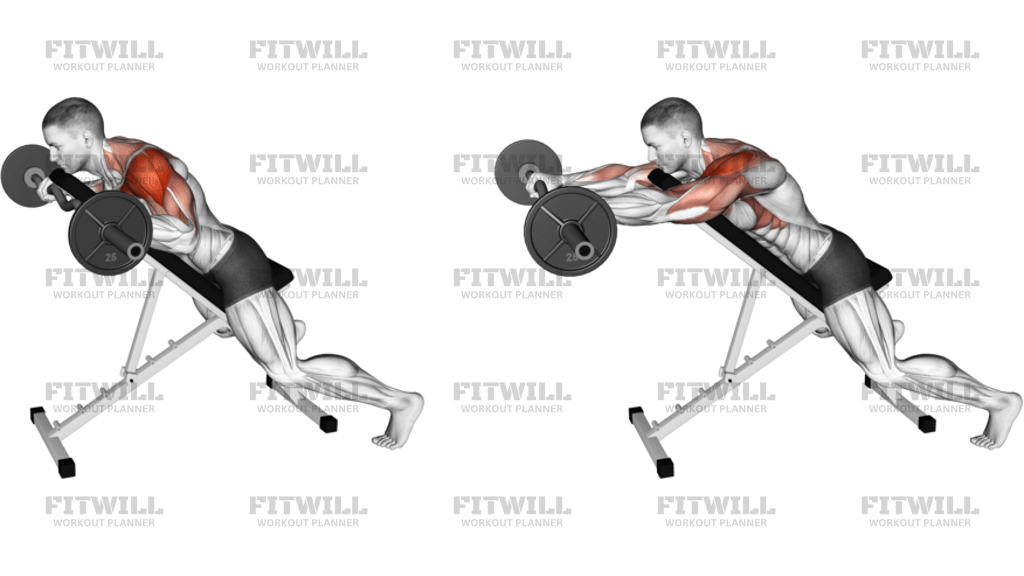
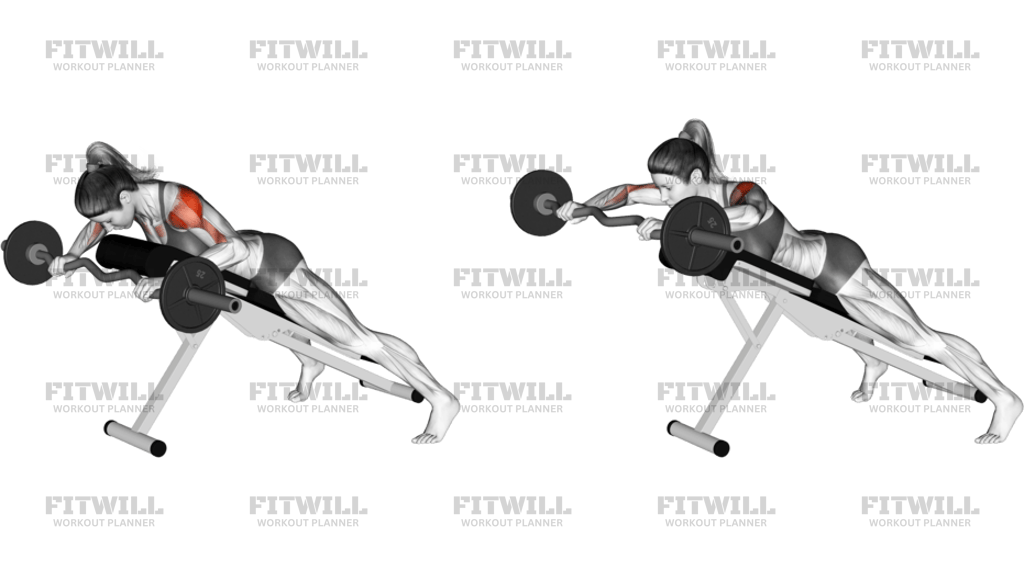
EZ Barbell Anti Gravity Press is a prone, chest-supported pressing exercise done on an incline bench with an EZ barbell. The image shows the lifter lying face down with the chest and upper torso supported on the bench while the bar starts close to the head and is pressed away under control. That setup removes a lot of standing momentum and makes the shoulders, upper back, and arms do the work with much less cheating from the hips or legs.
This exercise is most useful when you want strict shoulder and upper-back tension without loading the lower back or relying on body English. The supported position changes the feel of the press: the torso stays fixed against the bench, the ribs stay down, and the bar travels in a short, controlled path. Because the movement is stable, small changes in elbow angle, wrist position, and bench contact make a big difference in how clean each rep feels.
The EZ bar matters because the angled grip usually lets the wrists and elbows settle into a more comfortable line than a straight bar. That can reduce joint irritation while still challenging the delts, traps, rhomboids, and triceps. The goal is not to heave the bar upward; it is to keep the chest glued to the pad, press smoothly, and finish each rep with the shoulders still organized instead of rolled forward.
Use this movement as accessory work, technique work, or a controlled strength-builder when you want strict reps and less whole-body compensation. It fits well in shoulder-focused sessions, upper-back sessions, or upper-body circuits where you want to keep tension on the target muscles without heavy spinal loading. Beginners can use it with very light resistance first, but only if they can keep the bench contact, elbow path, and range of motion consistent.
A good rep starts with a stable setup and ends with the bar returning to the same controlled start point. If the neck cranes, the rib cage lifts off the bench, or the bar drifts out of the intended path, the load is too heavy or the setup is off. Keep the movement deliberate, pause long enough to own the position, and stop the set before the shoulders start to shrug or the torso starts to twist.
[ Workout Log & Planner ]
Put your next workout in Fitwill
Keep your plan and training log ready when you are.


Instructions
- Set an incline bench so your chest can rest firmly on the pad and position the EZ bar in front of the head end of the bench.
- Lie face down with your chest, sternum, and upper abdomen supported on the pad; plant your feet for balance and keep your neck long.
- Take a shoulder-width grip on the EZ bar with your wrists stacked over your forearms and your elbows slightly bent.
- Brace your midsection and keep your rib cage pressed into the bench before you start the press.
- Press the bar away from your shoulders in a smooth arc until your arms are straight without locking the elbows hard.
- Pause briefly at the top while keeping the shoulders down and the upper back tight against the bench.
- Lower the bar under control until it returns close to the starting line near the head and upper chest.
- Breathe out as you press and inhale as the bar comes back down.
- Reset the shoulder blades and torso before the next rep instead of bouncing into the bottom position.
Tips & Tricks
- Keep your chest glued to the pad so the bench, not your lower back, stabilizes the rep.
- Use the EZ bar grip angle that lets your wrists stay neutral instead of bending back.
- If your shoulders shrug toward your ears, the bar is too heavy or the press path is drifting too high.
- Think about pressing the bar away from the bench rather than throwing it forward with momentum.
- Stop the set if your ribs peel off the pad or your hips start to twist for extra range.
- A short pause at the top makes the supported position work harder without needing more load.
- Keep your neck in line with your spine; looking up or tucking hard into the pad usually shortens the press path.
- Use a slower lowering phase to keep tension on the delts, traps, and triceps instead of letting the bar drop.
- Choose a lighter load than a standing press because the chest-supported position removes cheat momentum.
Frequently Asked Questions
What does the EZ Barbell Anti Gravity Press work most?
It primarily challenges the delts, with the traps, upper back, and triceps helping to stabilize and finish the press.
Why is the chest-supported bench position important?
It locks the torso in place, which keeps the movement strict and reduces help from the lower back, hips, and leg drive.
How should my grip feel on the EZ bar?
Use the angled handles that let your wrists stay comfortable and aligned over your forearms instead of bent back.
Where should the bar travel during the rep?
Press it away from the shoulders in a controlled arc, then lower it back along the same path without bouncing off the bottom.
Should I lock out my elbows at the top?
Finish the rep with straight arms, but do not snap the elbows hard or lose tension in the shoulders and upper back.
Is this a beginner-friendly exercise?
Yes, if the load is light and the chest stays glued to the bench; the supported setup makes it easier to keep the rep strict.
What are the most common mistakes with this press?
Shrugging, arching the lower back, bouncing the bar, and letting the torso come off the bench are the biggest issues.
How can I make this exercise harder without adding much weight?
Use a slower lowering phase, pause at the top, and keep every rep identical so the supported position stays honest.
Can I swap this in for a regular shoulder press?
It is a useful accessory press, but it is not a direct one-to-one replacement for a standing or seated overhead press.