Push-Up On Bosu Ball
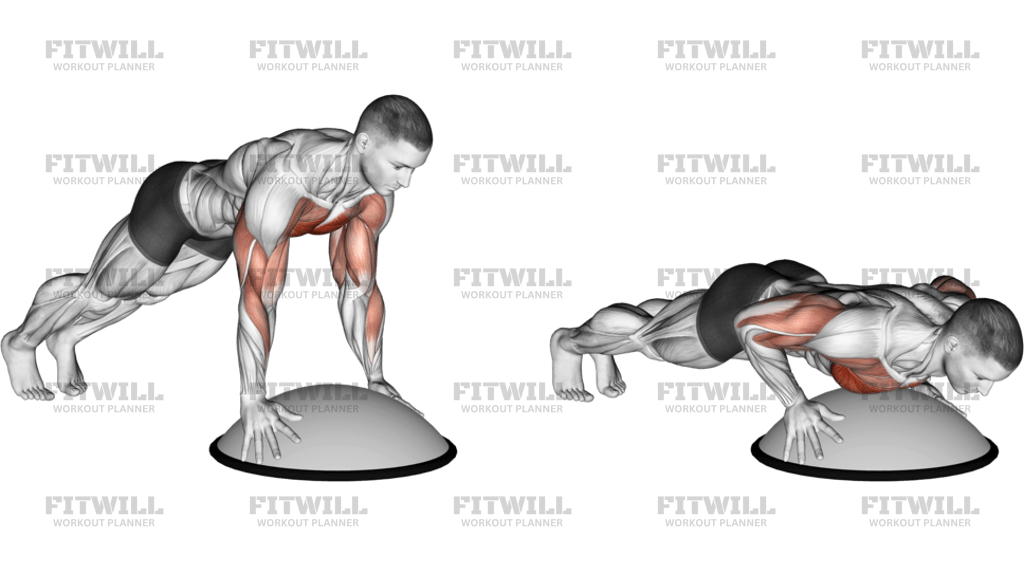
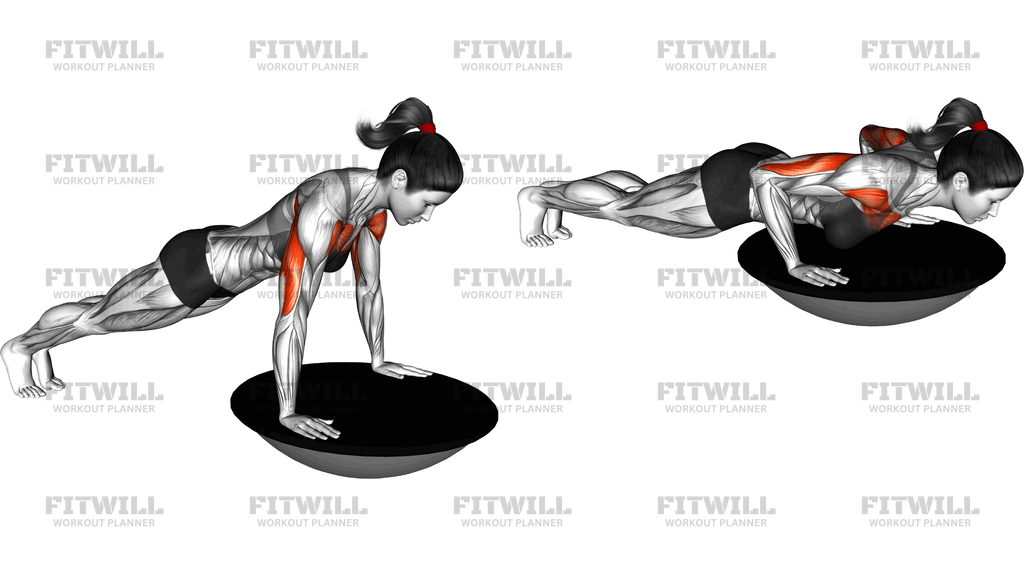
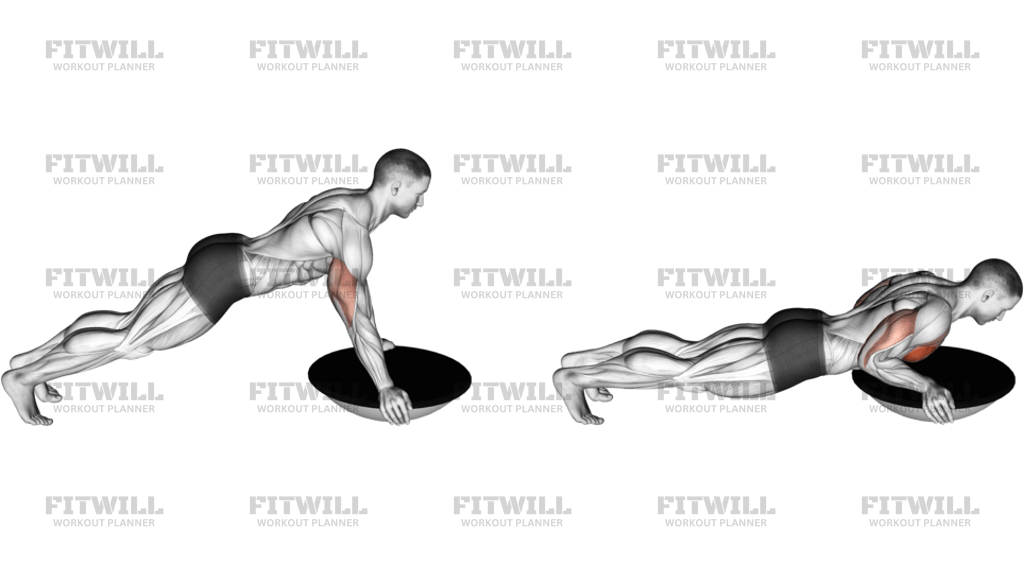
Push-Up On Bosu Ball is a push-up variation that places your hands on the unstable dome of a BOSU ball so the chest has to work while the shoulders, triceps, and trunk fight to keep the torso from wobbling. The instability changes the feel of the exercise more than the basic pattern itself: you still lower and press like a normal push-up, but the hands have to stay quiet and the torso has to stay braced so the ball does not shift under you.
This variation is useful when you want pressing strength plus extra demand on shoulder control, serratus engagement, and anti-rotation stability. The primary movement is still horizontal pressing for the pectoralis major, with assistance from the anterior deltoids, triceps brachii, and rectus abdominis. Because the BOSU surface is less predictable than the floor, the quality of the setup matters a lot. A good rep starts with the ball centered, hands planted evenly, and the body locked in a long straight line from head to heels.
Lower with control until your chest approaches the ball and your elbows track at a comfortable angle, usually about 30 to 45 degrees from your sides. Press the ball away by driving through both palms at the same speed and keep your ribs from flaring. If the ball rolls or your hips twist, the set is too heavy, too fast, or too sloppy. The goal is not to bounce or chase depth; the goal is to keep tension on the chest while the shoulders and core stabilize the movement.
Use Push-Up On Bosu Ball as accessory pressing work, a stability-focused warm-up, or a lighter bodyweight strength exercise when you want to challenge control without loading the joints heavily. It is most effective when reps stay crisp and symmetrical. If your wrists, shoulders, or low back start to compensate, shorten the set and reset before the next rep. Done well, it teaches cleaner push-up mechanics and better body awareness under instability.
[ Workout Log & Planner ]
Put your next workout in Fitwill
Keep your plan and training log ready when you are.


Instructions
- Place the BOSU ball dome-side up on a flat floor and kneel behind it with your hands ready to land evenly on the center of the dome.
- Step back into a high plank with both hands on the dome, wrists stacked under the shoulders, feet hip-width apart, and your body in one straight line.
- Screw the palms into the dome lightly, brace the abs and glutes, and keep the head long so the neck stays neutral.
- Lower your chest toward the top of the BOSU ball by bending the elbows at about a 30 to 45 degree angle from your torso.
- Keep the shoulders level and stop the descent before your hips sag or the ball starts to wobble side to side.
- Pause briefly near the bottom with tension still in the chest, shoulders, and trunk.
- Press through both hands to return to the plank, finishing with the elbows extended without locking out aggressively.
- Exhale as you press up, inhale on the way down, and reset your plank before the next repetition.
- Repeat for the planned reps, then step down carefully and release the ball only after you are stable.
Tips & Tricks
- Keep both hands centered on the dome so the BOSU does not tilt toward one side during the press.
- If the wrists feel strained, spread the fingers and push the floor away through the whole palm instead of hanging on the heels of the hands.
- A slightly wider hand position is often more stable than a narrow one on the BOSU and can help keep the shoulders from collapsing inward.
- Do not chase a deep chest-to-ball touch if the lower back starts to arch; a shorter range with a rigid plank is better on this variation.
- The less the ball moves, the more the chest and triceps are doing the work, so slow the rep down if you feel bouncing or shifting.
- Keep the ribs tucked and the glutes tight so the torso does not pike when you press back up.
- Use fewer reps than a standard push-up set if the stability demand is new; the BOSU can make the exercise fail earlier than the chest muscles do.
- Stop the set as soon as one shoulder starts to drift higher than the other or the ball begins to slide across the floor.
Frequently Asked Questions
What muscle does Push Up On Bosu Ball target most?
The chest is the main target, with the shoulders, triceps, and core working hard to keep the body stable on the BOSU dome.
Can beginners perform this exercise?
Yes, but only if they can already hold a solid plank and perform a controlled push-up on the floor first. The unstable surface makes the movement more demanding.
Where should my hands go on the BOSU ball?
Place both hands evenly on the center of the dome with the wrists under the shoulders. If one hand is too far forward or off-center, the ball will want to tip.
Should the BOSU ball be dome-side up or down?
This variation is typically done dome-side up so the hands rest on the curved, unstable surface and the torso has to stabilize through each rep.
How deep should I lower on this push-up?
Lower until your chest is close to the dome without losing your plank or letting the ball shift. Depth matters less than control on this version.
Why is this harder than a regular push-up?
The BOSU ball reduces stability at the hands, so your chest still presses, but your shoulders, trunk, and upper back have to work harder to keep the body from wobbling.
What should I do if the ball keeps sliding?
Widen your stance slightly, slow the lowering phase, and reduce reps. If it still slides, switch to a more stable push-up variation for that set.
Can I use this as a shoulder-stability drill?
Yes. It is useful when you want pressing work that also challenges shoulder control and trunk stiffness, especially in accessory or warm-up work.