Push-Up Bosu Ball
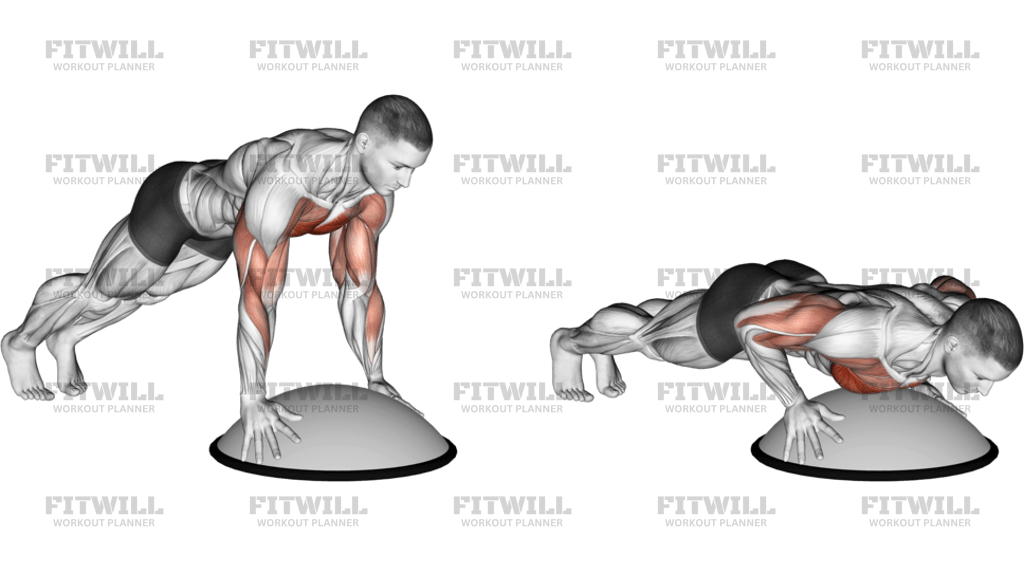
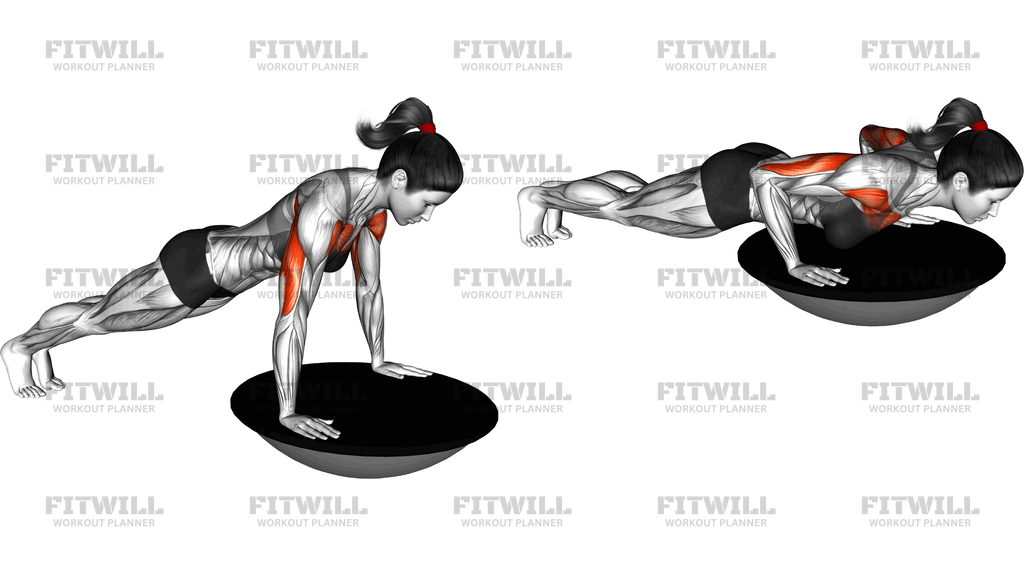
Push-Up Bosu Ball is a push-up variation performed with both hands on the dome of a BOSU ball while the feet stay on the floor. The unstable base makes the pressing pattern harder to control, so the exercise trains the chest, triceps, front shoulders, and trunk together instead of letting one area dominate the rep. It is a useful choice when you want a standard push-up pattern with a bigger stability challenge.
The setup matters because the dome wants to shift as soon as pressure leaves the center line. Place both palms on the top half of the dome, spread the fingers, and stack the wrists under the shoulders before you step the feet back. A slightly wider foot stance is usually the best way to keep the body from tipping side to side. The goal is a straight line from head to heels before the first rep begins.
Lower with control until the chest comes close to the BOSU without collapsing through the shoulders or midsection. Keep the elbows at a moderate angle from the torso, not flared straight out, and let the shoulder blades move naturally as the chest descends and presses away. On the way up, drive evenly through both hands so the dome stays centered instead of wobbling forward or drifting to one side.
This variation fits well in upper-body strength work, core training, or accessory blocks where stability and pressing control matter more than maximal loading. It also works well as a regression from harder plyometric or weighted push-up variations because the movement is simple, but the balance demand still forces attention to position, tempo, and breathing. If the wrists, shoulders, or low back cannot stay organized, reduce the range, widen the stance, or move back to a more stable push-up variation first.
Use the BOSU push-up when you want clean, repeatable reps with a clear end point and a visible stability challenge. The exercise should feel controlled through the chest and shoulders, not like a fight to keep from sliding off the dome. When the body stays rigid and the pressing path is smooth, the repetition becomes a useful test of upper-body strength and anti-rotation control at the same time.
[ Workout Log & Planner ]
Put your next workout in Fitwill
Keep your plan and training log ready when you are.


Instructions
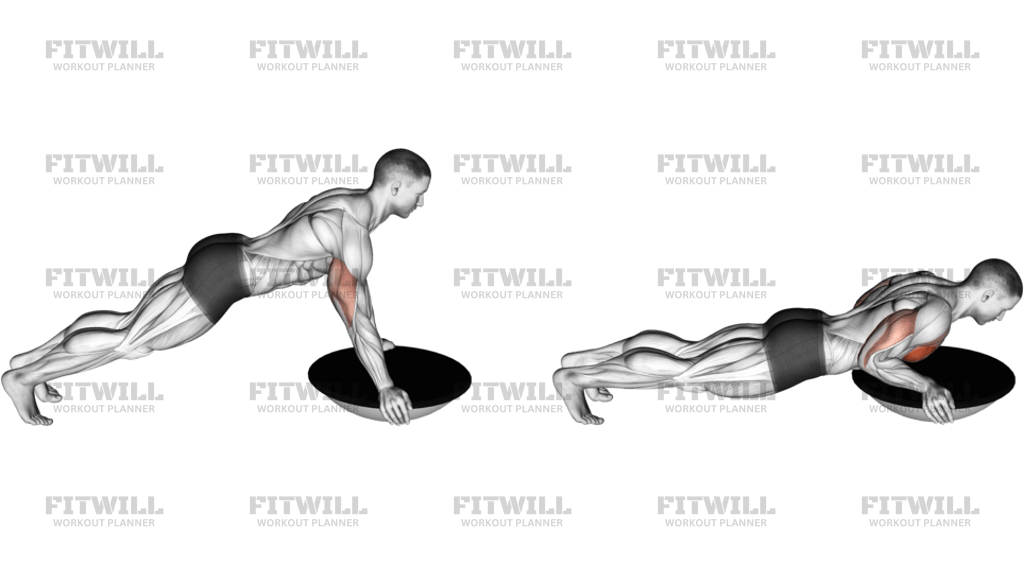
- Place the BOSU ball dome-side up on a flat, non-slip floor and kneel behind it.
- Set both hands on the top half of the dome, slightly wider than shoulder-width, with fingers spread for grip.
- Stack your wrists under your shoulders, then step both feet back until your body forms a straight line from head to heels.
- Widen your feet enough to steady the dome before the first repetition if you need extra balance.
- Brace your abs and glutes so your rib cage, hips, and shoulders stay aligned.
- Inhale and lower your chest toward the dome with control, keeping your elbows at a moderate angle from your torso.
- Stop when your chest reaches the bottom of a clean range without letting your hips sag or your shoulders collapse inward.
- Press evenly through both palms to push yourself back to the plank and exhale as you rise.
- Reset your body at the top, then repeat for the planned number of reps.
Tips & Tricks
- Keep more weight over the center of the dome than the front edge so the BOSU does not rock forward.
- Spread your fingers and grip the curved surface with your whole palm instead of dumping pressure into the heel of the hand.
- A slightly wider foot stance makes the rep cleaner; narrow your stance only after you can control the wobble.
- Lower in a slow, even tempo so the unstable surface does not pull one shoulder ahead of the other.
- Keep your chest and hips rising together; if the hips lead, the rep turns into a back extension.
- Let the elbows travel about 30 to 45 degrees from the torso instead of flaring straight out to the sides.
- If the dome shifts under your hands, shorten the range and re-center before the next rep.
- Use fewer reps per set than a floor push-up if your shoulders start shaking or your plank line breaks.
Frequently Asked Questions
What muscles does a BOSU ball push-up work most?
The main work goes to the chest, with the triceps, front shoulders, and core helping to keep the body steady on the unstable dome.
Should my hands stay on the BOSU dome or the floor?
For this variation, both hands stay on the dome side of the BOSU while your feet stay on the floor.
How wide should my hands be on the dome?
Start just wider than shoulder-width so each palm can stay centered on the curved surface without crowding the edges.
What is the biggest mistake with this exercise?
The most common problem is letting the BOSU rock while the hips sag or twist, which takes tension away from the pressing pattern.
Is a BOSU push-up harder than a regular push-up?
Yes. The unstable hand position makes it harder to keep the shoulders, core, and press path organized even before fatigue sets in.
How low should I go on the BOSU ball?
Lower until the chest comes close to the dome while your shoulders stay controlled and your body still looks like one straight line.
Can beginners use this push-up variation?
Yes, but it usually works better after a solid floor push-up base. Beginners can also shorten the range or widen the feet for more stability.
What should I do if the BOSU feels too unstable?
Widen your feet, slow the lowering phase, and reduce the range. If that still feels shaky, move back to a floor or incline push-up first.