Jack Plank
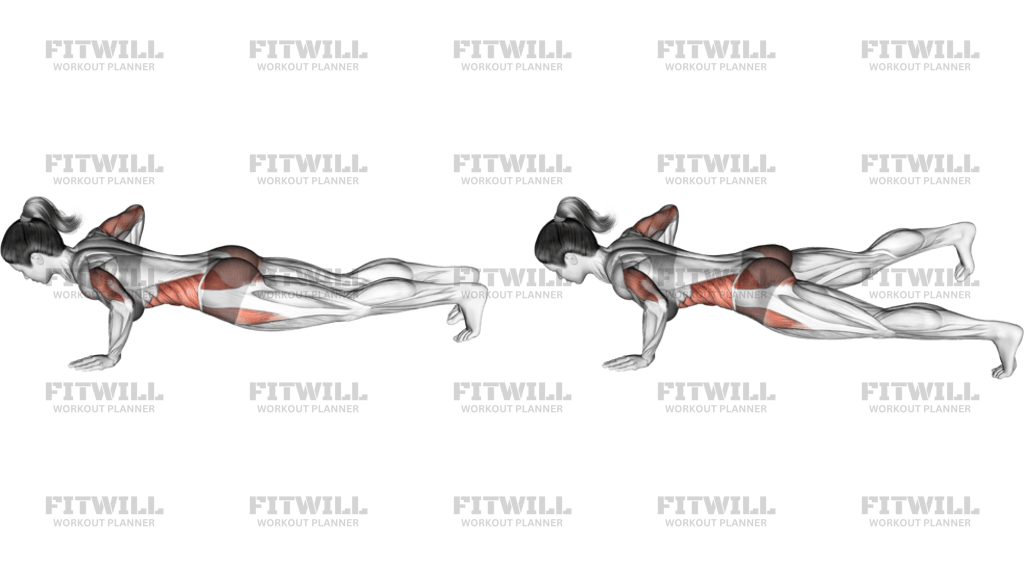
Jack Plank is a body-weight conditioning drill built from a high plank and a jumping-jack leg motion. In the starting position, your hands stay under your shoulders, your arms stay straight, and your trunk has to hold a rigid line while the legs do the work. The exercise challenges core stiffness, shoulder stability, hip control, and the ability to keep breathing while the lower body moves quickly.
The visible pattern is simple, but the quality of the rep depends on the plank. If the ribs flare, the hips twist, or the lower back sags, the movement stops being a controlled jack and turns into a rushed hop. A good rep keeps the torso quiet while the feet jump out and back in with soft, even landings. That makes the exercise useful for training coordination, midline control, and low-to-moderate impact conditioning at the same time.
Because the body is supported by the hands, setup matters more than speed. Stack the shoulders over the wrists, spread the fingers for a stable base, and press the floor away so the shoulder blades stay active. Brace the abdominals, squeeze the glutes, and keep the neck long so the plank position stays strong before the first jump begins. The more stable the plank, the cleaner each jack will feel.
Jack Plank is commonly used in warmups, core circuits, athletic conditioning blocks, and finishers where you want full-body tension without adding external load. It is also a useful regression or progression tool depending on pace and range: slower stepping makes it easier, while crisp jumping reps raise the demand on the core and shoulders. The goal is not a huge hop; it is keeping the torso level and the landing controlled from start to finish.
Use the exercise with enough space for the feet to move wide and return without clipping the floor or drifting the hips. If the shoulders start to collapse or the low back takes over, shorten the range or reduce the speed. The best reps look rhythmic, quiet, and stable, with the trunk staying square while the legs jump in and out.
Fitwill
Log Workouts, Track Progress & Build Strength.
Achieve more with Fitwill: explore over 9600 exercises with images and videos, access built-in and custom workouts, perfect for both gym and home sessions, and see real results.
Start your journey. Download today!




Instructions
- Start in a high plank with your hands under your shoulders, arms straight, feet together, and your body in one long line from head to heels.
- Spread your fingers, press firmly through the palms, and set your shoulders directly over your wrists before you move.
- Brace your core, squeeze your glutes, and keep your ribs from flaring so the trunk stays level.
- Keep your head neutral and your gaze a few inches ahead of your hands.
- Jump both feet out wide to each side while keeping your hips as still as possible.
- Land softly on the balls of your feet with a slight bend in the knees and no bounce through the low back.
- Jump the feet back together to the starting position without letting the hips rise or rotate.
- Keep breathing in a steady rhythm through the set, exhaling on the effort if that helps you stay braced.
- Repeat for the planned time or number of reps, then lower the knees to the floor to finish if needed.
Tips & Tricks
- Think of the plank as the main exercise and the leg jump as the add-on; if the torso is wobbling, the set is too fast.
- Keep the feet landing quietly. Loud contact usually means the hop is too aggressive or the core has stopped controlling the return.
- Press the floor away through the hands so the shoulders stay active instead of sinking between the ears.
- If your hips sway from side to side, narrow the jump distance until the trunk stays square.
- Squeeze the glutes before each hop to help prevent the low back from sagging.
- Keep the elbows locked but not hyperextended; soft joints make the plank feel more stable.
- Use a mat or rubber floor if the wrists or toes get irritated by repeated impact.
- Shorten the range or step the feet out and in when fatigue starts to break the plank shape.
- Do not chase speed at the expense of body line. A clean, rhythmic cadence is better than frantic reps.
- Stop the set when the shoulders start drifting behind the wrists or the hips begin to pike.
Frequently Asked Questions
What does Jack Plank train most?
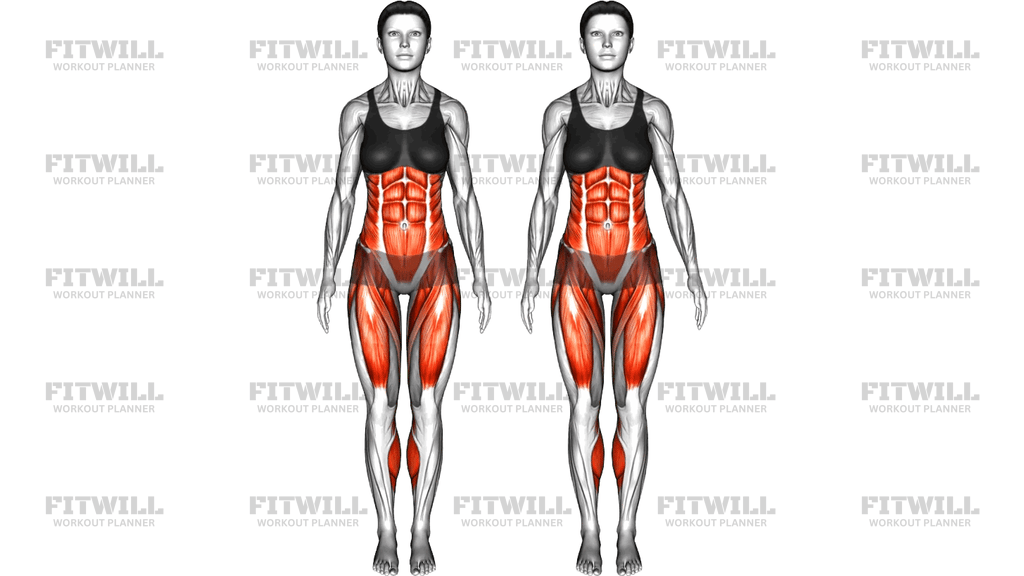
It primarily trains core stiffness, shoulder stability, and hip control, with the glutes and leg muscles helping keep the plank steady.
Is Jack Plank the same as a plank jack?
Yes. It is the high-plank version where the feet jump out and back in like a jumping jack.
How should my hands and shoulders be set up?
Place your hands under your shoulders, spread your fingers, and keep your shoulders stacked over the wrists so the upper body can stay stable.
How wide should my feet jump out?
Wide enough to challenge the legs and core, but not so wide that the hips rock or the landing becomes noisy and unstable.
Can beginners do Jack Plank?
Yes, but many beginners should start by stepping one foot out and back in at a time before progressing to the full jump.
Why do my hips sag during the movement?
That usually means the core or glutes are losing tension. Slow the pace, shorten the jump, and re-brace before each rep.
Should I keep my knees straight?
Keep the legs long, but allow a small, natural bend on landing so the impact stays controlled.
How can I make Jack Plank harder?
Increase the work interval, tighten the tempo, or keep the plank perfectly square while moving at a faster cadence.