Lever Seated Wide Squat
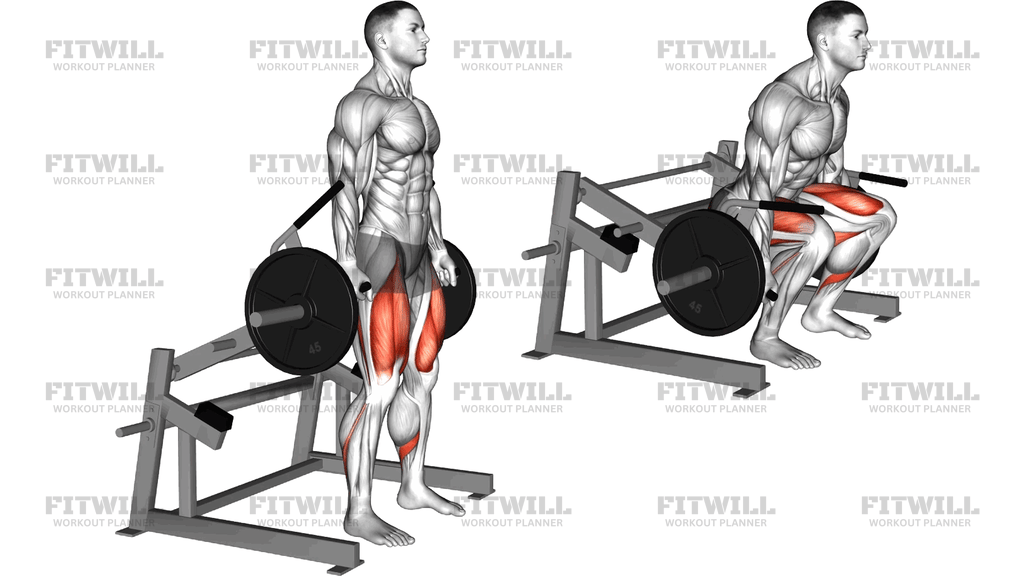
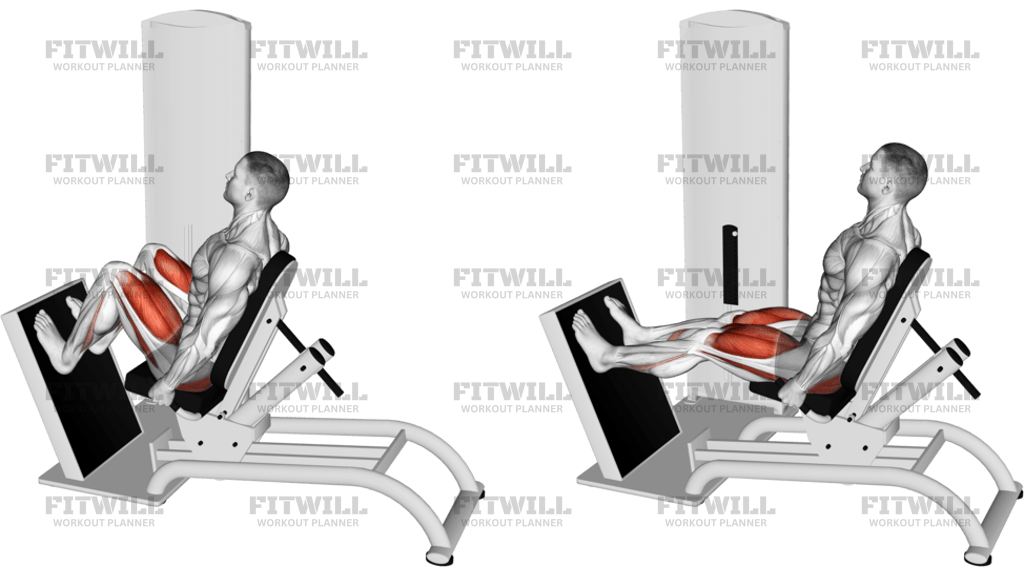
Lever Seated Wide Squat is a supported machine squat performed with your back against the pad and your feet set wide on the platform. The leverage path fixes the resistance, so the exercise is less about balancing the load and more about producing a smooth leg drive through the hips, knees, and ankles. That makes it a practical way to train hard on the quads while still keeping the torso supported.
The wide-foot placement changes the feel of the squat. Compared with a narrow stance, a wider setup often lets the knees travel out slightly and the hips sit between the thighs more naturally, which can help some lifters find a comfortable depth. The main target is the quads, but the glutes and adductors also help manage the descent and drive out of the bottom. Because the machine carries the torso, the legs can take the main load without as much balance demand as a free squat.
Set the seat or start position so your hips are fully supported and your feet can stay flat through the whole rep. Place the feet high and wide enough that the knees can open in line with the toes, then unlock the carriage and lower under control. Keep the chest lifted against the pad, the low back neutral, and the knees moving in the same direction as the toes. The best reps are smooth: no bouncing into the bottom, no collapsing inward at the knees, and no sudden snap at the top.
This exercise is useful when you want a controlled quad-focused squat pattern, especially in accessory work, leg sessions, or as a machine-based option when free squats are not ideal. It can be easier for beginners to learn than a barbell squat because the machine reduces balance demands, but the wide stance still needs careful setup. If the hips tuck under, the heels lift, or the knees cave inward, shorten the range and reset the stance before adding load.
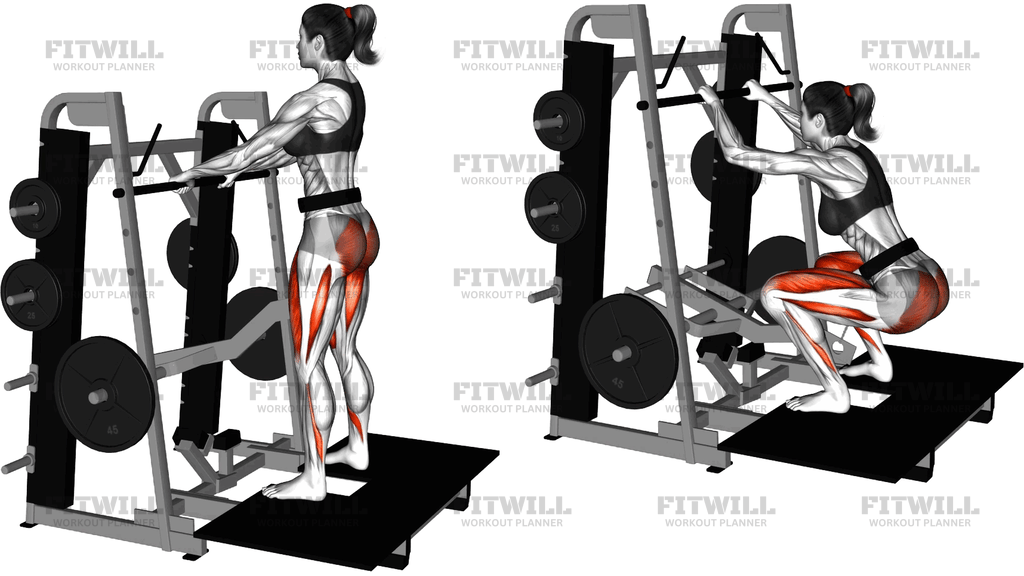
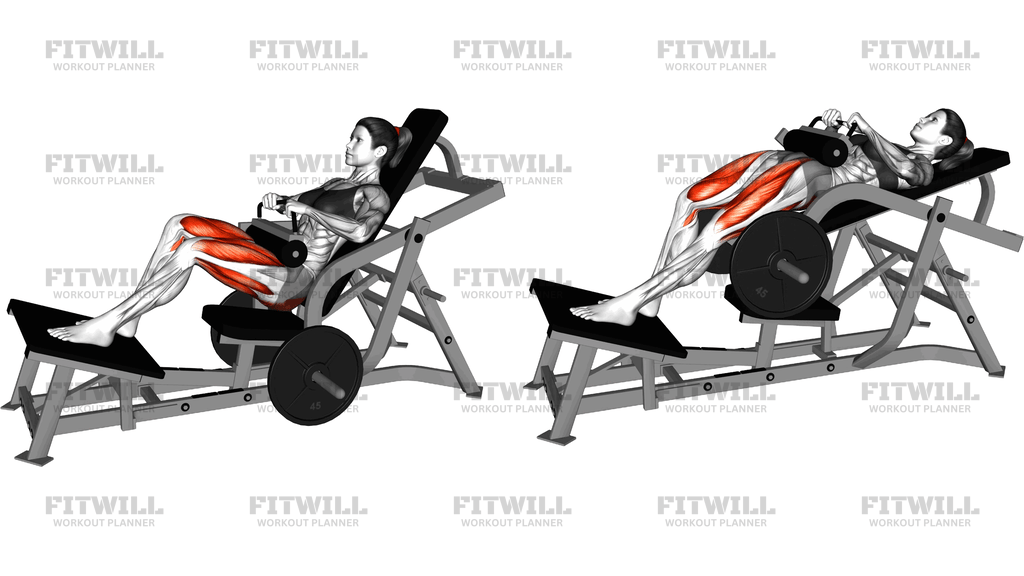
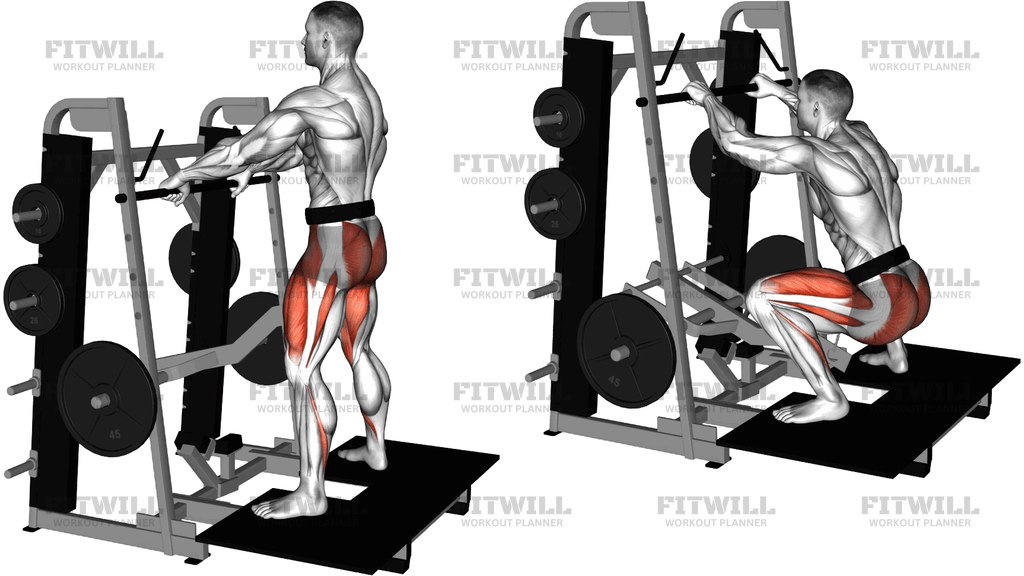
Use the machine to build repeatable strength, not to chase depth at the expense of joint position. A good set feels like steady pressure through the whole foot, with the quads doing the work and the torso staying quiet against the pad. If the machine or footplate angle differs from the image, keep the same principles: wide stance, controlled descent, knees tracking with the toes, and a strong drive back to the start.
Fitwill
Log Workouts, Track Progress & Build Strength.
Achieve more with Fitwill: explore over 9600 exercises with images and videos, access built-in and custom workouts, perfect for both gym and home sessions, and see real results.
Start your journey. Download today!




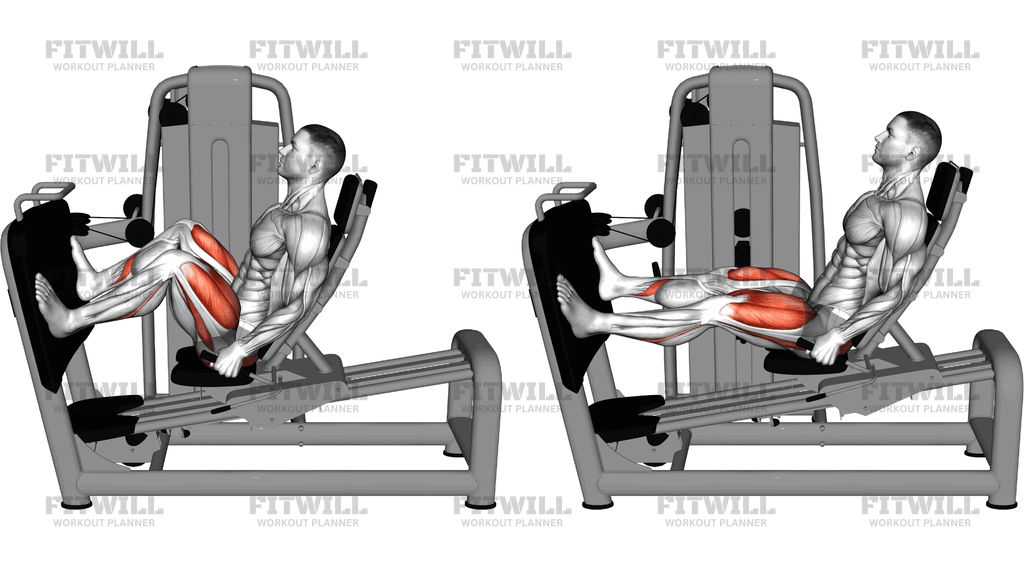
Instructions
- Sit into the leverage machine with your back and shoulders against the pad and your hips fully supported.
- Place your feet high and wide on the platform, with toes slightly turned out and heels flat.
- Hold the side handles and set your torso, keeping your low back neutral before you start the rep.
- Unlock the carriage and lower by bending the knees and hips together, letting the knees track over the toes.
- Descend under control until you reach a deep, comfortable squat without your heels lifting or your pelvis rolling back.
- Drive through the midfoot and heels to press the carriage back up, keeping the knees in line with the feet.
- Finish the rep with the legs extended but not forcefully locked, and keep the hips against the pad.
- Inhale on the way down and exhale as you press back to the start.
- Repeat for the planned number of repetitions, resetting the feet if the knees cave or the heels rise.
Tips & Tricks
- A higher foot placement usually makes it easier to keep the heels down and find depth on this machine.
- Keep the stance wide enough that your knees can open without your thighs pinching at the bottom.
- Press evenly through the whole foot; if pressure shifts to the toes, the heels often start to lift.
- Do not let the knees cave inward on the drive up, especially when the load gets heavy.
- Stop the descent before your pelvis tucks hard off the pad; that is the clearest sign the range has gone too far.
- Use a controlled lowering phase so the carriage does not drop into the bottom position.
- Do not lock the knees aggressively at the top; finish the rep with tension instead of a snap.
- If the machine feels too quad-dominant in the ankles, move the feet slightly higher and try again.
- If your lower back starts to lift, shorten the range before you add more plates.
Frequently Asked Questions
What does the Lever Seated Wide Squat work most?
It mainly trains the quads, with the glutes and adductors helping control the wide-stance squat pattern.
Can beginners perform this exercise?
Yes. The machine support makes it easier to learn than a free squat, as long as the feet and knees stay aligned.
Where should my feet go on the platform?
Place them high and fairly wide so you can keep your heels down and let the knees track over the toes.
How deep should I lower the carriage?
Lower only as far as you can keep your low back neutral and your heels planted. If your pelvis tucks, the depth is too much for that setup.
Should my knees stay straight ahead?
They should track in line with your toes. With this wide stance, a small amount of outward knee travel is normal.
What if my heels lift during the rep?
Move your feet slightly higher on the platform, reduce the load, and shorten the range until the heels stay grounded.
Is this exercise harder on the quads or the glutes?
The quads should do most of the visible work, while the glutes help you control the bottom position and drive back up.
What is the biggest mistake on this machine?
Letting the knees cave inward or bouncing out of the bottom. Both usually mean the load is too heavy or the stance needs adjusting.