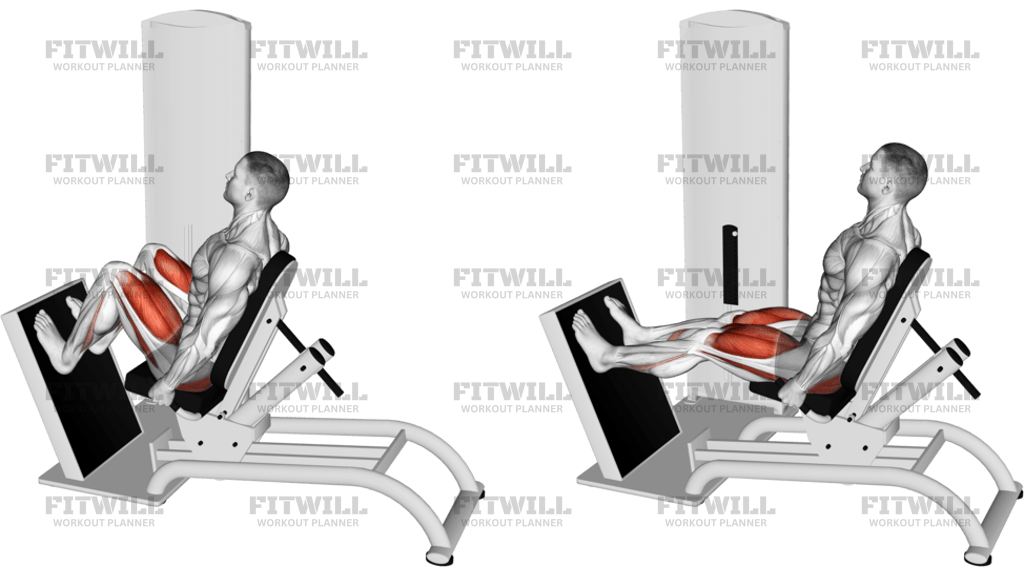
Lever One Leg Extension
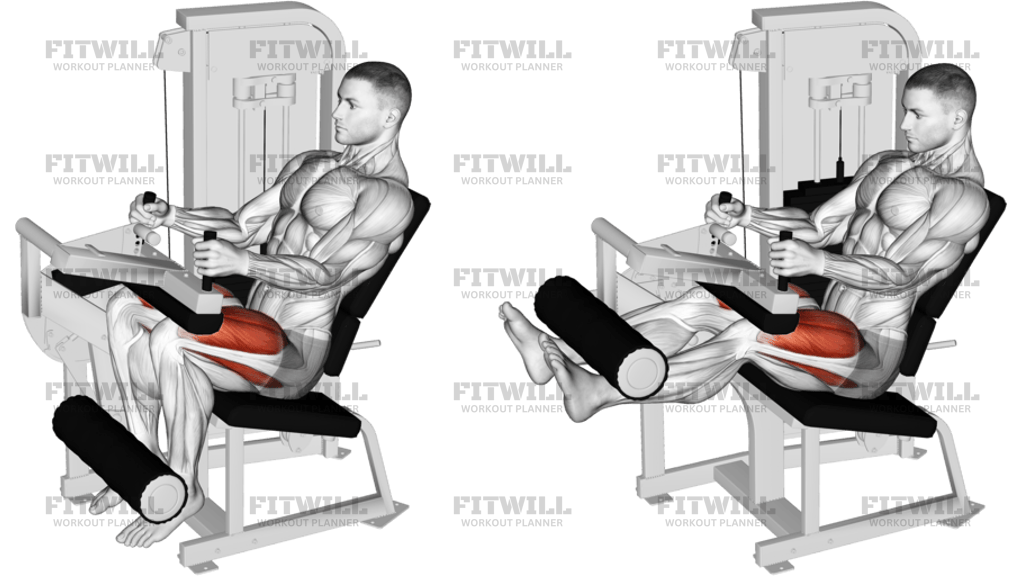
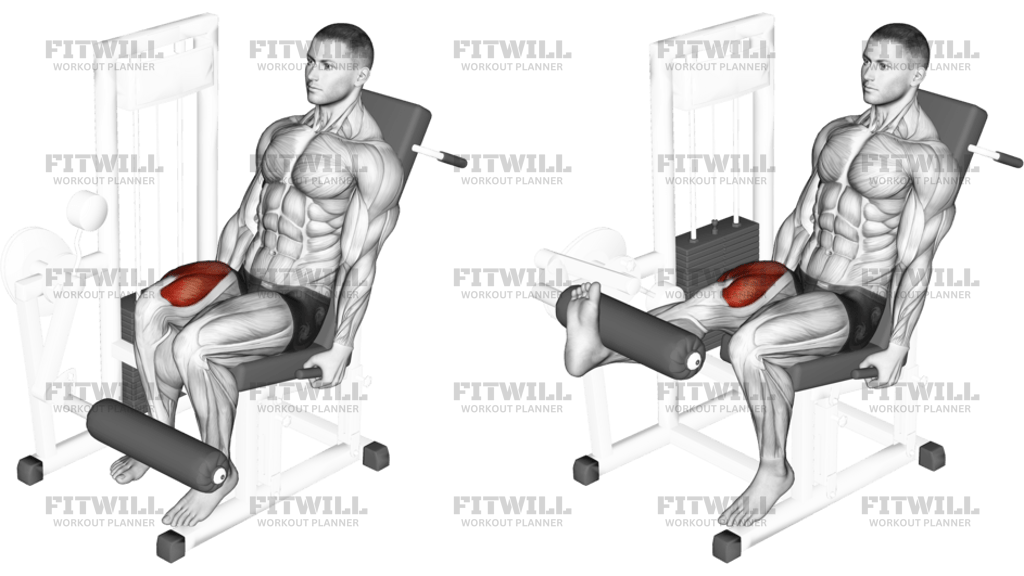
Lever One Leg Extension is a single-leg machine exercise for the front of the thigh. It is performed on a leverage leg extension machine with one shin hooked under the roller pad while the other leg stays relaxed. The movement isolates knee extension so the quadriceps do most of the work, which makes it useful for building quad strength, improving side-to-side balance, and adding controlled tension without loading the spine.
The setup matters more here than on many lower-body exercises. Your knee should line up with the machine pivot so the resistance feels smooth instead of jerky, and the pad should sit just above the ankle or on the lower shin, not on the foot. The working thigh stays anchored against the seat, the torso stays tall against the back pad, and the hands hold the machine handles so the pelvis does not slide as the leg extends.
Each repetition should move through a clean arc from a bent knee to a strong but not sloppy lockout. Extend the working leg until the shin is nearly straight and the quadriceps contract hard, then lower the pad back with control rather than letting the stack or lever drop. The non-working leg should stay quiet so the set stays unilateral and you can notice any difference in strength, coordination, or range between sides.
This exercise is commonly used as accessory work after squats, lunges, or leg presses, but it also works well earlier in a session when you want to wake up the quads without fatiguing the whole body. It is especially helpful for lifters who need extra quad volume, athletes rehabbing or rebuilding one leg at a time, or anyone who wants a machine-based option that keeps the motion strict and repeatable.
Keep the load honest and the tempo controlled. If the torso rocks, the hip lifts, or the foot starts to point and swing the lever, the set is usually too heavy or the seat position is off. Good reps feel focused in the working quad, smooth through the knee joint, and steady from the first rep to the last.
[ Workout Log & Planner ]
Put your next workout in Fitwill
Keep your plan and training log ready when you are.


Instructions
- Adjust the seat so your working knee lines up with the machine pivot and the roller pad rests just above the ankle on the lower shin.
- Sit tall against the back pad, keep both hips pressed into the seat, and grasp the side handles for support.
- Place one leg under the roller pad and let the other leg stay relaxed and out of the way.
- Brace your torso lightly and start with the working knee bent so the lever sits in a controlled bottom position.
- Drive the pad upward by straightening the knee until the leg is nearly locked out and the quad is fully contracted.
- Hold the top position briefly without kicking or leaning back.
- Lower the pad slowly until the knee returns to the starting bend and the weight stays under control.
- Exhale as you extend the leg and inhale as you lower it.
- Finish the set by returning the lever to the start under control before switching legs.
Tips & Tricks
- If the roller pad sits on the foot instead of the lower shin, the knee lever gets messy and the set becomes harder to control.
- Match the seat position to the pivot first; if the knee is too far ahead or behind the axle, the resistance curve usually feels off.
- Keep both hips glued to the seat so the pelvis does not tip backward as the leg straightens.
- Use a brief squeeze at the top, but do not slam into a hard lockout or bounce off the end range.
- Lower the weight slower than you lift it so the quadriceps stay loaded through the full arc.
- Choose a load that lets the non-working leg stay relaxed instead of helping you kick the lever up.
- If one side feels weaker, start the set with that leg and match the rep quality on the stronger side.
- Keep the toes neutral or slightly up if that helps you feel the front of the thigh more cleanly.
- Stop short of painful knee compression if the bottom position irritates the joint.
- Use controlled unilateral reps rather than momentum if you want the machine to expose left-right differences.
Frequently Asked Questions
What muscle does Lever One Leg Extension target most?
The quadriceps on the front of the working thigh do most of the work, especially as the knee straightens against the pad.
Where should the roller pad sit on my leg?
It should rest just above the ankle on the lower shin, not on the foot, so the lever tracks smoothly through the knee joint.
Why do I need to line up my knee with the machine pivot?
Pivot alignment keeps the machine path smooth and reduces the urge to lift the hips or torque the knee during the rep.
Can I do this with one leg at a time if one side is weaker?
Yes, that is one of the main benefits of the exercise. Unilateral work makes side-to-side strength and control differences easier to notice and fix.
Should I fully lock out my knee at the top?
Extend to a strong near-lockout, but avoid snapping into the end range. A brief squeeze is fine if it stays smooth and pain-free.
Is this a good exercise for knee-friendly quad work?
Often yes, because the load is guided and easy to control. If the bottom position irritates your knee, shorten the range or reduce the load.
When should I use Lever One Leg Extension in my workout?
It usually fits well after compound leg work as accessory volume, or earlier in a session when you want to pre-fatigue and wake up the quads.
What is the biggest mistake with this machine?
Most issues come from using too much weight and kicking the lever with the hip or torso instead of extending the knee under control.