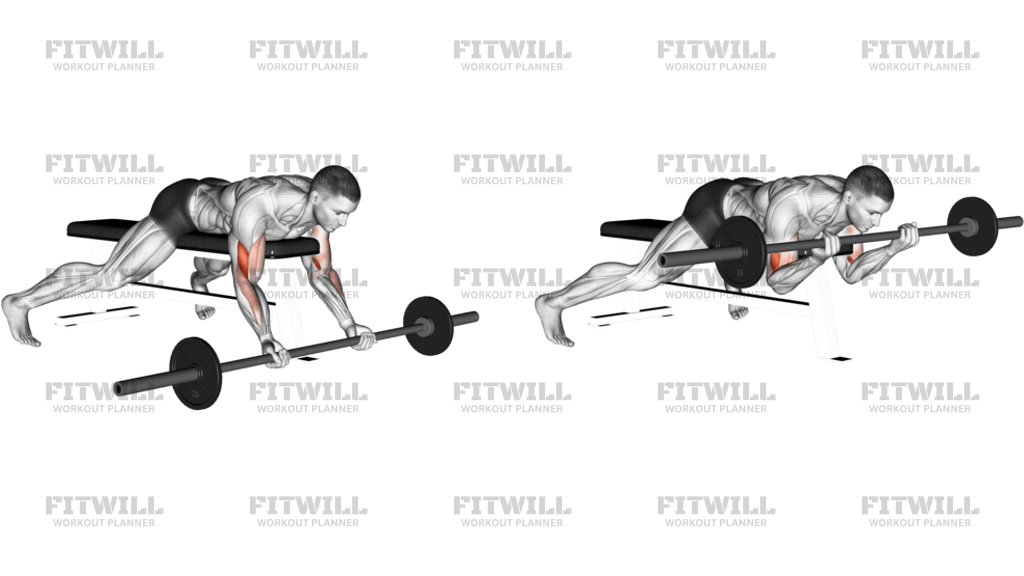
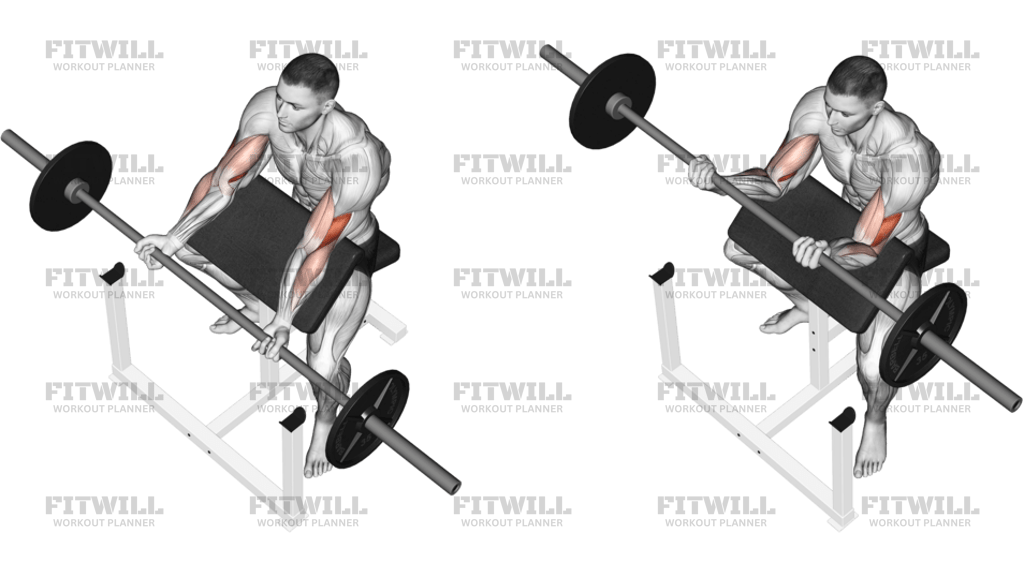
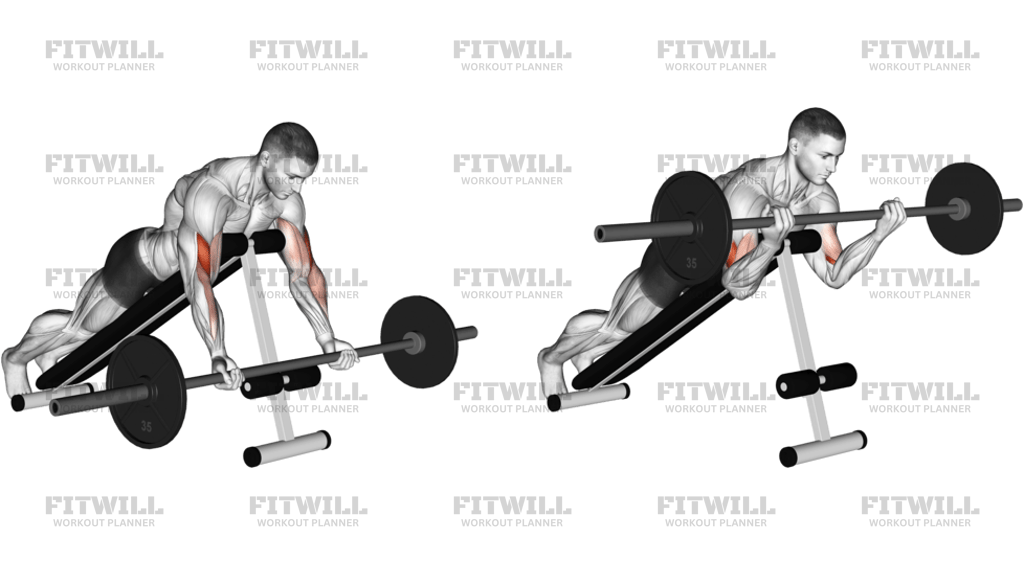
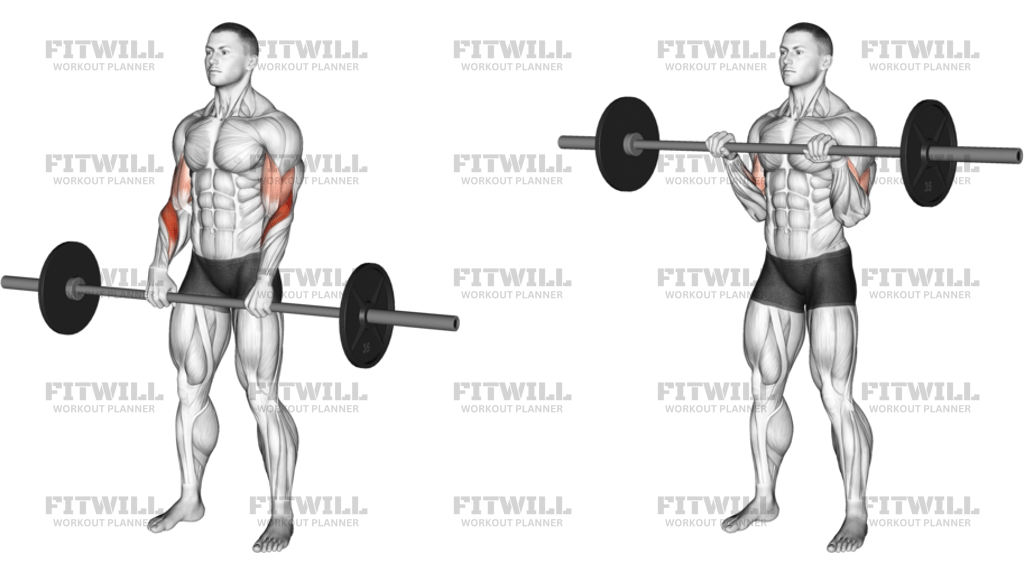
Barbell Behind Back Finger Curl
Barbell Behind Back Finger Curl is a standing forearm exercise performed with the bar held behind the hips and the arms kept straight. The setup changes the leverage of the lift and places a long, constant demand on the wrist and finger flexors, which makes it useful for direct grip work, forearm size, and wrist control.
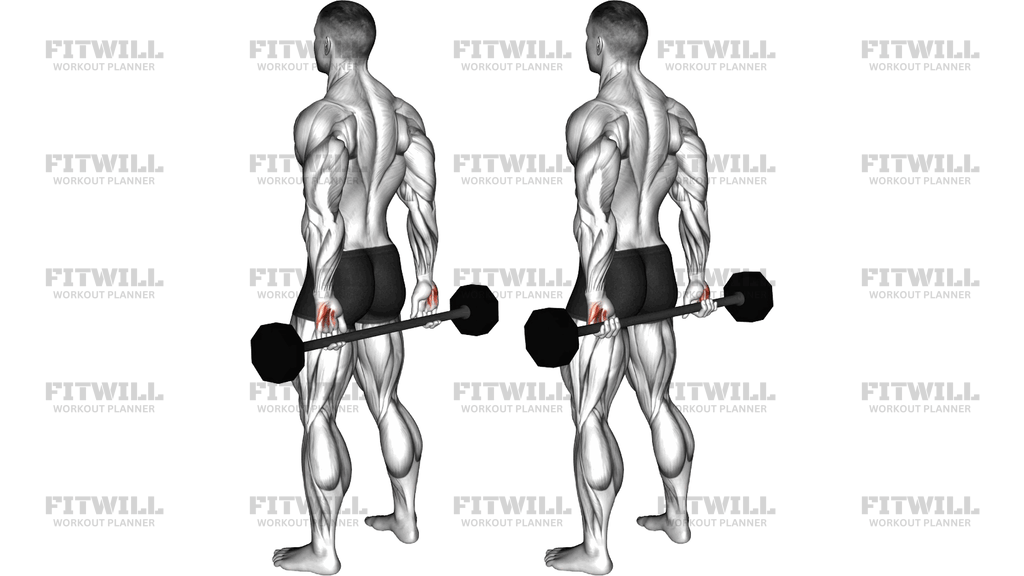
The image shows the bar sitting just behind the glutes with the torso tall, shoulders set, and the elbows straight. That position matters because the bar has to stay close to the body while the wrists and fingers do the work. If the shoulders drift forward, the lower back arches, or the elbows start bending, the exercise turns into a body swing instead of a controlled forearm movement.
In a clean rep, the bar rolls from the fingers into the palm as the wrists flex, then lowers back by opening the hands and extending the wrists under control. The movement should feel focused in the forearms, with the upper arms acting only as supports. A smooth tempo is more important than chasing a big load, because the smaller hand and wrist muscles fatigue quickly and form usually breaks before the target muscles are fully challenged.
This exercise is usually used as accessory work after heavier pulling, arm, or grip training. It is a practical choice when you want a direct forearm finish without needing a machine, but the behind-the-back position can be awkward for tight shoulders or irritated wrists. Keep the range pain-free, use a lighter bar than you think you need, and stop the set if you start shrugging, leaning, or losing the bar in your fingers.
[ Workout Log & Planner ]
Put your next workout in Fitwill
Keep your plan and training log ready when you are.


Instructions
- Stand tall with the barbell held behind your thighs, hands about hip-width apart, palms facing back, and arms straight.
- Set your feet under your hips, lift your chest, and keep your shoulders down and slightly back so the bar stays close to your glutes.
- Let the bar settle into your fingers at the bottom with your wrists extended, but keep the elbows locked and the torso still.
- Curl your fingers and flex your wrists to roll the bar up into your palms while keeping the bar path tight to the back of your legs.
- Squeeze through the top of the rep without bending the elbows or shrugging the shoulders.
- Lower the bar slowly by opening the fingers and extending the wrists until it returns to the fingertip position.
- Keep your breathing steady, exhaling as you curl the bar up and inhaling as you lower it back down.
- Finish the set by controlling the bar to a full stop behind your legs before releasing your grip.
Tips & Tricks
- Use a light barbell first; behind-the-back wrist work usually feels harder than it looks.
- Keep the bar close to your shorts or glutes so the leverage stays on the wrists and fingers instead of the shoulders.
- Do not bend the elbows to cheat the weight upward; the upper arms should stay as rigid supports.
- If the bar starts drifting away from your body, shorten the range before adding load.
- A slower lowering phase will usually train the forearm flexors better than a fast, jerky curl.
- Keep your neck relaxed and avoid looking down hard, which often pulls the shoulders forward.
- Stop short of any sharp wrist pain; this movement should create a strong forearm burn, not joint irritation.
- Small plates and a smooth bar help the setup feel more secure in the hands.
Frequently Asked Questions
What does the Barbell Behind Back Finger Curl train most?
It mainly trains the forearm flexors and finger flexors, with the wrists and grip doing most of the work.
Why hold the bar behind the body instead of in front?
The behind-the-back position changes the leverage and lets the bar roll through the fingers and wrists in a very direct forearm-focused pattern.
Should my elbows bend during the rep?
No. Keep the elbows straight so the movement stays on the wrists and fingers instead of turning into a partial curl.
How heavy should I go on this exercise?
Use a lighter load than you would for a normal curl. If you have to swing, shrug, or lean, the weight is too heavy.
Can beginners do this movement?
Yes, but only with light resistance and a short, controlled range. Beginners often need to learn how to keep the bar close and the elbows locked.
What is the most common mistake?
Letting the shoulders roll forward or using body sway to help the bar move instead of letting the wrists and fingers do the work.
What if my wrists feel uncomfortable?
Reduce the range, lighten the load, or switch to a more neutral forearm exercise. This setup should challenge the forearms without producing sharp wrist pain.
Where does this fit in a workout?
It works well as accessory or finisher work after heavier pulling, arm, or grip training.