Assisted Prone Lying Quadriceps Stretch
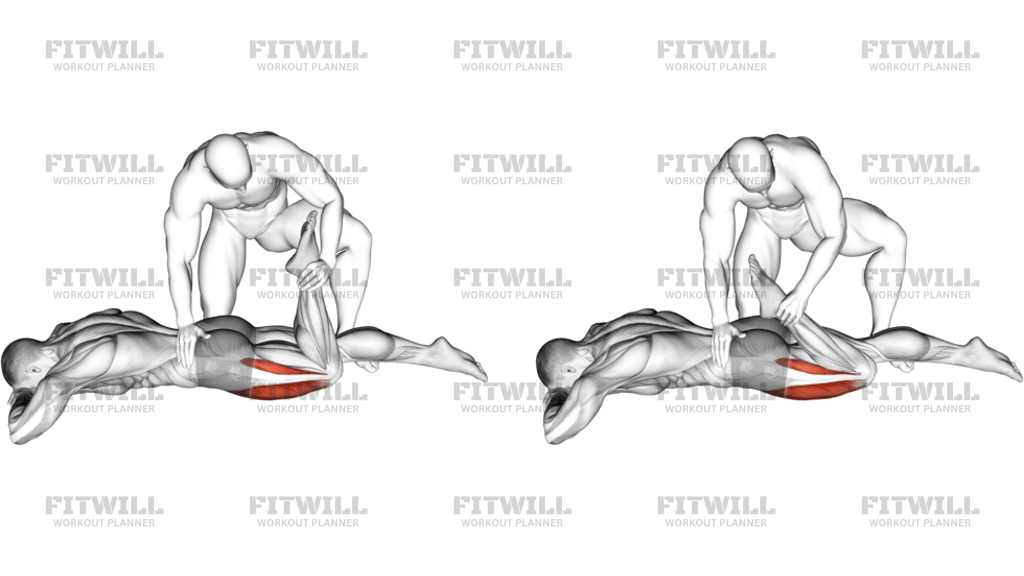
Assisted Prone Lying Quadriceps Stretch is a partner-assisted front-thigh stretch performed face down on a mat. One leg stays long while the other knee is bent and guided toward the glute, which places a strong stretch through the quadriceps and, especially, the rectus femoris. The assistance matters because it lets the lifter relax into the position without jerking the heel upward or twisting the pelvis.
This stretch is useful after lower-body training, sprint work, cycling, or any session where the quads and hip flexors feel tight. The prone position keeps the torso quiet and makes it easier to focus on the front of the thigh instead of turning it into a backbend. When the hips stay down, the stretch is cleaner and the knee usually feels more comfortable.
The setup should be deliberate: lie flat, keep the pelvis square, and let the partner stabilize the thigh or hip while guiding the ankle or foot. The working knee bends under control, but the movement should come from a steady increase in knee flexion rather than a hard pull. If the lower back starts to arch or the hip lifts off the mat, the stretch is no longer focused where it should be.
A good repetition is calm and specific. Breathe out as the heel moves closer to the glute, then hold the end range without bouncing or forcing deeper. The goal is a steady front-thigh stretch, not a cramp, pinch, or twist in the knee. If the stretch feels sharp, shorten the range and make sure the thigh stays aligned with the mat.
Used well, Assisted Prone Lying Quadriceps Stretch is a simple recovery tool that helps restore quad length without needing a machine or a large amount of space. It fits best at the end of a workout or during a dedicated mobility block, where a controlled hold and clean setup matter more than load. Because the partner controls the end range, you can use it after heavy leg work without needing much setup time. Beginners can use it comfortably, but the partner should always guide with light pressure and stop short of discomfort. If the knee has a history of irritation, keep the bend moderate and switch to a standing or side-lying quad stretch on days when prone flexion feels uncomfortable.
[ Workout Log & Planner ]
Put your next workout in Fitwill
Keep your plan and training log ready when you are.


Instructions
- Lie face down on a mat with both legs straight, your forehead resting on your hands or a folded towel, and your pelvis square to the floor.
- Keep the non-working leg long and relaxed with the toes pointed down so the lower back stays quiet.
- Let your partner kneel beside the working side and place one hand on your hip or sacrum to keep the pelvis from lifting.
- Bend the working knee slowly while your partner supports the ankle or instep and guides the heel toward the glute.
- Keep the thigh in contact with the mat and avoid letting the knee drift outward as the stretch deepens.
- Exhale and settle into the front-thigh stretch, stopping as soon as you feel firm tension through the quadriceps or hip flexor.
- Hold the end range for the prescribed time without bouncing, yanking, or arching the lower back.
- Release the foot slowly, straighten the leg under control, and repeat on the other side before getting up from the mat.
Tips & Tricks
- If your lower back arches, reduce the heel-to-glute range and press the pelvis heavier into the mat.
- Keep the working knee pointing straight down; letting it flare out usually shifts the stretch away from the quad.
- The partner should guide the ankle, not force the leg. A gentle increase in knee bend is enough.
- A small towel under the hip can make the prone position more comfortable and help you relax longer holds.
- If you feel the stretch mostly in the knee joint, move the heel a little farther from the glute and keep the thigh pinned down.
- Keep the opposite leg long and quiet so you do not rotate onto one hip while holding the stretch.
- Use shorter holds if the front of the thigh cramps, then repeat with slightly less knee bend.
- The best cue is a firm quad stretch with a still torso, not a bigger range at the cost of spinal extension.
Frequently Asked Questions
What does Assisted Prone Lying Quadriceps Stretch target most?
It primarily targets the quadriceps, especially the rectus femoris on the front of the thigh.
Why do I need a partner for Assisted Prone Lying Quadriceps Stretch?
The partner keeps the hip from lifting and guides the ankle smoothly, which makes the stretch more precise and less likely to turn into a back arch.
How far should the heel move toward the glute?
Only until you feel a strong front-thigh stretch. If the pelvis lifts or the knee feels pinched, the range is too deep.
What is the biggest form mistake in Assisted Prone Lying Quadriceps Stretch?
Letting the low back arch and the hip pop off the mat. That shifts stress away from the quads and makes the stretch less useful.
Can beginners do this prone quad stretch?
Yes, as long as the partner uses light pressure and the stretch stays mild enough to breathe through comfortably.
Should the opposite leg stay straight or bent?
Keep the opposite leg straight and relaxed on the mat. That helps keep the pelvis square and the stretch focused on the working side.
When is the best time to use Assisted Prone Lying Quadriceps Stretch?
It fits well after leg training, running, cycling, or any session where the quads and hip flexors feel tight.
What should I do if I feel it in my knee instead of my thigh?
Back the heel away slightly, keep the thigh pinned to the mat, and make sure the partner is not twisting the lower leg inward.