Cable Rope Incline Tricep Extension
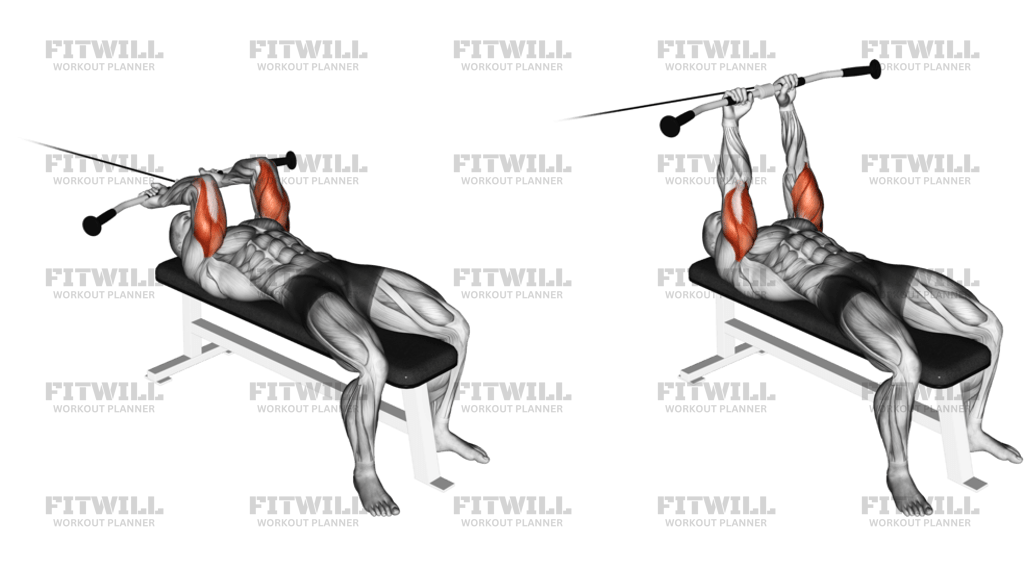
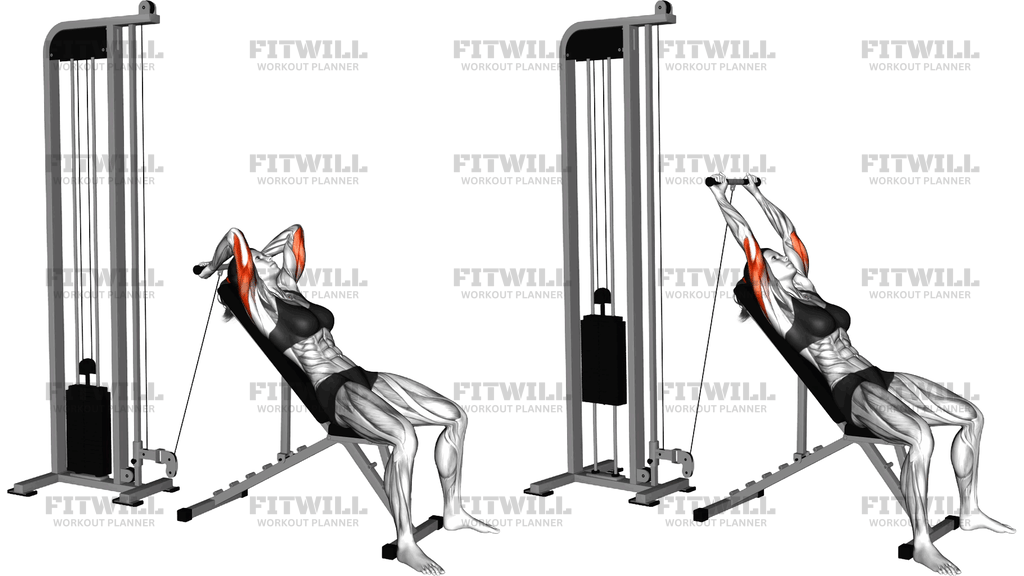
Cable Rope Incline Tricep Extension is an overhead cable triceps movement performed on an incline bench with a rope attachment. The bench supports your upper back while the cable keeps tension on the triceps through both the lowering and pressing phases, so the exercise is useful for building strength and size without needing a dumbbell or barbell setup. Because the arms work from an overhead position, the long head of the triceps gets a strong stretch at the bottom of each rep.
The setup matters more here than in many arm exercises. A bench angle that is too steep can turn the movement into an awkward shoulder exercise, while a bench that is too flat can shorten the triceps stretch and reduce the quality of the line of pull. With the rope behind your head and the pulley low, you want the elbows to stay pointed mostly upward, the rib cage controlled, and the upper arms still enough that the triceps do the work instead of the shoulders or body weight.
Each repetition should feel like an elbow-extension exercise, not a full-body press. Lower the rope under control until the forearms are back beside the upper arms and the triceps are loaded in the stretched position, then extend the elbows until the arms are straight without shrugging or over-arching the back. The rope lets your hands separate near lockout, which usually makes it easier to finish the rep cleanly and keep the wrists comfortable.
This movement is a practical accessory choice after pressing work, or on arm-focused days when you want a strict triceps exercise with constant cable tension. It works well for beginners if the load is light and the range is controlled, but the exercise is also useful for experienced lifters who want more targeted triceps volume. If the shoulders feel pinchy, reduce the bench angle, shorten the range slightly, or lower the load until the movement stays smooth and pain-free.
[ Workout Log & Planner ]
Put your next workout in Fitwill
Keep your plan and training log ready when you are.


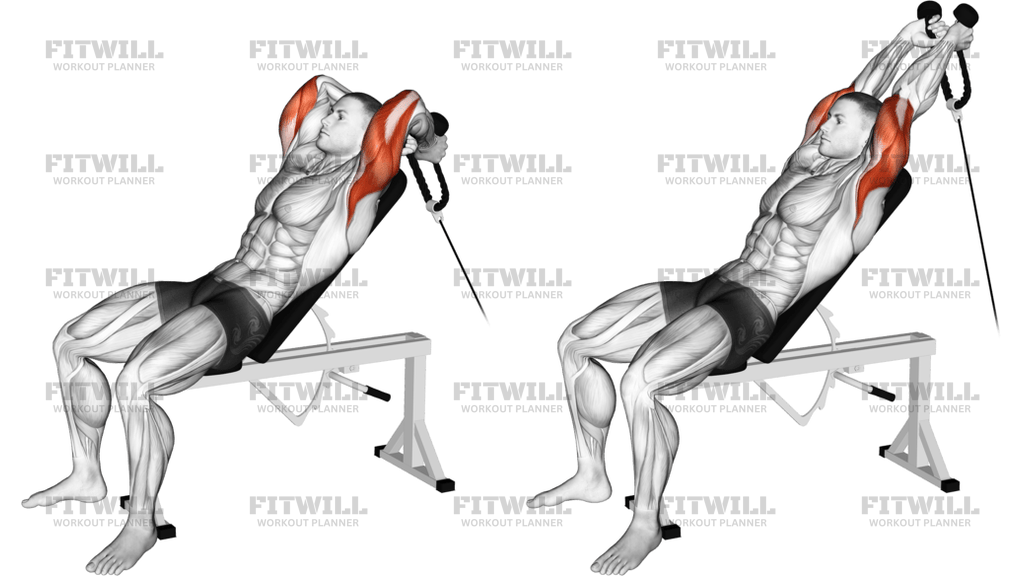
Instructions
- Set an incline bench in front of a low cable pulley and attach a rope so the cable runs behind your head.
- Sit back with your upper back and head supported, feet flat, and your hips settled firmly on the bench.
- Take a neutral grip on the rope and bring your hands beside your head with your elbows bent and pointed mostly up.
- Scoot into position until the cable has tension before the first rep, then stack your ribs over your pelvis.
- Keep your upper arms still and brace your torso so the movement starts from the elbows.
- Lower the rope under control until your forearms move back beside your upper arms and you feel a strong triceps stretch.
- Exhale and extend your elbows to bring the rope forward and up until your arms are straight without shrugging or arching your back.
- Briefly squeeze the triceps at lockout, then return slowly to the stretched position for the next rep.
- Reset your shoulders and neck between reps if the cable starts to pull you out of position.
Tips & Tricks
- Choose a bench angle that keeps your elbows slightly in front of your ears instead of drifting straight back.
- Let the rope separate near the top so you can fully straighten the elbows without forcing your wrists into an awkward angle.
- If your shoulders feel crowded, lower the bench angle or shorten the bottom range before changing the load.
- Keep the upper arms quiet; any big shoulder swing usually means the weight is too heavy or the bench is set too steep.
- Think about extending the elbows, not pressing the weight away with your chest or lats.
- A slower lowering phase usually improves the triceps stretch and keeps the cable from yanking your shoulders forward.
- Use enough load to feel the triceps, but not so much that your hips lift or your rib cage flares off the bench.
- Keep your wrists neutral and the rope centered so the movement finishes through the triceps instead of the forearms.
- Stop the set if the elbows start flaring wide or the cable line changes enough that the rep turns into a shoulder press.
Frequently Asked Questions
What does Cable Rope Incline Tricep Extension train most?
It mainly targets the triceps, with a strong emphasis on the long head because the arms work overhead on an incline bench.
Why use an incline bench for this rope extension?
The incline supports your upper back and places the triceps in a longer overhead position, which makes the stretch and cable tension more effective.
How is this different from a rope pressdown?
A pressdown keeps the arms by your sides, while this variation loads the triceps from overhead and usually gives a bigger stretch near the bottom.
Should my elbows move during the rep?
They should stay mostly fixed and point upward, with only small natural adjustments to follow the cable path.
What bench angle works best?
A moderate incline usually works best because it supports the back without turning the movement into an awkward shoulder-dominant position.
Can beginners do this exercise safely?
Yes. Start light, keep your upper arms still, and use a shorter range until you can control the cable behind your head.
Why do I feel this in my shoulders or forearms?
Some support work is normal, but if those areas dominate, the load is probably too heavy or your elbows are drifting too far apart.
What should I do if the bottom position bothers my shoulders?
Reduce the range slightly, lower the bench angle, and keep the ribs from flaring so the shoulders do not take over the stretch.