EZ Bar French Press On Exercise Ball
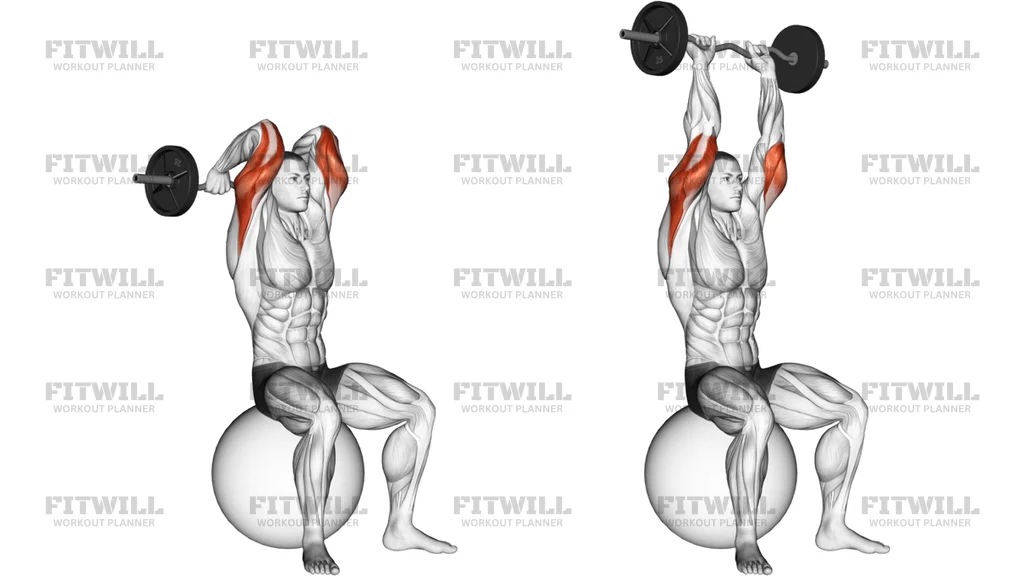
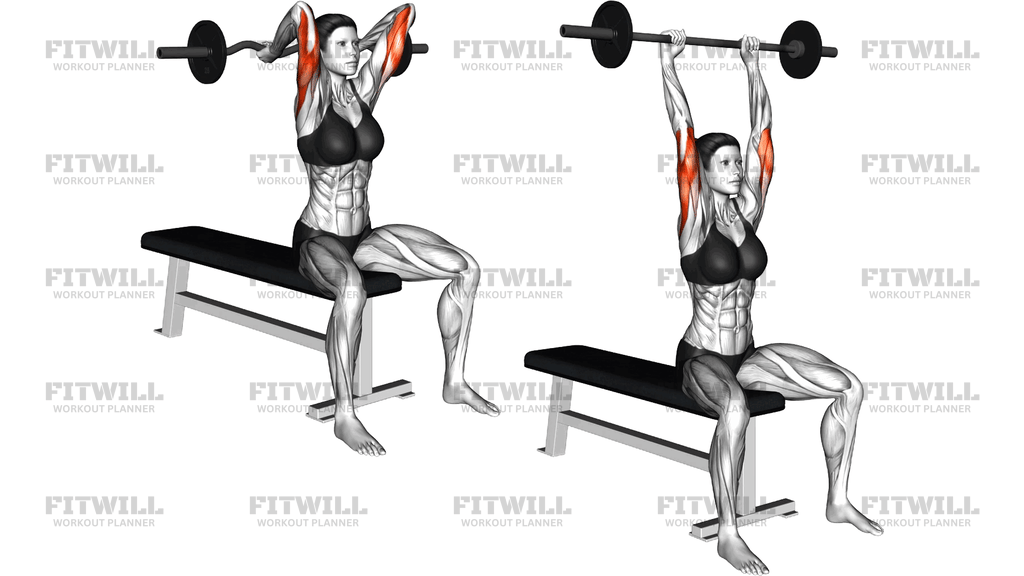
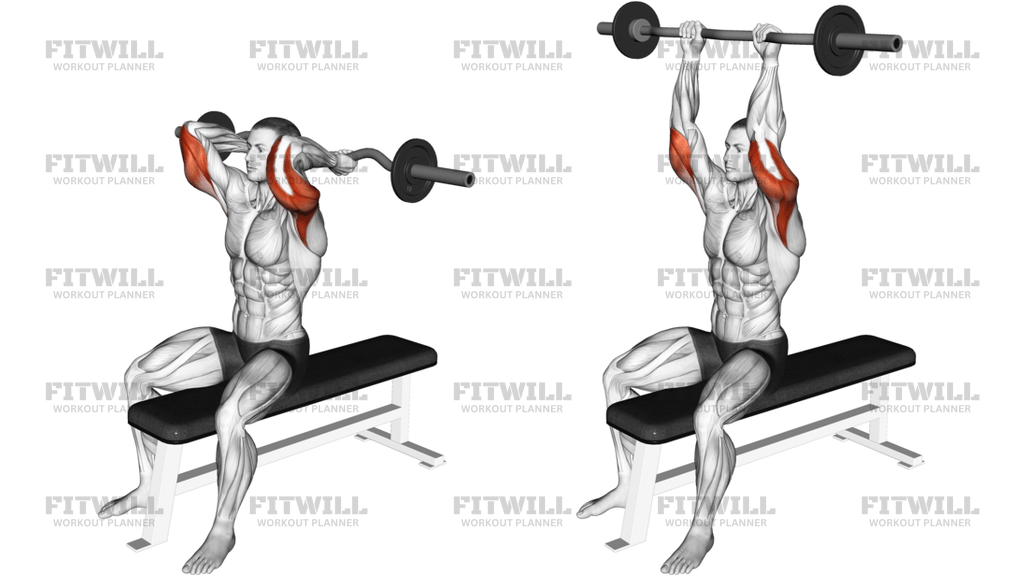
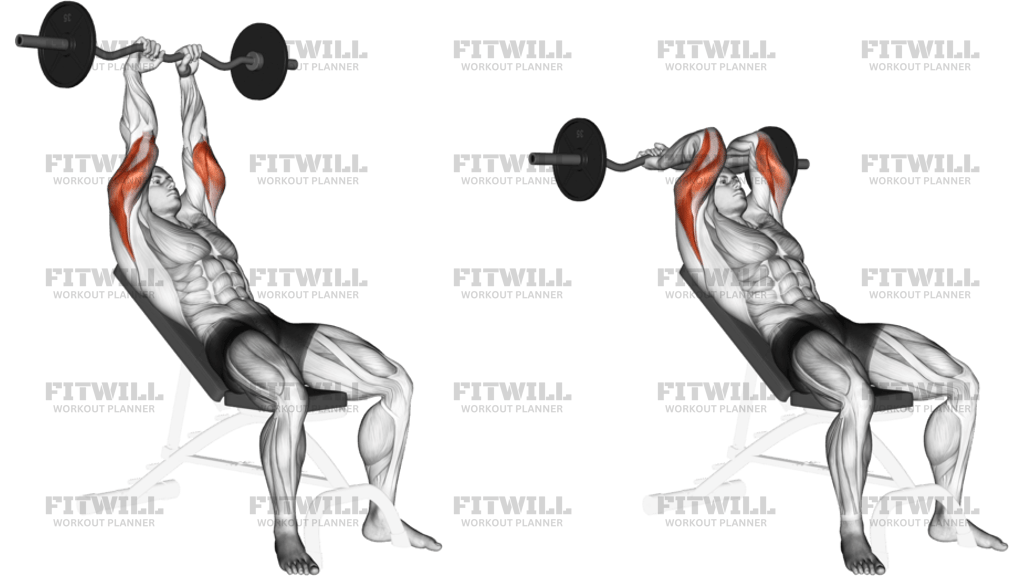
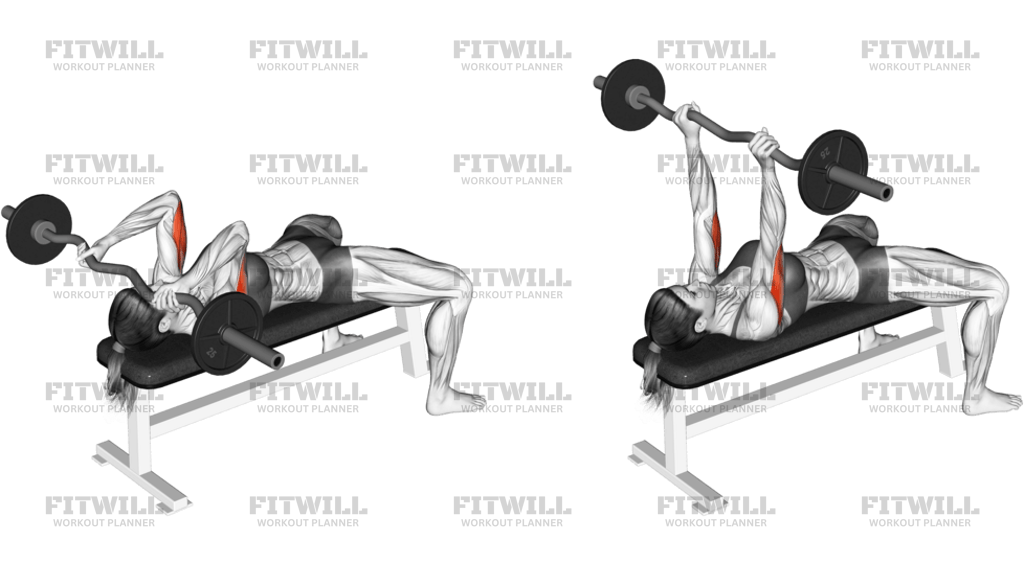
EZ Bar French Press On Exercise Ball is a seated overhead triceps extension performed while balancing on a stability ball. The exercise combines a strict elbow-extension pattern with a small stability demand from the ball, so the set rewards clean posture, steady breathing, and controlled reps instead of heavy loading or body English.
The main emphasis is on the triceps, especially the long head, because the arms work overhead and the elbow joint does most of the moving. The forearms help keep the EZ-bar grip steady, the shoulders keep the upper arms positioned, and the core helps prevent the ribcage from flaring as the bar travels behind the head. In anatomy terms, the main work centers on the triceps brachii, with support from the forearm flexors, anterior deltoid, and rectus abdominis.
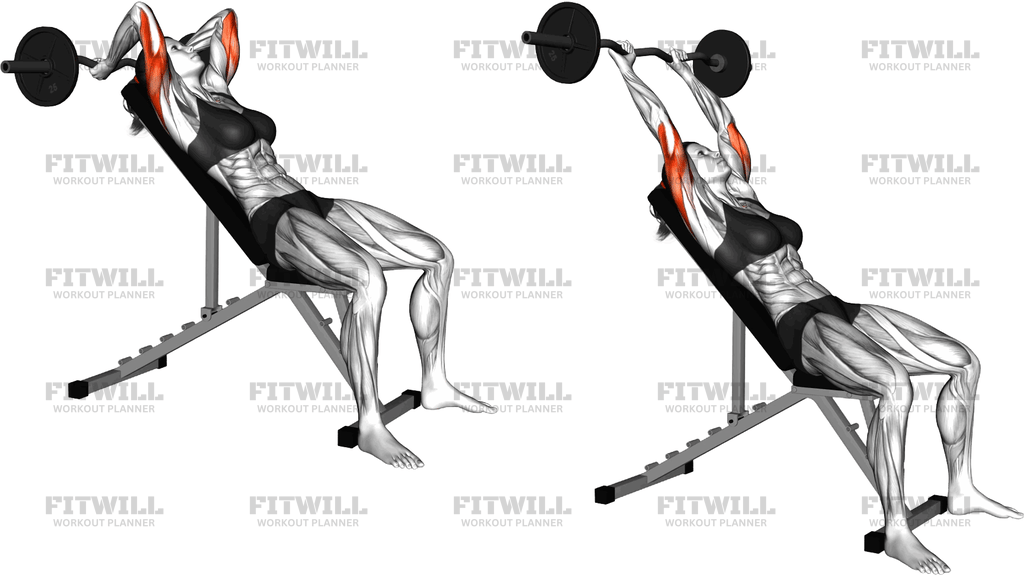
The setup matters because the ball can shift if your feet, hips, and torso are not organized before the first rep. Sit near the middle of the ball with both feet planted, then bring the bar overhead with the elbows pointed mostly forward and close to the ears. Keep the wrists neutral on the EZ-bar grips and stack the ribs over the pelvis so the low back does not take over when the bar descends.
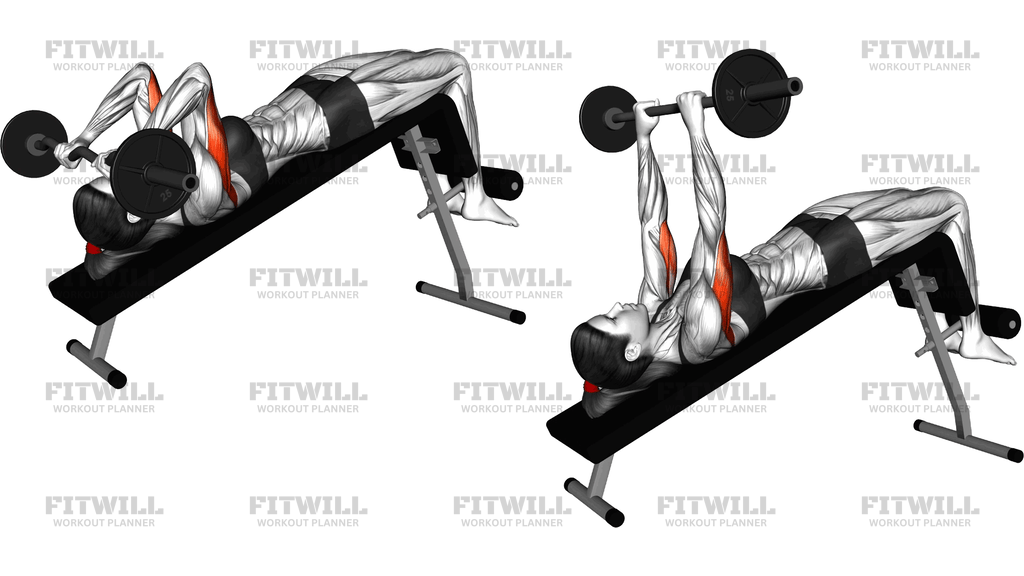
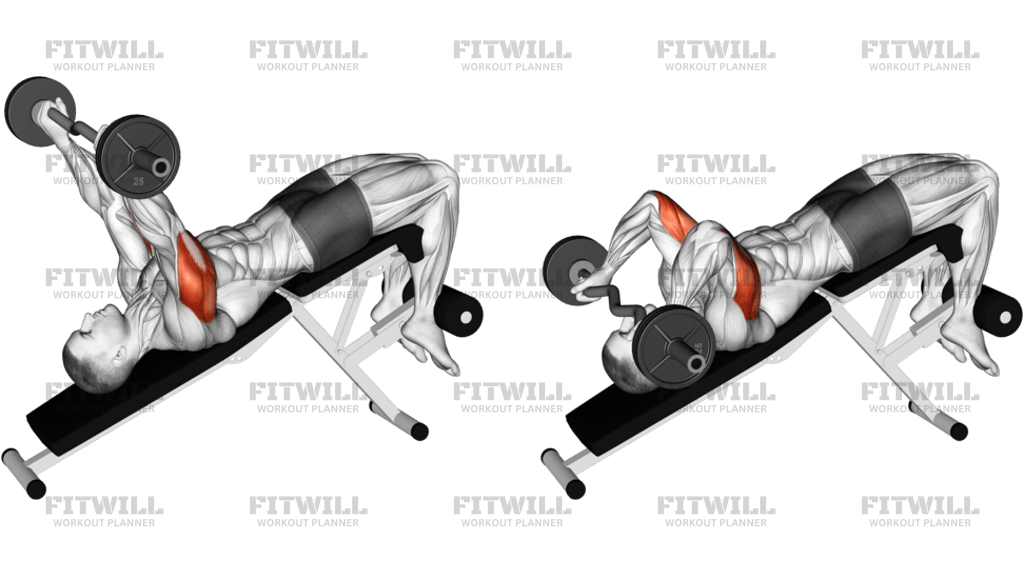
On each rep, lower the bar in a smooth arc behind the head by bending only at the elbows. The upper arms should stay mostly fixed while the forearms move through the range. Press the bar back up by straightening the elbows until the arms are extended overhead without snapping into lockout. Exhale on the lift, inhale as you lower, and keep the neck relaxed so the shoulders can stay down and stable.
This movement fits well as accessory work for pressing strength, arm hypertrophy, or a controlled triceps finisher. Use a lighter load than you would on a bench because the ball reduces stability and makes cheating easier to notice. If the ball rolls, the ribs flare, or the elbows drift wide, shorten the range or reduce the weight so the set stays strict and safe.
[ Workout Log & Planner ]
Put your next workout in Fitwill
Keep your plan and training log ready when you are.


Instructions
- Sit on the middle of the exercise ball with both feet flat on the floor and a stance wide enough to keep the ball from rolling.
- Hold the EZ bar overhead with your hands on the angled grips, wrists stacked over the forearms, and elbows close to your ears.
- Tighten your abs and glutes, stack your ribs over your pelvis, and keep your chest from puffing up as you prepare to lower the bar.
- Bend only at the elbows to lower the bar in a controlled arc behind the crown of your head.
- Keep your upper arms mostly still so the triceps, not momentum, move the load.
- Lower until you feel a strong triceps stretch without letting the shoulders collapse forward or the ball shift under you.
- Reverse the motion by straightening your elbows and pressing the bar back to the overhead start position.
- Finish with the arms extended, shoulders quiet, and the neck long instead of forcing the lockout.
- Reset your balance between reps and repeat for the planned set with steady breathing.
Tips & Tricks
- Choose a lighter bar than you would for the same triceps movement on a bench, because the ball makes cheating obvious and the rep less stable.
- Plant the feet a little wider than hip width if the ball feels slippery or you start drifting backward during the lowering phase.
- Keep the elbows aimed mostly forward and upward instead of letting them flare out to the sides, which turns the movement into a shoulder exercise.
- Use the angled sections of the EZ bar to keep the wrists neutral; a hard straight-wrist grip usually makes the rep feel rougher on the elbows and forearms.
- Lower the bar only as far behind the head as you can control without arching the low back or losing the ball position.
- Let the triceps do the work by holding the upper arms nearly fixed and moving mainly through elbow extension.
- Keep the ribs down as the bar rises; if your chest pops up every rep, the core is no longer stabilizing the ball position.
- Pause briefly in the bottom only if you can keep the shoulders and ball steady; otherwise keep the turnaround smooth and controlled.
- Stop the set when the ball starts to wander or the elbows stop tracking the same path on both sides.
Frequently Asked Questions
What muscles does EZ Bar French Press On Exercise Ball train most?
The triceps are the main target, especially the long head because the arms work overhead. The forearms, shoulders, and core help keep the bar and ball stable.
Why use an exercise ball for this triceps movement?
The ball adds a stability challenge, so you have to control your torso and foot pressure while the elbows extend. That makes it a stricter, more balance-demanding version of a seated overhead extension.
How should the EZ bar travel during each rep?
Lower it in a smooth arc behind the head by bending the elbows, then press it back up over the shoulders. The upper arms should stay mostly in place while the forearms move.
Should my elbows stay tucked in or flare out?
Keep them mostly tucked and pointed forward, close to the ears. If they flare wide, the load shifts away from the triceps and the shoulders have to do more of the work.
Is this a good exercise for beginners?
Yes, but only with a light load and careful setup on the ball. If balance is the limiting factor, a bench-supported overhead extension is the safer starting point.
Where should I lower the bar?
Lower it behind the head, not to the face or chest. The best range is the one that gives you a triceps stretch without making the low back arch or the ball shift.
What is the most common mistake on this exercise?
People usually flare the ribs, swing the bar, or let the ball roll while trying to lift too much weight. That turns a strict triceps drill into a noisy full-body compensation pattern.
How heavy should I go on this movement?
Use a load that lets you keep the elbows steady and the ball still from the first rep to the last. If you have to lean back or bounce out of the bottom, the weight is too heavy.