Lying Knee Roll Over Stretch
Lying Knee Roll Over Stretch is a floor-based spinal rotation stretch performed on your back with the knees bent and dropped from side to side. It is used to open the lower back, outer hips, glutes, and obliques while teaching the torso to stay relaxed as the legs move. The goal is not to force a bigger twist each rep, but to find a smooth, repeatable range that eases tension without irritating the spine.
The setup matters because the stretch changes a lot depending on how well you anchor the upper body. Lying with the arms out to the sides gives the shoulders a stable base, and keeping the knees together lets the legs move as one unit instead of twisting the hips independently. When the shoulders stay heavy on the mat, the stretch is easier to feel through the waist and outer hip instead of turning into a sloppy roll.
A good rep starts with a quiet breath and a controlled drop of the knees toward one side. Exhale as the legs lower, keep the opposite shoulder connected to the floor, and stop before the stretch turns into a pinchy tug in the low back. If the floor is far away, that is fine; the knees do not need to touch down for the stretch to be effective. Return to center with control, reset your breathing, and repeat on the other side.
This movement fits well in a warm-up, cooldown, mobility block, or recovery session after lifting, running, or long periods of sitting. It is especially useful when the waist and hips feel stiff and you want gentle rotation without load. On a good day it should feel like a steady stretch across the side body and lower back, not a sharp compression or a forced crank into the floor.
If one side feels much tighter, use that as information rather than trying to override it. Shorten the range, pause for a breath or two, and let the muscles soften gradually. Over time, the stretch should become smoother, with the torso staying relaxed and the knees moving more freely while the shoulders remain grounded.
[ Workout Log & Planner ]
Put your next workout in Fitwill
Keep your plan and training log ready when you are.


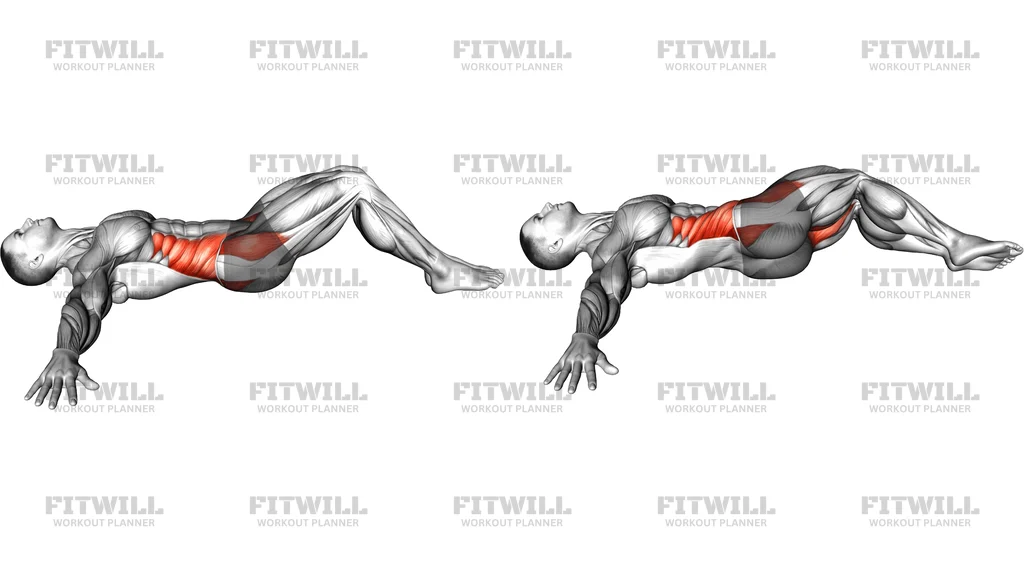
Instructions
- Lie on your back on an exercise mat with your knees bent and your feet together or close together.
- Extend both arms out to the sides in a T position with your palms facing up for balance.
- Keep your shoulders heavy on the mat and set your head in a comfortable neutral position.
- Exhale and let both knees drift together to one side as a single unit.
- Keep the opposite shoulder blade and upper back pressed into the floor as the legs lower.
- Lower only until you feel a clear stretch through the waist, lower back, or outer hip without a sharp pinch.
- Pause at the end range for one to three calm breaths and keep the legs relaxed.
- Use your core to bring the knees back to center with control, then repeat on the other side.
- Move slowly through both sides and stop the set if the low back feels strained or the shoulders start lifting.
Tips & Tricks
- Let the knees move together; separating the legs turns the stretch into a sloppy twist.
- Keep both shoulders rooted to the mat so the stretch stays in the waist instead of rolling the chest over.
- Use your exhale to help the knees drop a little farther without forcing them down with your arms.
- A smaller range is better if your low back feels tight; the knees do not need to touch the floor.
- If one side feels blocked, pause there and breathe instead of bouncing through the sticking point.
- Relax the hands, jaw, and neck so you are not adding tension to a mobility drill.
- Move the knees back to center slowly; yanking them up defeats the control this stretch is meant to build.
- If the stretch feels better with a pillow or folded towel under the knees at the start, use it to reduce strain.
- Sharp pain, numbness, or a pinching sensation in the spine means you should stop and shorten the range.
Frequently Asked Questions
What does the Lying Knee Roll Over Stretch target most?
It mainly targets the waist and lower back, with a strong stretch through the obliques, glutes, and outer hips.
Should my shoulders stay on the floor during the roll-over?
Yes. Keeping the shoulders heavy on the mat is what turns this into a controlled spinal rotation stretch instead of a full-body flop.
Do my knees have to touch the floor on each side?
No. A comfortable stretch is enough, and many people should stop well before the knees reach the mat.
Is this stretch good for lower-back stiffness?
Yes, as long as the motion feels smooth and pain-free. It is often used to ease stiffness after sitting, lifting, or running.
Why does one side feel tighter than the other?
That usually reflects a difference in hip rotation or trunk rotation on each side. Keep both sides honest, but do not force the tighter side harder.
Can beginners do this exercise safely?
Yes. Beginners should use a smaller range, keep the knees together, and focus on breathing instead of trying to maximize the twist.
What is the most common mistake with this stretch?
The biggest mistake is letting the opposite shoulder pop off the floor, which usually means the knees are being dropped too far.
How long should I hold each side?
A short, controlled hold of one to three breaths is enough for most warm-ups or cooldowns.
Can I use this after strength training?
Yes, it works well after deadlifts, squats, or long core sessions when you want a gentle reset for the torso and hips.