Knee Tuck Oblique Crunch
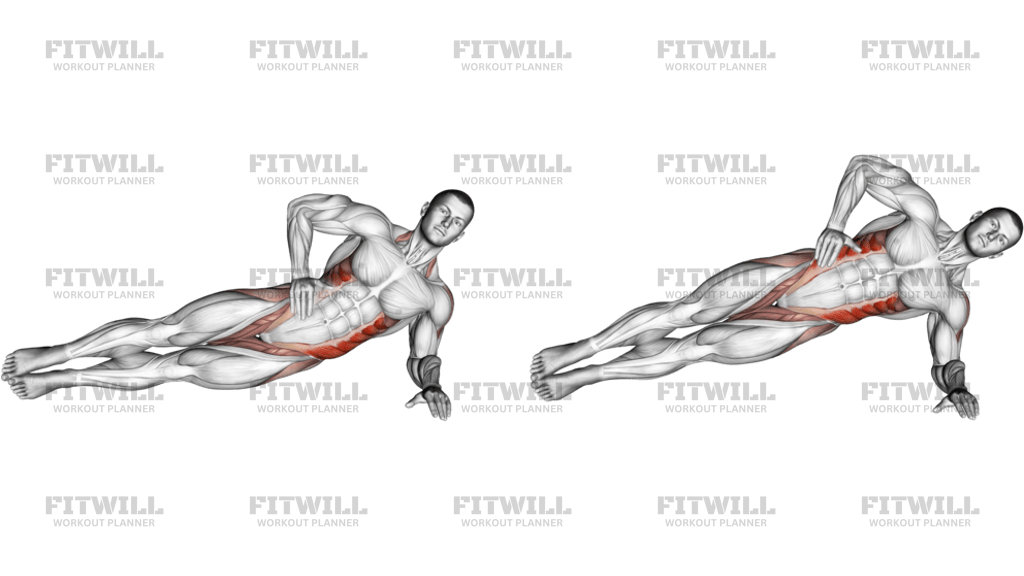
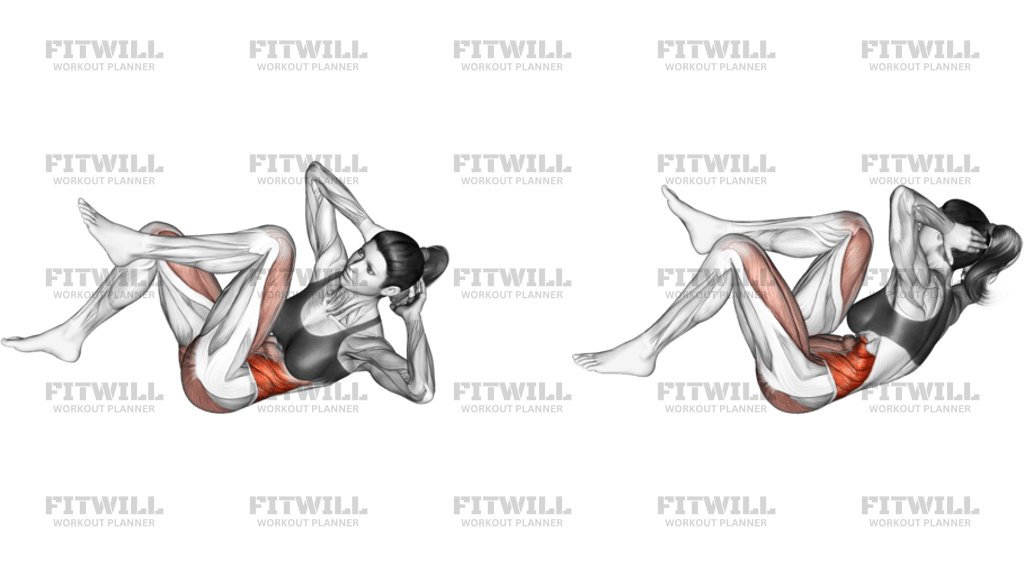
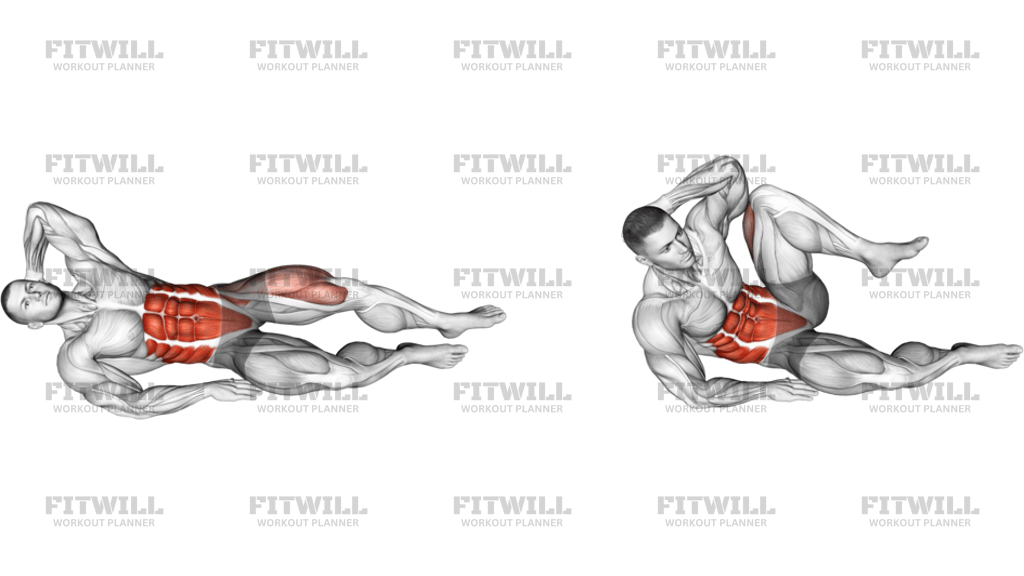
Knee Tuck Oblique Crunch is a side-lying bodyweight core exercise that combines a short crunch with a knee tuck to challenge the obliques, waist, and hip flexors. The image shows a floor-supported variation where one forearm stays braced on the ground, the top hand supports the head, and the top knee moves in toward the elbow. That side-lying setup matters because it lets you train the trunk without turning the movement into a sloppy sit-up or a twisting swing.
This exercise is useful when you want direct work for the sides of the torso and better control through lateral flexion and a small rotational crunch. The primary effort should come from the waist and abdominal wall, while the shoulder, hip, and neck simply hold the position steady. Because the range is compact, quality matters more than speed or rep count. If the ribs flare, the hips roll backward, or the neck starts doing the work, the set stops being a clean oblique crunch.
Set up with the bottom side long on the floor, elbow under the shoulder, and the top leg free to bend and tuck. Keep the pelvis stacked instead of collapsing forward, then curl the rib cage and knee toward each other in one controlled arc. The goal is to shorten the distance between the top elbow and top knee without yanking the head forward or swinging the leg. A brief squeeze at the top helps you feel the obliques finish the rep instead of just snapping the hip through.
Knee Tuck Oblique Crunch fits well in core circuits, accessory work, warmups, or conditioning sessions where you want a precise trunk stimulus without heavy loading. It is also a practical option for beginners because the floor support limits cheating and makes it easier to learn how to brace and curl at the same time. Keep the motion smooth, use the breath to drive each rep, and choose a side-to-side rhythm that lets you stay aligned from start to finish.
[ Workout Log & Planner ]
Put your next workout in Fitwill
Keep your plan and training log ready when you are.


Instructions
- Lie on your side on a mat with your bottom forearm on the floor, your elbow under your shoulder, your bottom leg long, and your top hand lightly supporting the side of your head.
- Stack your shoulders and hips, then bend the top knee so the thigh can travel toward your chest without letting your pelvis roll backward.
- Set your rib cage low, press the forearm into the floor, and brace your midsection before the first rep.
- Exhale as you curl your upper torso and top knee toward each other, bringing the top elbow and knee into the same side of the body.
- Keep the neck relaxed and let the torso do the crunch instead of pulling hard with the hand behind your head.
- Squeeze the obliques at the top when the rib cage and knee are closest together.
- Lower the torso and knee back down under control until you are almost back to the start.
- Reset the side-lying stack, then finish the planned reps before switching sides.
Tips & Tricks
- Keep the bottom elbow directly under the shoulder so the supporting side stays stable instead of sinking into the floor.
- Think about lifting the ribs toward the hip, not just driving the knee upward, or the rep turns into a hip-flexor swing.
- Do not yank the head forward with the top hand; the hand should guide the neck, not power the crunch.
- A small but strict range is better than rolling the pelvis backward and losing the side crunch position.
- Exhale on the crunch and keep the inhale for the return so the trunk stays braced through each rep.
- If you feel the set mostly in the front of the hip, shorten the tuck and slow the tempo down.
- Keep the top knee traveling in the same plane as the torso instead of drifting behind you.
- Pause for a beat at the top to make the obliques finish the rep instead of bouncing through the bottom.
Frequently Asked Questions
What muscles does Knee Tuck Oblique Crunch work?
It primarily hits the obliques and the rest of the abdominal wall, with the hip flexors and shoulder stabilizers helping you hold the side-lying position.
How do I set up the side-lying position for Knee Tuck Oblique Crunch?
Lie on one side, place the bottom elbow under the shoulder, keep the bottom leg long, and lightly support your head with the top hand. Stack the ribs and hips before you start the first tuck.
Should my top knee and elbow actually touch?
They do not need to slam together. Bring them close enough to feel the side of the waist shorten, then lower with control before the pelvis starts rolling backward.
Why do I feel Knee Tuck Oblique Crunch more in my hip flexors than my abs?
Usually the tuck is too aggressive or the torso is staying too quiet. Make the rib cage curl toward the hip, shorten the range, and slow the return so the abs keep working.
Is Knee Tuck Oblique Crunch beginner-friendly?
Yes. The floor support makes it easier to control than standing or hanging oblique work, so beginners can focus on the curl and the knee tuck without using momentum.
What is the biggest mistake on Knee Tuck Oblique Crunch?
Rolling the hips backward and turning it into a general knee raise is the most common error. Keep the body stacked and let the side waist create the movement.
How many reps should I do on each side?
Most people do well with moderate sets of 8-15 controlled reps per side, stopping as soon as the torso starts twisting or the neck starts taking over.
Can I make Knee Tuck Oblique Crunch harder without adding weight?
Yes. Slow the lowering phase, pause at the top, or extend the bottom leg farther away to increase the lever without changing the basic side-lying setup.