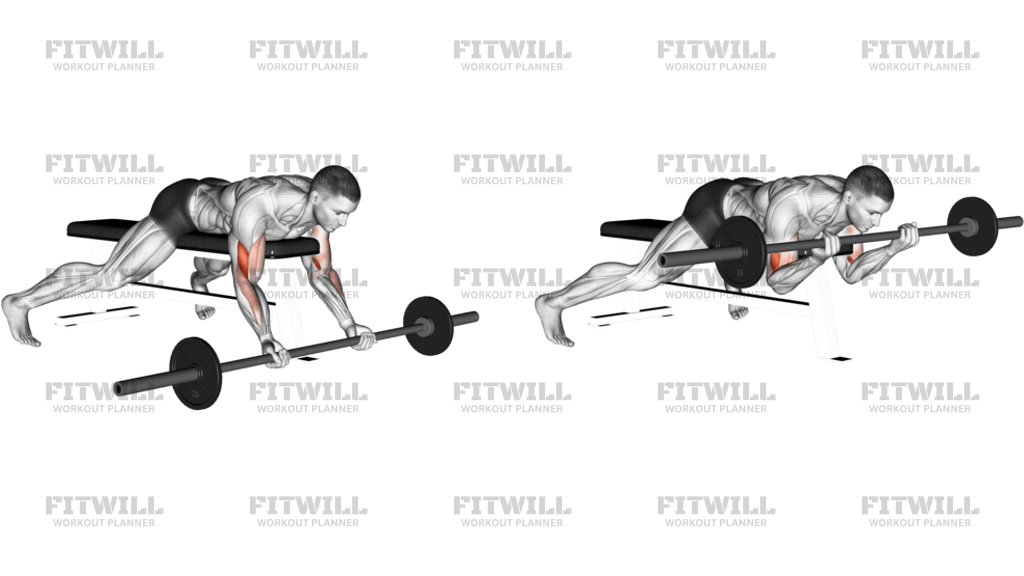
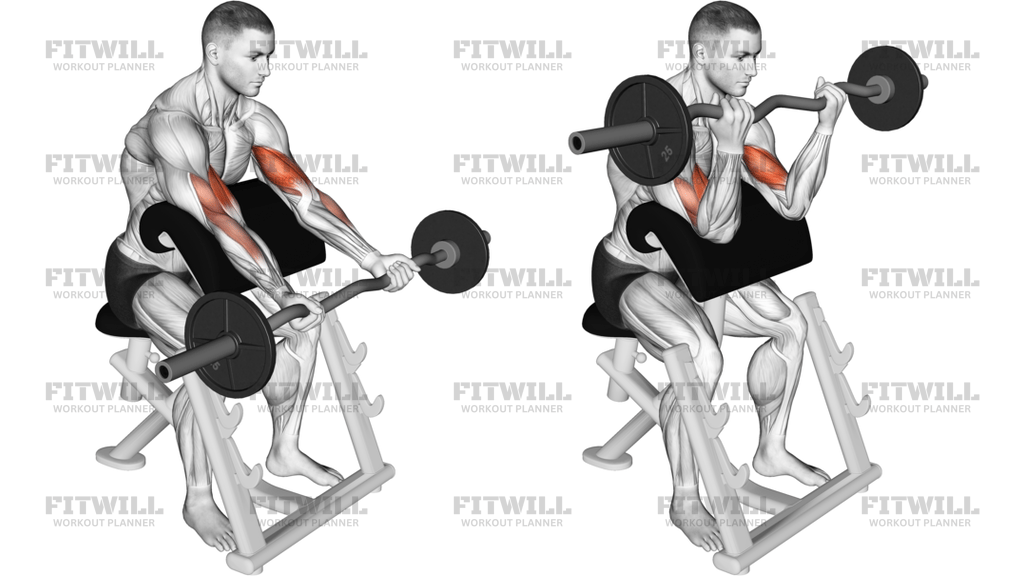
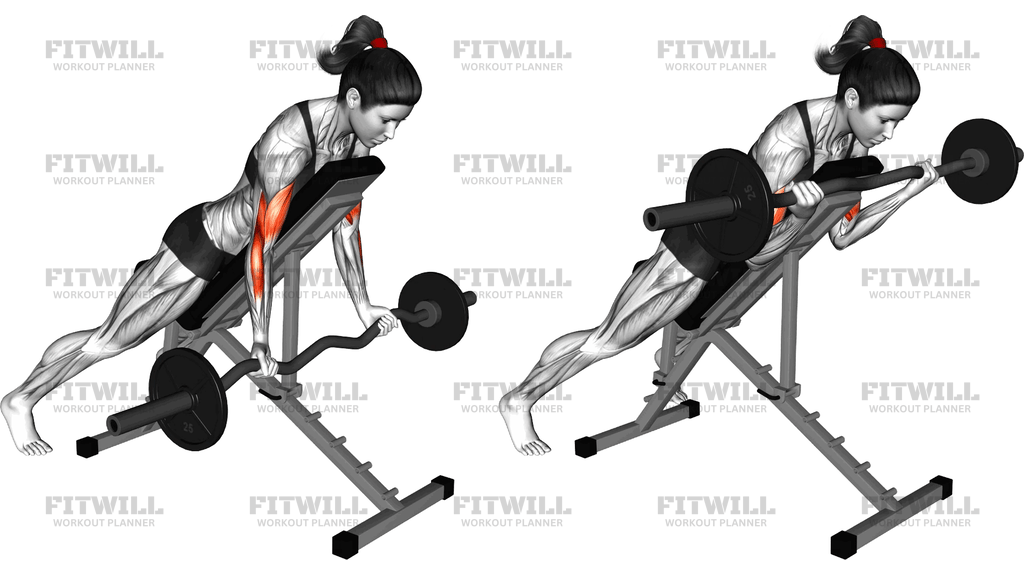
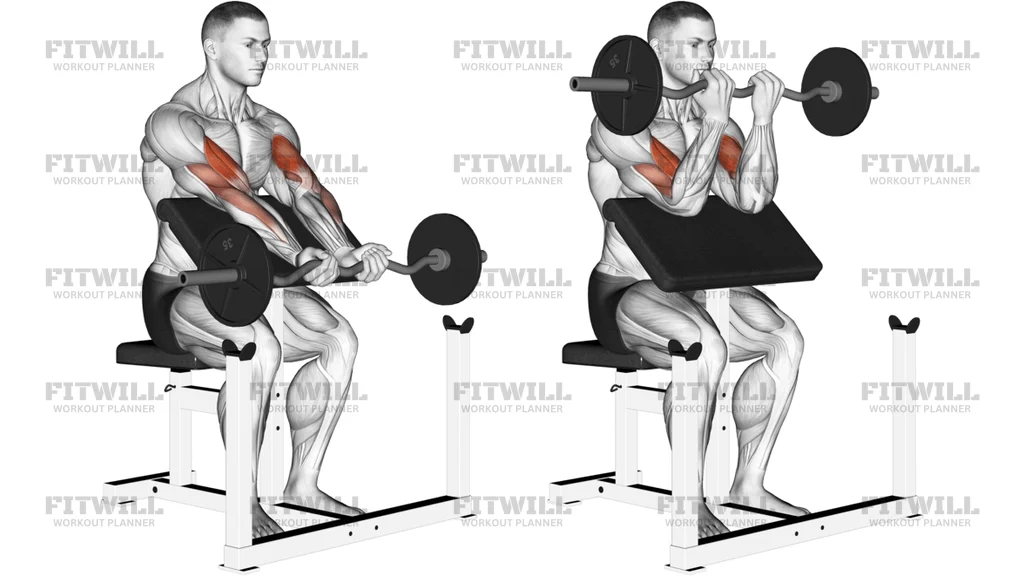
EZ-Bar Biceps Curl With Arm Blaster
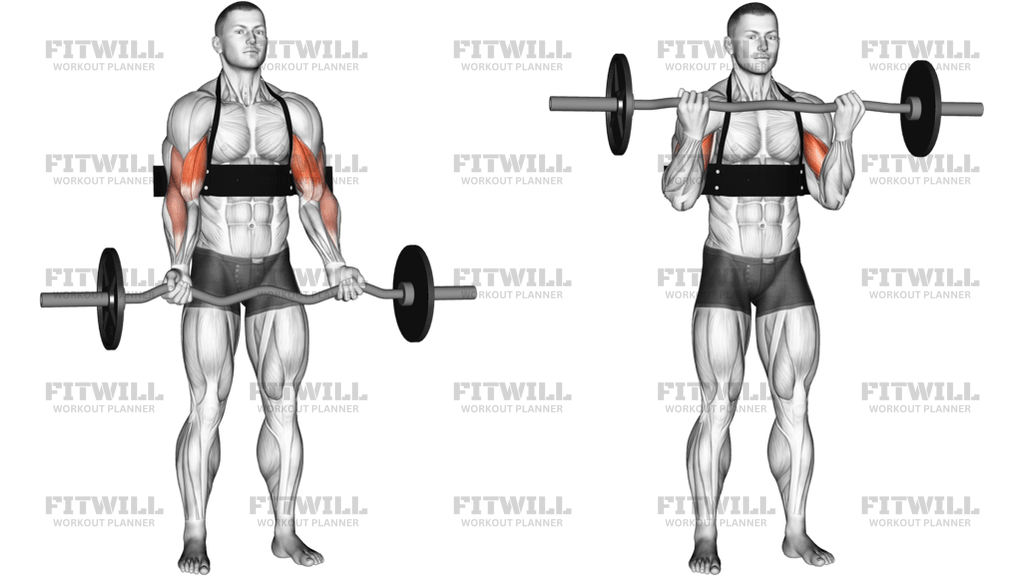
EZ-Bar Biceps Curl With Arm Blaster is a strict standing curl built to keep the upper arms fixed while the forearms do the work. The arm blaster braces the elbows and upper arms against your torso, which reduces body swing and makes the curl much harder to cheat than a regular standing curl. That stricter position is useful when you want cleaner biceps tension and less help from the shoulders or lower back.
The main target is the biceps, with the brachialis, brachioradialis, and forearm flexors helping through the pull and grip. Using an EZ bar usually feels friendlier on the wrists than a straight bar because the angled grips let your hands settle into a semi-supinated position. EZ-Bar Biceps Curl With Arm Blaster is especially useful for hypertrophy work, accessory arm training, and any session where you want the curl to stay honest from the first rep to the last.
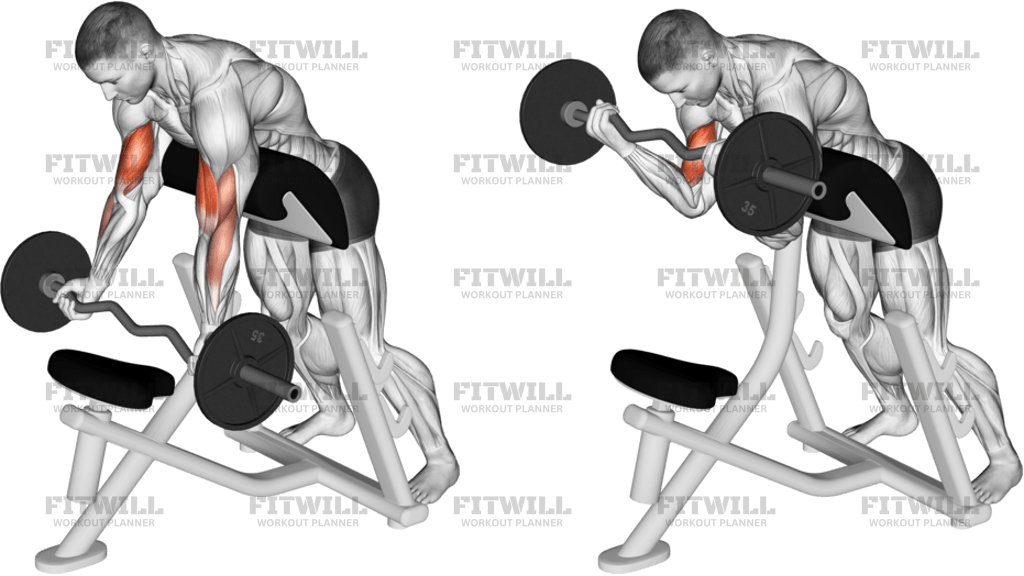
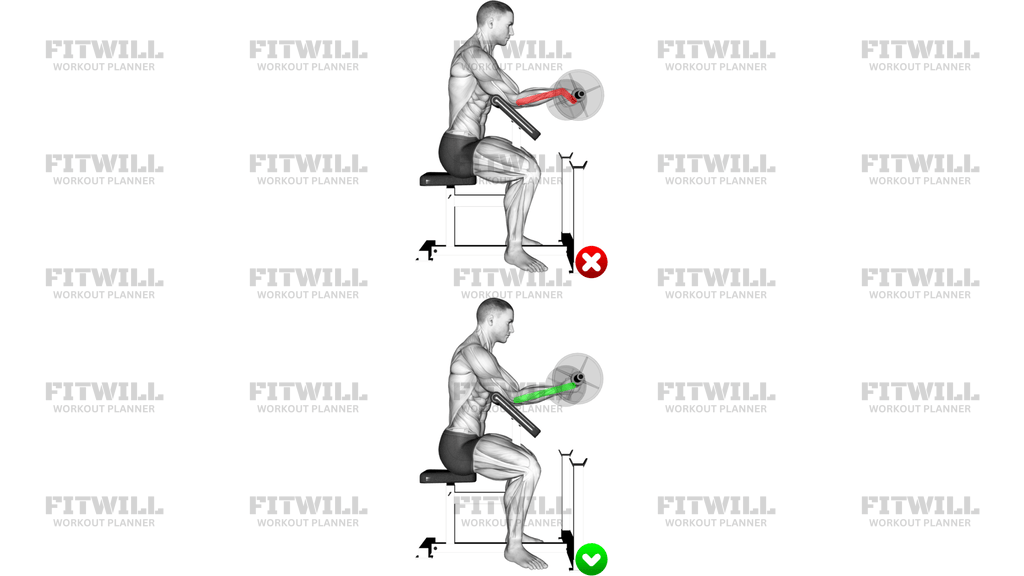
The setup matters because the arm blaster controls your elbow position before the first repetition even begins. Stand tall, let the curved plate rest against your torso, and keep the upper arms pinned to the pad so the elbows do not drift forward and back. If the blaster hangs too low or the bar starts too far from the body, the curl usually turns into a swing, so the starting position should feel stacked and stable before you move.
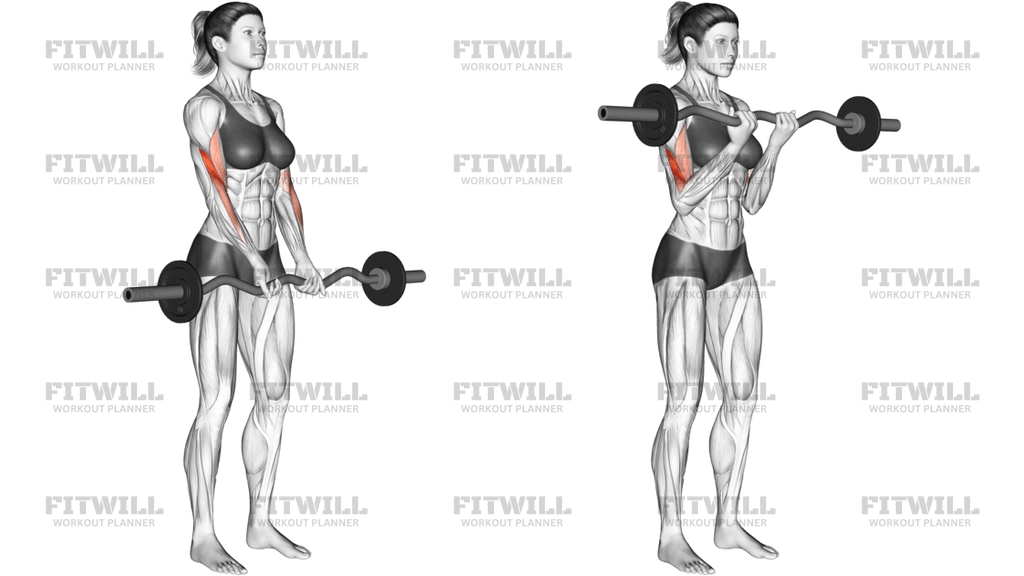
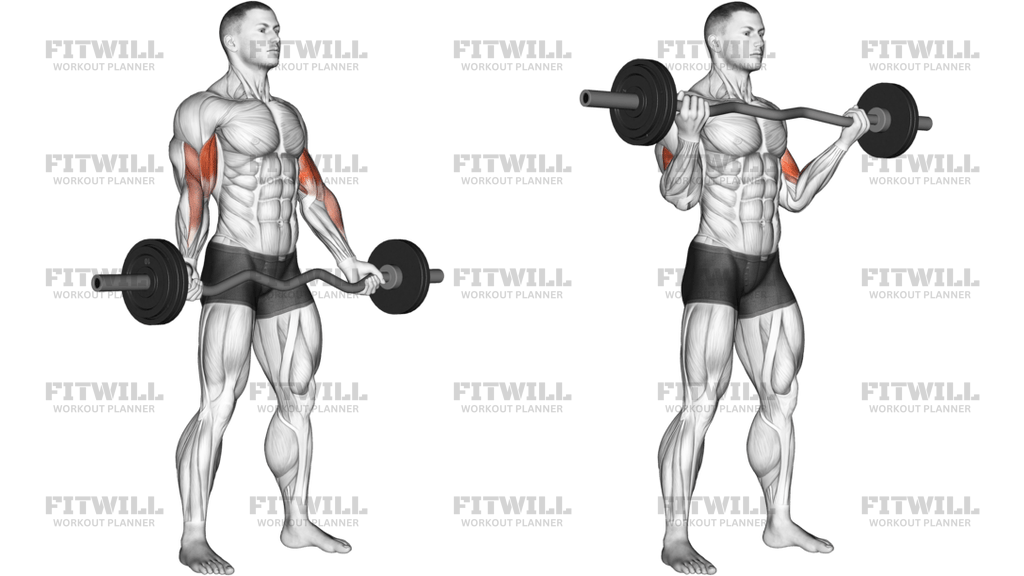
Each rep should look like the forearms are folding the bar upward while the upper arms stay quiet against the pad. Curl the EZ bar toward the lower chest and upper abdomen, squeeze hard near the top, and lower it under control until the elbows are almost straight without snapping into a hard lockout. Keep the wrists aligned with the EZ bar angles and avoid letting the shoulders roll forward to finish the rep.
EZ-Bar Biceps Curl With Arm Blaster works well as a focused arm-builder after heavier compound lifts or as a standalone biceps movement when you want strict tension and minimal cheating. It is not the best choice for big momentum reps, but it is excellent for learning how much work the biceps can do when the torso is removed from the lift. Use a load you can control cleanly, because the arm blaster will expose sloppy reps very quickly.
[ Workout Log & Planner ]
Put your next workout in Fitwill
Keep your plan and training log ready when you are.


Instructions
- Slip the arm blaster strap over your neck and let the curved plate rest flat against your torso.
- Stand with your feet about hip-width apart and hold the EZ bar in a shoulder-width underhand grip on the angled handles.
- Press your upper arms and inner elbows into the pad so the elbows stay slightly in front of your ribs.
- Let the bar hang in front of your thighs with your wrists stacked over your forearms and your chest tall.
- Brace your midsection, keep your shoulders down, and start the curl without swinging your torso.
- Flex your elbows to raise the EZ bar toward your lower chest and upper abdomen while the upper arms stay pinned to the blaster.
- Squeeze the biceps at the top for a brief pause without letting the elbows flare forward or the wrists bend back.
- Lower the bar slowly until your arms are almost straight and the tension stays on the biceps through the descent.
- Finish the set by lowering the bar to your thighs, relaxing the grip, and stepping clear of the arm blaster.
Tips & Tricks
- Use less weight than your regular standing curl; the arm blaster removes momentum and makes the same load feel heavier.
- If the elbows slide off the pad, narrow your stance slightly and keep the plate centered on your torso.
- Let the EZ-bar angle decide your wrist position instead of forcing a straight-bar grip that twists the forearms.
- Keep the bar path close to your body; if it swings forward, the front delts and hips are taking over.
- Stop just short of a hard lockout if your elbows feel irritated at the bottom.
- A 2-3 second lowering phase usually works better here than a fast drop because the blaster makes the top half easy to rush.
- Keep your shoulders quiet; shrugging usually means the load is too heavy or the blaster is sitting too low.
- Exhale as the bar comes up and inhale as it lowers so you do not brace so hard that the torso starts to rock.
- If the forearms burn before the biceps, check that your grip is not death-gripping the bar.
Frequently Asked Questions
What muscles does EZ-Bar Biceps Curl With Arm Blaster work most?
The biceps do most of the work, with the brachialis, brachioradialis, and forearm flexors helping during the curl and the lower phase.
Why use an arm blaster for EZ-Bar Biceps Curl With Arm Blaster?
It pins the upper arms to your torso so you cannot swing the weight as easily. That makes the curl stricter and keeps the tension on the arms instead of the body.
Is EZ-Bar Biceps Curl With Arm Blaster good for beginners?
Yes, if the load is light and the blaster fits correctly. Beginners often learn better curl mechanics here because the pad makes cheating obvious.
How should the EZ bar travel during this exercise?
The bar should move in a short arc from the thighs toward the lower chest or upper abdomen. If it drifts far forward, the shoulders are helping too much.
Where should my elbows be on the arm blaster?
Keep the inner elbows and upper arms pressed into the pad so they stay fixed instead of flaring outward. The bar should move while the upper arms stay quiet.
Can I use a straight bar instead of an EZ bar?
You can, but the straight bar usually puts more stress on the wrists and forearms. The EZ bar is the better choice if you want a more comfortable semi-supinated grip.
What is the most common mistake on EZ-Bar Biceps Curl With Arm Blaster?
People lean back and turn it into a body swing. Reduce the load and keep your ribs stacked over your pelvis so the curl comes from the elbows, not the hips.
Should I lock out my elbows at the bottom?
A soft near-lockout is usually enough. If full extension bothers the elbows, stop just short of lockout and keep the descent controlled.
Where should I feel EZ-Bar Biceps Curl With Arm Blaster most?
You should feel the work in the front of the upper arms, with some forearm involvement from holding the EZ bar. If the shoulders are dominating, the blaster or load is off.