Barbell Wide-Grip Drag Curl
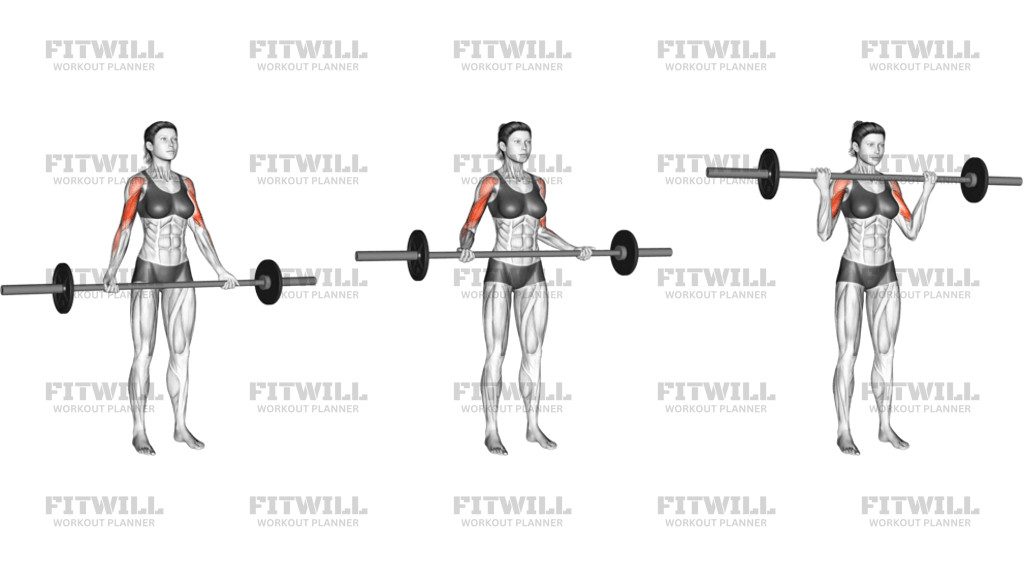
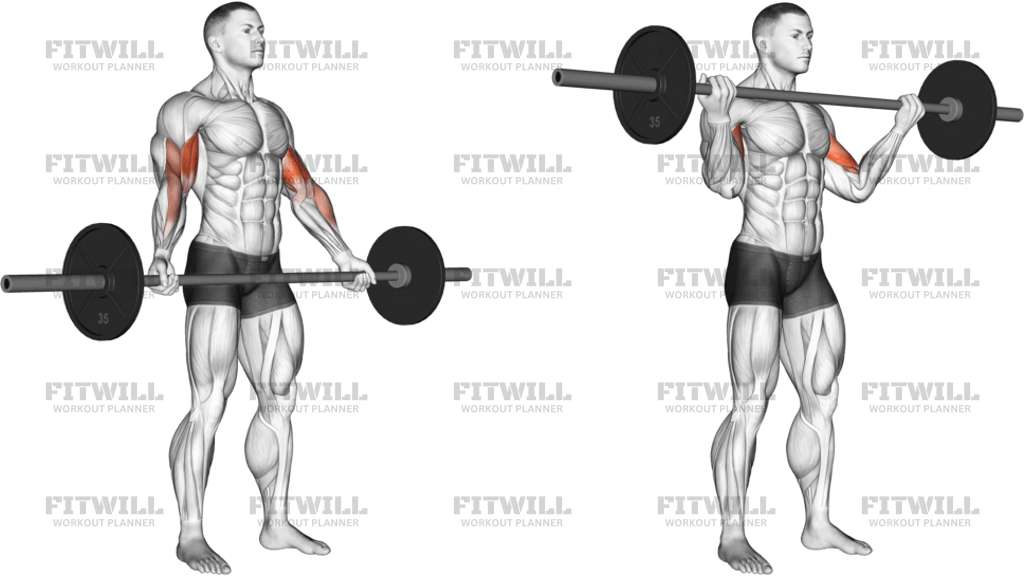
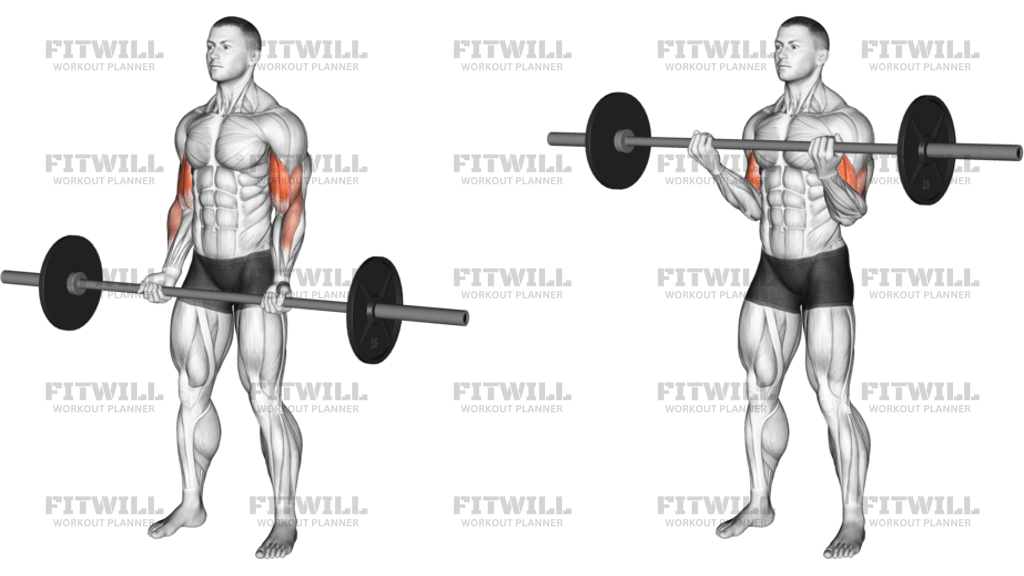
Barbell Wide-Grip Drag Curl is a standing curl that keeps the bar close to the torso while the elbows travel slightly behind the body. The wide hand position and close bar path change the line of pull compared with a standard curl, so the set feels strict, deliberate, and heavily biased toward the biceps rather than the shoulders.
This movement is most useful when you want direct arm work without the loose body swing that often sneaks into heavier curls. The primary emphasis is on the biceps, with the brachialis, brachioradialis, and forearm flexors helping to control the bar and keep the wrists steady. Because the upper arms stay close to the sides and then drift back as the bar rises, the rep rewards clean elbow flexion more than brute force.
The setup matters because the drag path only works if the torso stays tall and the bar starts close to the thighs. Stand with your feet about hip-width apart, grip the bar a little wider than shoulder width, and let the bar rest against the front of your thighs. From there, keep your chest lifted, ribs stacked over your pelvis, and shoulders set down rather than shrugged so the curl begins from a stable base.
Each repetition should feel like you are sliding the bar up the shirt rather than swinging it away from the body. As the bar climbs toward the lower chest or upper abdomen, the elbows travel back and the forearms stay under control, then the bar lowers along the same close track with no bounce at the bottom. That close path keeps the tension on the arms and makes it much easier to notice when you start cheating with your lower back or front delts.
Use Barbell Wide-Grip Drag Curl as an accessory movement for arm size, biceps strength, or higher-quality curl volume after your main lifts. Moderate loads usually work best, because the goal is a clean drag path and a hard squeeze at the top rather than maximal weight. If your wrists, elbows, or shoulders feel forced by the wide grip, reduce the load or choose a different curl variation instead of turning the rep into a heave.
Fitwill
Log Workouts, Track Progress & Build Strength.
Achieve more with Fitwill: explore over 9600 exercises with images and videos, access built-in and custom workouts, perfect for both gym and home sessions, and see real results.
Start your journey. Download today!




Instructions
- Stand tall with your feet about hip-width apart and hold the barbell against the front of your thighs in a wide underhand grip.
- Soften your knees, stack your ribs over your pelvis, and keep your chest lifted without leaning back.
- Let your elbows sit slightly behind your torso so your upper arms are close to your sides before the first rep starts.
- Brace your abs, keep your wrists straight, and begin the curl without swinging your hips or shoulders.
- Drag the bar up your shirt by pulling it close to your body instead of letting it travel forward.
- Keep your elbows drifting back as the bar rises toward your lower chest or upper abdomen.
- Squeeze your biceps briefly at the top without shrugging your shoulders or flaring your chest forward.
- Lower the bar along the same close path until your arms are straight, then reset before the next rep.
Tips & Tricks
- Keep the bar almost touching your torso; if it floats away from your body, the drag curl turns into a looser cheat curl.
- Choose a grip width that lets your wrists stay straight. If your wrists bend back, the grip is too wide for the load you picked.
- Think about driving the elbows back, not the hands forward. That cue keeps the bar path tight and the shoulders quieter.
- Use less weight than you would on a standard barbell curl. The shortened leverage makes heavy loads feel tempting but messy fast.
- Stop the rep when your shoulders begin to roll forward. Once the front delts take over, the biceps are no longer getting the cleanest tension.
- If the bar bumps your hips on the way up, soften your knees a little more instead of arching your lower back.
- Lower the bar slowly to keep tension on the biceps from the top all the way back to the thighs.
- If your elbows ache after a few reps, shorten the range slightly and keep the top squeeze controlled rather than forcing a higher finish.
Frequently Asked Questions
What does Barbell Wide-Grip Drag Curl train most?
It mainly trains the biceps, with the brachialis, brachioradialis, and forearm flexors helping to control the bar.
How is Barbell Wide-Grip Drag Curl different from a regular curl?
The bar stays close to your torso and the elbows drift back as you lift, so the rep is stricter and the shoulders contribute less.
How wide should my grip be on the bar?
Wide enough to feel stable, usually a little outside shoulder width, but not so wide that your wrists bend back or your shoulders shrug.
Should my elbows stay pinned to my sides?
Not exactly. They should stay close at the start, then travel slightly behind your torso as the bar rises along your shirt.
Can beginners do this exercise safely?
Yes, if they start light and keep the bar path tight. The main mistake is using too much weight and turning the lift into a swing.
Why does the bar need to stay so close to my body?
That close path keeps the tension on elbow flexion and makes it much harder to cheat with momentum from the hips or shoulders.
What should I do if my wrists or elbows feel irritated?
Reduce the load, narrow the grip slightly, and stop a little short of the most uncomfortable range before the joints start to complain.
Is Barbell Wide-Grip Drag Curl better for size or strength?
It is best used for strict arm hypertrophy and accessory strength work, where clean reps matter more than moving the heaviest possible bar.