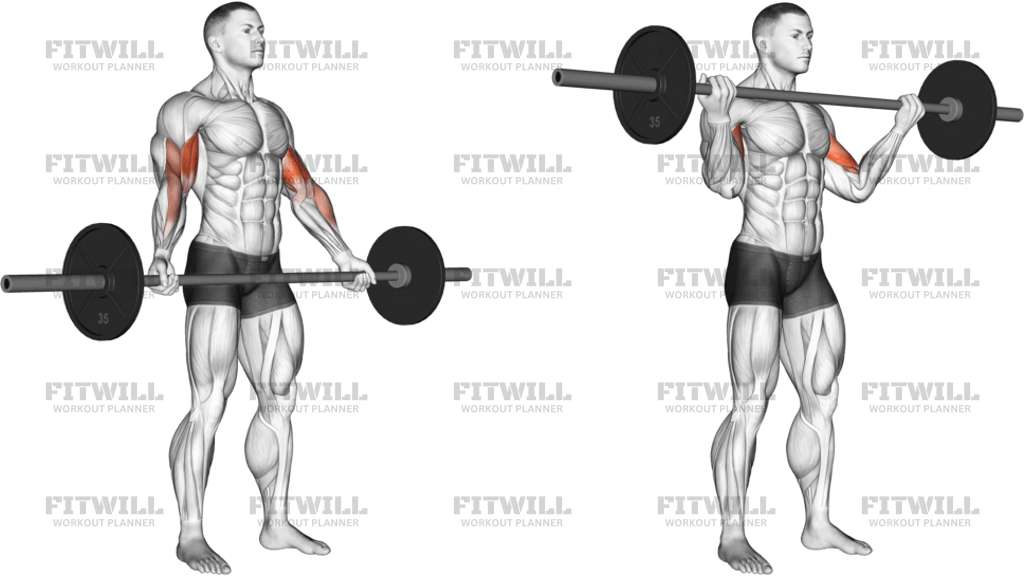
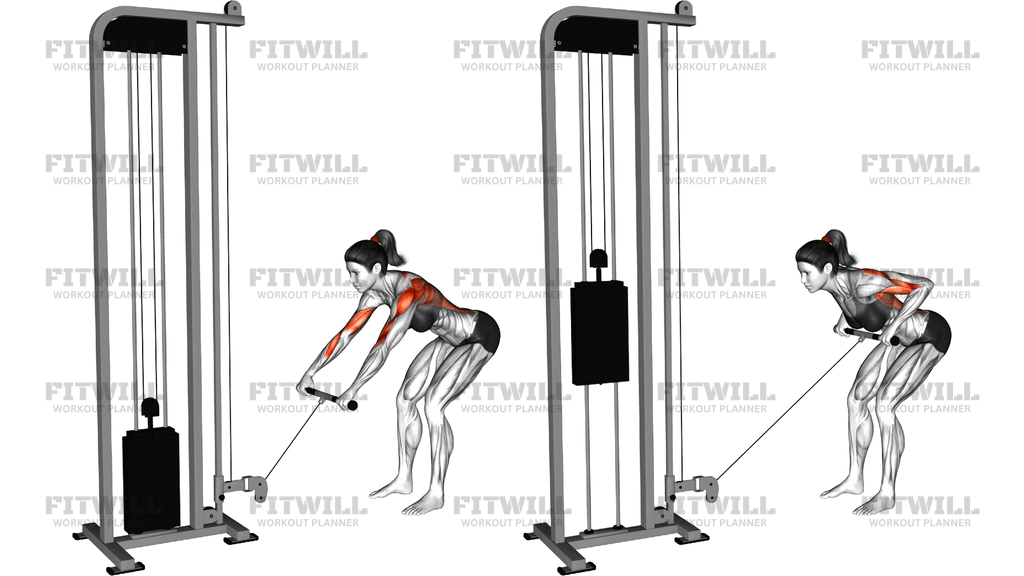
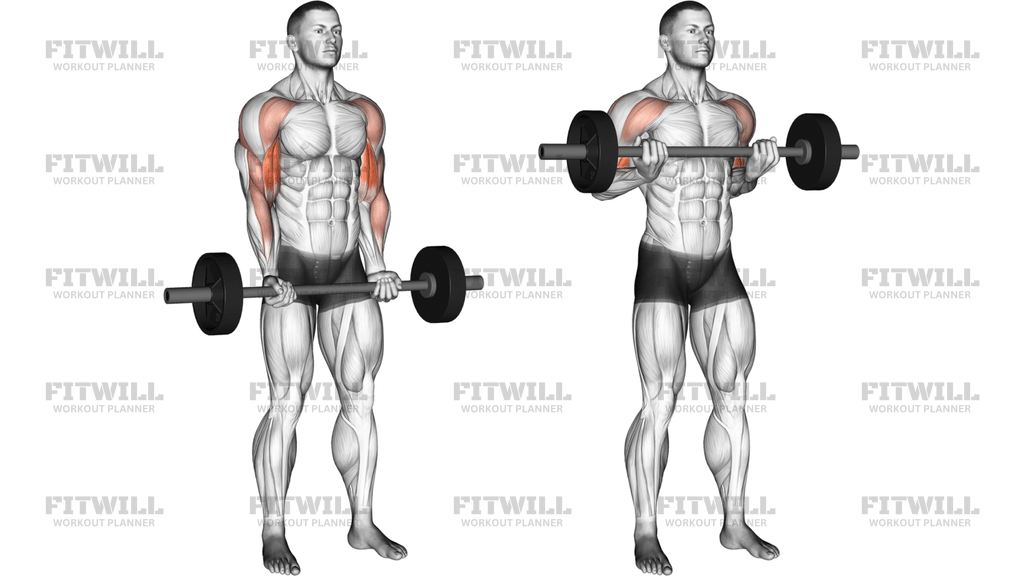
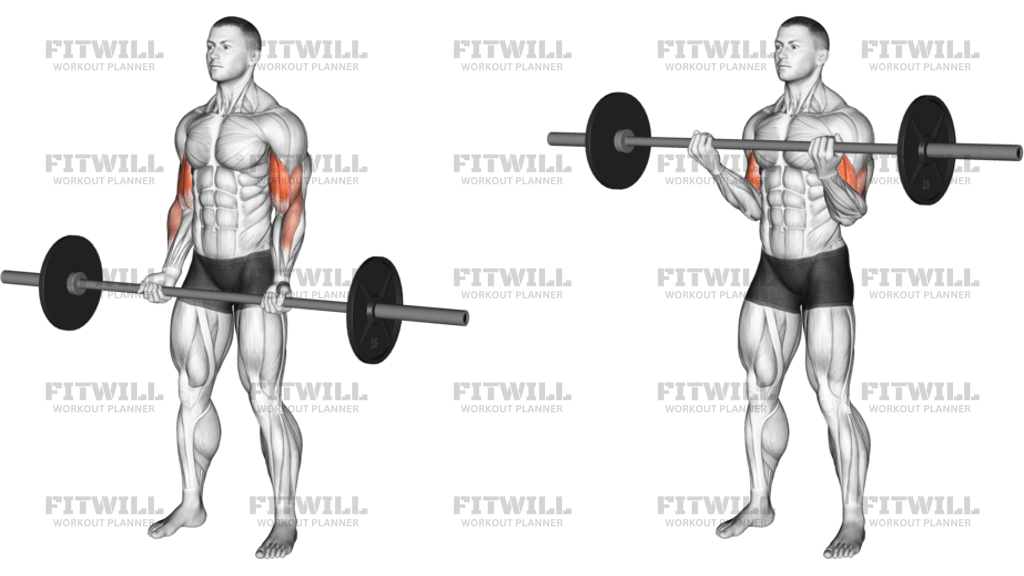
Barbell Standing Concentration Curl
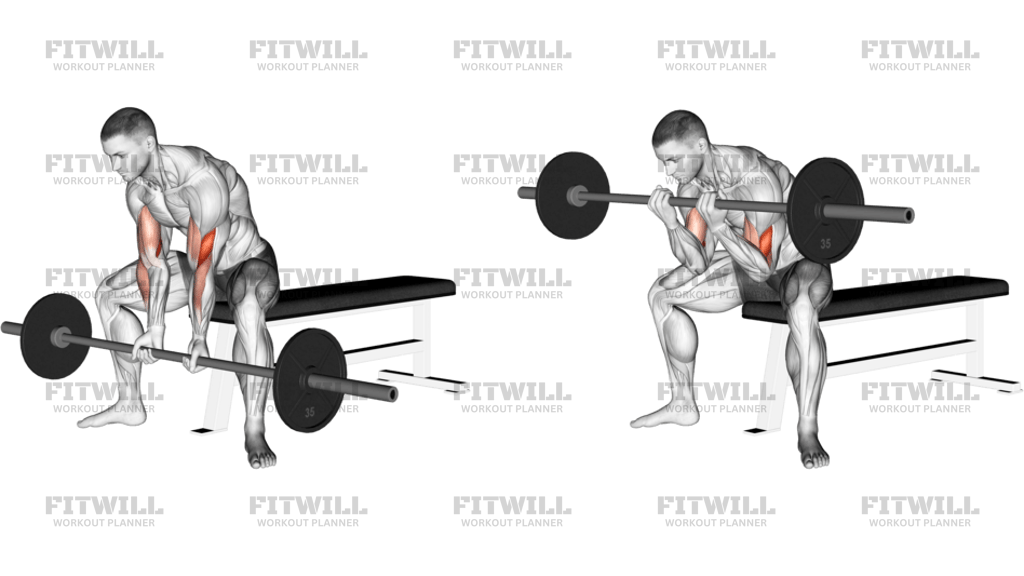
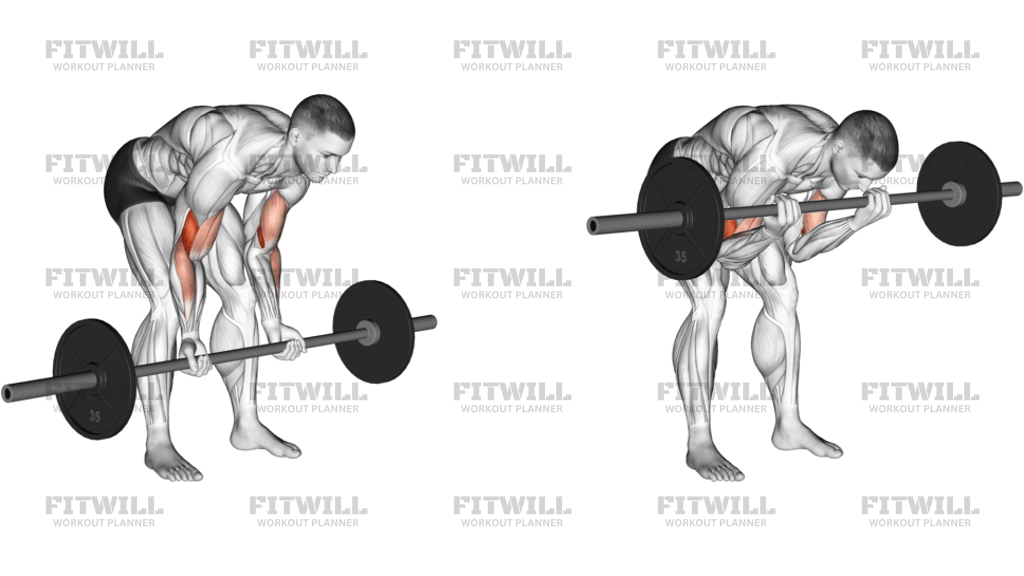
Barbell Standing Concentration Curl is a strict curling variation that uses a deep hip hinge to strip away momentum and keep the tension on the arms. Instead of standing tall and swinging the bar, you stay folded forward so the torso remains nearly parallel to the floor while the elbows do the work. That fixed position makes the repetition feel deliberate and gives you immediate feedback when the shoulders, hips, or lower back try to help.
The main muscles involved are the biceps, with the brachialis and brachioradialis adding elbow flexion strength and the forearm muscles stabilizing the wrist. Because the bar is held with a supinated grip, the forearms also have to keep the bar level and prevent the wrists from collapsing as the load travels. The hinge position adds an isometric demand to the posterior chain and trunk so the upper body stays quiet while the curl happens.
Set the feet about hip-width apart, soften the knees, and hinge from the hips until the chest points toward the floor. Hold the bar with a shoulder-width underhand grip and let it hang just in front of the shins. Keep the shoulder blades set, the ribs stacked, and the neck long so the start position is stable before the first rep begins.
Curl the bar toward the lower chest or upper abdomen by bending the elbows only. Keep the upper arms as still as possible, then pause briefly at the top before lowering the bar under control until the elbows are almost straight. Exhale on the way up, inhale on the way down, and avoid lifting the torso higher to finish the rep. The goal is a smooth path with the bar staying close to the legs, not a bigger range created by body English.
Barbell Standing Concentration Curl is useful after heavier pulling work when you want strict arm volume without turning the set into a full-body cheat curl. It also works well for moderate to higher rep ranges because the bent-over angle exposes weak links quickly, making load selection more honest. If the lower back, elbows, or wrists start taking over, shorten the set, reduce the weight, and keep the hinge locked before the movement gets sloppy.
[ Workout Log & Planner ]
Put your next workout in Fitwill
Keep your plan and training log ready when you are.


Instructions
- Stand with your feet about hip-width apart, hinge at the hips until your torso is nearly parallel to the floor, and let a barbell hang in front of your shins with a shoulder-width underhand grip.
- Soften your knees, set your shoulder blades down and back, stack your ribs over your pelvis, and keep your neck long before the first rep starts.
- Let your arms hang straight so the bar stays close to your legs and your wrists line up over your forearms.
- Curl the bar toward your lower chest or upper abdomen by bending only at the elbows.
- Keep your upper arms quiet and do not let your torso rise as the bar travels upward.
- Squeeze your biceps briefly at the top without letting your elbows drift behind your body.
- Lower the bar slowly until your elbows are almost straight and the bar returns close to the start position.
- After the set, bend your knees and hips together to place the bar back on the floor or rack it safely.
Tips & Tricks
- Use less weight than you would for a standing barbell curl, because the hinge removes almost all cheating.
- Keep the bar close to your shins and thighs; if it drifts away from the body, the rep turns into a swing.
- A shoulder-width underhand grip usually keeps the wrists happier than a very wide grip.
- If your chest keeps rising on the last reps, the load is too heavy for this strict angle.
- Think about freezing the torso in place so only the elbows move.
- Take 2 to 3 seconds on the lowering phase to keep tension on the biceps instead of dropping the bar.
- If the bar brushes your legs, hinge a little deeper so the bar path has room to travel cleanly.
- Stop the set when your lower back starts holding the position for you instead of the arms.
Frequently Asked Questions
What muscles does Barbell Standing Concentration Curl train most?
The biceps do most of the work, with the brachialis, brachioradialis, and forearm flexors helping to bend the elbow and steady the bar.
Why is Barbell Standing Concentration Curl done with a hip hinge?
The hinge takes away torso swing and makes the curl more strict, so the arms have to create the movement instead of momentum.
How is Barbell Standing Concentration Curl different from a regular barbell curl?
A regular curl is usually done standing upright and can use a little body drive, while this version keeps the torso folded over so the rep stays much stricter.
How wide should my grip be on the bar?
Start with a shoulder-width supinated grip. That usually gives the cleanest wrist position and keeps the elbows tracking naturally.
Should my elbows move during the curl?
They should stay mostly fixed near the ribs. A small amount of natural drift is fine, but the elbows should not travel back and turn the rep into a row.
Is Barbell Standing Concentration Curl good for beginners?
Yes, as long as the load is light and the hinge position stays locked. Beginners usually learn the strict arm path quickly with this setup.
What should I do if my lower back feels Barbell Standing Concentration Curl?
Reduce the load, hinge a little less deeply, and keep your ribs stacked instead of arching. If the back still dominates, stop the set.
What tempo works best for this exercise?
A controlled lift with a slower lowering phase works best, such as 1 to 2 seconds up and 2 to 3 seconds down.