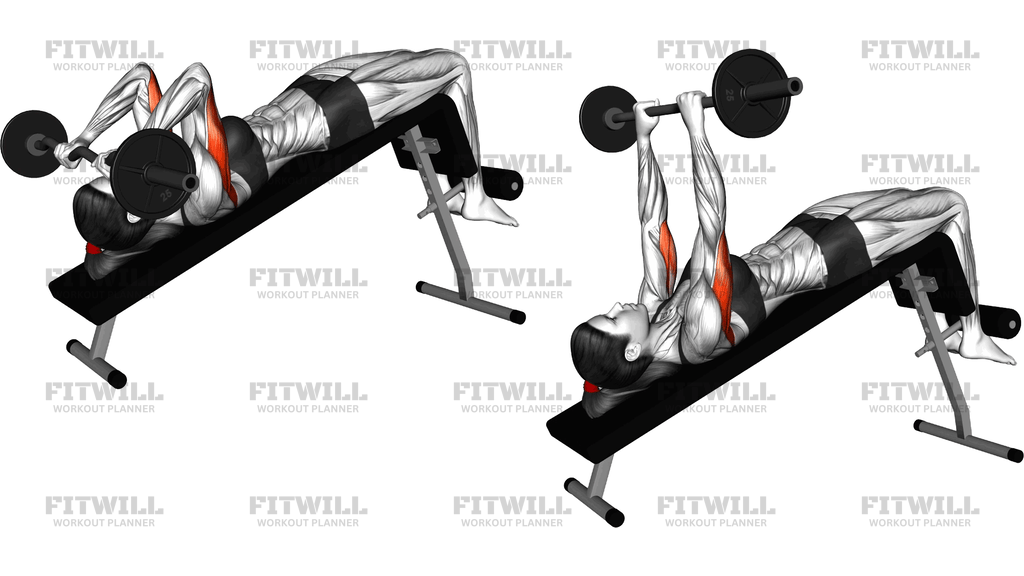
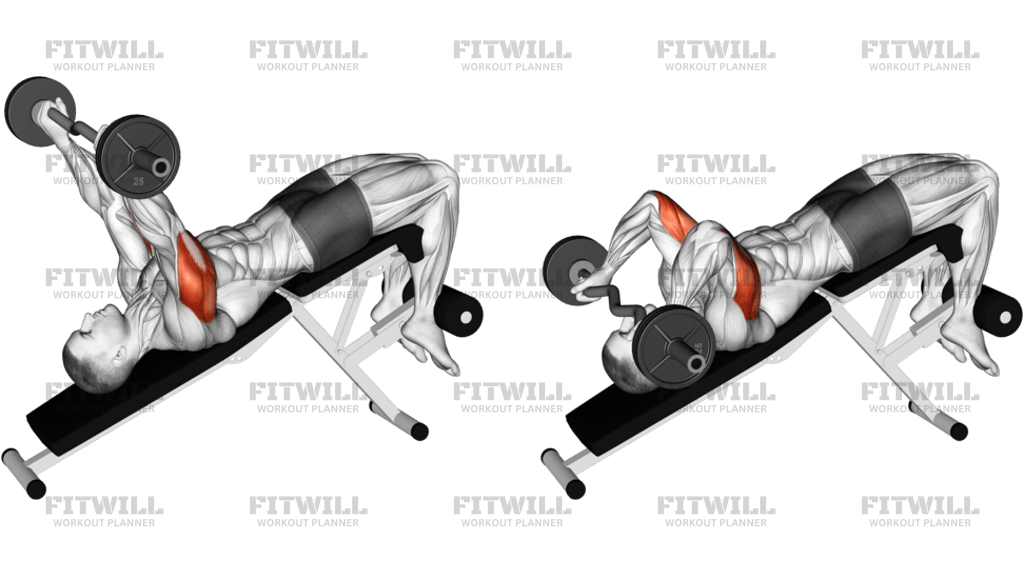
EZ-Bar Close-Grip Bench Press
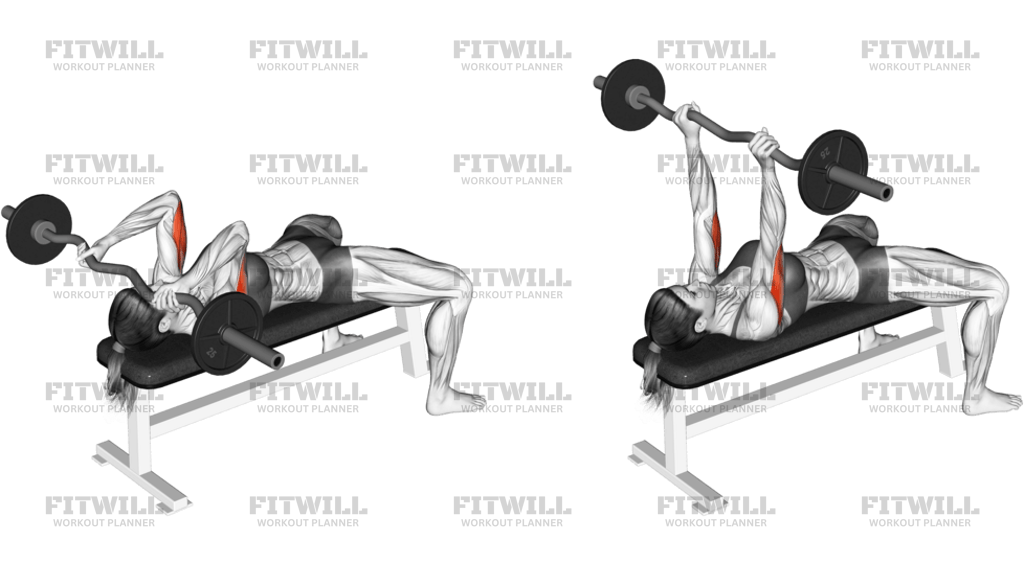
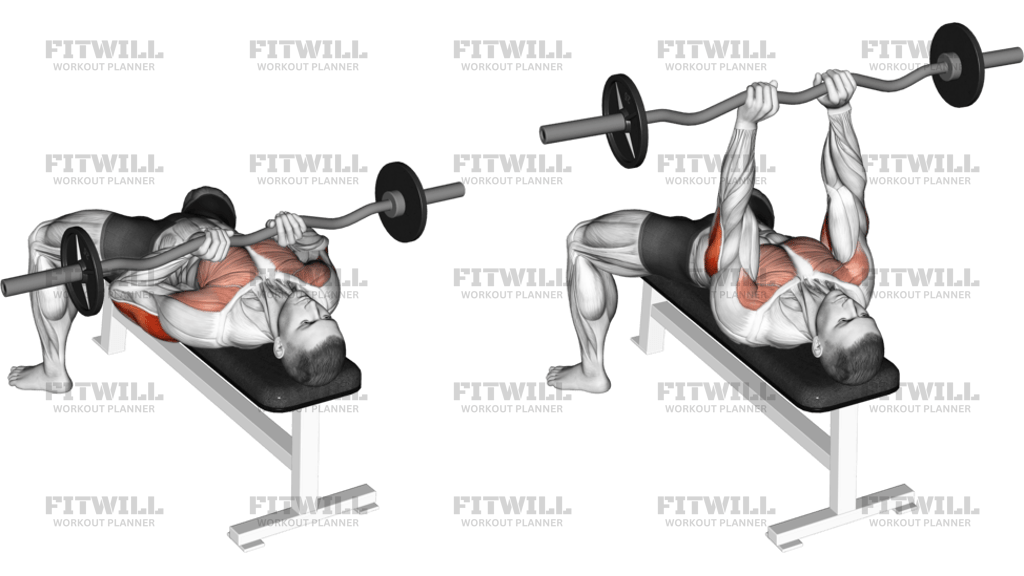
EZ-Bar Close-Grip Bench Press is a flat-bench pressing exercise that emphasizes elbow extension and places most of the work on the triceps. The EZ bar lets you keep a narrower, wrist-friendlier grip than a straight bar, which is useful when a close hand position would otherwise stress the forearms or wrists. The movement still uses the chest and front shoulders, but the closer grip shifts the demand toward the triceps brachii and makes the lockout phase the main driver of the rep.
The setup matters because the bench position controls how stable the whole lift feels. Lie back on a flat bench with your feet planted firmly on the floor, shoulder blades set down and back, and your eyes under the bar. Grip the EZ bar on the inner angled sections, usually just inside shoulder width, so your wrists can stay stacked over your forearms. A good setup keeps the elbows from drifting out and helps the bar travel in a clean, repeatable line.
During each rep, lower the bar with control toward the lower chest or upper sternum, keeping the elbows tucked closer to the torso than in a standard bench press. That elbow path is the key difference in this exercise: it reduces shoulder flare and asks the triceps to finish the press. Press the bar back up by extending the elbows and keeping the wrists neutral, then finish over the shoulder line without bouncing off the chest or letting the shoulders roll forward.
This exercise is most useful when you want a triceps-focused pressing pattern that still lets you train horizontal push strength. It fits well as an accessory after heavier bench pressing, as a main movement in a triceps session, or as a strength option for lifters who prefer the EZ bar grip. Because the close grip increases the triceps load, the bar usually needs to be lighter than a wider-grip bench press for the same level of control.
Stay within a pain-free range and stop the set if the wrists, elbows, or front of the shoulders lose their stacked position. A small pause on the chest can help eliminate rebound, but only if you can keep your upper back tight and the bar path consistent. For clean reps, think about lowering under control, touching lightly, and driving straight back up without losing the bench position.
[ Workout Log & Planner ]
Put your next workout in Fitwill
Keep your plan and training log ready when you are.


Instructions
- Lie faceup on a flat bench with your eyes under the bar, feet planted, and shoulder blades pulled down and back.
- Hold the EZ bar on the inner angled grips just inside shoulder width so your wrists stay stacked over your forearms.
- Unrack the bar and hold it over the mid-chest with straight but not locked elbows.
- Inhale, brace, and lower the bar in a controlled line toward the lower chest or upper sternum.
- Keep your elbows tucked closer to your torso than in a standard bench press as the bar descends.
- Let the bar make a light touch on the chest without bouncing or collapsing the shoulders forward.
- Press the bar back up by straightening the elbows and driving the bar to finish over the shoulder line.
- Exhale as you press, then re-rack the bar with control after the final repetition.
Tips & Tricks
- Use the angled sections of the EZ bar if a straight-bar grip makes your wrists ache.
- Keep the bar path over the lower chest on the way down and over the shoulders on the way up.
- Tuck the elbows, but do not pin them so tightly that the shoulders roll forward.
- Keep your upper back tight against the bench so the press feels stable from rep to rep.
- Lower the weight if the bar starts drifting toward your face or bouncing off the chest.
- A brief pause on the chest is useful if you want to remove momentum and build triceps strength.
- Stop the set when your wrists bend back or the EZ bar starts tilting unevenly in your hands.
- Spotters are helpful on heavier sets because the close grip makes the lockout demanding.
Frequently Asked Questions
What muscles do EZ-Bar Close-Grip Bench Presses work most?
The triceps do most of the work, with the chest and front shoulders assisting the press.
Why use an EZ bar instead of a straight bar?
The angled grips usually place the wrists in a more comfortable position while still allowing a close-hand bench press.
How close should my hands be on the bar?
Use the inner angled grips or a hand width just inside shoulder width so the elbows can stay tucked without feeling cramped.
Where should the bar touch on my chest?
Aim for the lower chest or upper sternum, not high on the chest, so the triceps can finish the press cleanly.
Can beginners do this exercise safely?
Yes, if they start light, keep the shoulder blades set on the bench, and control the lowering phase.
What is the most common mistake with this lift?
The biggest error is letting the elbows flare and turning it into a standard bench press instead of a triceps-focused press.
Does this exercise also train the chest?
Yes, but the narrower grip shifts more of the load to the triceps than a wider-grip bench press would.
How should I progress it over time?
Add load only when you can keep the bar path, wrist position, and elbow tuck consistent for every rep.