Tire Flip
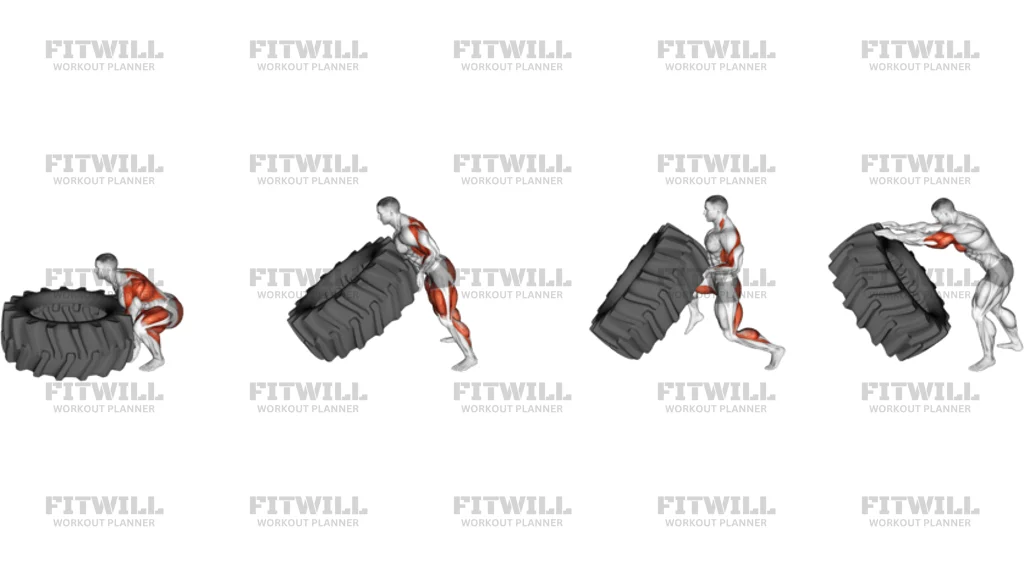
Tire Flip is a strongman-style full-body exercise that puts the thighs, glutes, hamstrings, back, shoulders, and core to work at the same time. The biggest training value comes from the unusual setup: you start low, drive hard through the floor, and then use a quick body position change to finish the turnover. That makes it a useful movement for strength, power, and total-body coordination, especially when you want something more athletic than a standard lower-body machine exercise.
The starting position matters because the tire does not behave like a barbell or dumbbell. Get close to the tire, sink into a deep squat or squat-hinge hybrid, and place your hands low on the tread or under the near edge so you can keep the load close to your body. A neutral spine and a strong brace are important here, since the first pull depends on leg drive and trunk stiffness rather than a pure back lift. If you begin too far away, the tire becomes harder to move and the turnover turns into a tug-of-war.
The first phase is usually a powerful push from the legs. Extend the knees and hips to bring the tire up toward knee height while keeping your chest over the tire and your arms engaged as guides, not as the main lifters. Once the tire starts to tip, step in with your feet and keep driving through the floor so the load continues to roll away from you instead of stalling on top of your shins. The second phase is a forward shove: once the tire is balanced high enough, press or shove through the tread to complete the flip and land it cleanly.
Tire Flip works well in strength circuits, strongman sessions, conditioning blocks, and athletic workouts because each repetition is short, intense, and easy to measure by effort. It rewards clean mechanics more than endless repetition, so set the tire where you have room to finish the turnover and step back safely after each rep. Beginners can use a lighter tire or partial turnover practice, but the movement still deserves respect because the awkward shape can pull you out of position if you rush the setup.
Keep your attention on control from the floor to the finish. The best reps look explosive but stay organized: the chest stays proud, the hips drive first, and the tire moves in one smooth sequence instead of getting yanked with the arms. When the tire is too large to control, the first place to adjust is load, not effort. Choose a tire that lets you stay close, keep a flat back, and complete each turnover without twisting, collapsing, or chasing the tire forward.
[ Workout Log & Planner ]
Put your next workout in Fitwill
Keep your plan and training log ready when you are.


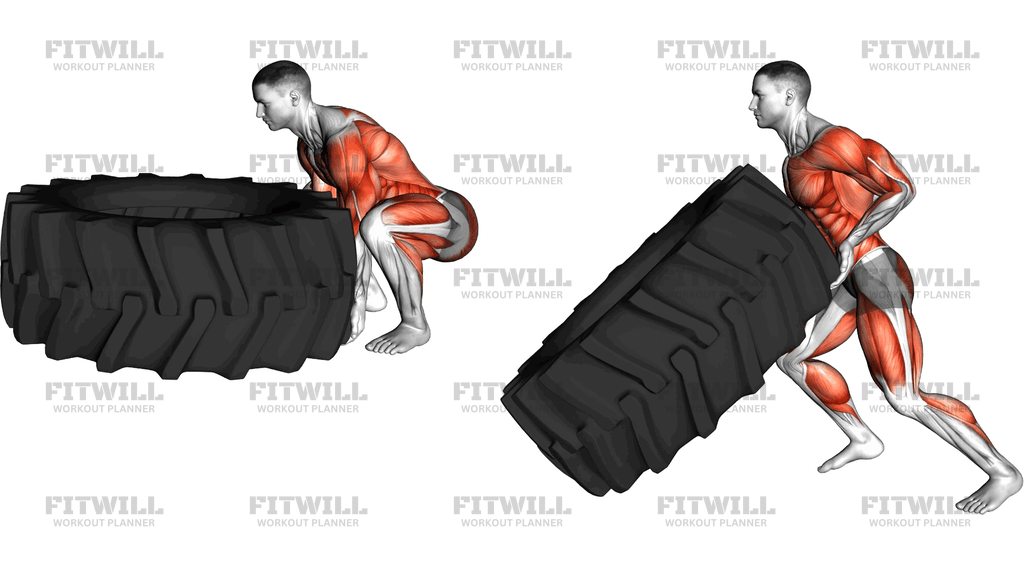
Instructions
- Stand close to the tire with your feet about shoulder-width apart and sink into a deep squat so your chest is over the tread.
- Reach your hands low on the near edge of the tire or under the tread opening, then set your back flat and your neck neutral.
- Brace your core, pull your shoulders down and back, and keep your shins close to the tire before you start the pull.
- Drive through your heels and extend your knees and hips to lift the tire until it reaches about knee height.
- Keep your arms tight and use them to guide the tire while your legs and hips do most of the work.
- When the tire begins to tip forward, step in toward it so your body stays close and the load does not drift away from you.
- Continue pushing through the tread with your hands and upper body until the tire rolls over and lands flat on the far side.
- Reset your feet, re-grip the tread, and repeat for the planned number of flips with the same setup each rep.
Tips & Tricks
- Start with a tire you can turn over in one smooth effort; if you have to yank it twice, it is too heavy for clean reps.
- Keep the tire close to your shins on the first pull so the load does not swing away from your hips.
- Think of the opening drive as a leg press from a deep squat, not a deadlift done with straight legs.
- Once the tire reaches knee height, step forward under it instead of leaning back and trying to curl it over.
- Do not let your elbows flare and turn the flip into a shoulder press; the hands should stay connected to the tread and guide the roll.
- If the tire stalls at the midpoint, reset your brace and re-drive with the chest still over the tire instead of rounding harder through the back.
- Use a clear landing zone on the far side so the tire can drop flat without bouncing into your feet or ankles.
- Stop the set when you start losing the forward shove and have to twist your torso to finish the flip.
Frequently Asked Questions
What muscles does Tire Flip work most?
Tire Flip hits the thighs, glutes, and hamstrings hard, then adds a lot of work for the back, shoulders, and core during the turnover.
Is Tire Flip a beginner-friendly exercise?
Yes, if you start with a manageable tire and keep the reps slow enough to learn the setup. Beginners should prioritize a clean first pull and a controlled shove over trying to move the heaviest tire in the gym.
Where should my hands go on the tire?
Place your hands low on the near edge or under the tread so you can keep the tire close to your body. A high grip makes the first pull awkward and usually pulls your shoulders out of position.
Should Tire Flip feel more like a squat or a deadlift?
It usually starts like a deep squat with a hinge and ends with a powerful leg drive. If it turns into a straight-leg deadlift, the tire will drift away and your back will take over too early.
What is the most common mistake on Tire Flip?
Most people let the tire move away from their body and then try to finish with their arms. Staying close and stepping forward as the tire rises keeps the turnover smooth.
Can I do Tire Flip without a huge tire?
Yes, any stable tire that lets you practice the pattern works. If the tire is too tall to control, use a smaller tire or do partial turnover reps until your position is consistent.
How should I breathe during Tire Flip?
Take a brace before each rep, exhale through the effort as you drive the tire up, and reset your breath before the next flip. Short, deliberate breaths work better than holding tension for too long.
Is Tire Flip safe for the lower back?
It can be, as long as you keep the tire close, avoid twisting, and stop before your spine rounds to finish the rep. If the tire forces you to chase it forward, reduce the load or switch to a more controlled strength movement.