Dumbbell Alternate Hammer Preacher Curl
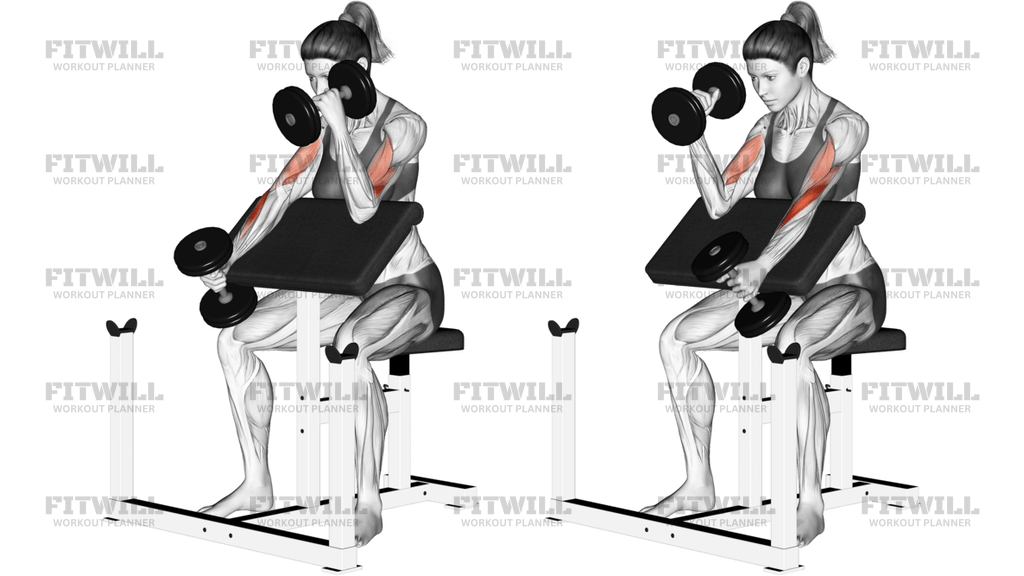
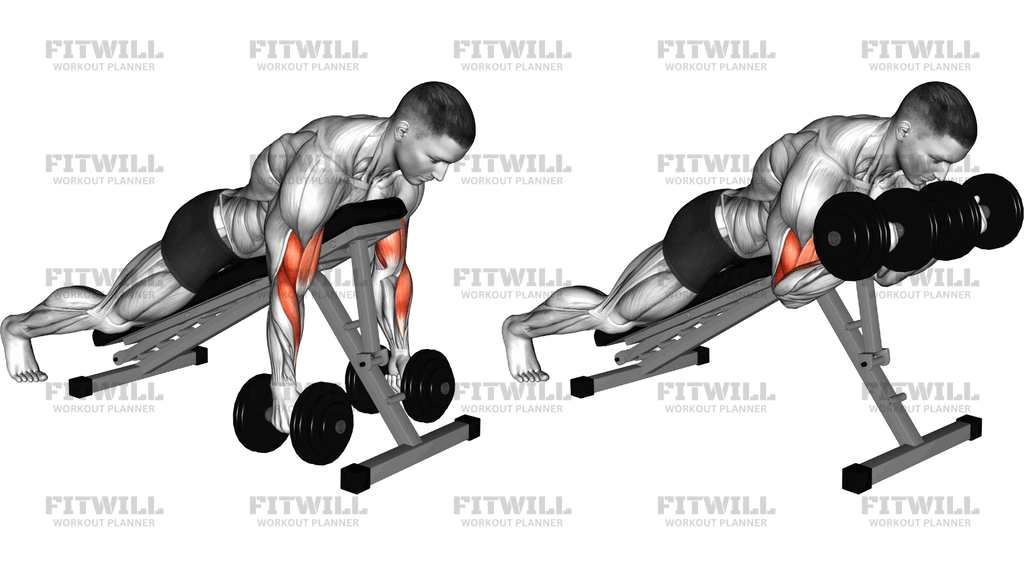
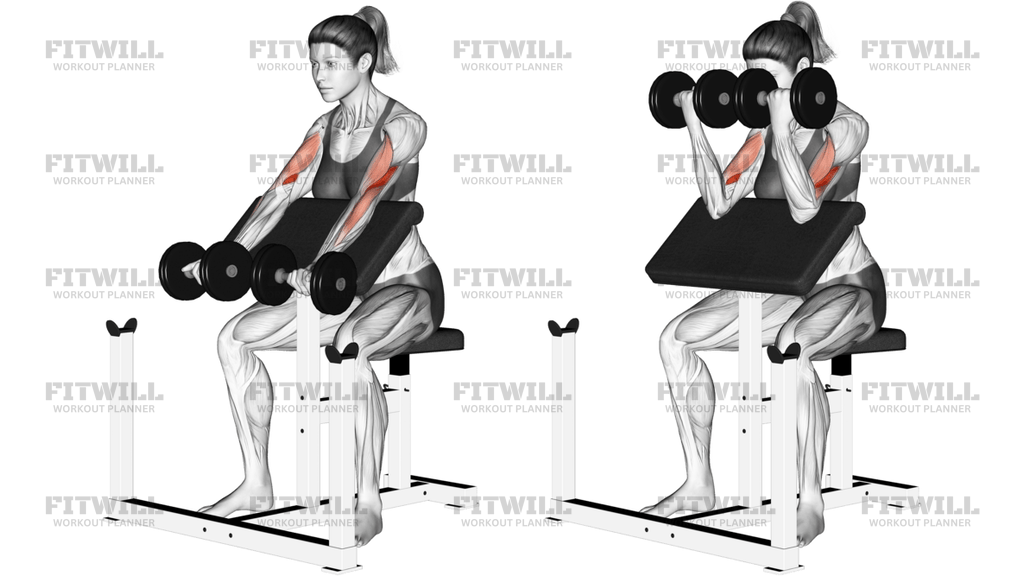
Dumbbell Alternate Hammer Preacher Curl is a strict arm exercise performed with one dumbbell at a time while the upper arm stays supported on a preacher pad. The neutral hammer grip keeps the wrist and forearm in line with the elbow, so the curl shifts some work away from a pure supinated biceps curl and toward the brachialis and brachioradialis as well. It is a useful choice when you want focused elbow flexion work without standing momentum or shoulder swing.
The preacher setup is the main reason this variation feels different from a free-standing hammer curl. By pinning the upper arm to the pad, the exercise reduces cheating from the torso and makes the start of the rep more demanding, especially near the bottom where the elbow is extended. That fixed position helps you isolate the arm, but it also means sloppy setup shows up quickly as shoulder shrugging, wrist collapse, or letting the upper arm slide off the pad.
To get the most out of it, sit close enough that the armpit and upper arm can rest comfortably on the pad while the elbow tracks in front of the body. Curl one dumbbell in a neutral grip, squeeze through the forearm and upper arm, then lower it under control before switching sides. The non-working arm should stay quiet instead of helping you twist or lift the torso. Breathing should stay steady and deliberate so each rep begins from a braced, organized position.
This movement is a good accessory after heavier pulling work, or as a dedicated arm-builder when you want clean repetition quality and a strong contraction without excessive load. Because the bench removes a lot of cheating, it works well for moderate loads, controlled tempo, and higher-quality volume. It also makes it easier to notice side-to-side differences between arms, since each side has to work through the same fixed path.
Use a pain-free range and stop short of losing shoulder position on the pad. If the elbow drifts, the wrist bends back, or the dumbbell crashes into the bottom, the set is too heavy or the bench setup is off. The goal is a smooth curl, a brief squeeze, and a controlled return that keeps tension on the arm from start to finish.
[ Workout Log & Planner ]
Put your next workout in Fitwill
Keep your plan and training log ready when you are.


Instructions
- Adjust the preacher bench so your upper arm can rest fully on the pad, then sit close enough that your armpit stays near the top edge without your shoulder rolling forward.
- Hold one dumbbell with a neutral hammer grip, keep the wrist straight, and let the working elbow point down the front of the pad.
- Plant your feet, brace your torso lightly, and keep the chest in contact with the pad before the first rep starts.
- Curl the dumbbell upward in a smooth arc without letting the upper arm lift off the pad or the shoulder drift toward the ear.
- Squeeze hard near the top while keeping the forearm vertical and the palm facing inward.
- Lower the dumbbell slowly until the elbow is almost straight, maintaining tension instead of relaxing at the bottom.
- Switch arms only after the first side is fully controlled, keeping the non-working arm still and off the path of the moving dumbbell.
- Exhale as you curl and inhale as you lower, then repeat for the planned number of reps on each side.
Tips & Tricks
- Keep the upper arm glued to the pad; if your shoulder starts helping, the preacher setup is no longer doing its job.
- Use a grip that stays neutral from start to finish so the dumbbell does not roll toward a supinated curl at the top.
- Choose a load that lets you control the last third of the lowering phase, where momentum usually shows up first.
- Do not slam into full elbow lockout at the bottom; stop just short and keep the forearm under tension.
- Keep the wrist stacked over the knuckles instead of bending it back when the dumbbell gets heavier.
- Switch sides deliberately rather than rushing the alternation, so each arm starts from the same position.
- If the bench feels too high for your shoulder, raise or lower your seat until the elbow can travel cleanly in front of the pad.
- A slower eccentric usually feels better here than a fast curl, because the pad magnifies any loss of control.
- If your torso keeps lifting off the seat, reduce the weight before you turn the movement into a half-standing curl.
Frequently Asked Questions
What muscles does Dumbbell Alternate Hammer Preacher Curl train most?
It mainly trains the biceps, brachialis, and brachioradialis, with the preacher pad reducing body English so the arms do most of the work.
Why use a preacher bench for this curl instead of standing?
The pad fixes the upper arm in place, which makes it harder to swing the torso or shoulder the weight up.
Should my palm turn up during the rep?
No. Keep a hammer grip with the thumb facing up or slightly inward so the forearm stays neutral.
How far should I lower the dumbbell?
Lower until the elbow is almost straight, but do not fully relax into the bottom if that makes the shoulder roll forward or the wrist lose position.
Why alternate arms instead of curling both at once?
Alternating lets you focus on one side at a time and keeps each rep strict, which is useful on a preacher bench where momentum is easy to notice.
Is this exercise hard on the elbows?
It can be if you use too much load or drop too fast. Controlled lowering and a pain-free range usually make it easier to manage.
What is the biggest form mistake with the preacher pad?
Letting the upper arm slide off the pad or letting the shoulder come forward to help the curl.
Can beginners use Dumbbell Alternate Hammer Preacher Curl?
Yes, if they start light and learn to keep the upper arm fixed, the wrist neutral, and the lowering phase controlled.