Burpee
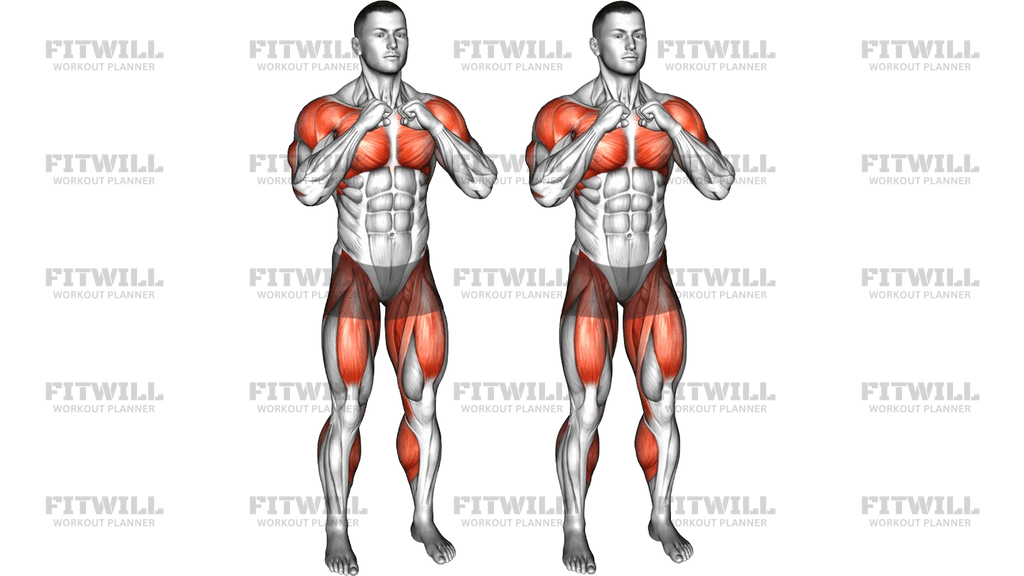
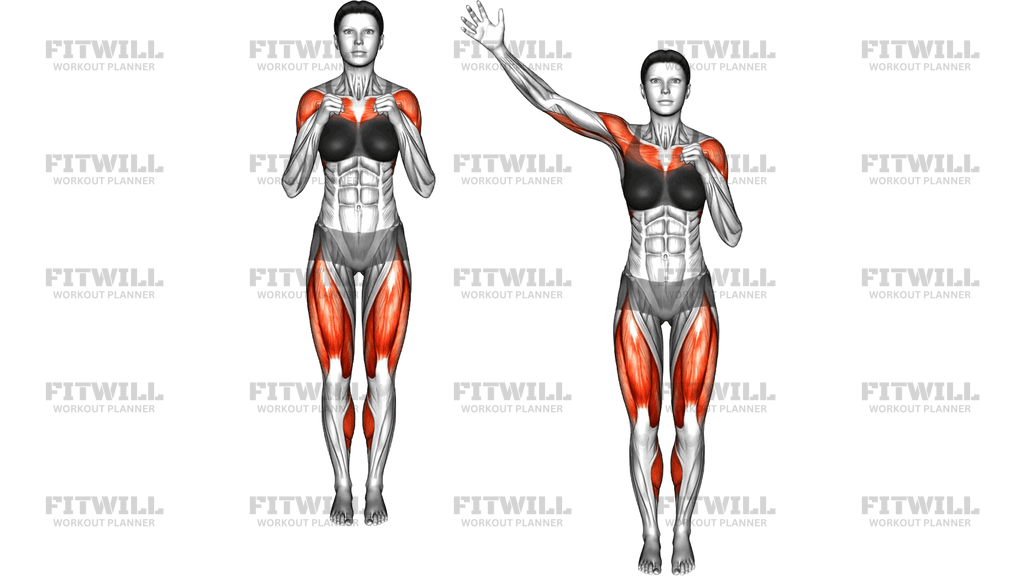
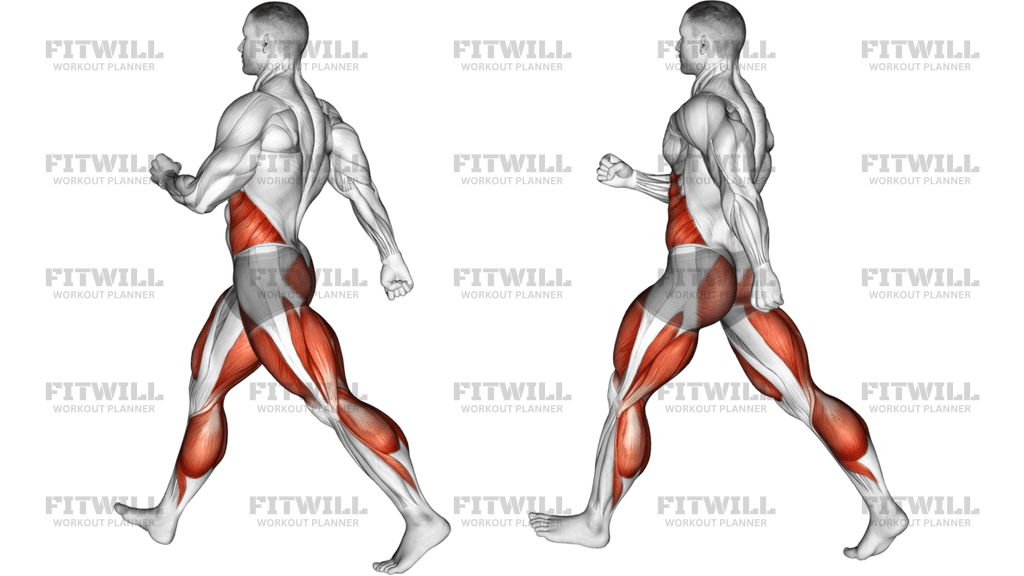
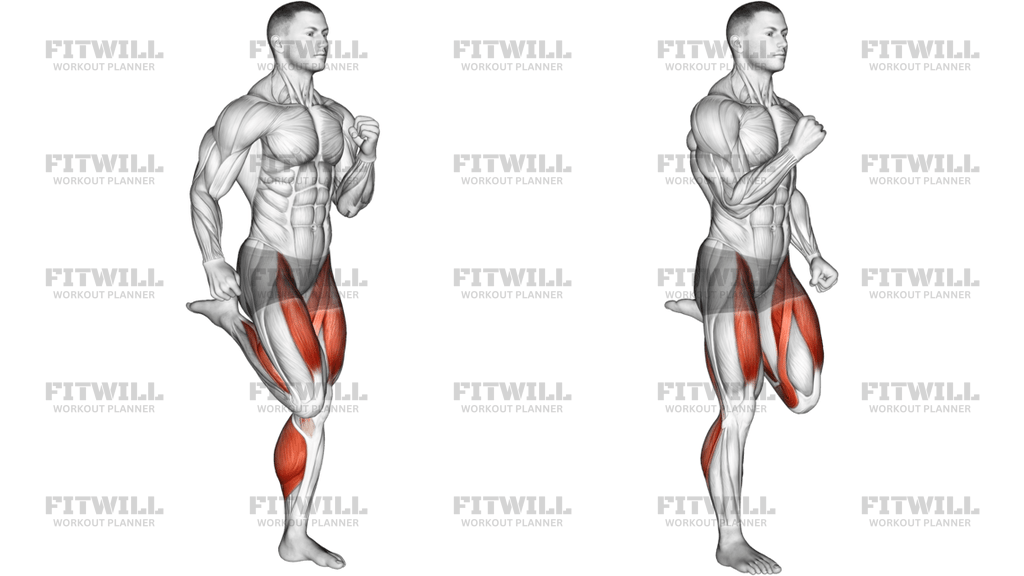
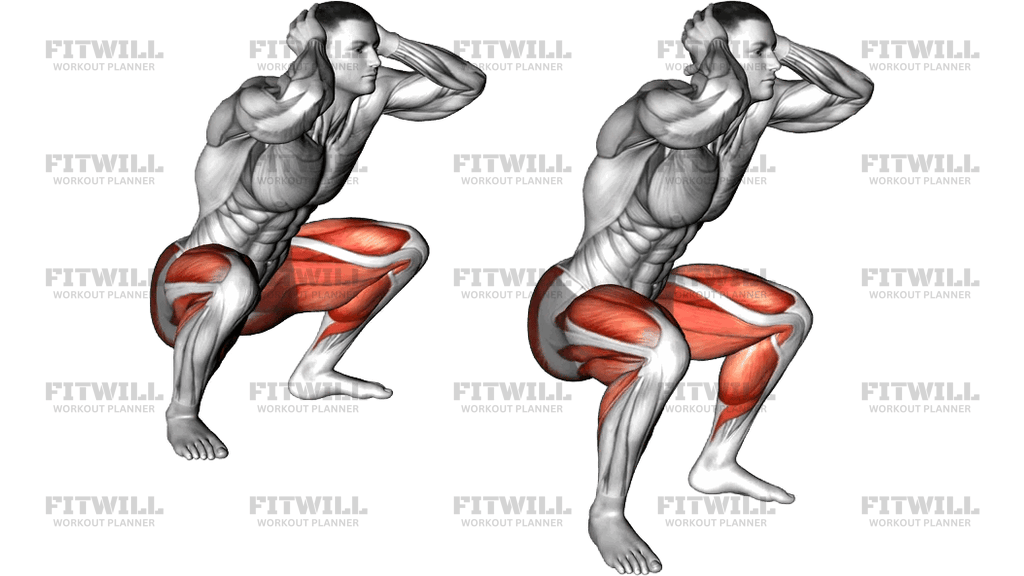
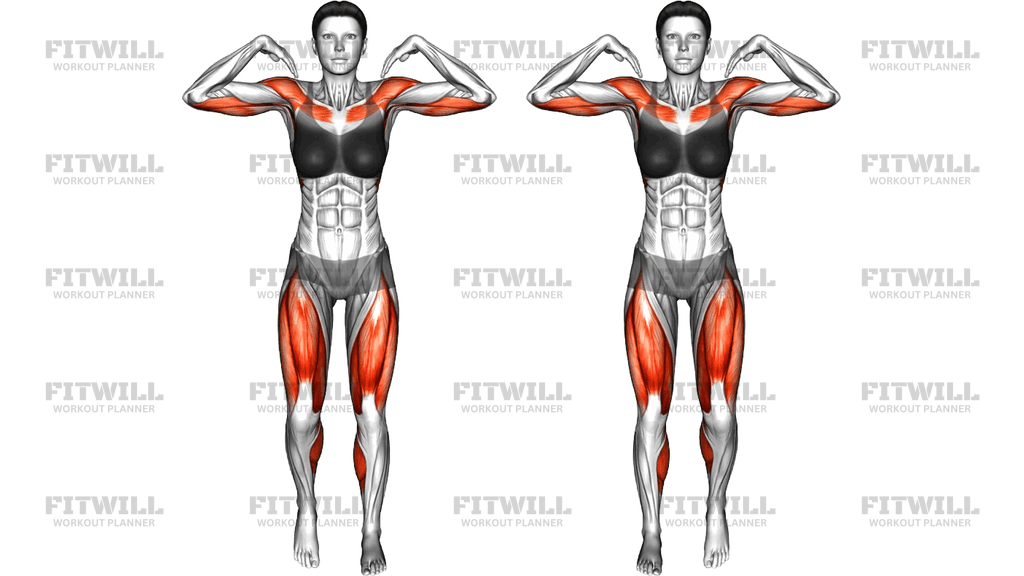
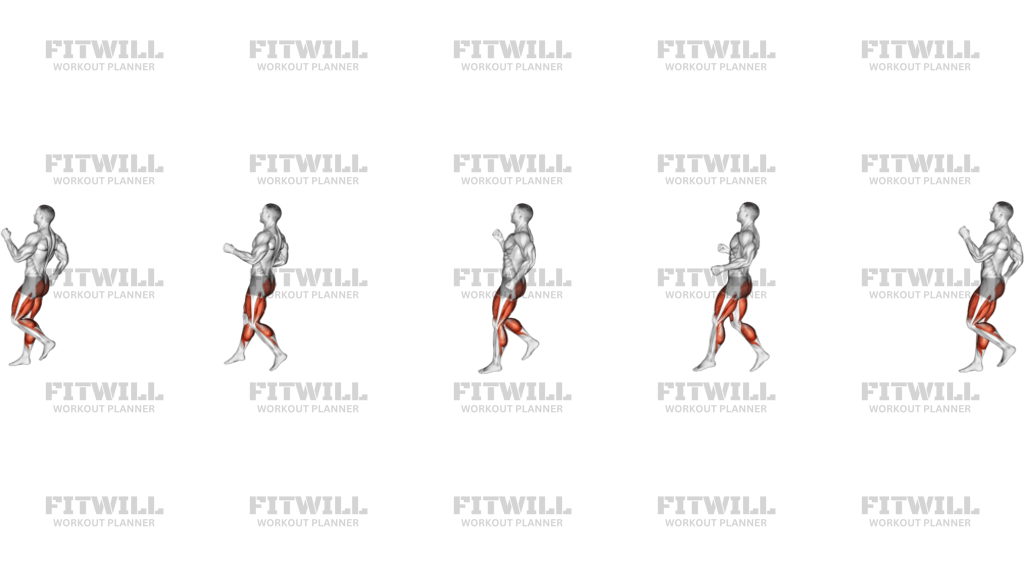
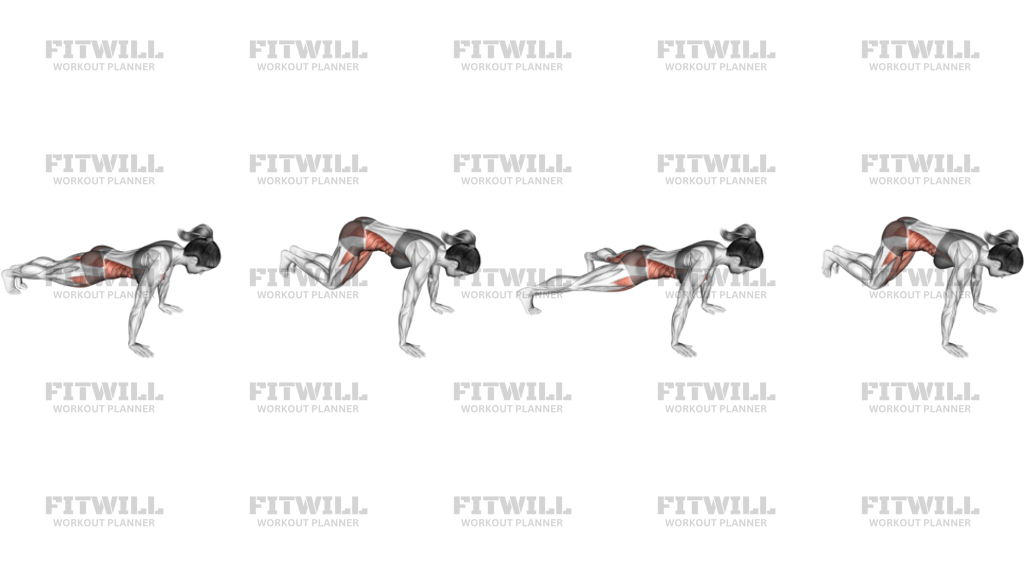
The burpee is a full-body bodyweight conditioning exercise that links a squat, a plank, and an explosive jump into one continuous rep. This version matches the common no-push-up burpee shown in the image: you fold down to the floor, step or jump back into a plank, return your feet under you, then stand and jump overhead. It is built to raise heart rate quickly while still demanding coordination, trunk stiffness, shoulder support, and leg drive.
Because the burpee moves through several positions in a single rep, the setup matters more than it does in simpler bodyweight drills. Your feet should start about hip-width apart, with enough space in front of you to place both hands flat on the floor. A stable landing and a controlled plank entry keep the movement smooth; if the descent is rushed, the shoulders and lower back usually take over and the rep turns sloppy.
The floor phase should feel deliberate. Lower your hips into a squat, plant your hands, and send your legs back until you reach a strong plank line from shoulders to heels. From there, bring the feet forward under the hips, keep the chest lifted enough to avoid folding completely onto the thighs, and drive up through the legs into a tall finish. The jump is the power phase, but it should still look organized rather than wild.
Burpees are useful in warmups, metabolic circuits, conditioning blocks, and athletic finishers when you want a bodyweight drill that taxes both the lower body and the upper body. They are also easy to scale by stepping back instead of jumping, removing the jump at the top, or shortening the range if the shoulders, wrists, or knees need a lower-impact option.
The main quality marker is repeatability. Every rep should look similar, with the same hand placement, plank shape, and landing pattern. If the pace starts to break your posture, shorten the set or slow the transition instead of chasing more speed. Done well, the burpee is a simple but demanding conditioning drill that teaches efficient floor-to-stand movement under fatigue.
[ Workout Log & Planner ]
Put your next workout in Fitwill
Keep your plan and training log ready when you are.


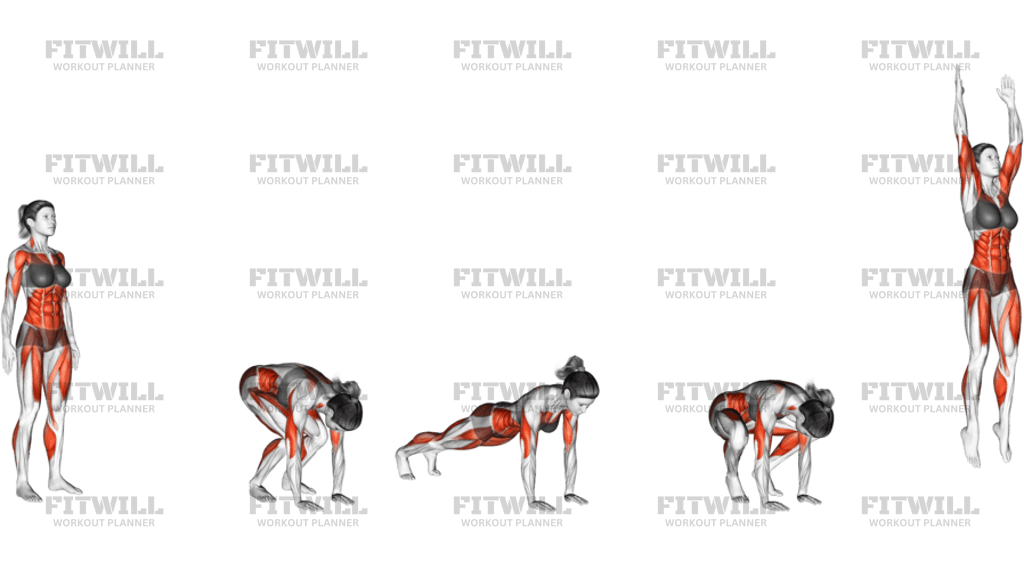
Instructions
- Stand tall with your feet about hip-width apart and your arms relaxed at your sides.
- Brace your trunk, hinge at the hips, and lower into a squat until you can place both hands flat on the floor in front of your feet.
- Shift your weight into your hands and send your legs back to a straight plank, keeping your shoulders stacked over your wrists and your body in one line.
- Hold the plank briefly without sagging through the lower back or piking the hips.
- Snap or step your feet back under your hips so you return to a low squat with your hands still near the floor.
- Drive through your heels, stand up powerfully, and extend your hips and knees as you rise.
- Finish with a small jump and reach overhead if the variation calls for it, or simply stand tall if you are using the low-impact version.
- Land softly with bent knees, reset your stance, and repeat for the planned number of reps or time.
Tips & Tricks
- Keep your hands slightly ahead of your feet when you plant them so the return to plank feels balanced instead of cramped.
- If your wrists bother you, turn your hands slightly out or use push-up handles so the floor contact is less abrupt.
- The plank should look like a straight line from shoulders to heels; if your hips sag, shorten the set or slow the pace.
- Step back and step in when you want a lower-impact burpee that keeps the conditioning effect but reduces the jump stress.
- Use a short, quick breath at the top and exhale as you kick back, stand up, or jump so the rep does not feel breathless too early.
- Keep your chest from collapsing into your thighs when you bring your feet forward; stay compact, but do not fold completely.
- Land the jump quietly with knees tracking over the toes instead of letting the knees cave inward.
- Stop the set when your hands start drifting, your plank turns soft, or your jump becomes a flop instead of a clean finish.
Frequently Asked Questions
What does a burpee work most?
Burpees are mainly a conditioning drill, but they heavily involve the legs, shoulders, core, and upper back as you move from floor to stand.
Is this the version with a push-up?
No. The image shows the squat-to-plank-to-jump version, so the chest never drops into a full push-up between the plank and the return.
Should I jump my feet back or step them back?
Either works. Jumping is faster and more demanding, while stepping back is easier on the shoulders, wrists, and lower back.
Why does my lower back feel this exercise?
Usually the plank is losing shape. Keep the ribs down, brace before you kick back, and avoid letting the hips sag when you land in the plank.
How can I make burpees easier?
Step back into the plank, step your feet forward instead of jumping them, and skip the overhead jump at the top.
What should my hands do on the floor?
Plant them flat, just outside or slightly inside shoulder width, with enough space to keep your shoulders stacked over your wrists in the plank.
Can I use burpees in a warmup?
Yes, but keep the pace controlled and the volume modest so you warm up the whole body without tiring yourself out too early.
What is the biggest form mistake in a burpee?
Rushing the floor-to-stand transition and losing the plank shape is the most common problem.