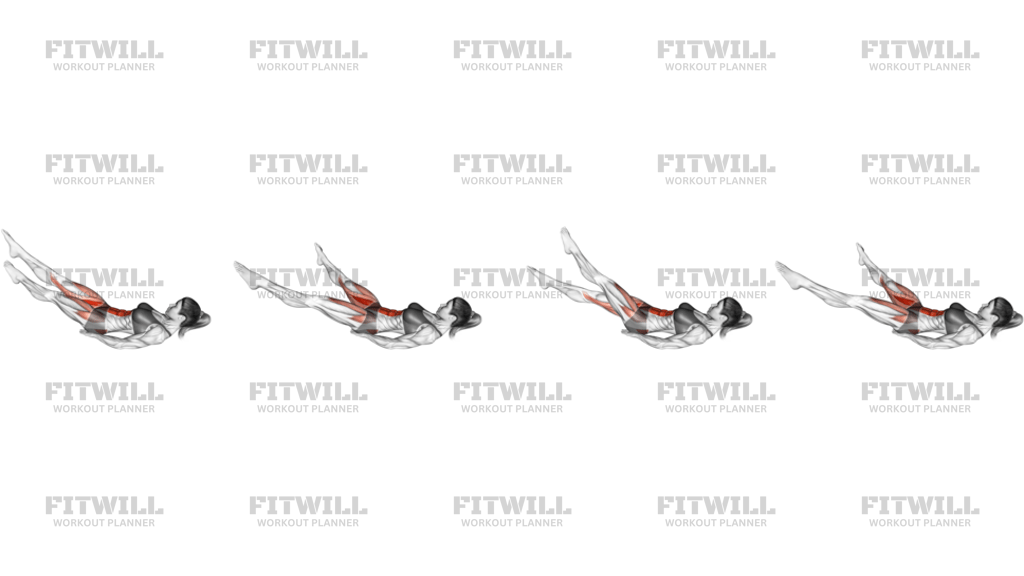
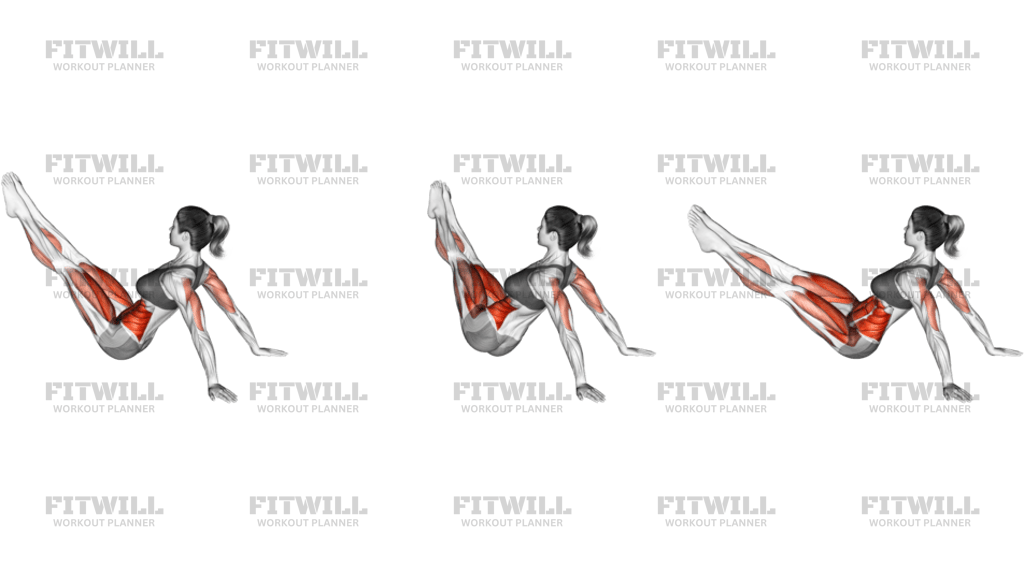
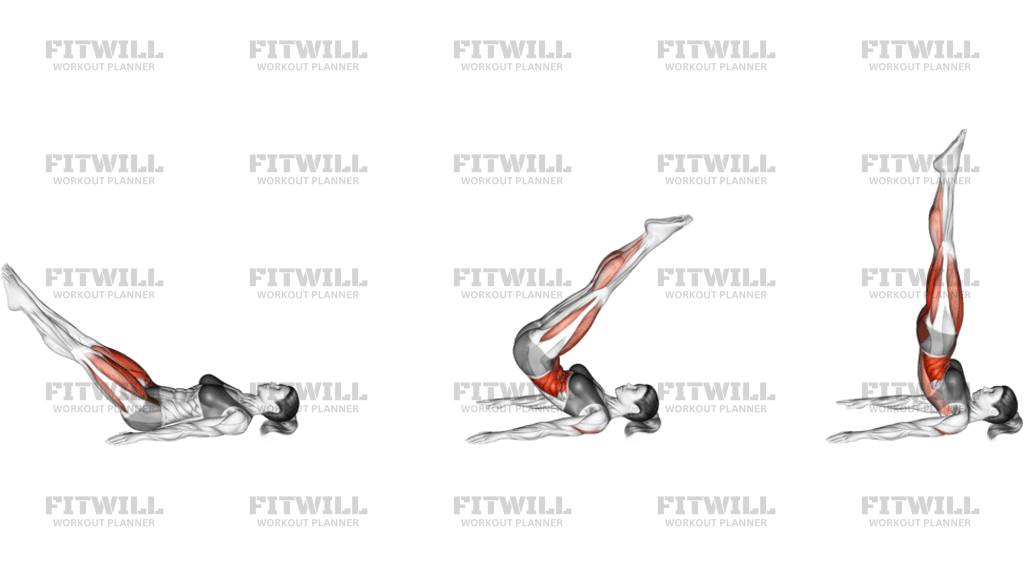
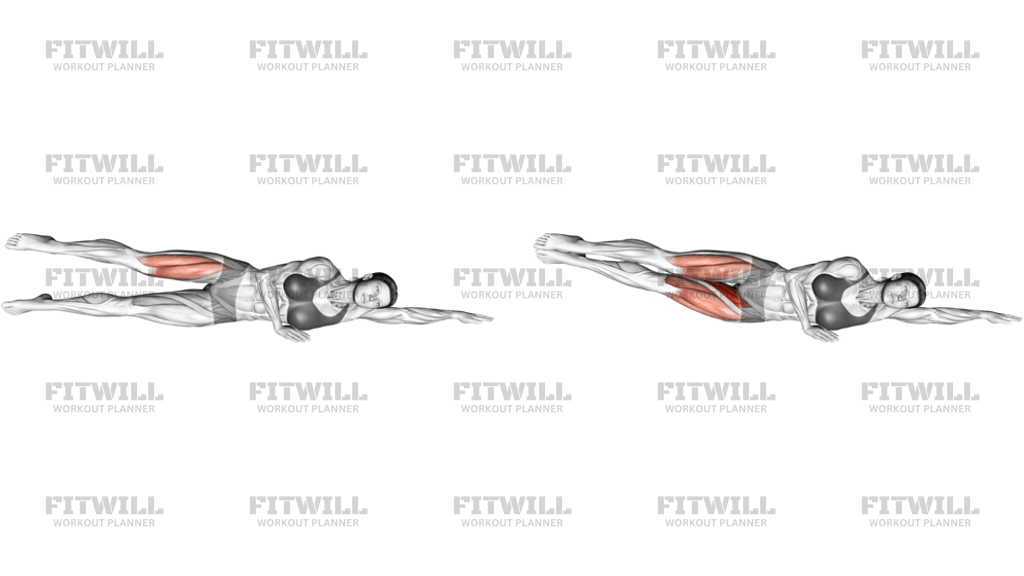
Leg Pull
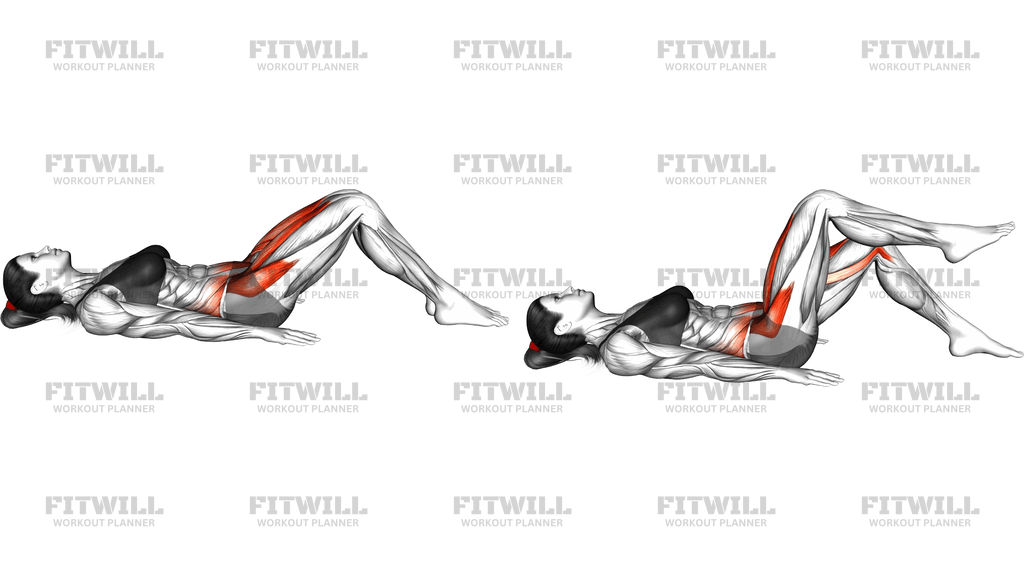
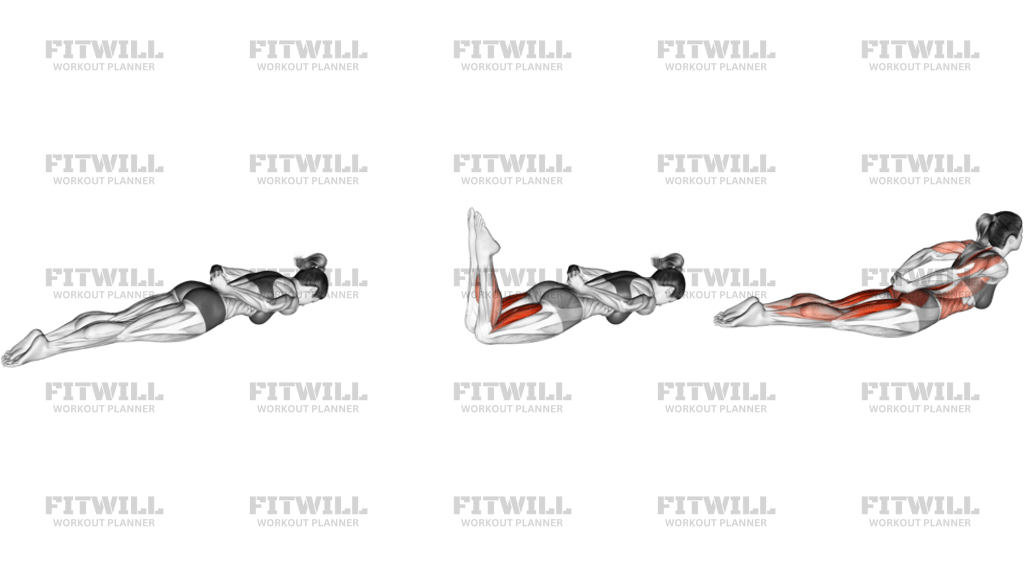
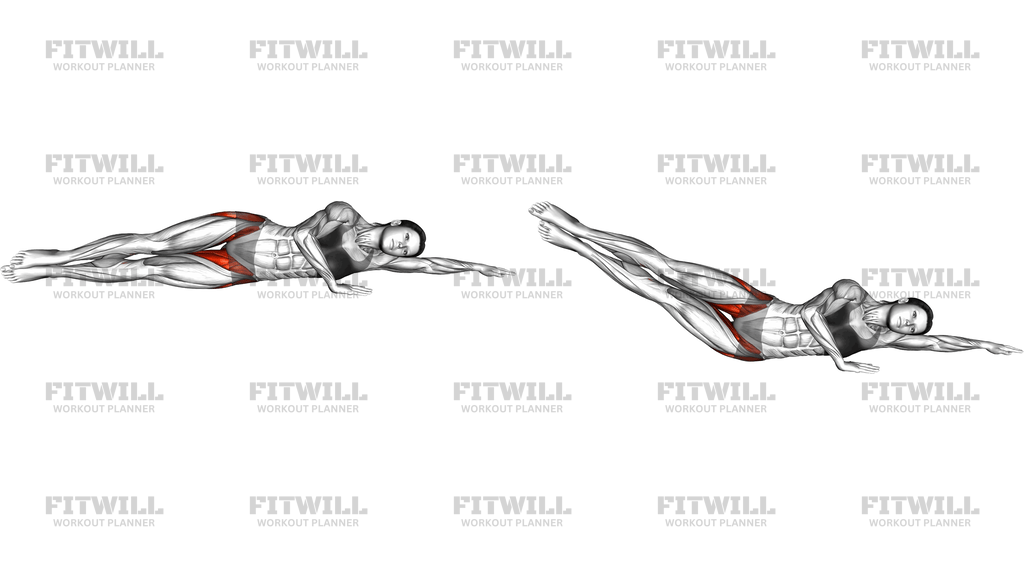
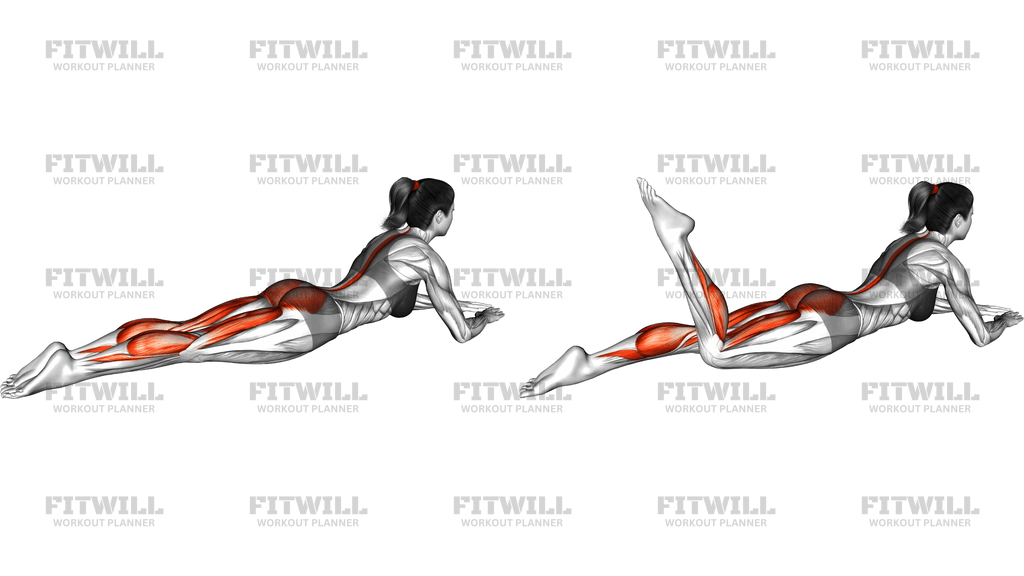
Leg Pull is a Pilates mat exercise performed from a reverse-support position, with your hands on the floor behind you and your torso lifted into a long line. The movement asks for more than just leg strength: it challenges shoulder extension, glute engagement, hamstring control, and the deep muscles that keep the pelvis steady while one leg leaves the floor. Because the body is supported by the hands and the heel of the standing leg, small changes in hand placement or hip position make a big difference in how stable the exercise feels.
This exercise is most useful when you want to train control rather than load. Leg Pull works the posterior chain and trunk together, but the real skill is keeping the chest open, the ribs controlled, and the hips level while the lifted leg changes the base of support. If the shoulders collapse or the lower back arches, the exercise quickly turns into a compensation drill instead of a clean Pilates rep.
The setup matters. Sit with the legs long, place the hands slightly behind the hips, and point the fingers toward the feet so the shoulders can open without forcing the wrists into an awkward angle. Press through the palms and heels, then lift the hips until the body makes a straight line from shoulders to ankles. From there, the working leg can lift without the pelvis twisting or the standing hip dropping.
Leg Pull is often used in Pilates sequences, bodyweight core work, or warm-ups for athletes who need better hip extension and trunk control. It also fits well as a low-load strength option when you want the glutes and hamstrings to work without a lot of equipment. Keep the range honest, move slowly enough to notice the pelvis, and lower with control so each rep finishes as cleanly as it started.
If your wrists, shoulders, or hamstrings limit the position, shorten the lever before you chase a bigger lift. A smaller leg lift with a stable plank is better than a higher leg swing that makes the torso wobble. The goal of Leg Pull is to show control in a demanding support position, not to win by kicking the leg higher than the rest of the body can organize.
[ Workout Log & Planner ]
Put your next workout in Fitwill
Keep your plan and training log ready when you are.


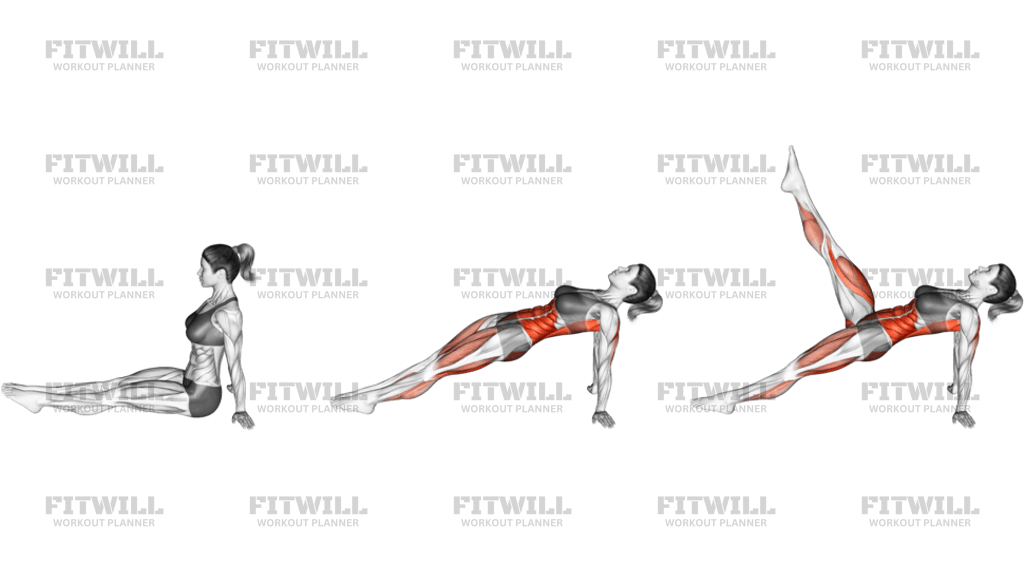
Instructions
- Sit on the mat with your legs extended, place your hands on the floor slightly behind your hips, and turn your fingers toward your feet.
- Keep your chest lifted and your shoulders back as you press weight into your palms and the heels of both feet.
- Exhale and lift your hips until your body forms a long line from shoulders to ankles.
- Set your gaze forward or slightly up so your neck stays long and your ribs do not flare.
- Brace your midsection and squeeze your glutes to keep the pelvis from sagging before the leg lift begins.
- Shift a little more weight into one foot, then lift the opposite leg without letting the supporting side rotate open.
- Raise the free leg only as high as you can keep the hips level and the torso steady.
- Lower the leg back with control, keeping pressure through the hands and the standing heel.
- Repeat on the other side or continue alternating for the planned number of reps, then lower the hips to the mat with control.
Tips & Tricks
- Keep the fingers pointed toward the feet so the shoulders can stay open without letting the chest collapse.
- Press the floor away through the palms; if the wrists feel crowded, reset the hand position before you start the leg lift.
- Lift the hips high enough to create a straight line, but not so high that the lower back takes over.
- Think about squeezing the glute of the supporting side before you raise the free leg.
- The lifted leg should float, not swing; a small controlled lift is better than a big kick that twists the pelvis.
- Keep the standing heel heavy so the support side does not slide forward as the leg changes position.
- If your hamstrings cramp, shorten the hold and lower the hips between reps instead of forcing a longer set.
- Avoid shrugging into the neck; the shoulders should stay active, not jammed up toward the ears.
- Lower the free leg as slowly as you raise it so the trunk has to resist rotation the whole time.
Frequently Asked Questions
What muscles does Leg Pull work?
Leg Pull mainly trains the glutes, hamstrings, shoulders, and deep core, with the supporting side of the body working hard to keep the hips square.
Is Leg Pull more of a core exercise or a leg exercise?
It is both. The lifted leg comes from the hip, but the trunk and shoulders have to stabilize the reverse-support position so the pelvis does not twist.
How do I keep my hips from twisting during Leg Pull?
Press evenly through both hands and keep the standing heel heavy while you lift the free leg only as far as the pelvis stays level. If the hip opens, reduce the range.
Where should my hands be for Leg Pull?
Place your hands slightly behind your hips with the fingers turned toward your feet. That position gives you room to open the chest and support the reverse plank without collapsing the shoulders.
Can beginners do Leg Pull?
Yes, but start with a shorter hold and a very small leg lift. Beginners should focus on a stable reverse-support line before adding more range or longer sets.
What if my wrists or shoulders feel strained?
Adjust the hand position, keep the hips a little lower, or stop before the shoulders lose control. The exercise should feel demanding through the support chain, not painful in the joints.
How is Leg Pull different from a glute bridge?
A glute bridge supports the body from the back, while Leg Pull is a reverse-support hold on the hands and feet. That makes the shoulders and triceps much more involved.
Should I alternate legs or hold one leg up?
Either can work. Alternating legs is useful for control and rhythm, while holding one leg up longer makes the trunk work harder against rotation.