Rocking
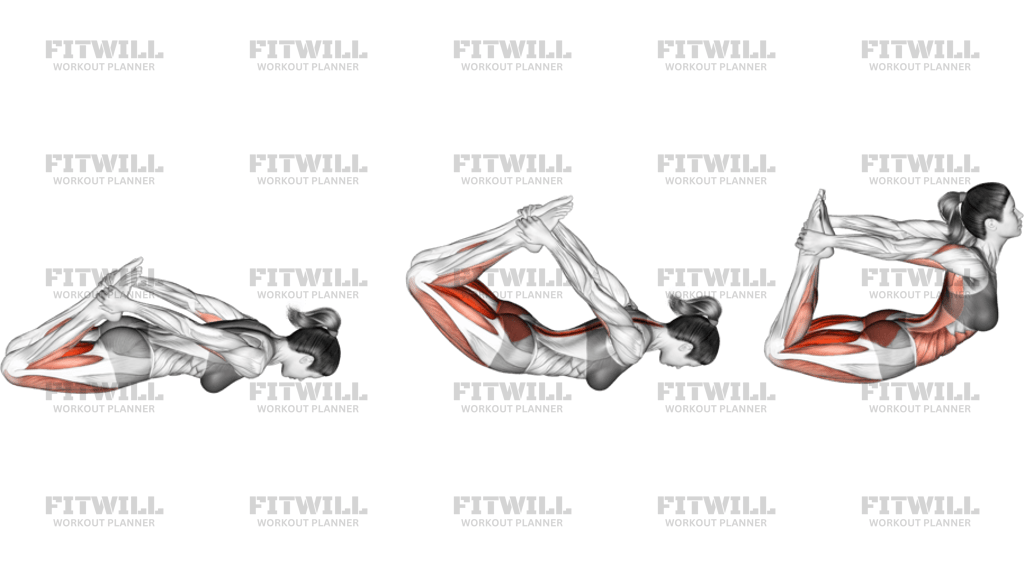
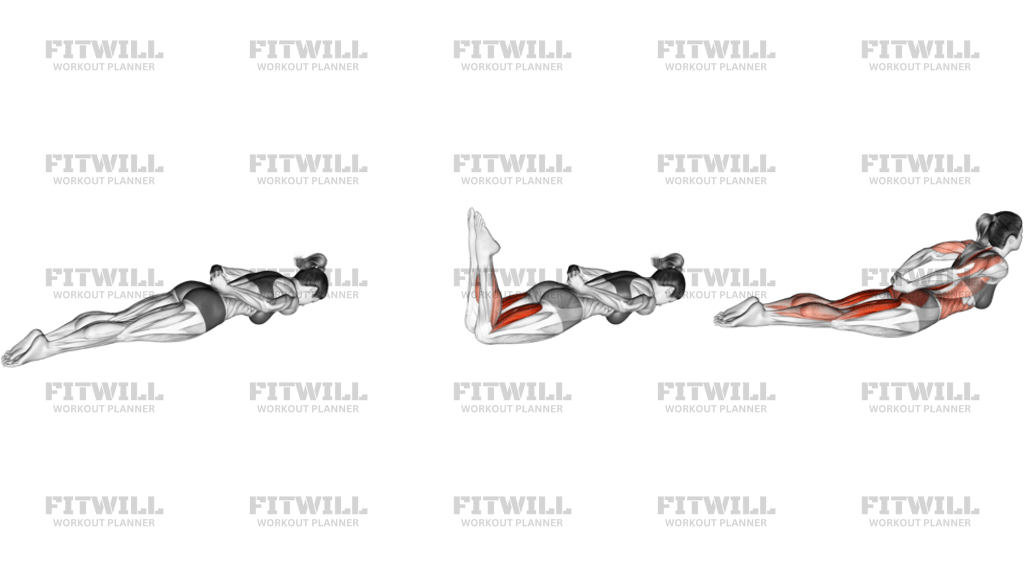
Rocking is a Pilates floor exercise performed from a prone bow position, with the chest lifted, knees bent, and the hands reaching back to hold the feet or ankles. The body forms a curved shape that lets you rock gently forward and backward under control. It is less about speed than about staying organized through the spine, hips, and shoulders while the body moves as one unit.
This movement is usually used to challenge back-body strength, shoulder extension, hip opening, and trunk control at the same time. The front of the thighs, glutes, spinal erectors, and the deep muscles that stabilize the trunk all work to keep the bow shape from collapsing as you shift. Because the body is already loaded by its own weight, small changes in breathing, grip, and neck position can change the quality of the repetition a lot.
Setup matters more here than in many other bodyweight drills. You need enough space to lie fully prone, bend both knees, and reach the hands back far enough to connect with the ankles or feet. The chest should lift without jamming the lower back, and the knees should stay close enough to the hips that the shape can be held without strain. If the hold is too aggressive or the shape is too large, the movement turns into a back bend instead of a controlled rocking drill.
A good rep starts by creating the bow shape first, then using a small shift of weight to roll slightly toward the chest and then back toward the thighs. The rocking action should feel smooth and rhythmic, not jerky. Keep the neck long, the gaze slightly forward, and the abdomen lightly braced so the spine does not hinge unpredictably. Exhale as you rock, and let the inhale help you re-center without losing the lifted position.
Rocking is useful in Pilates sessions, mobility-focused warmups, and bodyweight control work when you want coordination rather than load. It can be a challenging drill for beginners because shoulder reach and quad flexibility both matter, but the range can be reduced to make it manageable. The best version is the one where you can keep the same shape on every repetition, rock without slamming into the floor, and finish with the spine feeling long rather than compressed.
[ Workout Log & Planner ]
Put your next workout in Fitwill
Keep your plan and training log ready when you are.


Instructions
- Lie face down on the floor and bend both knees so your heels travel toward your seat.
- Reach both hands back to hold your feet or ankles, with your thumbs wrapped securely.
- Lift your chest and thighs enough to create a strong bow shape without pinching the low back.
- Keep your knees close together and let the front of your thighs stay active as you hold the position.
- Set your gaze slightly forward so your neck stays long instead of cranked upward.
- Rock your body a few inches forward toward your chest, then let the momentum carry you back toward your thighs.
- Keep the rocking motion smooth and even, with the torso staying lifted as one connected shape.
- Breathe out during the rock and breathe in as you return through center.
- Stop the set if you lose your foot hold, collapse the chest, or feel the lower back taking over.
Tips & Tricks
- Keep the grip on your feet high enough to stay secure, but not so aggressive that it yanks the shoulders into strain.
- Think about lengthening the front of the body as you rock, rather than trying to throw your head and feet farther apart.
- If the low back feels crowded, reduce the height of the chest lift before you try to rock.
- A smaller rock with a stable bow shape is better than a bigger swing that breaks the position.
- Keep the knees narrow enough to help the ankles stay within reach and to keep the movement symmetrical.
- Do not force the feet upward if the shoulders or quads are limiting the shape; shorten the hold instead.
- Let the rocking come from the whole body shifting, not from kicking the legs or bouncing the chest.
- Keep the chin slightly tucked so the neck follows the curve of the spine instead of jutting forward.
- If you cannot keep both feet held through the whole set, work on the bow hold first before adding the rock.
Frequently Asked Questions
What does Rocking work most?
It primarily challenges the back body, especially the glutes, hamstrings, spinal erectors, and the muscles that keep the trunk lifted in a bow shape.
Why do I need to hold my feet or ankles?
The hold creates the bow position that makes the exercise possible. It also ties the upper and lower body together so the movement can rock as one unit.
Should this feel like a backbend?
No. It should feel like a controlled prone bow with a small rocking motion, not a deep lumbar compression stretch.
What should I do if I cannot reach my feet?
Work on a lighter bow hold or a smaller range first. If needed, keep the chest lower and focus on maintaining the shape before adding the rock.
Can beginners do the Rocking exercise?
Yes, but only with a smaller range and a comfortable foot hold. Beginners often need to shorten the bow shape so the shoulders and quads do not take over.
Where should I feel the effort in the rocking position?
You should feel steady work through the glutes, hamstrings, upper back, and trunk, with the front of the body staying open rather than cramping.
What is the most common mistake with this exercise?
The most common mistake is turning it into a big bounce or forcing the chest too high, which usually shifts stress into the lower back.
How many rocks should I do in a set?
Use a small controlled set that lets you keep the same shape on every rep. The exact number matters less than staying smooth and symmetrical.