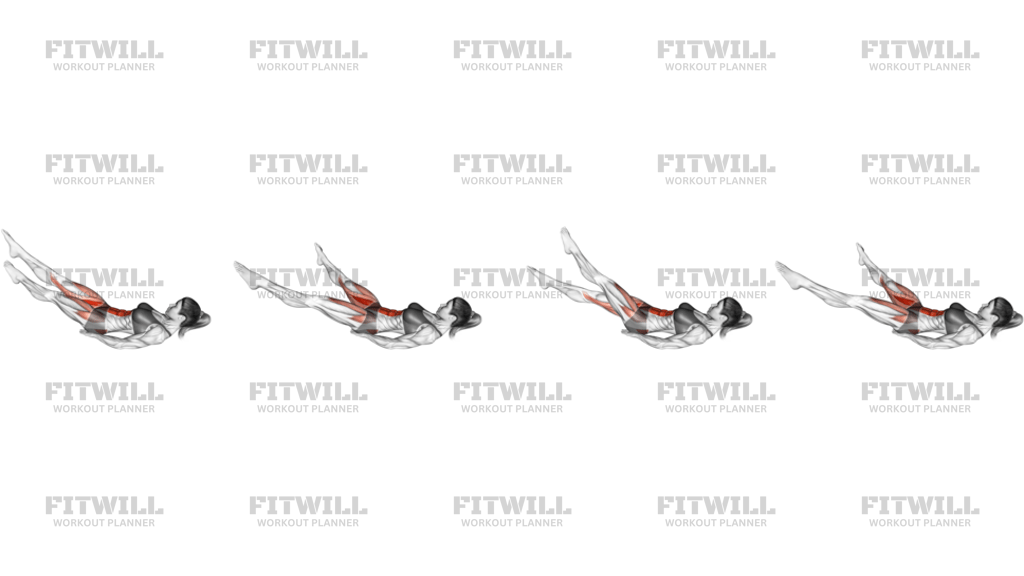
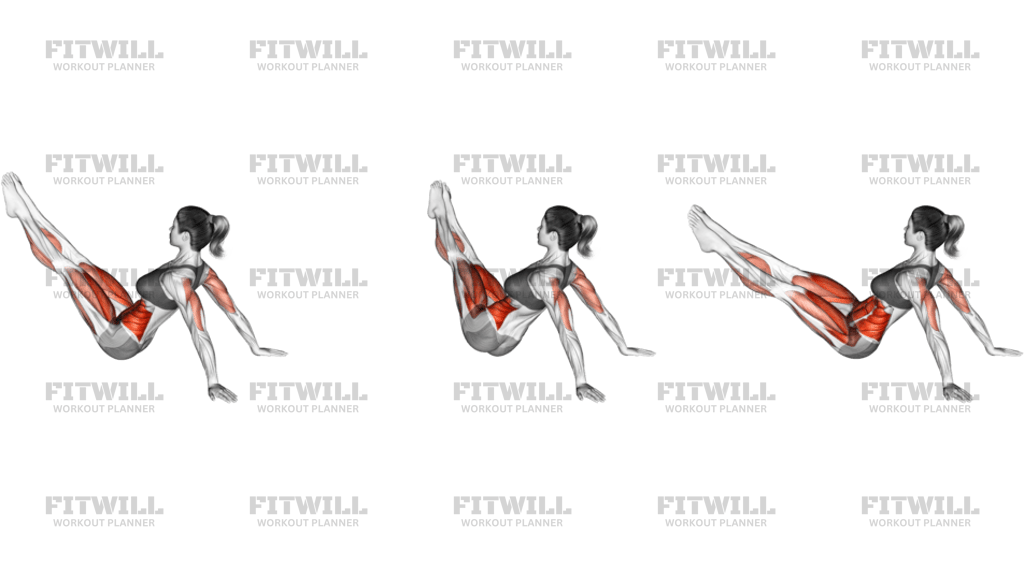
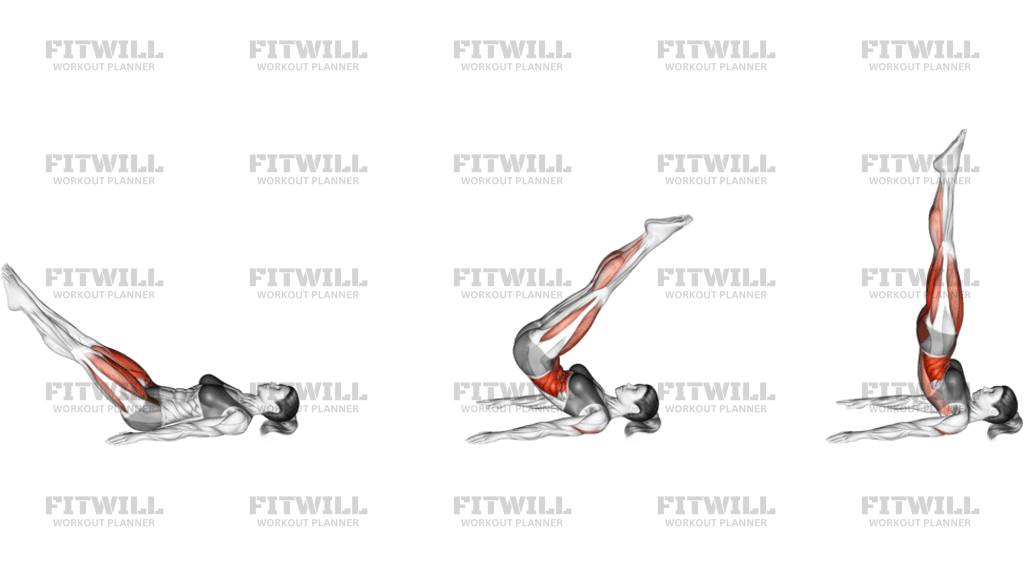
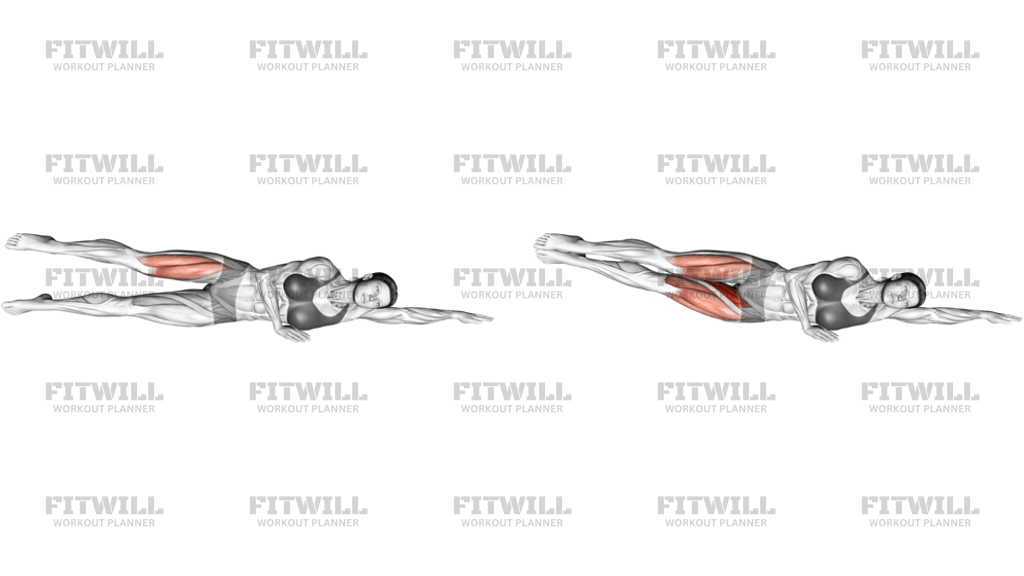
Side Twist
Side Twist is a body-weight core exercise built around a side-plank position with a rotational reach-through. It asks you to hold the torso long and lifted while the ribs, shoulders, and hips work together to control the twist. The movement is small enough to stay strict, but demanding enough that you feel the obliques, deep abdominal wall, shoulder stabilizers, and glutes working hard to keep the body from collapsing.
The setup matters because this exercise changes quickly from effective to sloppy if the support hand, shoulder, and feet are not lined up. With one hand on the floor and the body stacked sideways, the working side has to support your weight while the free arm guides the rotation. If the shoulder drifts out from under the hand or the hips sag, the exercise turns into a survival hold instead of a clean trunk rotation.
A good rep starts in a strong side plank, then the chest rotates toward the floor as the top arm sweeps under the torso. From there, you reverse the motion and open the chest back up, reaching the arm toward the ceiling or overhead position shown in the setup. The key is to keep the movement smooth and to let the rib cage and upper back rotate without collapsing the hips or overbending the lower back.
Side Twist is useful when you want core work that also challenges shoulder stability and body control. It fits well in warmups, accessory circuits, Pilates-style sessions, and trunk-strength blocks where quality matters more than load. Because the movement is body weight based, it can be scaled by shortening the lever, using a knee-down version, or reducing the rotation range if balance or wrist comfort becomes an issue.
Stay honest about range and speed, because momentum hides poor control in this pattern. The most productive version is the one where the torso stays braced, the support shoulder remains packed, and the twist comes from the trunk rather than a fling of the arm. If the lower back feels strained or the hips start dropping, shorten the range and slow the transition until each rep looks and feels clean.
Fitwill
Log Workouts, Track Progress & Build Strength.
Achieve more with Fitwill: explore over 9600 exercises with images and videos, access built-in and custom workouts, perfect for both gym and home sessions, and see real results.
Start your journey. Download today!




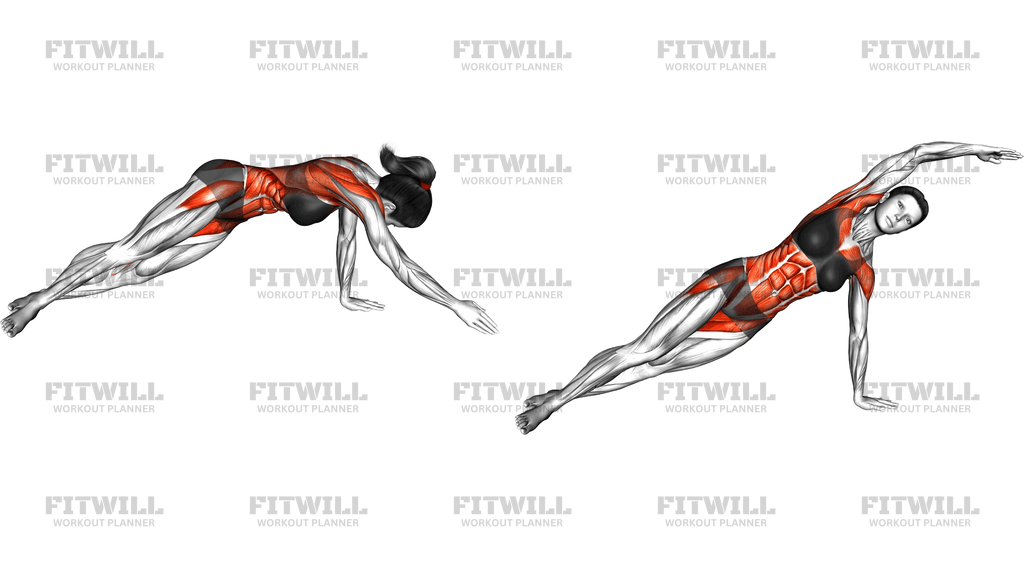
Instructions
- Place one hand directly under the shoulder and stack the feet or stagger them for balance, then extend the free arm long so the body forms a straight line from head to heels.
- Press the floor away through the support hand, keep the neck long, and lift the hips so the torso stays in one line instead of folding at the waist.
- Set the ribs down slightly, squeeze the glutes, and take a breath before starting the rotation.
- Exhale as you rotate the chest toward the floor and sweep the free arm under the torso in a controlled reach-through.
- Keep the support shoulder packed and the hips lifted as you move, rather than letting the body dump into the floor.
- Pause briefly in the closed position, then reverse the twist and open the chest back up toward the ceiling.
- Reach long through the top arm at the open position without shrugging the shoulder toward the ear.
- Keep the motion smooth for each rep, breathing steadily and avoiding any snap or swing from the lower back.
- When the set is done, lower the hips with control and reset before changing sides.
Tips & Tricks
- If stacking the feet feels unstable, stagger them slightly so the base is wider and the hips stay higher.
- Think about rotating the ribs and upper back, not dipping the shoulder into the floor.
- Keep the support wrist under the shoulder; a hand that drifts too far forward makes the hold feel unstable fast.
- If your lower back takes over, shorten the twist and keep the ribs and pelvis closer together.
- A slow reach-through is more useful than a big reach that throws the torso out of line.
- Squeeze the glutes on the support side to help keep the hips from sagging during the rotation.
- Keep the neck neutral and look slightly ahead or down instead of craning the head toward the ceiling.
- Use the knee-down version before loading the full side plank if your shoulder or obliques cannot hold position cleanly.
- Exhale through the twist and inhale as you open back up so the trunk stays braced without holding your breath.
- Stop the set when the hips start dropping or the reach-through becomes a fast swing instead of a controlled turn.
Frequently Asked Questions
What muscles does Side Twist work most?
It emphasizes the obliques and deep core muscles, with the shoulder stabilizers and glutes helping keep the side plank position solid.
Is Side Twist good for beginners?
Yes, if you start with a knee-down or shorter-range version. Beginners should focus on keeping the hips lifted and the rotation slow rather than chasing a big twist.
Should I do Side Twist on my hand or elbow?
The pictured version uses a straight arm, which demands more shoulder stability. An elbow-supported version is a good substitute if your wrist or shoulder needs a easier option.
How far should I rotate in Side Twist?
Rotate only as far as you can while keeping the hips up and the support shoulder stacked. If the lower back arches or the hips drop, the range is too big.
Why do my hips drop during Side Twist?
That usually means the side plank is too hard for your current strength or the reach-through is too fast. Narrow the range, stagger the feet, or use the knees until you can hold the line.
What should I feel during Side Twist?
You should feel the obliques working hardest, along with the shoulder on the floor side and the glutes holding the body straight.
Can I use Side Twist as a warmup?
Yes. It works well as a low-load core and shoulder-stability drill before training, especially when you keep the reps slow and controlled.
What is the most common mistake in Side Twist?
The most common mistake is turning it into a fast swing-through that collapses the side plank. Keep the hand under the shoulder and rotate the torso under control.