Seal
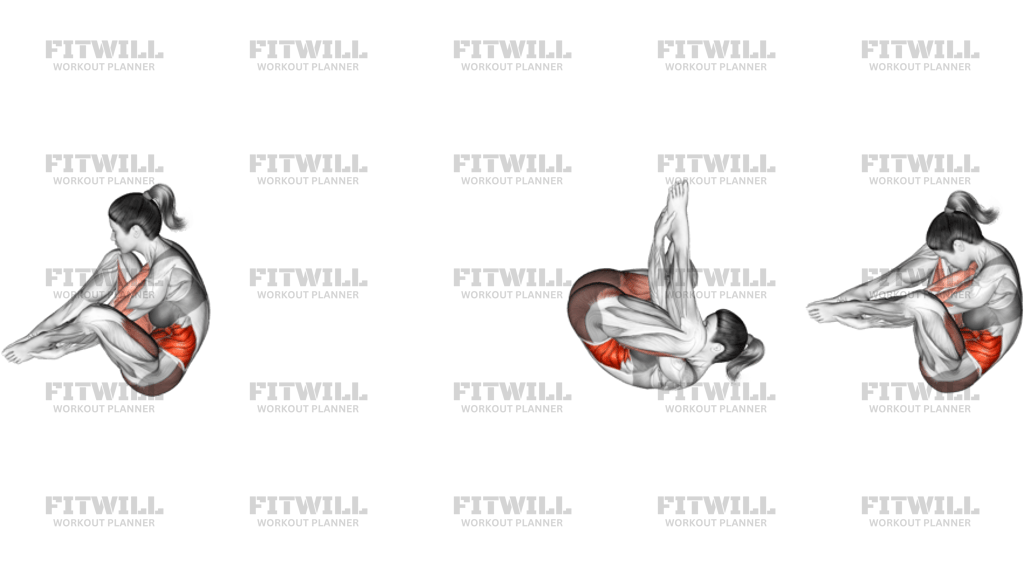
Seal is a Pilates mat exercise that builds core control, spinal articulation, and balance with body weight only. In the starting position, you sit on your mat, reach your hands through your legs to hold your ankles, and balance behind your sit bones with your knees open and feet lifted. The shape should feel rounded and compact, not loose or collapsed, because the entire drill depends on staying organized while you roll.
Each rep asks you to move smoothly through a controlled backward roll and then return to the balance point without losing the ankle grip or the curved spine. The goal is not to throw the body backward; it is to keep the motion small enough that you can control the transition onto the shoulder blades, then come back up to the same seated balance. That makes Seal useful for improving body awareness, abdominal engagement, and coordination.
The three light foot claps at the top are part of the exercise rhythm. They should happen while you stay balanced on the sitting bones, not while you shift, kick, or swing. Keep the shoulders relaxed, the neck long, and the chin gently tucked so the head follows the curve of the spine instead of leading the movement. If the roll becomes jerky, the setup is too wide or the movement is too fast.
Because the exercise is driven by position and timing rather than load, the setup determines the quality of the whole set. A small tuck of the pelvis, steady abdominal tension, and a controlled exhale before each roll help keep the motion centered. If you lose the rounded shape, the shoulders start to shrug, or the feet drift apart and drop toward the floor, shorten the range and reestablish the balance before the next rep.
Seal fits well in Pilates sessions, warm-ups, or core-focused accessory work when you want controlled trunk strength rather than heavy loading. It can be a strong choice for beginners if the range stays small and the rolling phase stays smooth, but it still demands precision. Use it to practice clean breathing, stable balance, and a consistent return to the same start position on every rep, and treat every repetition as a test of coordination rather than a race for speed.
[ Workout Log & Planner ]
Put your next workout in Fitwill
Keep your plan and training log ready when you are.


Instructions
- Sit on the mat and hold the inside or front of your ankles, then lift your feet so you balance behind your sitting bones.
- Open your knees comfortably and round your lower back into a compact C-shape with your chest soft and chin slightly tucked.
- Exhale to brace your abdominals before the first roll so the pelvis stays tucked and the spine stays organized.
- Roll back smoothly until your shoulder blades touch lightly, keeping the ankle hold and the knees open the same amount.
- Pause in the rolled-back balance and clap the soles of your feet three times without losing the rounded shape.
- Use the exhale and abdominal pull to roll back up to the seated balance on your sit bones.
- Reset the balance at the top, keeping the feet lifted and the shoulders relaxed before the next repetition.
- Repeat for the planned number of reps with the same small, controlled range each time.
Tips & Tricks
- Keep the ankle grip light but secure so the arms do not have to yank you through the roll.
- Let the movement travel onto the shoulder blades, not onto the neck or back of the head.
- The clap should be quiet and small; if the feet are swinging hard, the roll is too fast.
- Think of rolling over a smooth curve instead of collapsing backward and then lunging forward.
- Keep the knees comfortably apart the whole time so the thighs do not clamp the torso shut.
- Exhale on the roll back and again as you come forward to help the abdominals stay active.
- If you lose the seated balance at the top, shorten the range before chasing more speed or more claps.
- Stop before the lower back arches or the shoulders start to tense up.
Frequently Asked Questions
What does Seal train?
It mainly trains Pilates-style core control, spinal articulation, and balance while the body rolls and returns to the seated position.
Where should my hands go in Seal?
Reach your hands through your legs and hold the ankles or lower legs so you can keep the rounded shape while rolling.
How far should I roll back?
Only roll as far as you can keep the ankle hold, the rounded spine, and the return to the top under control.
Should Seal feel like a neck exercise?
No. The neck should stay long and relaxed while the torso does the work.
Do I need to clap my feet?
Yes, the three light claps are part of the Pilates rhythm, but they should happen without swinging or losing balance.
Is Seal beginner-friendly?
It can be, if you keep the range small and move slowly enough to stay balanced through the roll.
What is the most common mistake?
The most common mistake is using momentum instead of the abdominals to roll backward and return to the top.
How can I make Seal harder?
Make the rolling phase smoother, keep the balance cleaner at the top, and preserve the same shape through every rep instead of increasing speed.