Kneeling Push-Up
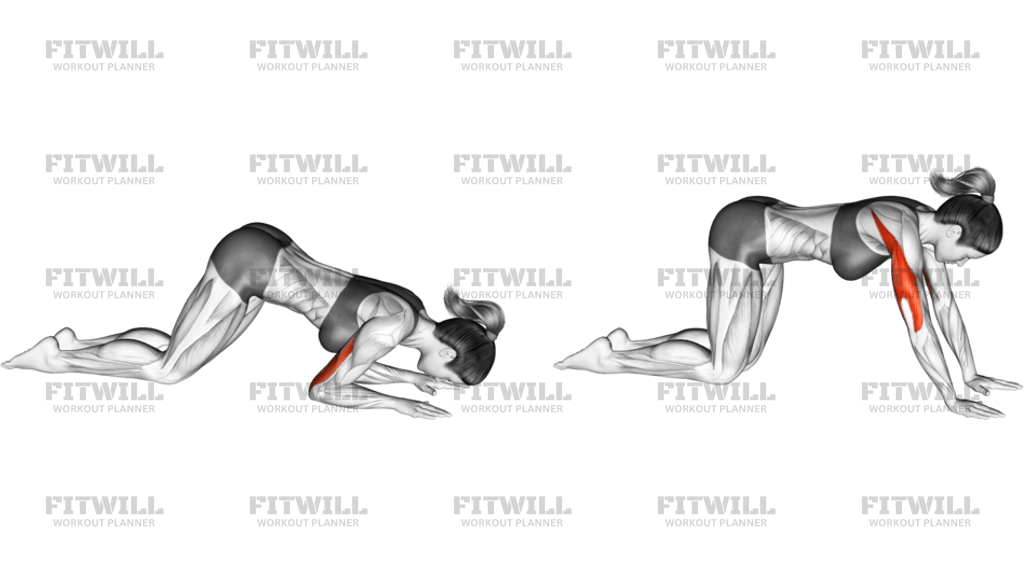
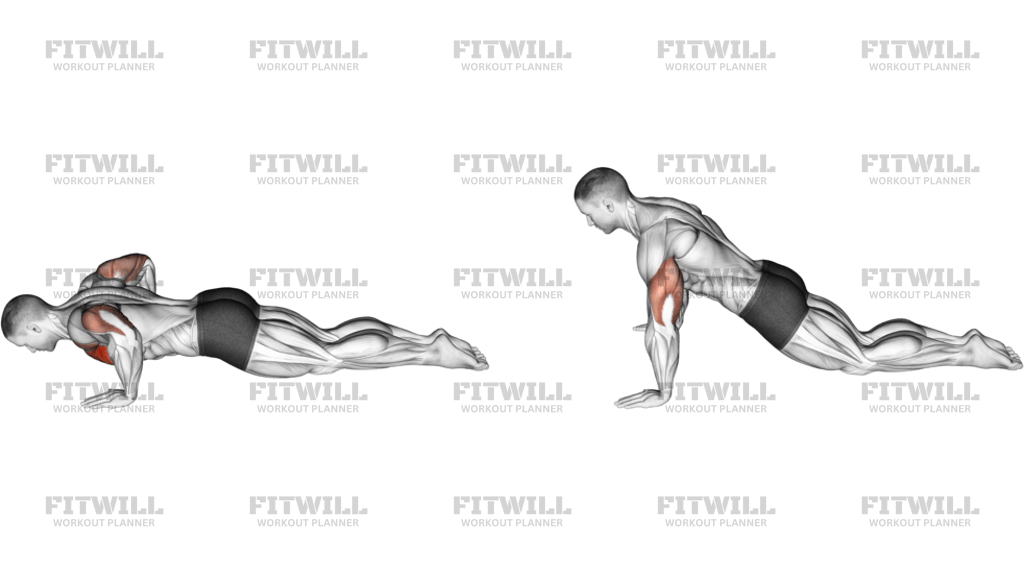
Kneeling Push-Up is a bodyweight pressing exercise that reduces the load of a standard push-up by keeping the knees on the floor. It is commonly used to build pressing strength, triceps endurance, and shoulder control while the torso stays braced in a shorter lever position. That makes it a practical option for beginners, deloads, rehab-style progressions, or any session where you want clean push-up mechanics without the full bodyweight demand.
The exercise primarily targets the triceps, with the chest and front shoulders contributing to the press and the core working to keep the trunk from sagging or rotating. In anatomy terms, the main work centers on the triceps brachii, with help from pectoralis major, anterior deltoids, forearm flexors, and rectus abdominis. The knees act as the support point that lets you practice the same pressing pattern with less total resistance.
Setup matters because the line from head to knees should stay long and stable throughout the rep. Place the hands slightly wider than shoulder width, stack the shoulders over the wrists, and set the knees on the floor behind the hips. From there, tighten the glutes and ribs so the body does not hinge at the low back as you lower. A solid kneeling push-up feels like a controlled plank from the knees up, not a loose upper-body dip.
Each repetition should travel straight down and back up with the elbows tracking at a comfortable angle, usually about 30 to 45 degrees from the torso. Lower the chest toward the floor between the hands, keep the neck neutral, and press the floor away until the elbows are fully extended without shrugging the shoulders forward. Breathing should stay steady: inhale as you lower, then exhale as you drive up.
Use the kneeling version when the full push-up is too heavy to keep the trunk, shoulder blades, and elbow path clean. It works well for strength foundations, higher-rep accessory work, warmups, and progression toward floor push-ups. The goal is not to just move less weight; it is to rehearse the same pattern with enough control that you can gradually earn more range, more reps, and eventually the full-body variation.
[ Workout Log & Planner ]
Put your next workout in Fitwill
Keep your plan and training log ready when you are.


Instructions
- Start on the floor with your hands slightly wider than shoulder width, shoulders stacked over the wrists, and knees down behind the hips.
- Lift the feet off the floor or keep them lightly crossed behind you so the support stays on the knees and hands.
- Tighten your glutes and ribs so your body forms a straight line from the head through the knees.
- Lower your chest between your hands while keeping the elbows angled slightly back, not flared straight out.
- Stop when the chest is just above the floor or as low as you can go without losing trunk position.
- Press the floor away and return to the top until the elbows are fully extended without locking the shoulders forward.
- Keep your neck long and neutral, and avoid letting the hips shift back as you press.
- Breathe in on the way down and exhale as you drive back up.
- Reset your shoulder and trunk position before the next rep.
Tips & Tricks
- Place the hands just outside shoulder width; too narrow usually overloads the wrists and triceps, while too wide shifts tension away from the intended press.
- Keep the knees far enough behind the hips that your torso can stay in a long line instead of folding at the waist.
- Squeeze the glutes lightly so the low back does not sag as you lower.
- Let the elbows travel at a diagonal angle rather than flaring straight out to the sides.
- Touching the chest a little lower between the hands usually gives a cleaner rep than chasing extra depth with a collapsed trunk.
- If the shoulders shrug toward the ears, shorten the set and reset the shoulder blades before continuing.
- Use a slower lowering phase to make the knees-down position feel like a true strength rep instead of just an easier shortcut.
- Keep the neck in line with the spine; looking far forward often causes the chest and ribs to dump toward the floor.
- Progress the movement by adding reps, then moving to a stricter full push-up, rather than making the kneeling version sloppy.
Frequently Asked Questions
What muscle does Kneeling Push-Up target most?
The triceps are the main target, with the chest and front shoulders assisting the press.
Why do I keep my knees on the floor for this push-up?
The knees shorten the lever and reduce the amount of bodyweight you have to press, which makes the movement easier to control.
Where should my hands be in a kneeling push-up?
Place them slightly wider than shoulder width with the wrists under the shoulders or just ahead of them.
How low should I lower my chest?
Lower until the chest is just above the floor or as low as you can go without losing the straight line from head to knees.
What is the biggest mistake in this movement?
Letting the hips hinge back or the low back sag instead of keeping the torso braced from the head to the knees.
Can I use this as a push-up progression?
Yes, it is one of the most common progressions toward a full floor push-up.
Should my elbows flare out?
No, keep them angled slightly back so the shoulders stay in a stronger pressing path.
What should I do if my wrists hurt?
Adjust the hand angle, place the hands a little farther forward, and stop the set if the pain persists.