Cable One-Arm High Pulley Overhead Tricep Extension
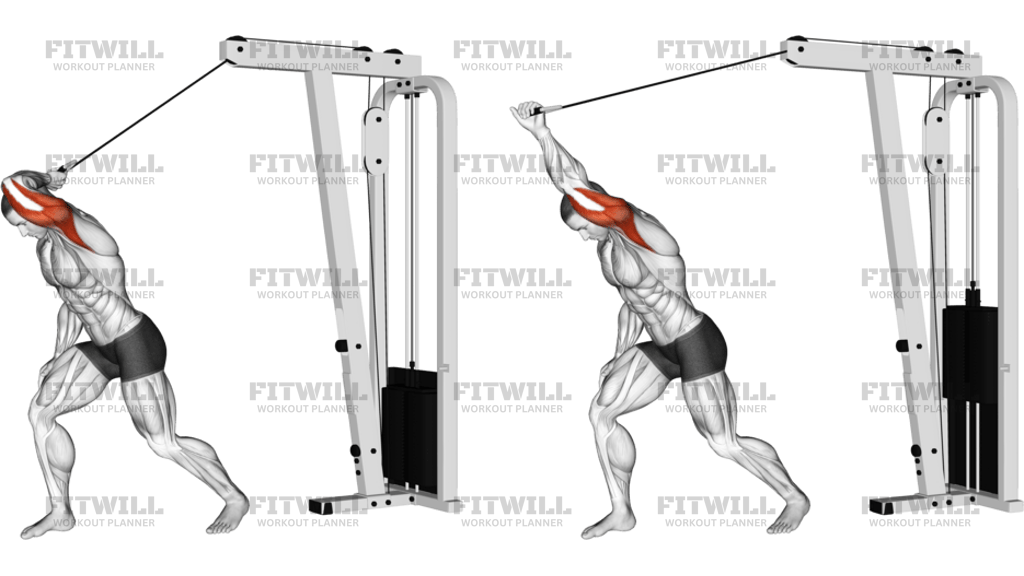
Cable One-Arm High Pulley Overhead Tricep Extension is a unilateral cable isolation exercise that trains the back of the upper arm while also challenging shoulder position, grip, and trunk control. The high pulley and single handle create constant tension through the entire rep, so the exercise rewards a stable setup more than brute force. Because the arm works overhead, it places the long head of the triceps under a useful stretch at the bottom and asks it to finish the press without the torso taking over.
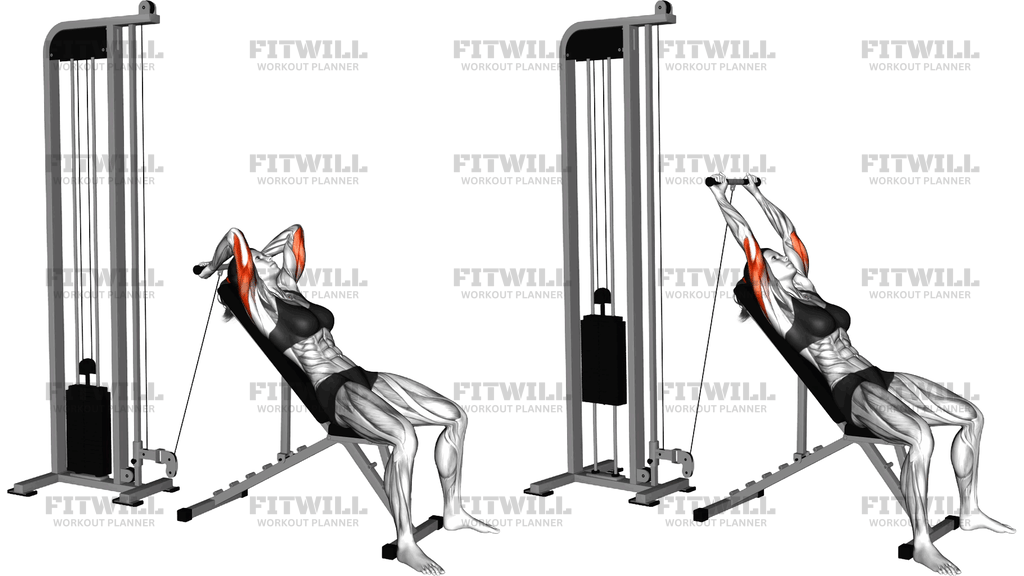
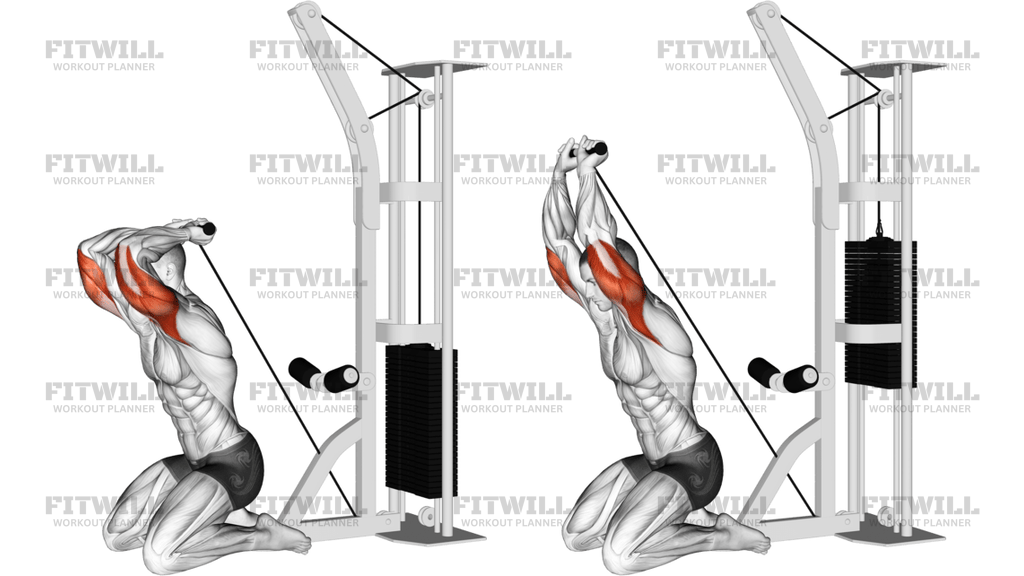
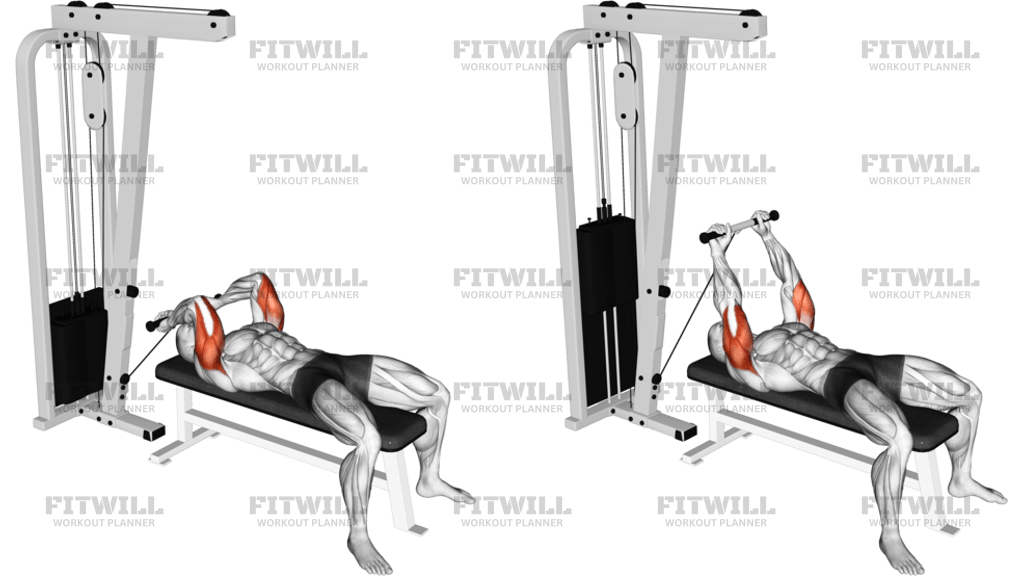
This movement is especially useful when you want direct triceps work without needing a barbell or dumbbell. The image shows a split stance with the torso hinged slightly forward and the working arm reaching overhead, which is the right shape for keeping the cable line smooth and the elbow honest. If you stand too upright, the stack can pull you off balance; if you lean too far or arch the lower back, the shoulder and ribs start helping more than they should.
The main action is elbow extension. The upper arm stays mostly fixed while the forearm moves from a bent, overhead start into a near-straight finish. That makes the triceps brachii the prime mover, with the forearm grip, front shoulder, and core helping to keep the cable path clean. The goal is not to swing the handle down or to chase a huge range. The goal is to keep tension on the triceps from the first inch of the press until the controlled return.
Set the handle on a high pulley, step far enough away that the cable stays loaded, and arrange your stance so you can brace without twisting. Keep the wrist neutral, the elbow pointed mostly forward, and the shoulder from shrugging as you extend. A good rep feels smooth and deliberate: press until the arm is almost straight, pause briefly if you can do so without locking out hard, then lower under control until the triceps lengthen again.
This is a strong accessory choice for hypertrophy blocks, arm sessions, and unilateral balance work when one side needs extra attention. It also works well as a lighter triceps movement when heavier presses are already in the program. Use a load that lets you keep the elbow steady and the torso quiet, because once the rib cage flares or the body starts drifting, the exercise stops being an honest triceps extension and turns into a compensation drill.
[ Workout Log & Planner ]
Put your next workout in Fitwill
Keep your plan and training log ready when you are.


Instructions
- Clip a single handle to the high pulley and step far enough away from the stack that the cable stays loaded when your arm is overhead.
- Take a staggered stance and hinge slightly forward so you can lean away from the machine without twisting your torso.
- Reach the working arm overhead and slightly in line with your ear, with the elbow pointing mostly forward and the wrist straight.
- Set your shoulder down and back just enough to keep the neck long, then brace your abs and glutes before the first rep.
- Start with the elbow bent and the handle behind or just above your head so the triceps begin under tension.
- Press the handle by extending only at the elbow while keeping the upper arm quiet and the torso still.
- Finish with the arm nearly straight and the triceps fully shortened, but do not let the shoulder shrug or the lower back arch.
- Lower the handle slowly until the elbow bends again and you feel a controlled stretch through the back of the upper arm.
- Repeat for the planned reps, then reset your stance before switching sides.
Tips & Tricks
- Let the forearm move and keep the upper arm almost fixed; if the elbow drifts forward and back, the rep is no longer a strict extension.
- Choose a lighter load than you would for a pushdown, because the overhead position makes the long head work harder.
- Keep the wrist stacked over the forearm so the handle does not fold your hand back and irritate the elbow.
- Stop the rep when the arm is nearly straight instead of snapping into a hard lockout and losing cable tension.
- Use a 2-3 second lowering phase to keep the triceps under load through the return.
- If the stack pulls you sideways, step a little farther from the pulley or reduce the weight before you compensate with your torso.
- Keep your ribs down and avoid turning the rep into a back extension; the movement should come from the elbow, not the spine.
- If you feel the front of the shoulder more than the triceps, lower the arm slightly or reduce how far you lean away from the stack.
- Match left and right sides carefully and stop the set when one side can no longer keep the same elbow path.
Frequently Asked Questions
What muscles does the Cable One-Arm High Pulley Overhead Tricep Extension work most?
It mainly targets the triceps brachii, with the long head getting a strong stretch because the arm is overhead.
Why is the arm overhead instead of by your side?
The overhead line of pull puts the triceps, especially the long head, under more tension through the stretched part of the rep.
Should my upper arm move during the set?
No. The upper arm should stay mostly fixed while the elbow opens and closes; if the upper arm swings, the cable is too heavy.
How far should I lean away from the cable stack?
Lean only enough to keep tension and balance. If your lower back arches or your ribs flare, you are leaning too far.
Can beginners use this exercise?
Yes, but start light and keep the elbow path strict. The overhead position can make the movement feel harder than a regular pushdown.
What is the biggest mistake on this exercise?
Most people either shrug the shoulder or turn the rep into a body swing. Both reduce triceps tension and make the set less useful.
Is a single handle better than a rope here?
A single handle makes it easier to keep one elbow fixed and compare both sides. A rope can work, but it usually feels less strict.
What should I feel at the bottom of the rep?
You should feel a controlled stretch through the back of the upper arm, not pinching in the shoulder or pain in the elbow.
How can I make the set harder without adding a lot of weight?
Use a slower lowering phase, keep the cable line strict, and pause briefly near the top without losing shoulder position.