Skater Hops
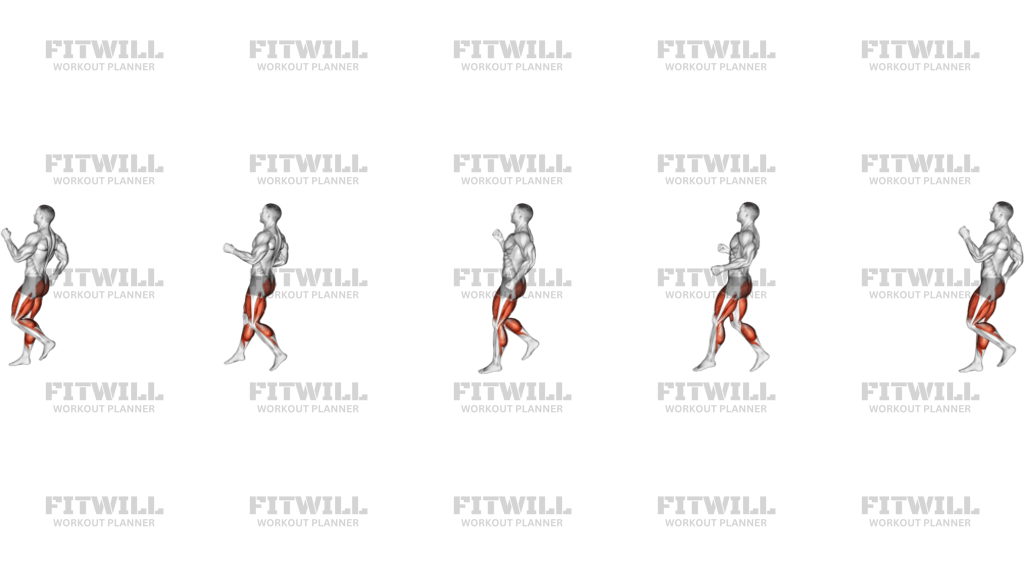
Skater Hops are a bodyweight lateral plyometric drill built around side-to-side bounds and single-leg landing control. Each rep asks one leg to absorb body weight while the other leg swings behind for balance, so the exercise trains lateral power, hip stability, and the ability to decelerate cleanly before changing direction.
The movement is useful anywhere you want athletic conditioning without equipment. It strongly involves the glutes, quads, hamstrings, calves, adductors, and the trunk muscles that keep the pelvis and ribcage from drifting while you move. Because the effort is shared across one leg at a time, the quality of the landing matters more than how far you can jump.
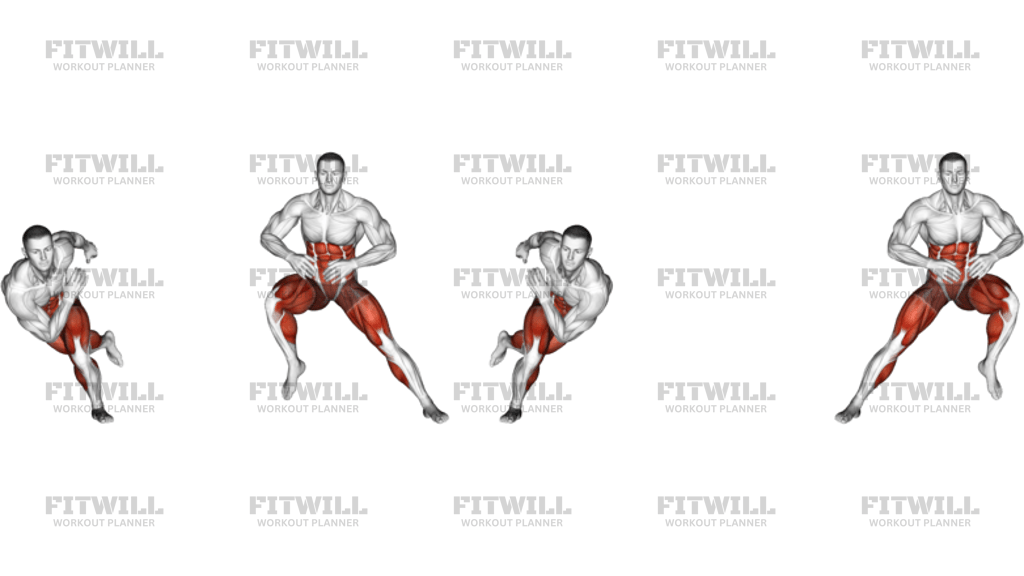
The setup should look like an athletic stance rather than a deep squat. Start with the knees soft, the hips slightly hinged, and the chest tall enough to stay organized over the midfoot. From there, load one hip, swing the opposite arm, and leap sideways. The trailing leg crosses behind the landing leg in the classic skater position, but it should act as a counterbalance rather than a second landing point.
A clean rep lands quietly on the outside leg with the knee tracking over the toes and the foot staying stable. The body should absorb force through the hip and ankle instead of collapsing at the knee or twisting through the low back. If the landing gets loud, the torso starts swaying, or the planted knee caves inward, the jump is too big or the pace is too fast.
Use Skater Hops for warm-ups, conditioning blocks, agility work, or lower-body circuits where lateral control matters. They are a good choice for athletes, but beginners should start with short bounds and slow rhythm before chasing distance or speed. The goal is repeatable side-to-side power with crisp control, not a high jump count at the expense of mechanics.
[ Workout Log & Planner ]
Put your next workout in Fitwill
Keep your plan and training log ready when you are.


Instructions
- Stand tall with your feet about hip-width apart, then soften the knees and hinge slightly at the hips so you start in an athletic stance.
- Shift your weight onto one leg and let the other leg hover lightly behind or beside you so you can bound side to side without a reset step.
- Load the standing hip, keep the chest proud, and swing the opposite arm forward to help drive the jump.
- Jump laterally to the other side, covering only as much distance as you can control on the landing.
- Land on the outside leg with a bent knee and hip, keeping the foot stable and the knee tracking over the toes.
- Let the free leg cross behind the landing leg for balance, like a speed skater, but do not let it take over the landing.
- Absorb the impact quietly, briefly regain balance if needed, then push back to the opposite side.
- Continue alternating sides for the planned time or rep count while keeping each bound crisp and controlled.
Tips & Tricks
- Start with short bounds first; if the knee caves inward or the landing turns noisy, the jump is too aggressive.
- Think about pushing the floor away sideways rather than trying to jump straight up.
- Keep a slight forward torso angle, but avoid folding at the waist or rounding the upper back.
- Use the arm swing to match the direction of the jump, not to yank yourself off balance.
- Land on a stable tripod foot and let the hip, not just the knee, absorb the force.
- If you cannot hold the landing for a second without wobbling, shorten the distance and slow the pace.
- Keep the non-landing foot off the floor between reps so each side actually has to decelerate and reaccelerate.
- For conditioning, work in time intervals; for power, keep reps fewer and rest long enough to stay explosive.
Frequently Asked Questions
What muscles do Skater Hops work?
They mainly train the glutes, quads, hamstrings, calves, adductors, and the core muscles that stabilize the pelvis during the landing.
Are Skater Hops a good warm-up exercise?
Yes, if you keep the bounds small and controlled. They are a good way to prepare the hips, ankles, and knees for lateral movement.
Should the trailing foot touch the floor?
Usually no. It should cross behind as a counterbalance while the landing leg does the work of absorbing and controlling the rep.
How far should I jump sideways?
Only as far as you can land quietly with the knee tracking over the toes and the trunk staying steady.
Are Skater Hops beginner-friendly?
Yes, but start with short, low-amplitude bounds and a slower rhythm. Beginners should earn distance only after they can stick the landing cleanly.
What is the biggest form mistake?
Letting the planted knee collapse inward or letting the torso twist as you land. Both usually mean the jump is too big.
How are Skater Hops different from jump squats?
Jump squats are vertical. Skater Hops are lateral and place much more emphasis on single-leg deceleration and side-to-side control.
How should I breathe during the set?
Inhale as you load the landing leg, then exhale as you drive into the next bound so the trunk stays braced and rhythmic.