Crunch With Medicine Ball
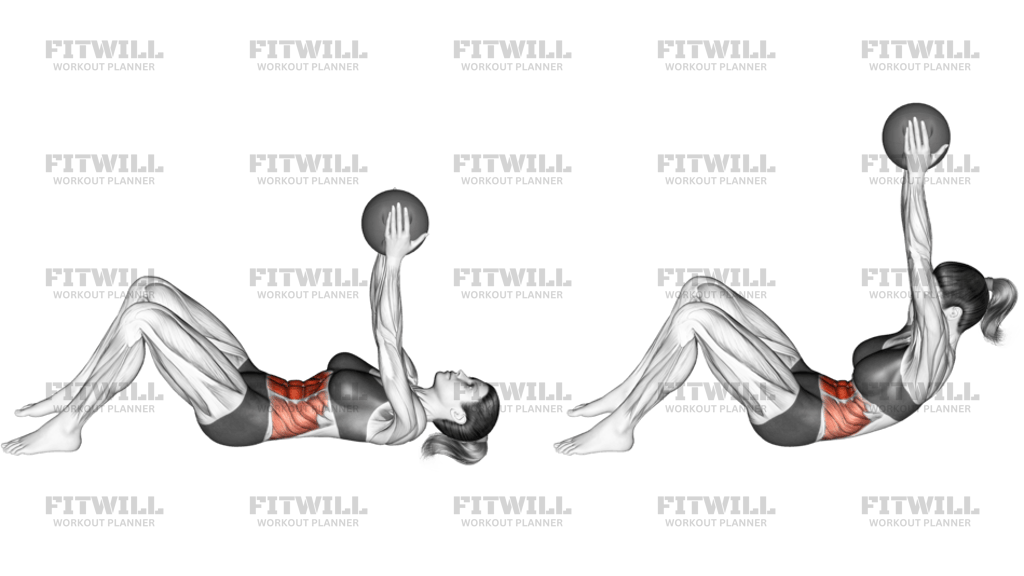
Crunch With Medicine Ball is a floor-based abdominal crunch performed while holding a medicine ball above the chest. The ball increases the demand on the rectus abdominis by giving the arms a fixed load to stabilize and by making it harder to rely on momentum or swinging through the rep. The exercise is simple in appearance, but the setup matters: a consistent foot position, a neutral neck, and a steady ball position are what let the abs do the work.
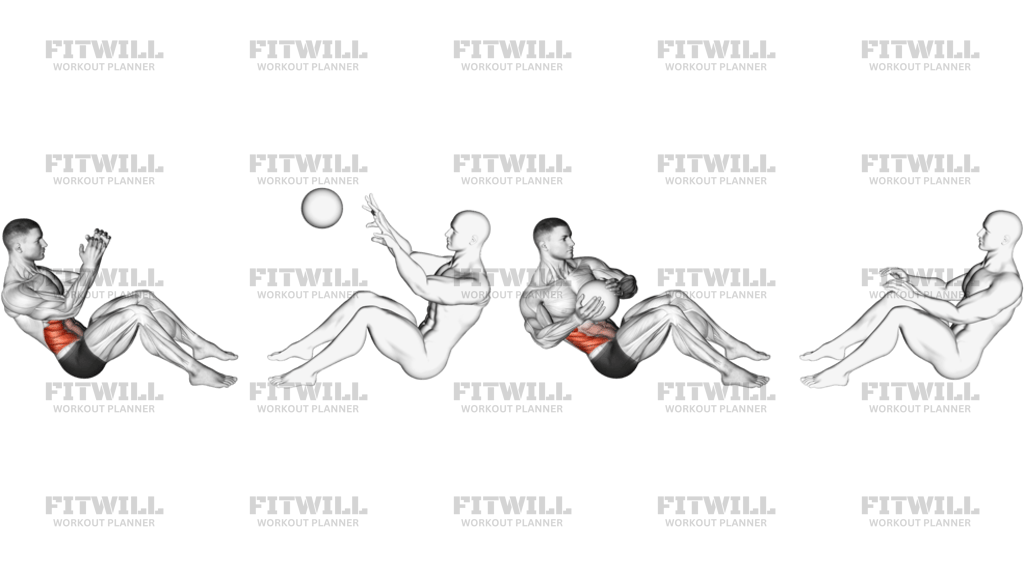
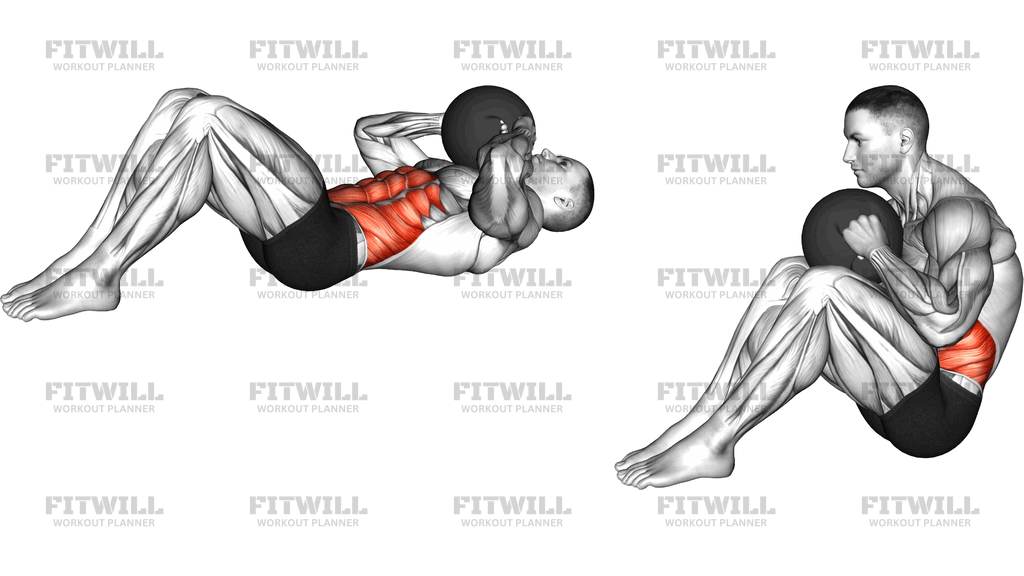
In the image, the lifter lies on the back with knees bent, feet planted, and the medicine ball held straight up over the chest. From there, the torso curls upward by drawing the ribs toward the pelvis and lifting the shoulder blades off the floor. That short range is intentional. This is a crunch, not a sit-up, so the lower back stays mostly down while the upper trunk flexes under control.
This movement is useful when you want direct abdominal work without complex equipment. It fits well in core sessions, warmups, accessory blocks, and general strength routines because it is easy to load lightly, easy to learn, and easy to scale by changing the ball weight or the tempo. It also gives clear feedback: if the neck starts reaching, the ribs flare, or the hips begin to take over, the set is too heavy or too fast.
Good reps feel like the abs shorten the distance between rib cage and pelvis while the arms stay quiet and the chin stays softly tucked. Lower with control until the shoulder blades touch down again, reset the brace, and repeat. Keep the motion smooth rather than explosive, and stop the set if the ball drifts, the elbows flare into a pull, or the torso begins to jerk through the top.
[ Workout Log & Planner ]
Put your next workout in Fitwill
Keep your plan and training log ready when you are.


Instructions
- Lie on your back with your knees bent, feet flat on the floor, and the medicine ball held straight above the center of your chest.
- Press the ball up so your arms are vertical, keep your lower back lightly on the floor, and set your chin in a neutral position.
- Brace your abs before each rep and keep your feet planted instead of pulling with the hips.
- Exhale as you curl your shoulders and upper back off the floor, bringing your rib cage toward your pelvis.
- Lift only until your shoulder blades clear the floor; do not turn the movement into a full sit-up.
- Keep the ball stacked over your chest as you rise so the arms do not swing or drift forward.
- Pause briefly at the top, then lower with control until your shoulder blades touch down again.
- Reset your brace at the bottom and repeat for the planned number of repetitions.
Tips & Tricks
- Hold the medicine ball over the middle of your chest, not over your face, so the load stays balanced through the rep.
- Think about curling the ribs toward the pelvis instead of trying to sit all the way up.
- Keep the chin slightly tucked and look at the ceiling or ball, not at your knees.
- If your neck starts to strain, reduce the ball weight or keep the hands closer to the chest line.
- Keep the feet quiet on the floor; if they start lifting or sliding, the load or effort is too high.
- Lower slowly enough that the abs stay engaged, but do not collapse onto the floor between reps.
- Use a small pause at the top to remove momentum and make each rep more honest.
- Stop the set when the ball begins to wobble or the torso starts jerking instead of curling.
Frequently Asked Questions
What muscles work most in a Crunch With Medicine Ball?
The rectus abdominis does most of the work, with the obliques and deep core muscles helping stabilize the torso.
Is this the same as a sit-up?
No. A crunch keeps the motion short and focused on lifting the shoulder blades, while a sit-up usually involves much more hip flexion.
Where should I hold the medicine ball?
Hold it straight above the center of your chest so the load stays balanced and you do not have to reach or twist.
Can beginners do this exercise safely?
Yes, if the ball is light and the neck stays relaxed. Beginners should keep the range small and controlled.
Why do my hip flexors feel this exercise?
If the torso is coming up too high or the feet are pushing hard, the hips can take over. Keep the crunch short and focus on curling the ribs downward.
How do I avoid neck strain during the crunch?
Keep the chin softly tucked, look up, and let the abs lift the torso instead of pulling the head forward.
What is the biggest form mistake with this movement?
Swinging the ball or turning the rep into a sit-up are the most common mistakes. Both reduce abdominal tension.
How can I make the exercise harder without changing the movement?
Use a slightly heavier ball, slow the lowering phase, or add a one-second pause at the top while keeping the same short crunch range.