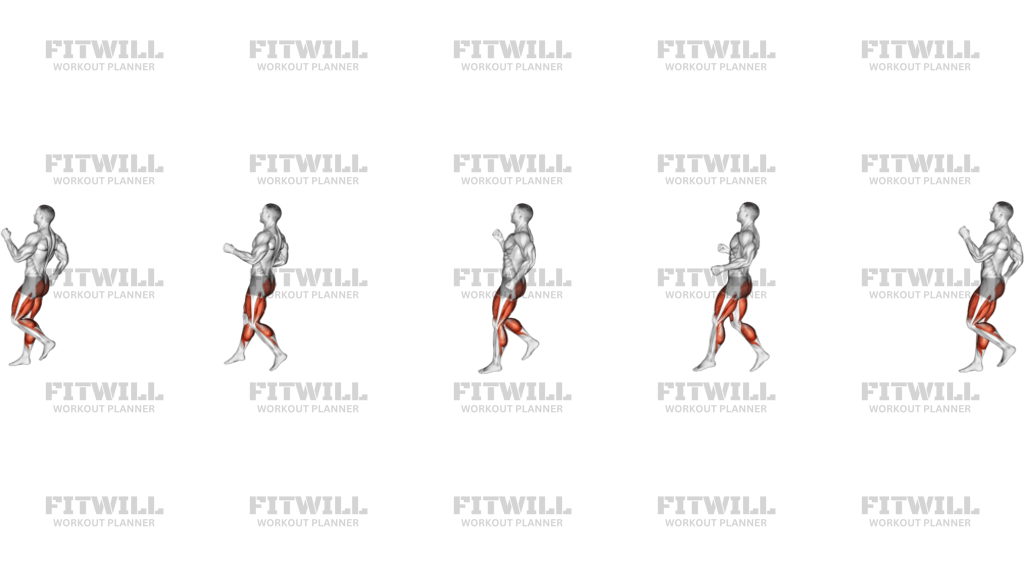
Quickly Trot In Place
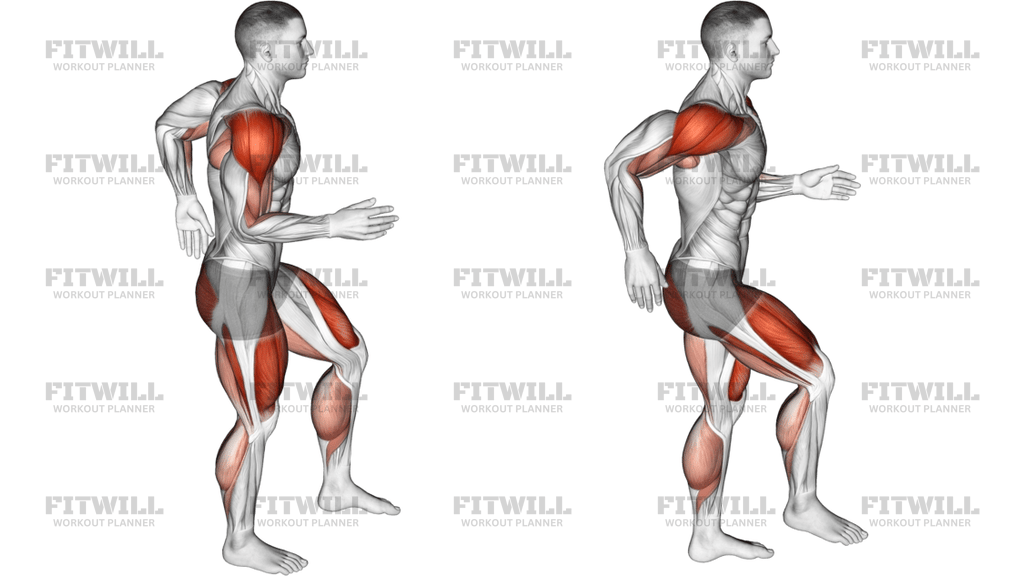
Quickly Trot In Place is a fast, bodyweight locomotion drill that raises your heart rate while teaching you to stay organized as your legs cycle rapidly under you. It sits between an easy march and an all-out high-knee sprint: the feet stay underneath the hips, the torso stays tall, and the arms drive in a compact running pattern. Because the movement is simple but fast, it is useful as a warm-up, a conditioning finisher, or a low-equipment cardio option when you want to move without a treadmill or bike.
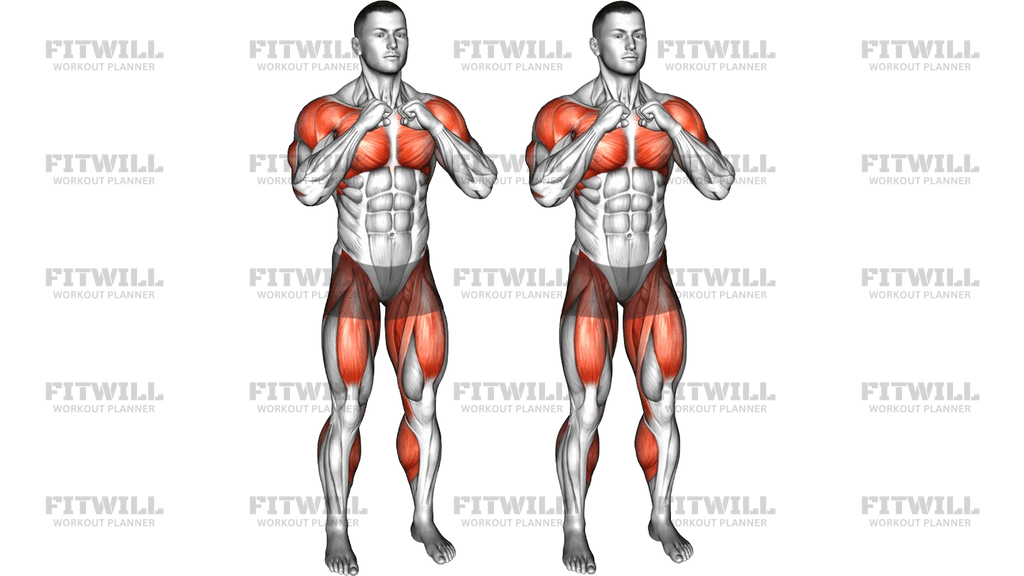
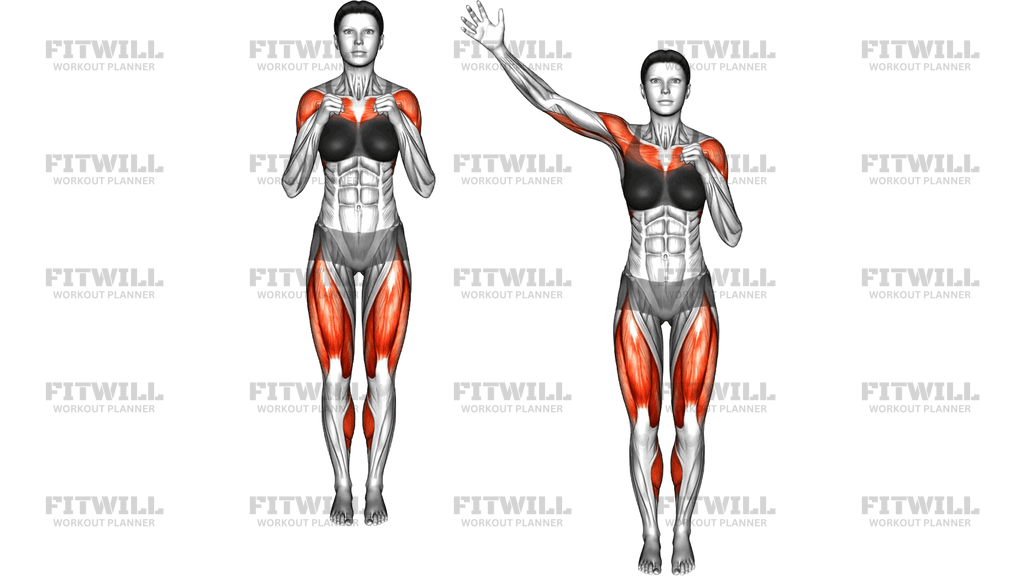
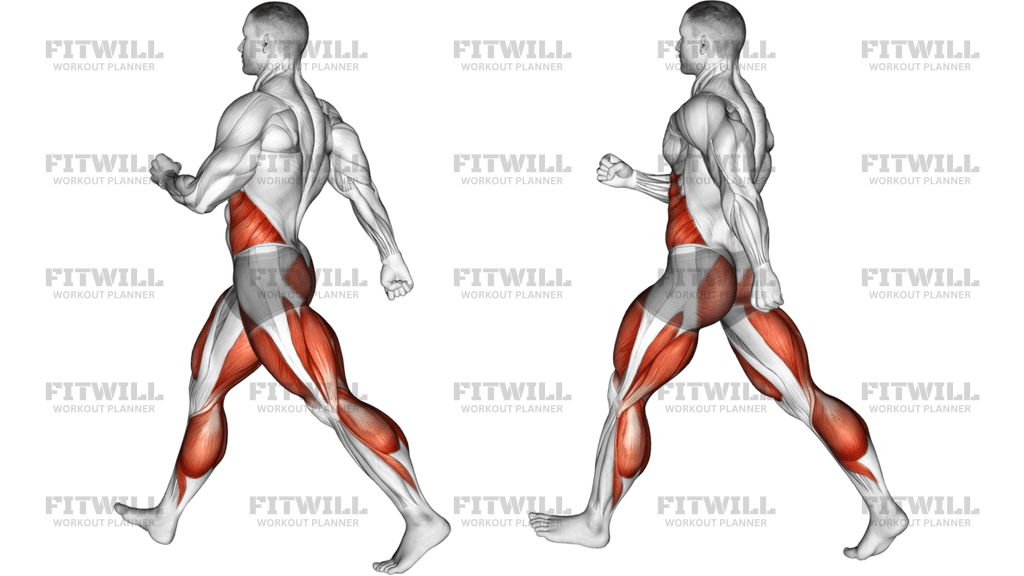
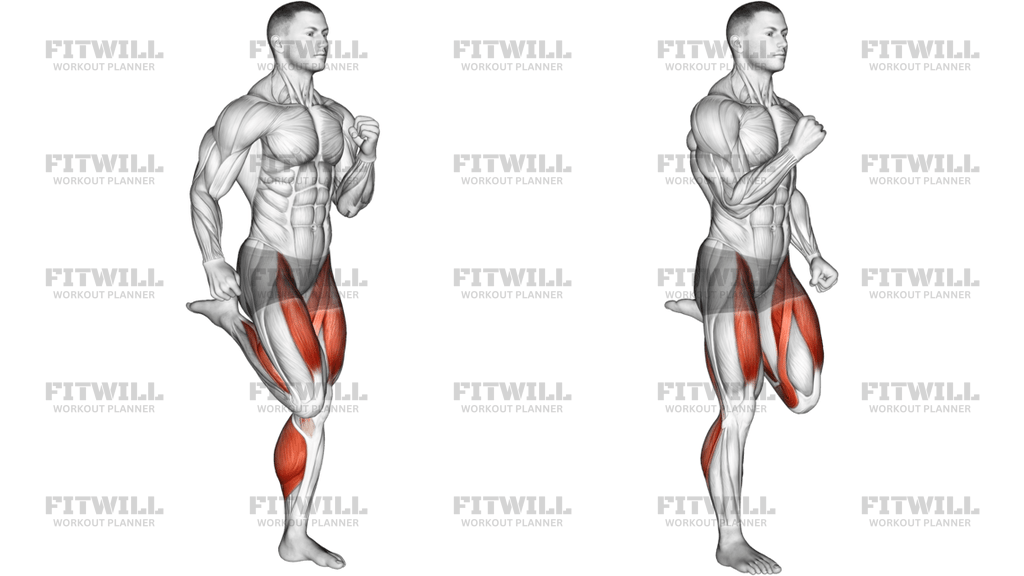
Even though the exercise looks light, it asks a lot from the calves, quads, glutes, hip flexors, and core stabilizers. The working leg has to lift quickly, land softly, and switch without excessive bouncing, while the upper body keeps rhythm with the lower body. That makes Quickly Trot In Place valuable for athletes and general trainees who want better foot speed, coordination, and repeated effort tolerance without loading the joints with external weight.
The setup matters more than people expect. Start with a narrow athletic stance, knees soft, ribs stacked over the pelvis, and elbows bent so the hands can swing naturally. The goal is not to lean back or fling the knees forward; it is to create a quick, repeatable rhythm with the feet landing under control. If the stride gets long or the torso starts swaying, the drill turns into sloppy running in place instead of a clean trot.
During each rep, drive one knee up as the opposite arm swings forward, then switch immediately and keep the contact time short. Think of quick, light steps rather than stomping the floor. The pace can be brisk, but the trunk should stay tall and the shoulders relaxed so the movement stays efficient instead of tense. Breathing should stay steady and rhythmic, with the exhale matching the faster drive phase if that helps you keep pace.
Quickly Trot In Place works well in space-limited sessions, circuit training, field-sport warm-ups, and conditioning blocks where you need a simple way to build heat. It also scales easily: beginners can keep the knees lower and the cadence moderate, while more experienced trainees can increase the speed or the knee lift without changing the basic pattern. The main priority is always the same: quick feet, quiet upper body, and a controlled reset when you finish the set.
[ Workout Log & Planner ]
Put your next workout in Fitwill
Keep your plan and training log ready when you are.


Instructions
- Stand tall with your feet about hip-width apart, your knees softly bent, and your elbows bent so your hands sit near mid-torso.
- Shift onto the balls of your feet and keep your ribs stacked over your pelvis instead of leaning back or hinging forward.
- Set your shoulders down and let your hands hover at your sides so the arms can swing like a runner's arms.
- Drive one knee up quickly as the opposite arm swings forward, keeping the lifted thigh at a height you can control.
- Land lightly on the forefoot of the lifted leg and immediately switch to the other side without pausing.
- Keep your steps under your hips so the movement stays quick and vertical rather than turning into a long stride.
- Breathe in a steady rhythm while you keep the torso quiet and the head facing forward.
- Maintain the pace for the planned time or repetitions, then slow your steps and stand still before stopping completely.
Tips & Tricks
- Keep the knee drive brisk, but do not chase maximum height if it makes your torso lean back.
- Let the feet tap the floor briefly; heavy, loud landings usually mean you are reaching too far in front of your body.
- Pump the arms opposite the legs to keep the rhythm honest and stop the upper body from twisting.
- Think about moving up and down, not forward, so the drill stays in one spot.
- If your hips start rocking side to side, shorten the stride and reduce the knee lift for a few seconds.
- Stay on a slightly springy forefoot, but keep the heel from bouncing wildly off the ground.
- Use a faster cadence for conditioning and a lower knee lift for warm-ups or recovery-focused sets.
- Stop the set once your steps get noisy, your shoulders tense up, or your breathing becomes erratic.
Frequently Asked Questions
What muscles does Quickly Trot In Place work?
It mainly works the calves, quads, glutes, hip flexors, and core stabilizers, with the arms helping set the tempo.
Is Quickly Trot In Place a good beginner cardio drill?
Yes, as long as you keep the knee lift modest and the cadence controlled. Start with short intervals and build speed only after the landing stays quiet.
How high should my knees come up in Quickly Trot In Place?
Only as high as you can lift them without leaning back or losing rhythm. A moderate knee drive is usually better than forcing a sprint-style height.
Should I swing my arms during Quickly Trot In Place?
Yes. Keep the elbows bent and drive the arms opposite the legs, just like a quick run, so the pace stays coordinated.
What is the most common mistake with Quickly Trot In Place?
People often overstride and land too far in front of the body. Keep the feet under your hips and aim for quick, light contacts.
Can I use Quickly Trot In Place as a warm-up?
Yes. It works well before running, sports practice, or lower-body lifting because it raises body temperature without needing equipment.
What if I want a lower-impact version?
Reduce the speed and keep the knees lower, closer to a quick march. You still get the rhythmic cardio effect without pushing the bounce.
Where should I feel the effort during Quickly Trot In Place?
The effort should build in the calves and legs, with the core working to keep your torso stable. If your lower back feels strained, the cadence or knee lift is probably too aggressive.