Lying Leg Lift With Hip Raise
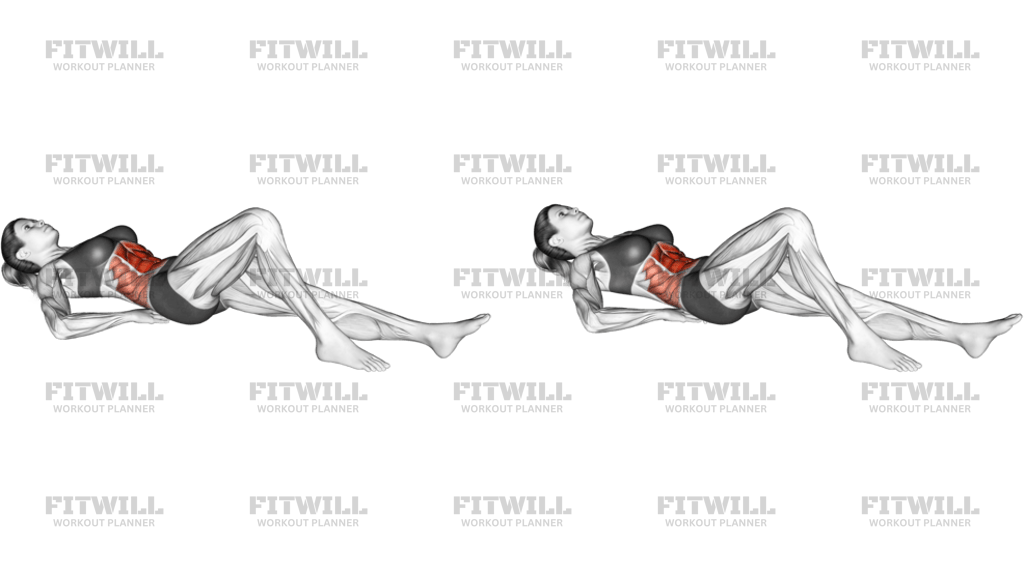
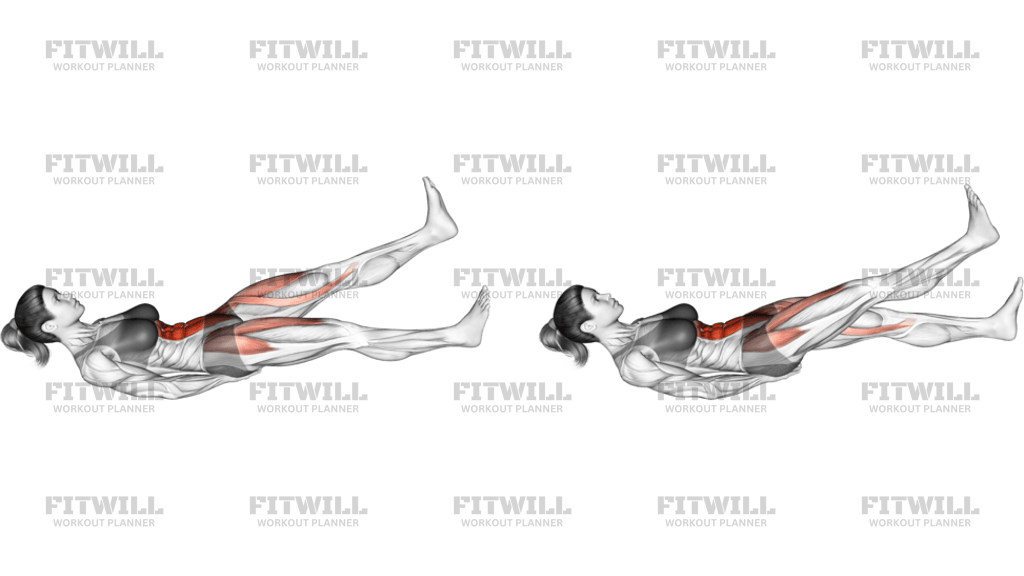
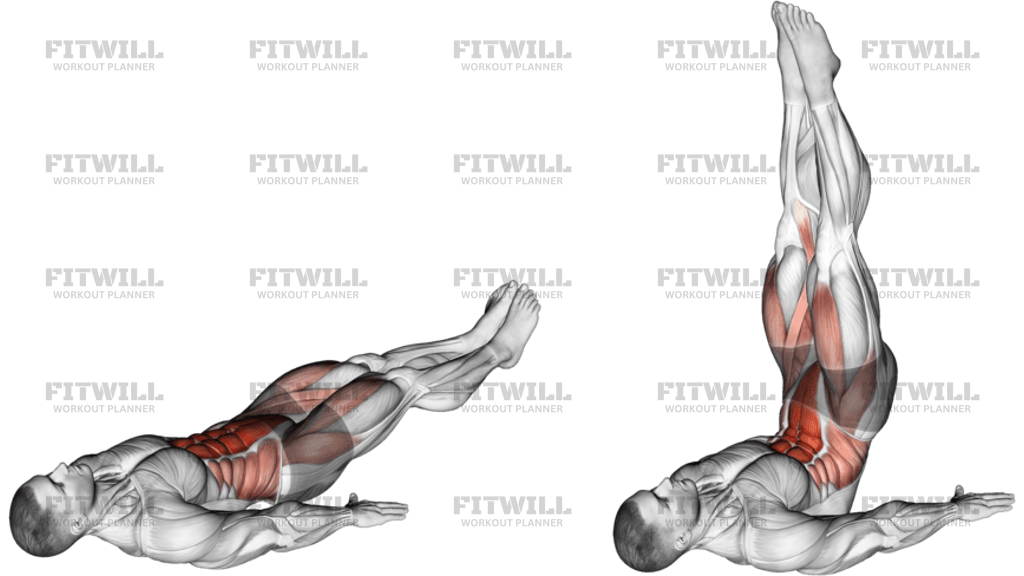
Lying Leg Lift With Hip Raise is a floor-based core exercise that combines a straight-leg raise with a small reverse-crunch at the top. It is useful when you want direct abdominal work without equipment, especially for building control through the lower abs, pelvis, and hip flexors while keeping the torso quiet on the floor.
The movement looks simple, but the setup matters. Lie flat on your back with your legs together and your arms by your sides for balance. The goal is to keep the ribs down and the lower back organized so the legs can move without the torso arching and without the hips rocking side to side.
Most of the work comes from the rectus abdominis, with help from the obliques, hip flexors, and deep core stabilizers. As the legs travel upward, the abdominal wall has to resist extension; as the hips peel up, the lower abs finish the rep with a short posterior pelvic curl. That combination makes the exercise more demanding than a basic leg raise, because you have to control both the leg path and the small hip lift.
A good repetition is smooth rather than fast. Lift the legs under control, then curl the pelvis a few inches off the floor without throwing the legs backward or using momentum. On the way down, lower the hips first and then the legs, stopping before your low back arches off the floor. If you lose the low-back position early, shorten the range or bend the knees slightly so the abs stay in charge.
Lying Leg Lift With Hip Raise fits well in core-focused sessions, accessory work, or as a finish after bigger lower-body lifts. It can also help people who need better control of pelvic position during running, sprinting, or other athletic tasks. Keep the neck relaxed, breathe steadily, and treat the rep as a controlled sequence rather than a leg swing.
For beginners, the easiest way to learn it is to start with a smaller range and a slower lowering phase. For more advanced lifters, the challenge comes from keeping the legs straighter, lowering farther without losing the back position, and making the top hip curl crisp instead of sloppy.
[ Workout Log & Planner ]
Put your next workout in Fitwill
Keep your plan and training log ready when you are.


Instructions
- Lie flat on your back on the floor with your legs together, arms at your sides, and palms pressing lightly into the floor for balance.
- Set your chin slightly tucked, ribs down, and low back gently pressed toward the floor before the first rep starts.
- Keep both legs straight or only slightly soft at the knees, and hover them low enough that you can still keep control of your pelvis.
- Exhale and raise both legs toward the ceiling without swinging your hips or letting your feet drift apart.
- When your legs reach near vertical, curl your pelvis off the floor by pulling your belt line toward your ribs.
- Pause briefly at the top with the hips lifted only a few inches and the abs doing the work, not your momentum.
- Lower your hips back to the floor first, then lower the legs slowly until they are just above the floor or until your low back is about to arch.
- Keep the descent smooth and stop the set if you cannot keep the low back controlled against the floor.
- Reset the ribs, brace again, and repeat for the planned number of reps.
Tips & Tricks
- Press your palms into the floor, but do not use your hands to swing the legs upward.
- If your low back arches as the legs lower, shorten the range and stop the descent higher.
- Keep the legs together so the pelvis does not twist during the hip raise.
- Think about curling the tailbone upward, not just throwing the feet toward the ceiling.
- A small knee bend is better than a sloppy straight-leg swing if your hamstrings are tight.
- Slow the lowering phase to three or four seconds to make the abs control the whole path.
- If you feel the movement mostly in your hip flexors, start the rep from a slightly higher leg position.
- Keep your gaze fixed upward so your neck stays relaxed instead of tensing during the curl.
- Stop each set when the hip lift turns into a leg swing or your ribs flare off the floor.
Frequently Asked Questions
What muscles does Lying Leg Lift With Hip Raise work?
It mainly trains the rectus abdominis and lower abs, with the obliques, hip flexors, and deep core helping stabilize the pelvis.
Should my hips come off the floor on every rep?
Yes, but only slightly. The hip raise is a short reverse-crunch at the top, not a big bridge.
How low should I lower my legs?
Lower them only until you can no longer keep your low back flat. The right range is the one where the abs stay in control.
Can beginners do Lying Leg Lift With Hip Raise?
Yes, but they should start with a smaller range or a slight knee bend so the low back stays anchored to the floor.
Why do I feel this more in my hip flexors than my abs?
Usually the legs are dropping too low or the rep is too fast. Start higher, slow the lowering phase, and focus on the pelvic curl at the top.
Is this the same as a reverse crunch?
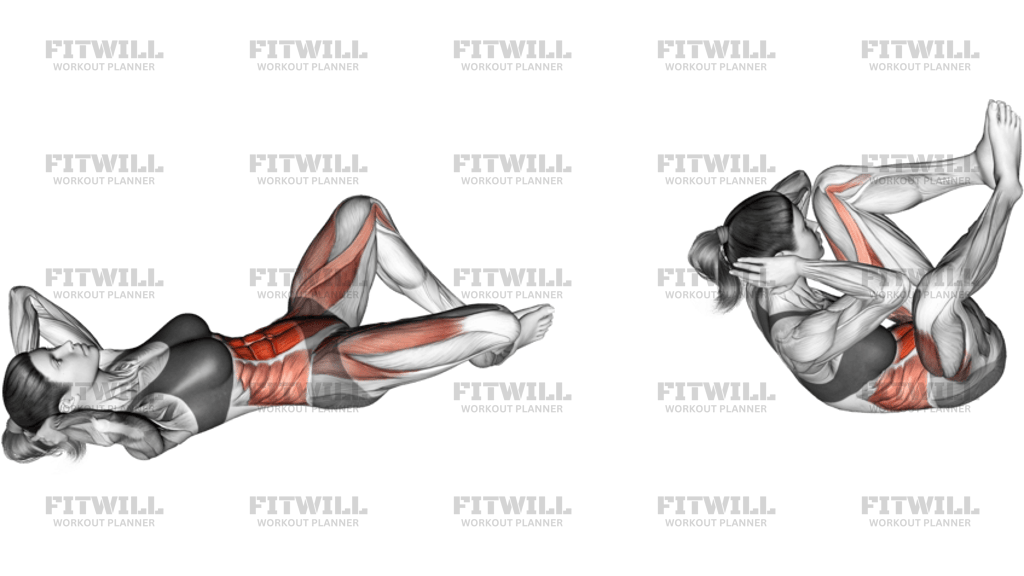
It is closely related, but this version adds a straighter leg raise before the hip curl, which makes the lever longer and the core demand higher.
What should I do if my hamstrings feel tight?
Bend the knees slightly or keep the legs a little higher so you can keep the pelvis tucked without straining to stay straight.
Where should I place my hands?
Keep them by your sides with the palms down. If you need extra support, place them under the hips, but do not push to create momentum.