Hanging Straight Leg Hip Raise
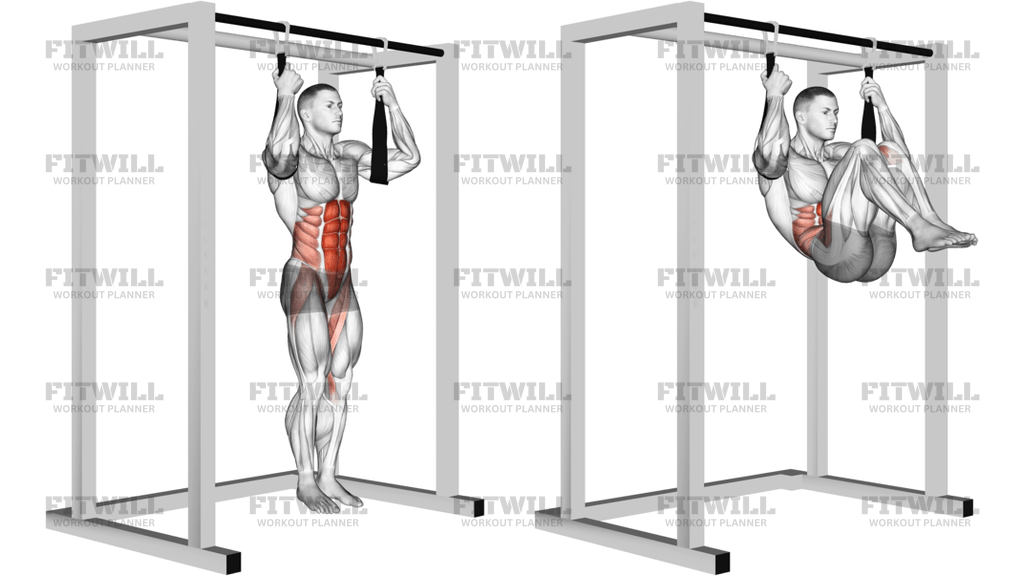
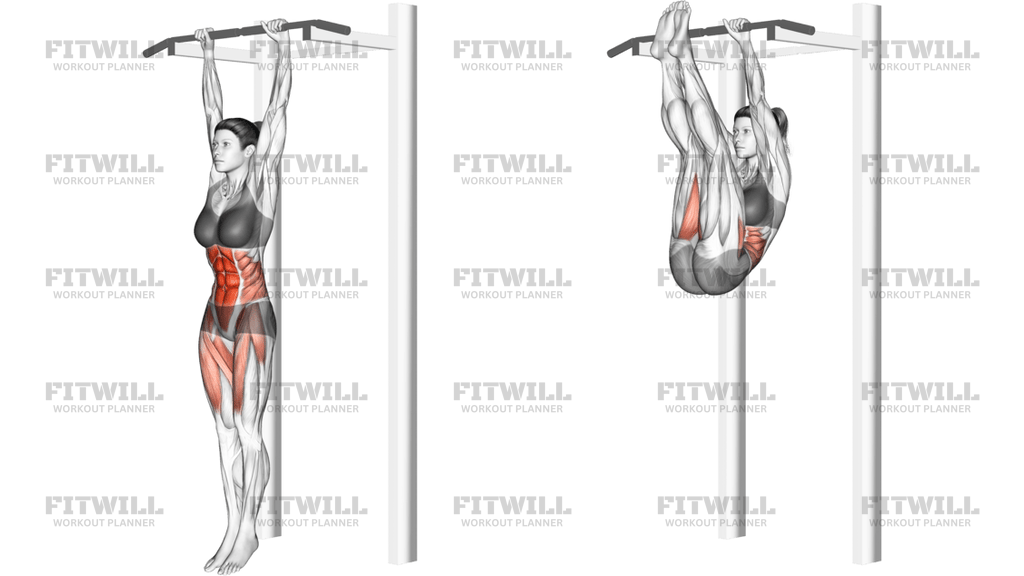
Hanging Straight Leg Hip Raise is a strict hanging core exercise performed from an overhead bar with the body fully suspended. It asks you to keep the legs long, lift them in one controlled arc, and finish with a small pelvic curl so the abs do the work instead of swing or loose hip motion. The setup matters because once you are hanging, every rep depends on grip, shoulder position, and the ability to keep the torso from drifting.
This version emphasizes the rectus abdominis, with strong help from the hip flexors and obliques as the legs rise and the pelvis tips upward. The straight-leg position makes the movement more demanding than a bent-knee raise because the lever is longer and the lower body is harder to control. That is why this exercise is useful for building strict abdominal strength, hanging control, and the ability to resist body swing in calisthenics or athletic work.
The cleanest reps start with a quiet hang: hands fixed on the bar, shoulders active, ribs stacked, and feet together. From there the legs should travel upward as one unit, not kick or separate. The top position should feel like an abdominal curl from the pelvis, not a lower-back arch or a fast hip snap. If the only way to finish the rep is to bend the knees, shrink the range or regress to a bent-knee variation until the straight-leg version is controlled.
Use the exercise when you want strict hanging trunk work that challenges the whole front chain without external load. It fits well in core sessions, accessory blocks after pulling work, or body-weight progressions for intermediate lifters. Keep the descent slow, stop each rep before the swing takes over, and treat shoulder stability as part of the exercise rather than just a setup detail. The best set is not the one with the highest leg height, but the one where each rep looks identical and the torso stays disciplined from start to finish.
[ Workout Log & Planner ]
Put your next workout in Fitwill
Keep your plan and training log ready when you are.


Instructions
- Grip the pull-up bar overhead about shoulder-width to slightly wider, hang with straight arms, and bring your legs together with the feet pointed or neutral.
- Let the body settle into a still dead hang, then draw the shoulders down and back just enough to keep the hang active instead of passive.
- Brace your abs so the ribs stay stacked over the pelvis before the legs move.
- Keep the knees straight or only softly unlocked, and start the lift without any kick or backward lean.
- Raise both straight legs together in a smooth arc, leading with the pelvis rather than swinging the feet upward.
- Continue until the feet reach hip height or higher, stopping before the knees bend or the lower back arches.
- Pause briefly at the top while keeping the torso quiet and the grip steady.
- Lower the legs slowly to the start position, reset the swing, and repeat for the planned number of reps while breathing out on the lift and in on the descent.
Tips & Tricks
- If the legs bend on the way up, shorten the range before you turn the rep into a swing.
- Think about curling the pelvis toward your ribs at the top so the abs finish the rep instead of the hip flexors alone.
- Keep the shoulders active the whole time; a loose hang makes the torso drift and the legs swing.
- A small pause at the bottom removes momentum and makes each rep more honest.
- Slow lowering is more valuable here than chasing extra rep speed.
- If one leg rises higher than the other, reduce fatigue or clean up the setup before continuing the set.
- Use a tighter grip than usual if your hands slip before your trunk fatigues.
- Stop the set when the lower back starts arching or the body starts rocking between reps.
Frequently Asked Questions
What muscles does Hanging Straight Leg Hip Raise work most?
It primarily trains the rectus abdominis, with strong help from the hip flexors and obliques. Your grip and shoulder stabilizers also work hard to keep the hang controlled.
Do my legs need to stay completely straight on the bar?
Yes, that is the main challenge of the exercise. If you cannot keep the legs straight without swinging, use a bent-knee regression until you can control the full lever.
How high should I raise my legs?
Raise them as high as you can while keeping the torso still and the pelvis curling upward. For most people that means at least to hip height, or higher if the bar path and control stay clean.
Why do I start swinging after the first few reps?
Usually the set starts too fast, the shoulders go passive, or the lowering phase is too quick. Reset at the bottom and use shorter, slower reps to remove momentum.
Is this harder than a hanging knee raise?
Yes, the straight-leg version is more demanding because the lever is longer and harder to control. Knee raises are the better regression if you cannot keep the body quiet.
Can beginners do Hanging Straight Leg Hip Raise?
Most beginners should start with hanging knee raises or a captain's-chair version first. Once the torso stays still and the legs can remain long, the straight-leg variation becomes a realistic next step.
What should my grip and shoulder position look like?
Hold the bar firmly, keep the arms straight, and keep the shoulders active so you are not hanging passively into your joints. That stability makes the leg raise much cleaner.
What is the most common form mistake?
The biggest mistake is turning it into a kick or a back swing instead of a controlled abdominal raise. If the torso rocks, the set is too fast or too hard for the current level.