Smith Deadlift
Smith Deadlift is a Smith-machine hip hinge built around a fixed vertical bar path. The bar stays close to the body while the hips travel back and then forward, so the lift is driven by control rather than by balancing a free bar. That makes foot placement especially important: if you stand too far forward or too far back, the machine will pull you out of position and the hinge will start to feel awkward or stressful through the lower back.
This exercise trains the posterior chain with a strong emphasis on the glutes, hamstrings, and hip extensors, while the lats, upper back, core, and grip help keep the bar close and the torso organized. Because the Smith bar cannot drift forward or backward, the lift feels more guided than a conventional deadlift. The challenge is to keep your torso braced and your spine neutral while you let the hips do the work.
A clean rep usually starts with the bar set at a height that lets you reach it without rounding or squatting it up. Stand so the bar tracks over the midfoot, take the bar with an overhand grip, and create a long spine before you move. As you descend, send the hips back, keep a soft bend in the knees, and lower until the hamstrings are loaded and the torso is in a stable hinge.
On the way up, drive through the whole foot, extend the hips, and finish tall by squeezing the glutes rather than leaning backward. The bar should stay close to the legs from start to finish, and each rep should look the same. This version of the deadlift is useful as lower-body accessory work, hinge pattern practice, or higher-rep posterior-chain training when you want a controlled setup and a clear, repeatable movement path.
Use a lighter load than you might choose for a free-bar pull if the fixed track feels restrictive at first. The goal is not to force a bigger range of motion, but to keep tension on the right muscles while the machine guides the line of travel. If the bar hits the knees, adjust your stance. If your back takes over, shorten the range and re-establish the hinge before adding load.
Fitwill
Log Workouts, Track Progress & Build Strength.
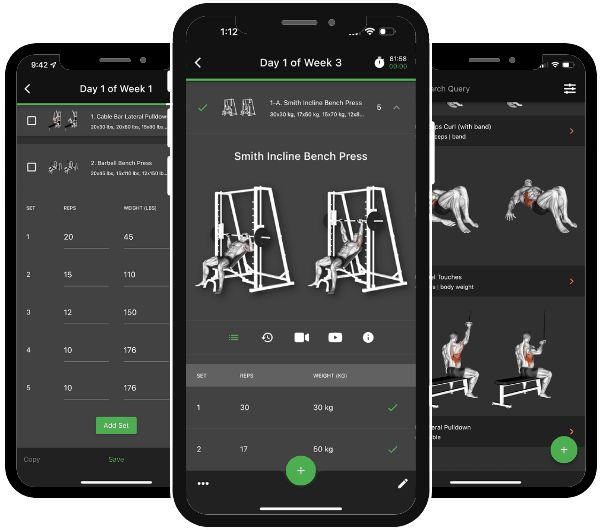
Achieve more with Fitwill: explore over 5000 exercises with images and videos, access built-in and custom workouts, perfect for both gym and home sessions, and see real results.
Start your journey. Download today!


Instructions
- Set the Smith bar to a height that lets you reach it without rounding your back, then stand inside the machine with your feet about hip-width apart.
- Place your feet so the bar will track over your midfoot and stay close to your thighs when you stand tall.
- Take an overhand grip just outside your legs, relax your shoulders down, and brace your trunk before the first rep.
- Unlock the movement by pushing your hips back and keeping a soft bend in your knees.
- Lower the bar straight down the rails while your torso folds into a controlled hinge and your shins stay nearly vertical.
- Stop when you feel a strong hamstring stretch or when your torso can no longer stay neutral.
- Drive through your whole foot, pull the hips forward, and stand tall by squeezing your glutes.
- Do not lean back at the top; finish stacked and reset your breath before the next rep.
Tips & Tricks
- If the bar scrapes your thighs or bumps your knees, move your feet until the rails line up cleanly over midfoot.
- Keep the bar close to your legs so the Smith track does not turn the rep into a forward reach.
- Think hinge, not squat; the knees should soften, but the hips should travel back first.
- Stop the descent when your spine wants to round, even if the bar could go lower.
- Use straps if your grip fails before your hips and hamstrings do.
- Exhale as you stand up and inhale again before the next rep so each rep starts braced.
- Avoid snapping into lockout; finish with the glutes, not with a backward lean.
- Choose a range of motion that matches your hamstring mobility on the Smith path, not a forced depth.
Frequently Asked Questions
What muscle does Smith Deadlift target most?
It mainly trains the glutes, hamstrings, and hip extensors, with the lats and upper back helping keep the bar close.
Can beginners perform this exercise?
Yes. The fixed bar path can make it easier to learn a hinge, but beginners should start light and keep the spine neutral.
Where should my feet be on the Smith machine?
Stand so the bar tracks over your midfoot and stays close to your thighs. If the bar hits your knees or drifts forward, adjust your stance.
Should this feel like a squat or a hinge?
It should feel like a hinge. The hips move back first, the knees stay softly bent, and the torso folds forward without collapsing.
Why does the Smith version feel different from a free-bar deadlift?
The machine fixes the bar path, so you do less balancing and more straight-line hip extension. That also makes setup and stance more important.
How low should I lower the bar?
Lower only until you still can keep a neutral spine and strong hamstring tension. Depth is limited by your hinge, not by where the bar can technically go.
What is a common mistake to avoid?
Common errors are squatting the bar up, leaning back at the top, or letting the bar drift away from the legs.
How do I progress Smith Deadlift safely?
Add load only after every rep looks identical, the bar path stays close, and you can reset your brace before the next repetition.