Smith Narrow Row
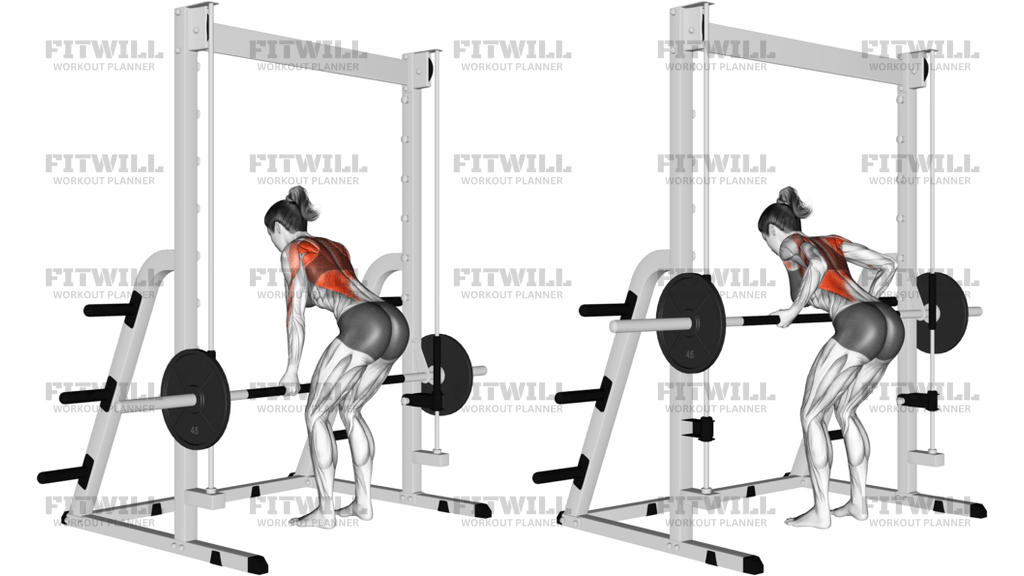
Smith Narrow Row is a bent-over rowing variation done on a smith machine with a narrow overhand grip. It trains the back through a fixed bar path, which makes it easier to focus on shoulder position, elbow path, and torso angle instead of balancing the bar. The movement is useful when you want a controlled row that still lets you load the lats, mid-back, rear delts, and biceps in a clear, repeatable way.
The setup matters because the smith machine locks you into one path, so your hinge and foot position have to match the bar instead of the other way around. Stand with your feet planted so the bar clears your shins, then hinge forward until your torso is angled over your hips with a flat back and soft knees. A narrow grip usually keeps the elbows closer to the ribs and makes the row feel more direct through the back rather than turning it into a shrug or an upright pull.
Each repetition should start from a strong, still hinge. Let the arms hang long, brace your trunk, and pull the bar toward the lower ribs or upper abdomen by driving the elbows back instead of yanking with the hands. At the top, squeeze the shoulder blades without letting the shoulders climb toward the ears, then lower the bar under control until the arms are straight again and the back stays organized.
Smith Narrow Row is a good accessory after heavier pulling work, or as a main horizontal row when you want strict technique and a stable bar path. It can also help lifters who struggle to keep a free bar row smooth, because the guided track reduces some coordination demands while still asking the torso, hips, and midsection to stay locked in position. The tradeoff is that a bad setup feels more obvious, so if the bar forces your shoulders or wrists into an awkward line, adjust your stance or shorten the range rather than forcing reps.
Keep the motion clean and deliberate so the back does the work instead of the lower body. If your torso keeps rising, your hips are turning the rep into a cheat row; if your shoulders shrug up first, the load is too heavy or the elbow path is drifting too high. Use a weight you can row without losing the hinge, and stop the set when you can no longer bring the bar to the same spot with the same body angle.
[ Workout Log & Planner ]
Put your next workout in Fitwill
Keep your plan and training log ready when you are.


Instructions
- Stand centered on the smith machine and take a narrow overhand grip on the bar, just inside shoulder width.
- Hinge at the hips until your torso is angled forward, keep a slight bend in your knees, and let the bar hang under your shoulders.
- Set your spine in a long, neutral line and brace your trunk before the first pull.
- Pull the bar toward your lower ribs or upper abdomen by driving your elbows back and close to your sides.
- Squeeze your shoulder blades together at the top without shrugging your shoulders upward.
- Lower the bar slowly until your arms are straight again and your back stays tight.
- Exhale as you row the bar up and inhale as you lower it back down.
- Reset your hinge before each rep and step out carefully when the set is finished.
Tips & Tricks
- If the bar hits your shins, move your feet a little farther forward so the fixed path clears your legs.
- Keep the grip narrow enough to keep the elbows tucked, but not so narrow that your wrists bend sharply.
- Think about pulling the elbows toward your hips if you want more lat emphasis, or slightly wider if you want more upper-back work.
- Do not stand up as you row; if your torso keeps rising, the load is too heavy for a strict hinge.
- Let the shoulders reach forward a little at the bottom instead of locking the shoulder blades hard in place.
- Pause for a beat near the top so the bar does not bounce through the range.
- Keep your gaze down and a few feet ahead of you so your neck stays in line with your spine.
- Use straps if your grip fails before your back does, especially on higher-rep sets.
- Choose a load that lets every rep touch the same point on your torso with the same hinge angle.
Frequently Asked Questions
What muscles does Smith Narrow Row work most?
It mainly works the lats, mid-back, rear delts, and biceps, with the lower back and core helping you hold the bent-over position.
Is Smith Narrow Row beginner-friendly?
Yes, because the smith machine removes some balance demands. Start light and focus on keeping the hinge, grip, and bar path consistent.
Where should the bar touch in Smith Narrow Row?
Aim for the lower ribs or upper abdomen. If you have to pull to your chest, the torso angle or elbow path is usually off.
How bent over should I be for Smith Narrow Row?
A solid hip hinge with a slight knee bend usually works best, often with your torso somewhere around 30 to 45 degrees above parallel.
Why do my shoulders feel like they take over?
Usually the elbows are flaring too high or the weight is too heavy. Keep the elbows closer to your sides and lower the load until the back leads the rep.
Is Smith Narrow Row more for back width or thickness?
The narrow elbow path usually biases the lats and mid-back, so it is a strong choice for both back thickness and a tighter lat-focused row.
Can I use Smith Narrow Row after deadlifts or pulldowns?
Yes. It fits well as a horizontal pull after heavier compound work when you want controlled back volume without a lot of setup complexity.
What should I do if my lower back gets tired first?
Raise your torso angle a little, shorten the set, and reduce the load. The row should feel like a back exercise, not a standing hinge hold.