V-Up
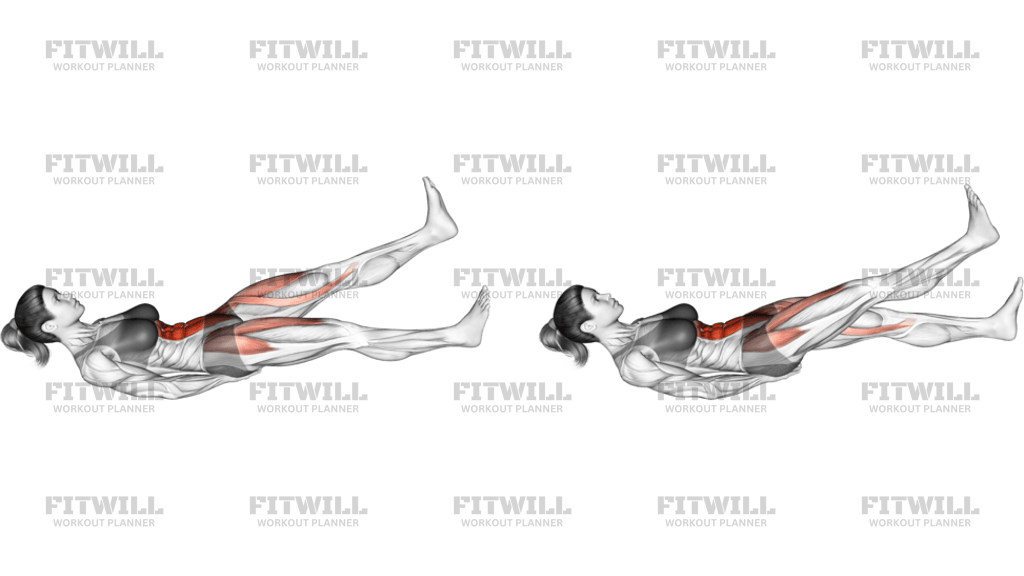
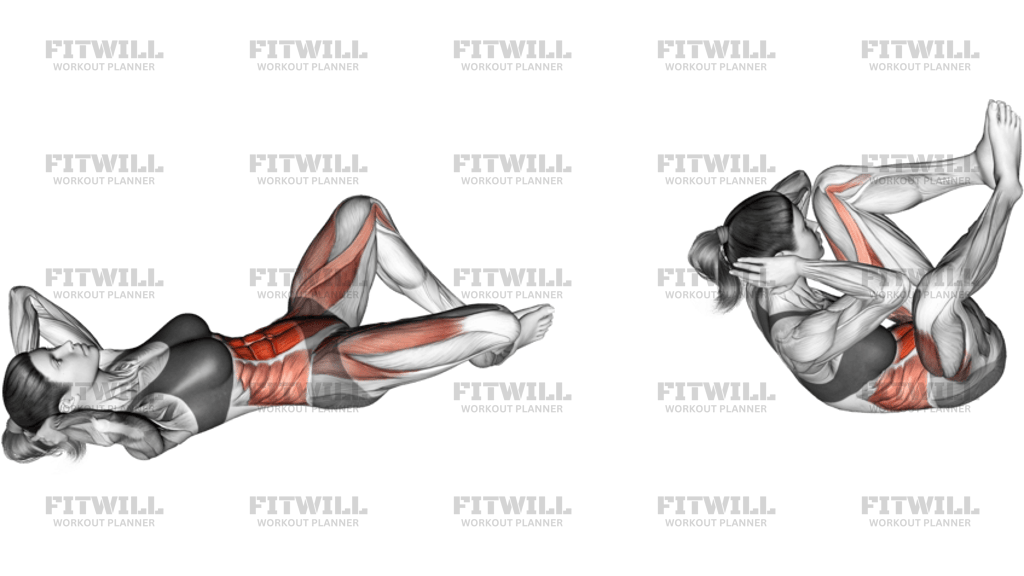
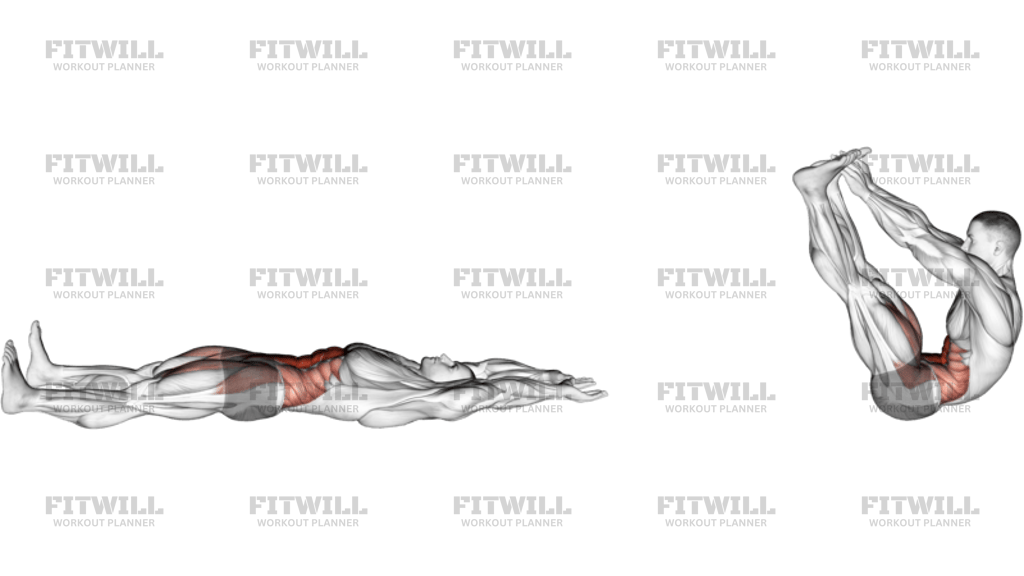
The V-Up is a floor core exercise that combines a crunch and a leg raise into one coordinated movement. From a flat supine position, you fold at the hips and spine at the same time so your hands and feet rise toward each other, creating the visible "V" shape at the top. Because the lever arms are long, the movement quickly becomes demanding, even without external weight.
This exercise primarily trains the rectus abdominis, with the obliques and deep trunk stabilizers helping keep the torso from twisting or flaring open. The hip flexors assist in lifting the legs, which is why the movement feels much harder than a simple crunch. In practice, the V-Up is useful for building anterior core strength, compression control, and the ability to keep the ribs and pelvis organized while the body moves as one unit.
The setup matters more than it looks. If you start with the low back arched and the ribs flared, the first rep usually turns into a hip-flexor swing instead of a controlled trunk curl. Lying tall with the arms extended overhead and the legs straight on the floor helps you begin in a long, honest position. From there, the goal is to exhale, brace, and curl the shoulders and legs together without throwing momentum into the rep.
A clean V-Up should feel like a deliberate fold rather than a snap. Reach the hands toward the shins or toes, keep the chin gently tucked, and lower back to the floor with the same control you used on the way up. If you cannot keep the low back from arching or the legs from dropping fast, shorten the range, bend the knees slightly, or use a tuck-up variation until the pattern is solid.
This exercise fits well in core sessions, athletic warmups, or accessory work when you want a challenging bodyweight drill that rewards precision more than load. It is not a good place to chase speed. Quality reps, a steady exhale on the lift, and a slow return will train the abs more effectively and reduce the chance of the hip flexors or lower back taking over.
[ Workout Log & Planner ]
Put your next workout in Fitwill
Keep your plan and training log ready when you are.


Instructions
- Lie flat on your back on the floor with your legs straight, arms extended overhead, and ribs pulled down so your low back stays gently in contact with the floor.
- Set your feet together and keep your legs long, then tighten your abs before the first rep so the movement starts from a braced position.
- Exhale as you lift your shoulders, upper back, and straight legs off the floor at the same time.
- Fold at the hips and spine so your hands travel toward your shins or toes while your torso and legs close into a V shape.
- Keep the movement smooth and avoid swinging the arms or kicking the legs to create momentum.
- Pause briefly at the top when your torso and legs are closest together.
- Lower your upper body and legs back to the floor under control until you return to the long starting position.
- Reset your brace before the next rep and keep breathing steady through the full set.
Tips & Tricks
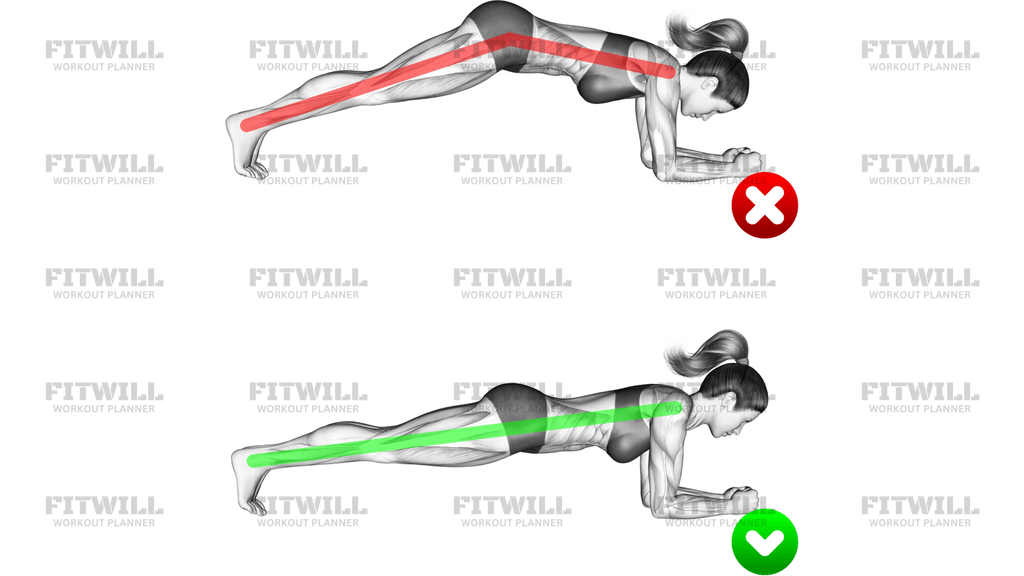
- Start each rep by flattening the low back slightly; if your ribs flare or your lower back arches, the rep will turn into a hip-flexor swing.
- Think about bringing your ribcage and pelvis toward each other, not just reaching your hands up.
- A small bend in the knees is a valid regression if straight legs make the rep sloppy.
- Keep the chin tucked and the neck long so you do not yank your head forward at the top.
- Reach to the shins or ankles if touching the toes forces you to lose trunk control.
- Lower slowly enough that your shoulders and legs do not crash back to the floor.
- Exhale on the way up to help the abs shorten and to reduce rib flare.
- Stop the set when momentum starts to replace control; a few clean reps are better than a long set of rushed ones.
Frequently Asked Questions
What muscles does the V-Up train most?
The V-Up mainly trains the rectus abdominis, with the obliques and hip flexors helping during the lift.
Is the V-Up appropriate for beginners?
Yes, but most beginners should start with a bent-knee version or a shorter range until they can keep the low back controlled.
Why does my hip flexor take over during V-Ups?
If the legs are too straight or the lower back arches, the hip flexors usually dominate. Shorten the lever and focus on curling the ribs toward the pelvis.
Should my legs stay perfectly straight?
Not necessarily. Straight legs make the exercise harder, but a slight knee bend is fine if it helps you keep the rep strict.
How high should I lift at the top?
Lift only until your torso and legs meet in a controlled V shape. You do not need to force a toe touch if that breaks form.
What is the most common mistake with V-Ups?
Throwing the arms and legs to create momentum is the biggest mistake. The rep should look folded and controlled, not whipped upward.
How can I make the exercise easier?
Bend the knees, keep the range shorter, or hold the top position for less time. A tuck-up or toe-reach crunch is a good regression.
How can I progress the V-Up without adding weight?
Slow the lowering phase, pause at the top, and gradually straighten the legs or extend the range while keeping the trunk from opening up.