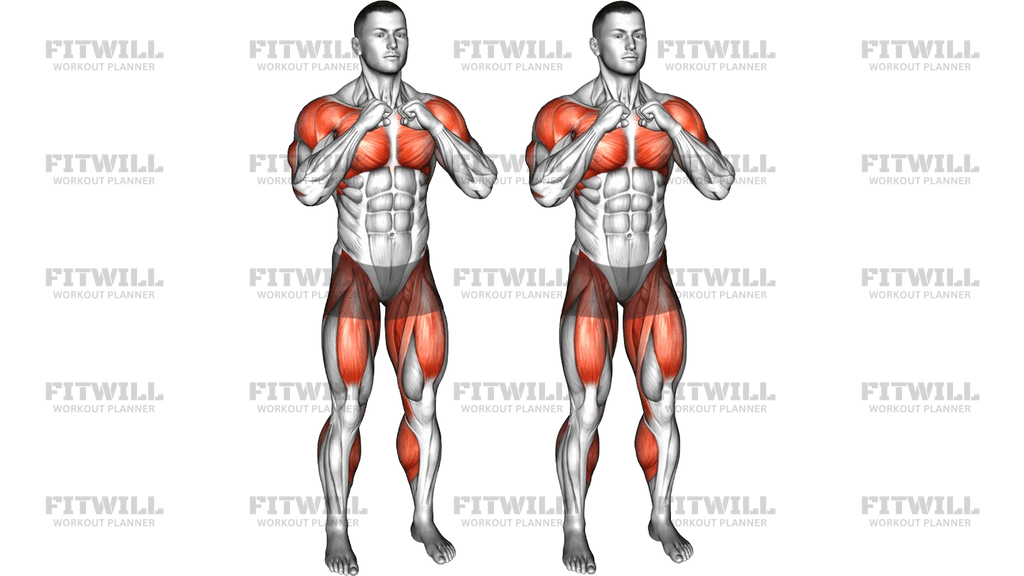
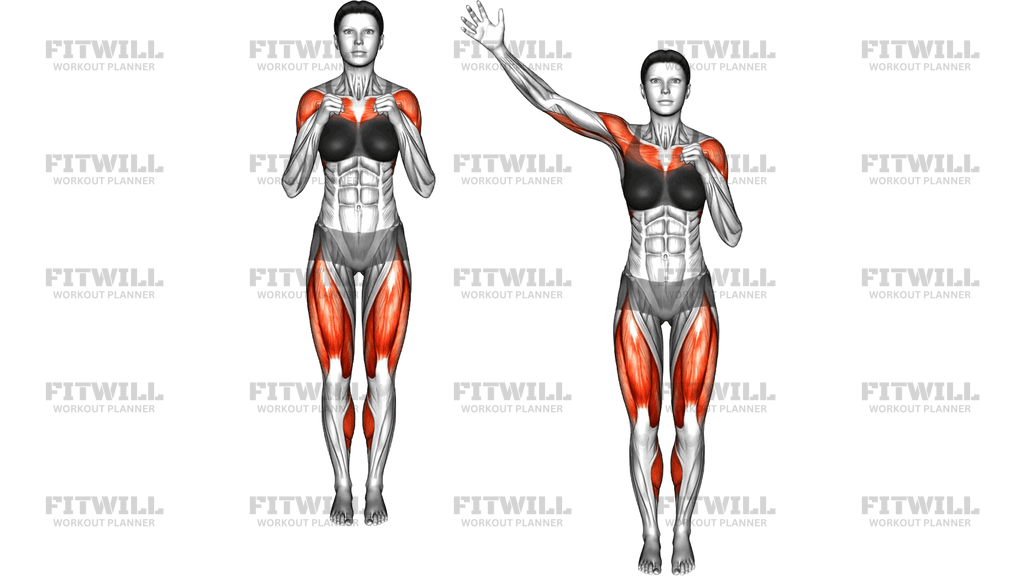
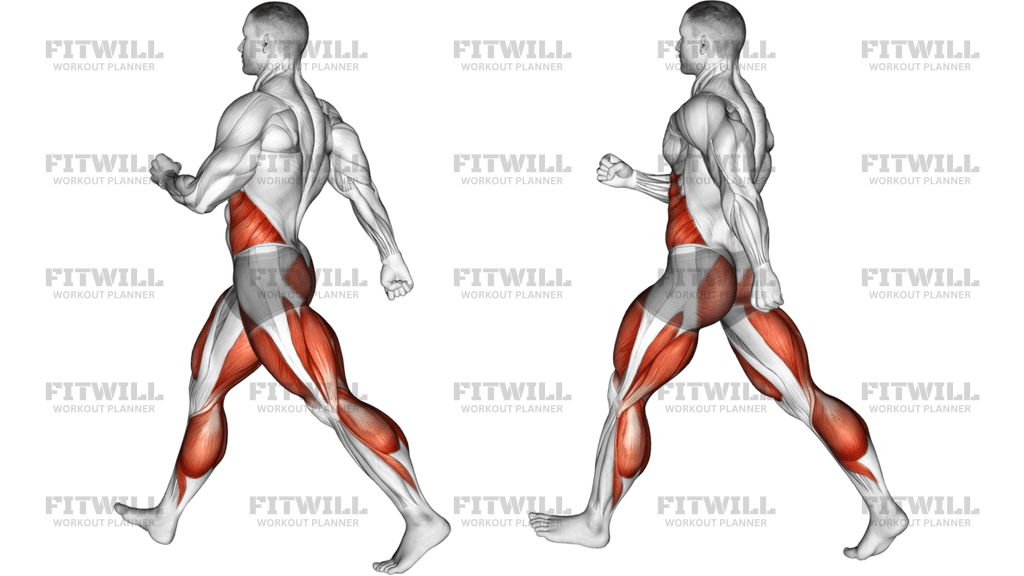
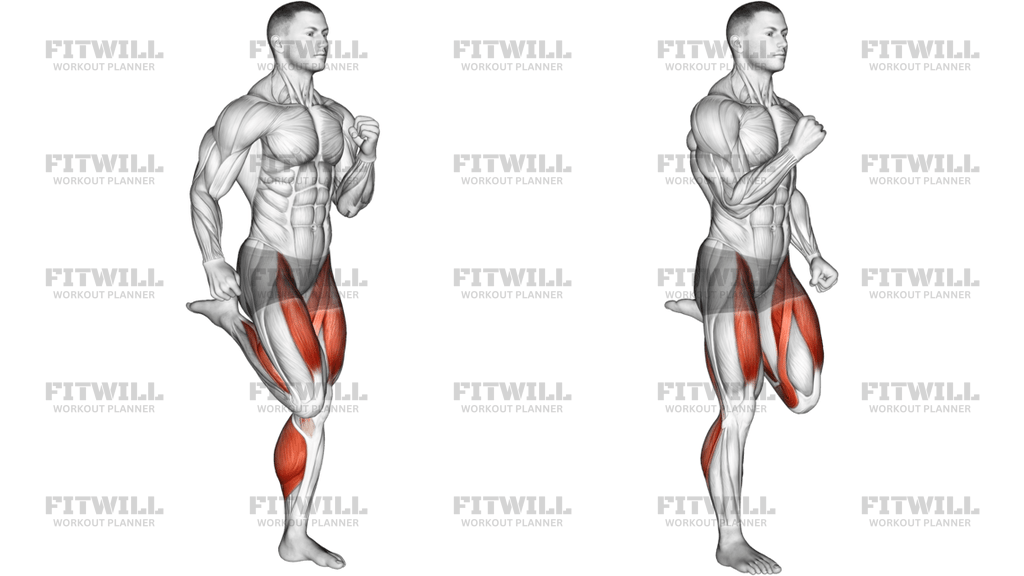
High Knee Against Wall
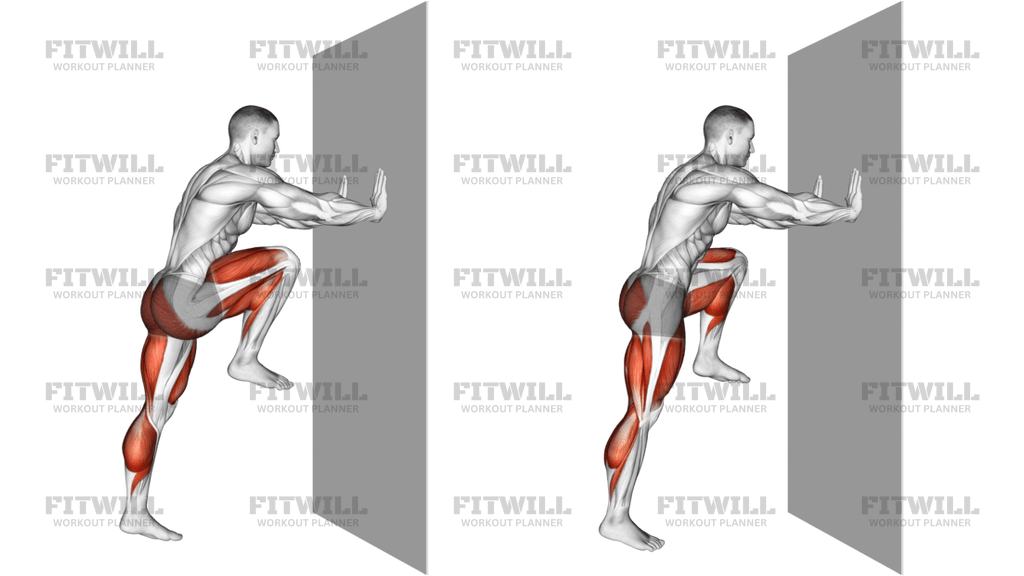
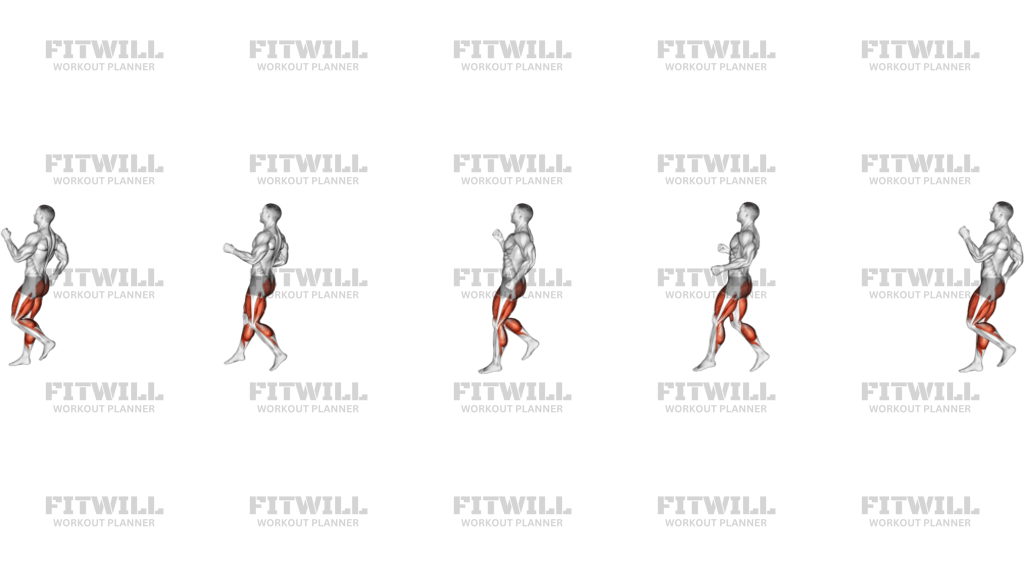
High Knee Against Wall is a wall-supported sprint drill that teaches you how to hold a tall running posture while one knee drives up sharply in front of the body. The wall gives you a fixed reference point, so you can focus on hip position, trunk angle, and a fast but controlled knee lift instead of bouncing around or leaning back.
It is most useful as a warm-up drill before running, sprinting, field sports, or any session where you want cleaner mechanics and better front-side leg action. The position challenges the hip flexors, glutes, calves, and deep core to work together while the upper body stays quiet. Because the movement is short and precise, the quality of each rep matters more than the number of reps.
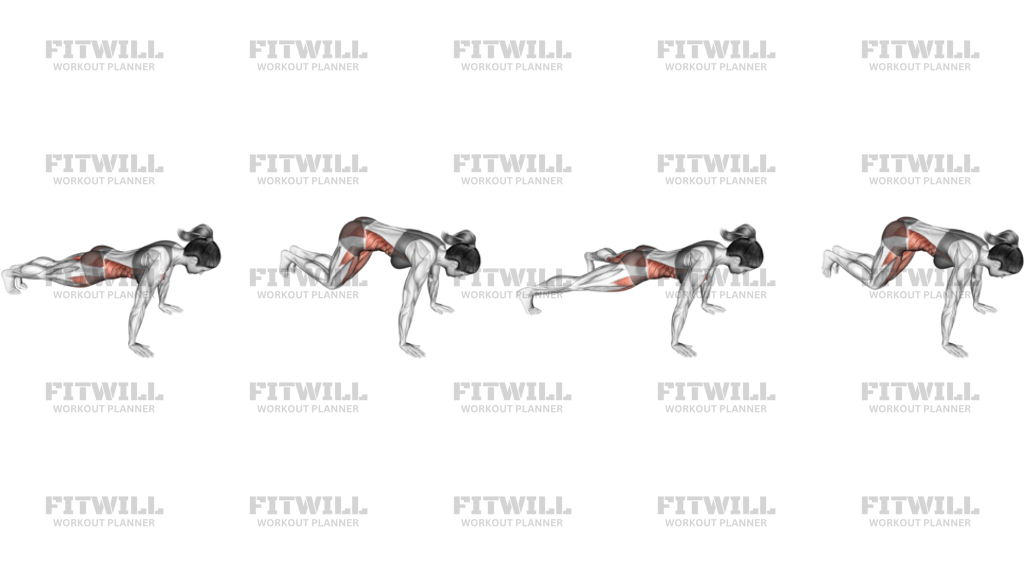
The setup is the whole exercise. Your hands press into the wall at about chest height, your body forms a straight line from head to back heel, and your support leg stays stacked under the hip. From there, one knee drives upward until the thigh is close to parallel or as high as you can control without arching the lower back or letting the pelvis twist open.
The drill should feel snappy, not sloppy. The lifted foot stays dorsiflexed, the standing foot pushes the floor away, and the ribs stay down so the torso does not collapse forward into the wall. If the knee comes up by swinging the torso or shrugging through the shoulders, the rep is too fast or the stance is too close to the wall.
High Knee Against Wall is also a useful reset when you want to clean up running posture or teach athletes how to separate knee drive from upper-body swing. It can be used for low-volume technique work, activation before acceleration work, or as a regression for people who need more support than a free-standing high knee march. Keep the motion crisp, the wall contact light, and the reps consistent so the drill trains coordination rather than fatigue.
[ Workout Log & Planner ]
Put your next workout in Fitwill
Keep your plan and training log ready when you are.


Instructions
- Stand facing a wall and place both palms on it at about chest height.
- Step back far enough that your body can lean forward in a straight line from head to back heel.
- Set one foot under your hip with the heel lifted and the other leg extended behind you for support.
- Brace your midsection and keep your ribs stacked over your pelvis before you move.
- Drive the free knee straight up toward hip height while the opposite foot stays planted on the floor.
- Keep the lifted foot pulled up toward the shin and avoid letting the pelvis twist or the low back arch.
- Pause briefly at the top with the thigh high and the support leg firm.
- Lower the knee with control, reset the stance, and switch legs for the next rep.
- Repeat for the planned number of reps while keeping the wall pressure light and the movement crisp.
Tips & Tricks
- Keep your hands on the wall only for balance; if you are pushing hard, the drill is turning into an upper-body brace instead of a knee-drive drill.
- Lean from the ankles, not from the waist, so the torso stays long and the hip angle is set before the knee moves.
- Stop the rep if the lower back arches to get the thigh higher; the knee should rise from the hip, not from lumbar extension.
- Dorsiflex the lifted foot so the shin stays active and the drill carries over better to sprinting mechanics.
- Press the support foot into the floor and keep the hip of the standing leg tall instead of sinking into the stance.
- If you feel the drill mostly in the quads or calves, shorten the wall distance and rebuild the lean before adding speed.
- Make each knee lift quick on the way up and controlled on the way down; the return should not flop or bounce.
- Keep the shoulders quiet and the neck long so the upper body does not steal momentum from the leg drive.
Frequently Asked Questions
What does High Knee Against Wall train?
It mainly trains sprint posture, knee drive, hip flexor action, and trunk control while the wall keeps your alignment honest.
Is High Knee Against Wall good before running or sprinting?
Yes. It is a strong warm-up drill for acceleration work because it reinforces a forward body angle and a cleaner front-side knee lift.
How far should I stand from the wall?
Far enough to lean in a straight line from head to back heel without bending at the waist. If you feel cramped, step back slightly; if you are collapsing, move closer.
How high should the knee come up?
Usually close to hip height or as high as you can reach without arching your low back or twisting the pelvis.
Should I hold the knee at the top?
A brief pause is useful if you are learning the drill. It helps you feel the stacked posture before you lower and switch sides.
Can beginners do this exercise?
Yes. Beginners usually do best with a slower tempo, more wall support, and a smaller knee lift until the posture feels stable.
What is the most common mistake?
Letting the low back arch or the torso sway to fake a higher knee. The leg should drive the movement, not the upper body.
Do I need equipment besides a wall?
No. A flat wall or sturdy vertical surface is enough, which makes it easy to use as a travel or warm-up drill.