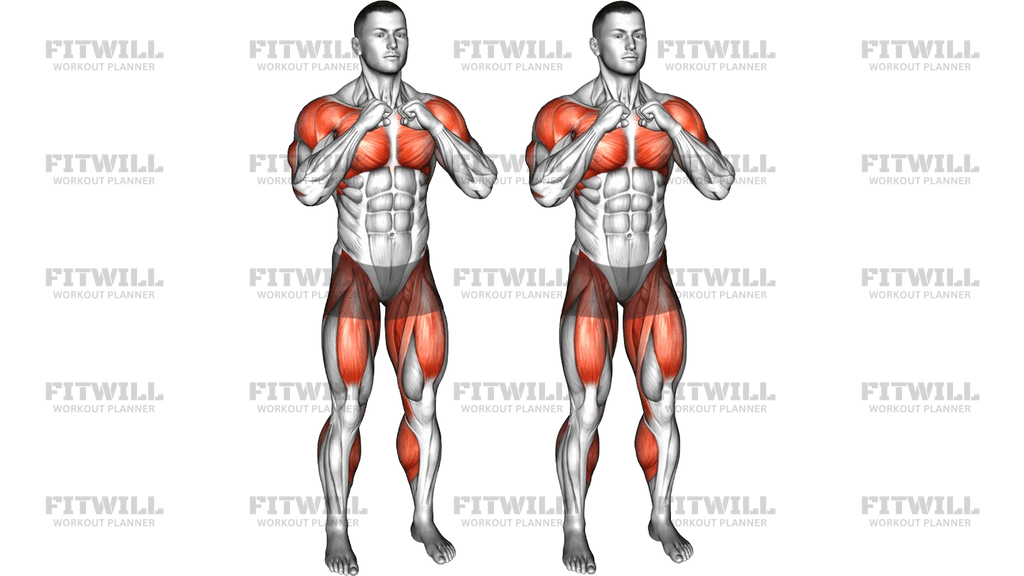
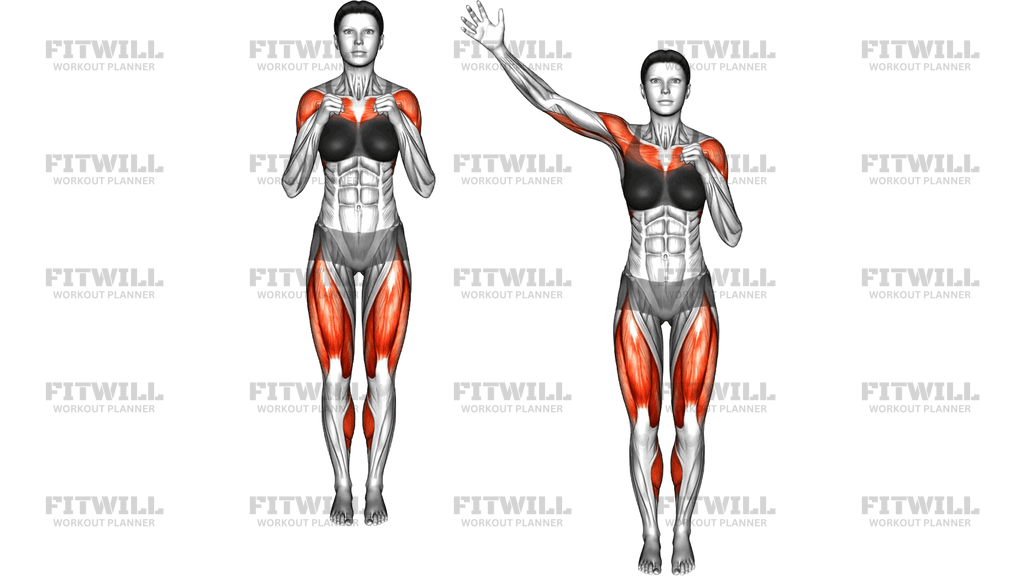
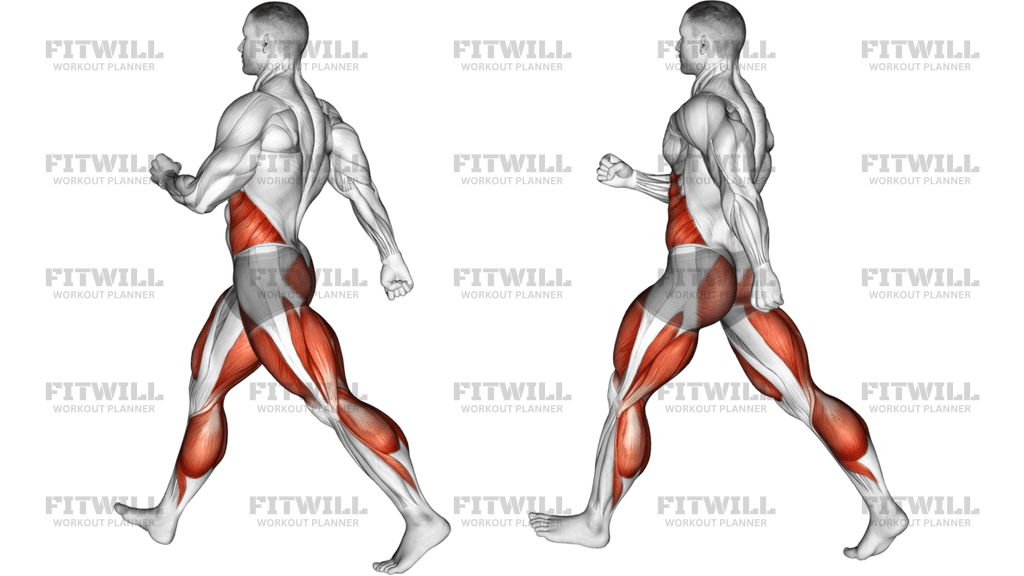
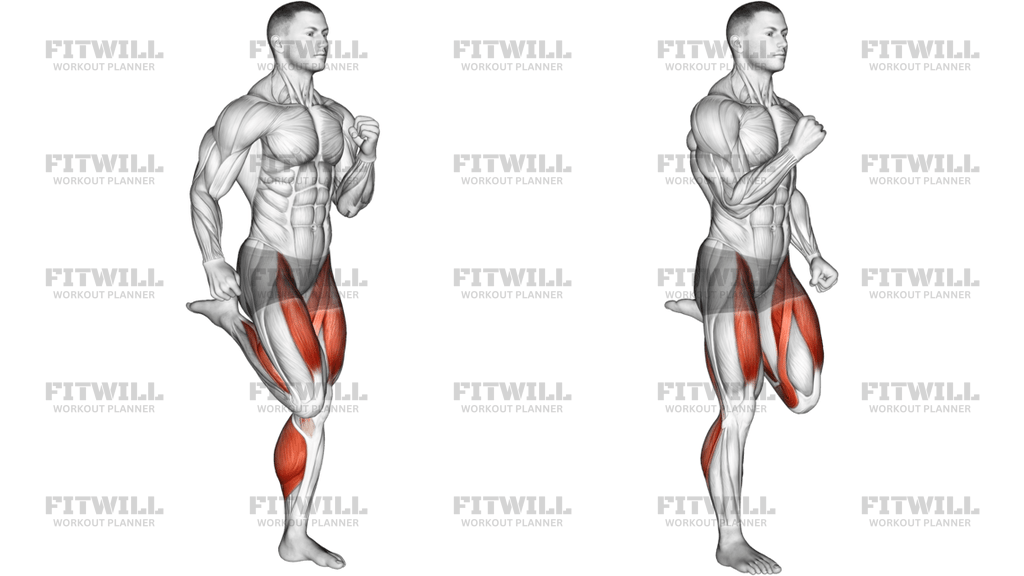
Push To Run
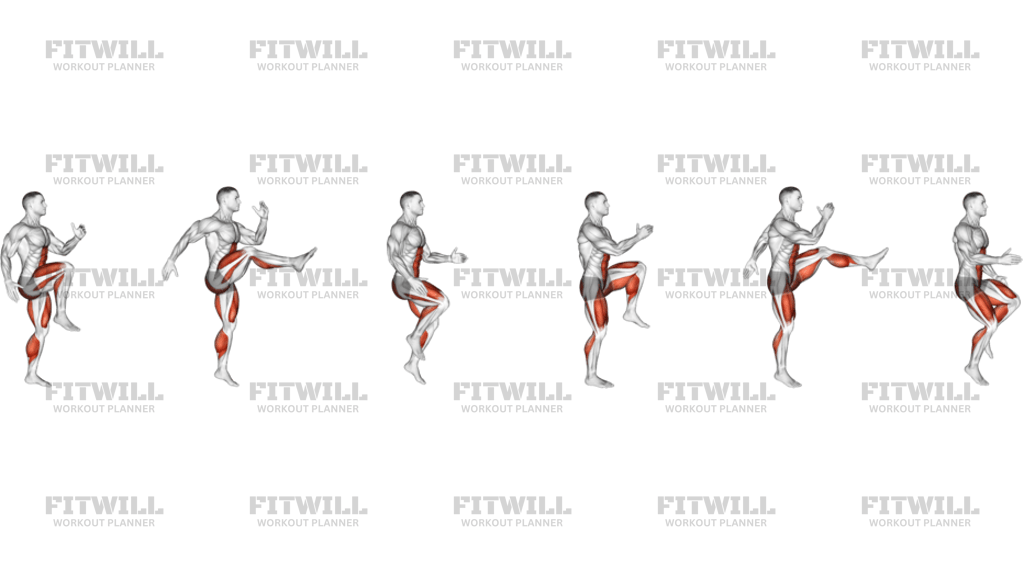
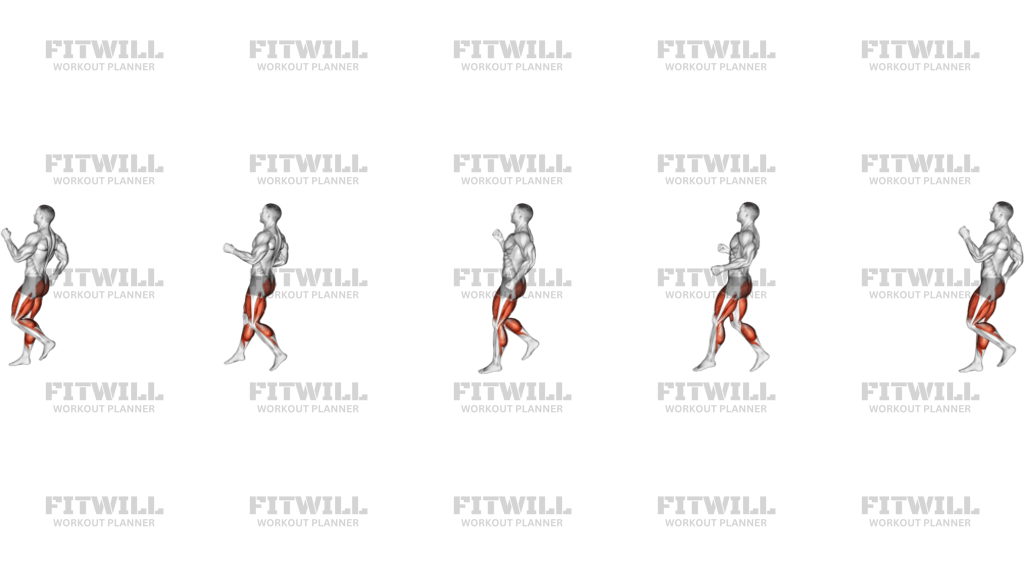
Push To Run is a bodyweight running drill built around a quick knee drive, fast arm swing, and light, repeated ground contacts. It is less about brute force and more about rhythm, posture, and clean coordination. The drill is useful when you want to wake up the legs, rehearse sprint mechanics, or raise your heart rate without loading the body with equipment.
The movement should feel like an athletic run in place rather than a big jump. Each rep asks one knee to drive upward while the opposite arm punches forward, then the legs switch quickly under the hips. Keep the chest tall, the ribs stacked over the pelvis, and the landing soft so the drill stays springy instead of noisy or heavy.
That setup matters because the exercise rewards efficient mechanics. If you lean back, reach too far with the foot, or swing the arms across the body, the drill turns into a sloppy hop and the knees and calves do extra work. A clean Push To Run pattern keeps the torso stable while the hips, ankles, and arms share the workload.
Use it as part of a warm-up, speed prep, conditioning circuit, or low-equipment cardio block. Beginners can shorten the knee lift and reduce the pace to keep the motion crisp. More advanced athletes can increase cadence, but only as long as the foot strike stays light and the torso stays organized. If the contacts start getting loud or the trunk starts twisting, the drill is moving too fast for the current level of control.
[ Workout Log & Planner ]
Put your next workout in Fitwill
Keep your plan and training log ready when you are.


Instructions
- Stand tall with your feet about hip-width apart and your weight balanced over the balls of your feet.
- Set your elbows near 90 degrees and prepare to pump the arms as if you are sprinting.
- Drive one knee up toward hip height while the opposite arm moves forward in a quick running motion.
- Push off the standing leg and switch legs immediately so the next knee rises as the first foot comes down.
- Land softly under your hips on the forefoot instead of reaching out in front of you.
- Keep your chest tall, your ribs stacked over your pelvis, and your gaze forward as you move.
- Let the arms and legs move in a fast, alternating rhythm without letting the torso twist side to side.
- Breathe in a steady cadence and exhale on the drive phase as you continue for the planned time or reps.
Tips & Tricks
- Think quick and springy, not high and forceful. The best reps have short ground contact and a light landing.
- Keep the lifted knee tracking straight ahead. If the hip opens outward, the drill loses its running mechanics.
- Swing the arms front to back instead of across your chest so the torso stays organized.
- If the exercise feels like a hop, shorten the knee lift and focus on faster switches under the hips.
- Keep your weight slightly forward over the forefoot so you can rebound quickly into the next step.
- Use a cadence you can hold with clean mechanics. Speed is only useful if the foot strike stays quiet.
- If your calves or shins start taking over, reduce the pace before the pattern turns into a stamp.
- Stop the set when the trunk starts leaning back or the knees stop lifting evenly.
Frequently Asked Questions
What does Push To Run train?
It trains running rhythm, knee drive, arm action, and lower-body coordination while also raising the heart rate.
Which muscles work hardest in this drill?
The hip flexors, quads, glutes, calves, and core all contribute, with the arms helping keep the running pattern coordinated.
How high should I lift the knee?
Lift it as high as you can while keeping the torso tall and the landing light. Hip height is a good target, but control matters more than height.
Should my feet stay flat on the ground?
No. Stay on the forefoot and make the contacts quick and springy so you can switch legs efficiently.
What is the most common mistake?
Overstriding and leaning back are the biggest issues. Both make the drill heavy and reduce the quick running rhythm.
Can beginners do Push To Run?
Yes. Beginners should use a slower cadence, smaller knee lifts, and a shorter set length until the pattern feels smooth.
Is this a strength exercise or a cardio drill?
It is mainly a cardio and movement-pattern drill, though it still challenges the legs and core enough to build useful athletic conditioning.
Where does this fit best in a workout?
It works well in warm-ups, sprint prep, conditioning circuits, or as a short finisher when you want fast feet without equipment.