Walking High Knees Lunge
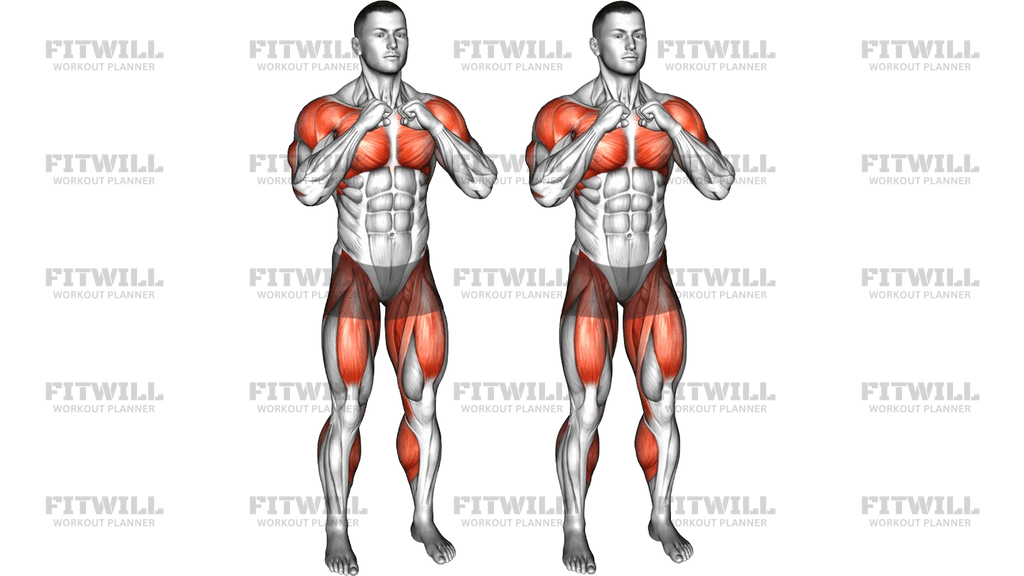
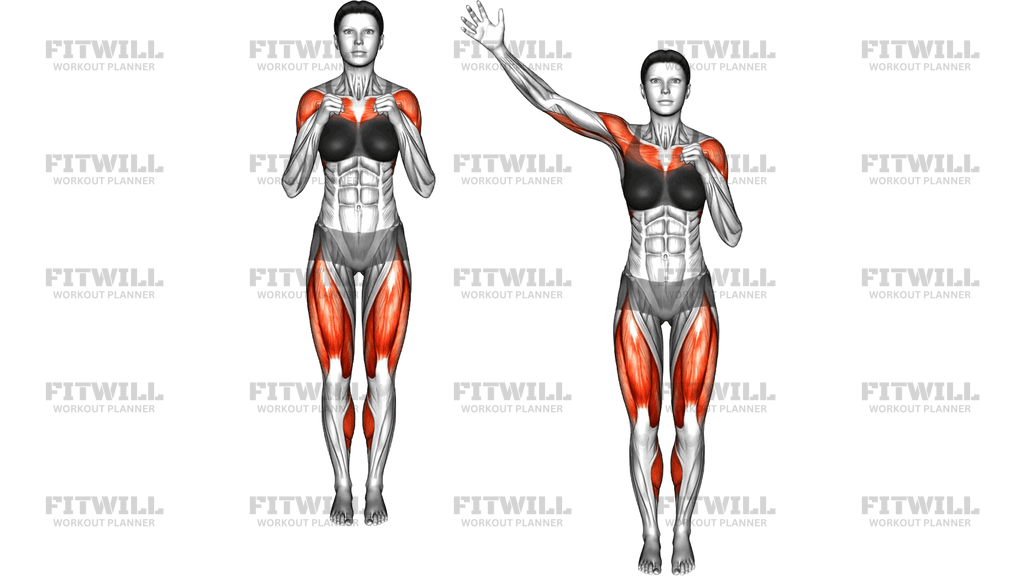
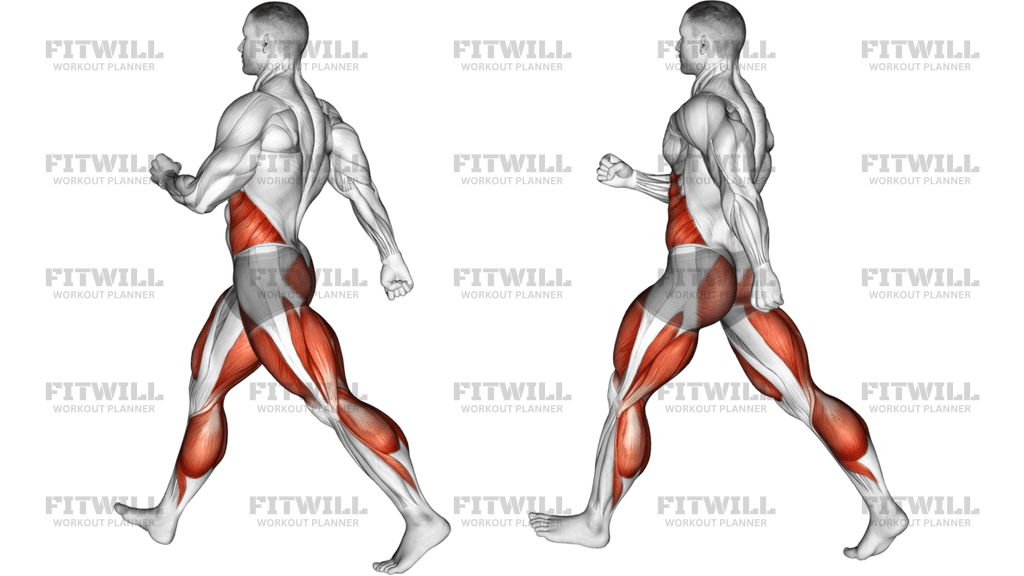
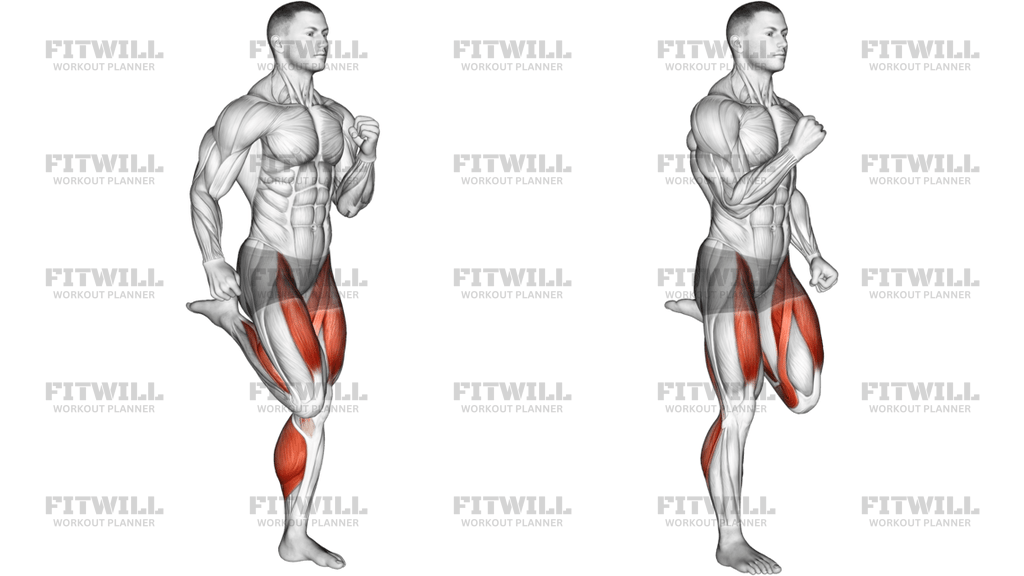
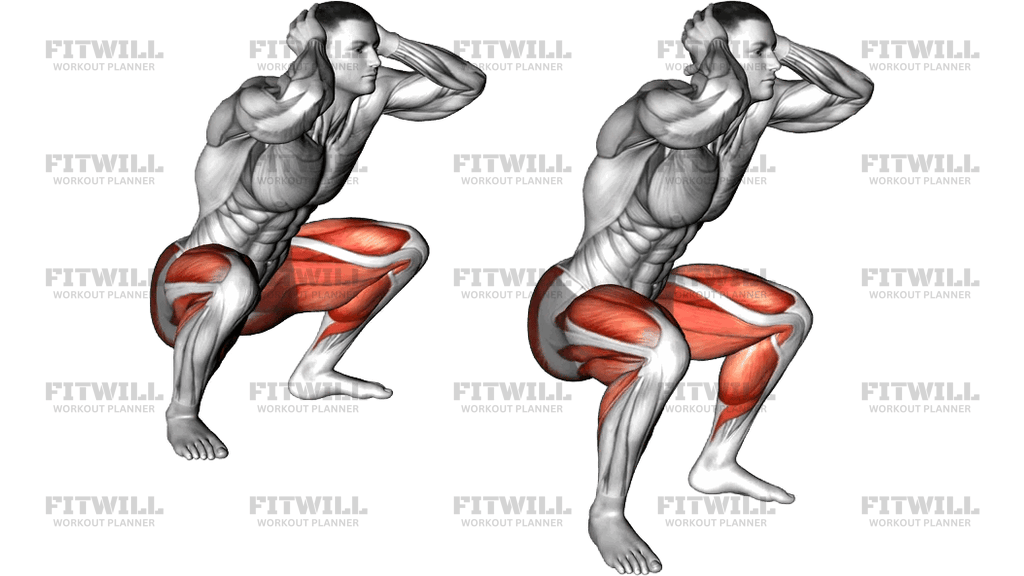
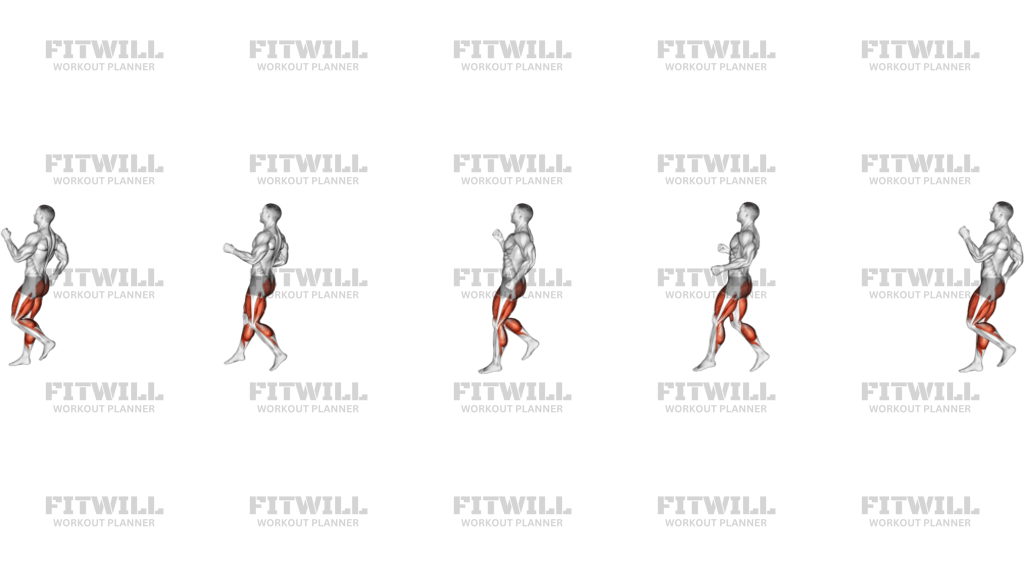
Walking High Knees Lunge is a dynamic bodyweight drill that combines a walking lunge with a strong knee drive at the top of each rep. It is usually used for conditioning, warm-ups, and lower-body control work because it asks you to change levels, balance on one leg, and keep the torso organized while moving forward. The picture shows a split stance lunge position followed by an active drive upward, so the exercise should feel like a rhythmic sequence rather than a stationary hold.
The main training value comes from how cleanly you can transfer force from the lunge into the standing knee raise. The front leg has to control the descent, the glute and quad have to stand you back up, and the hip flexor has to lift the opposite knee without letting the trunk tip forward. That makes the movement useful for legs, hips, and core stability at the same time, especially when you want athletic coordination rather than pure load.
Setup matters because stride length changes everything. If the step is too short, the front knee crowds the toes and the torso tends to fold; if it is too long, the back knee can lose control and the drive becomes awkward. Start tall, step into a comfortable lunge, and keep the front foot grounded through the heel and midfoot as you lower. From there, stand up by driving through the front leg and bring the trailing knee up in front of the body with control.
Use this exercise when you want a lower-body pattern that also challenges balance, pacing, and posture. It works well in circuits, warm-ups before lunges or squats, or as a conditioning drill between strength sets. Keep the movement smooth, alternate sides deliberately, and stop the set if the knee drive turns into a torso swing or the landing becomes noisy. The goal is an upright, repeatable walking pattern with a crisp lunge on the way down and a clean knee lift on the way up.
[ Workout Log & Planner ]
Put your next workout in Fitwill
Keep your plan and training log ready when you are.


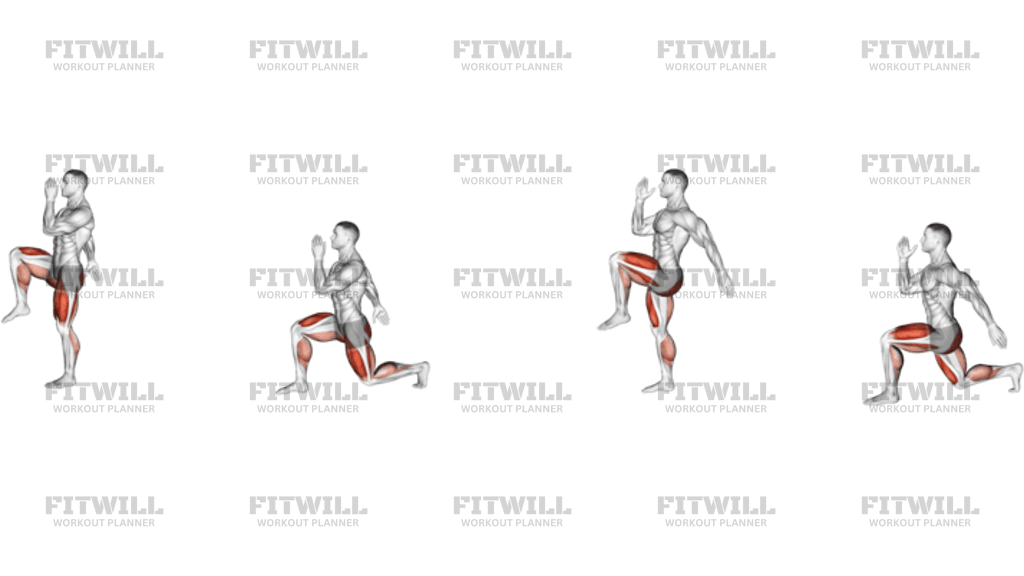
Instructions
- Stand tall with your feet about hip-width apart and your hands ready to help you balance.
- Step one foot forward into a split stance and lower into a controlled lunge until both knees are bent.
- Keep the front heel planted, the chest tall, and the front knee tracking in line with the toes.
- Lower the back knee toward the floor without collapsing onto it or letting the pelvis twist.
- Drive through the front foot to stand up as you begin to lift the trailing knee forward.
- Bring the lifted knee up toward hip height while staying upright through the ribs and shoulders.
- Set the lifted leg down under control and step directly into the next lunge on the opposite side.
- Keep alternating steps and knee drives for the planned distance or repetition count while breathing steadily.
Tips & Tricks
- Take a long enough step that the front shin stays fairly vertical at the bottom of the lunge.
- Keep the knee drive crisp and upright instead of leaning the torso back to create height.
- Let the back knee travel down under control; do not bounce off the floor.
- Focus on pushing the floor away with the front leg before the knee lift starts.
- Keep your hips level as you step so the pelvis does not drop to one side.
- If balance is shaky, shorten the step and slow the knee drive instead of rushing the rep.
- Land softly on the walking step so the transition sounds quiet and controlled.
- Use a steady rhythm that lets every lunge look the same from start to finish.
Frequently Asked Questions
What muscles does Walking High Knees Lunge work?
It mainly trains the quads, glutes, and hip flexors, with the core helping you stay upright and balanced through the knee drive.
Is this just a walking lunge with a knee raise?
Yes, the movement is a walking lunge followed by an active knee drive on the standing leg before you step into the next rep.
How high should the knee come up?
Aim for about hip height if you can keep the torso tall and the pelvis steady; lower is fine if balance or control breaks down.
Should my back knee touch the floor?
No, it should lower close to the floor with control, but you do not need to slam or rest on the knee between reps.
What is the biggest form mistake?
The most common problem is swinging the torso to fake the knee lift instead of standing up cleanly through the front leg.
Can beginners do this exercise?
Yes. Beginners can keep the step short, slow the tempo, and reduce the height of the knee drive until balance improves.
Is this more of a cardio drill or a strength exercise?
It can be both, but it is usually used as a conditioning and coordination drill because the alternating steps keep the heart rate moving.
How do I make the movement feel smoother?
Stay tall, place the foot under control, and keep the transition from lunge to knee drive rhythmical instead of explosive.