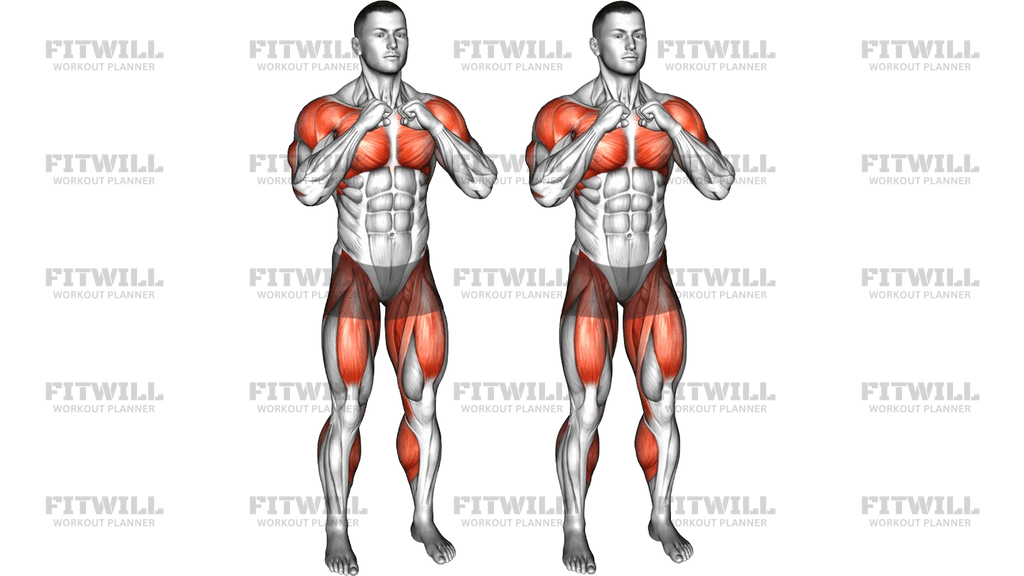
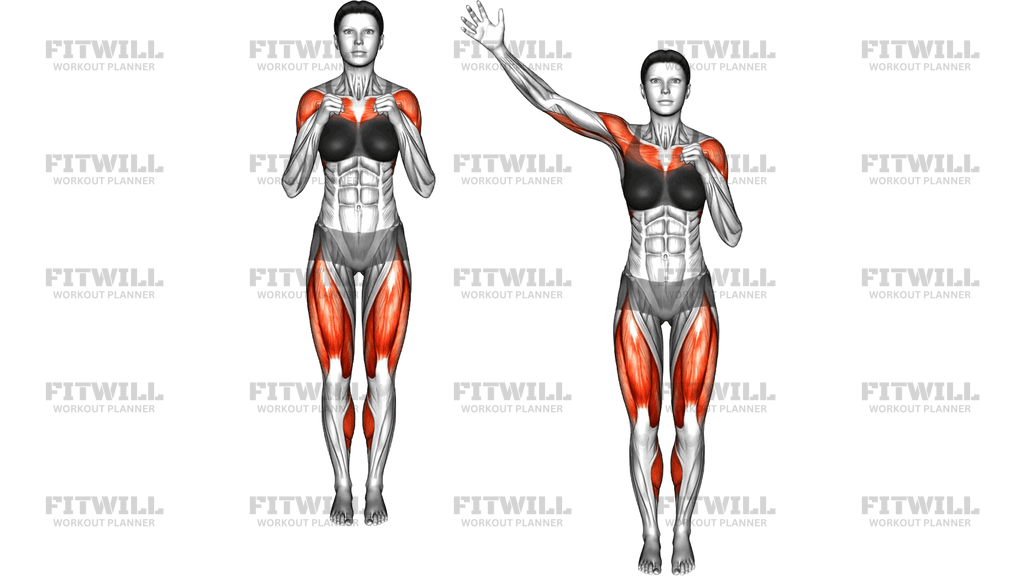
Short Stride Run
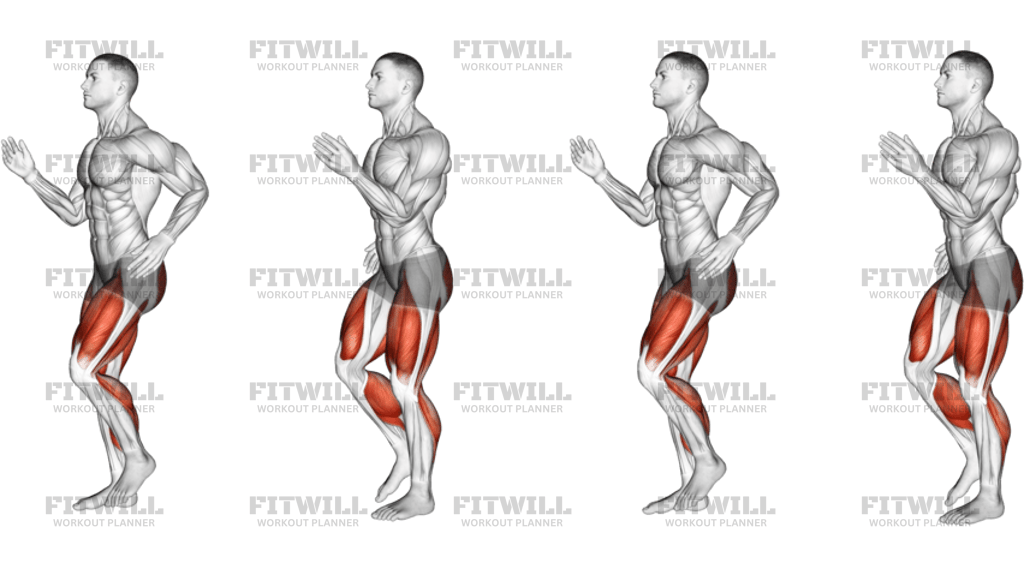
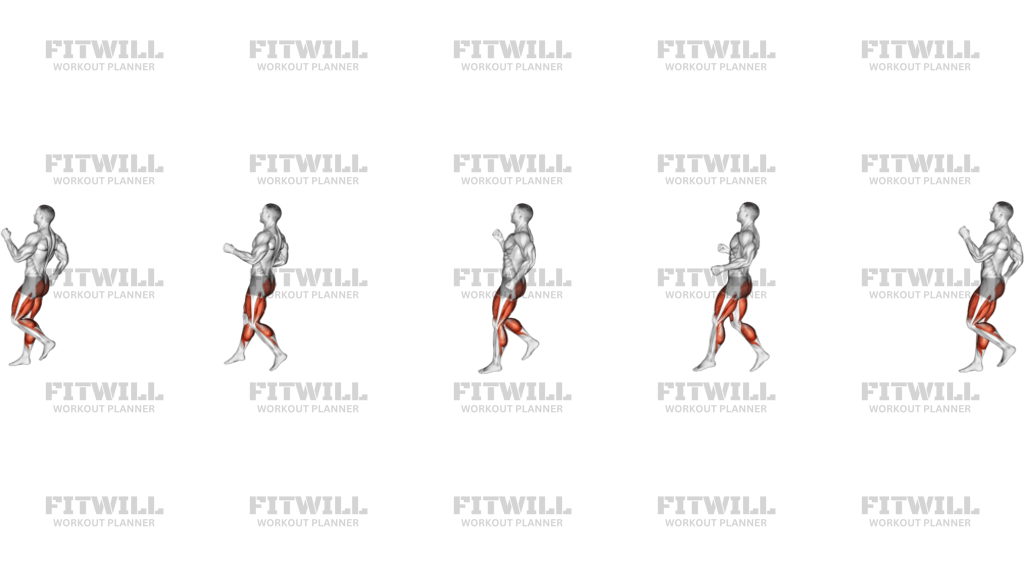
Short Stride Run is a bodyweight running drill built around quick, short steps and a light, springy contact with the floor. It is useful when you want to raise heart rate, rehearse better running mechanics, or add a simple cardio finisher without needing equipment. The stride stays compact, so the body can move fast without reaching forward or letting the torso collapse.
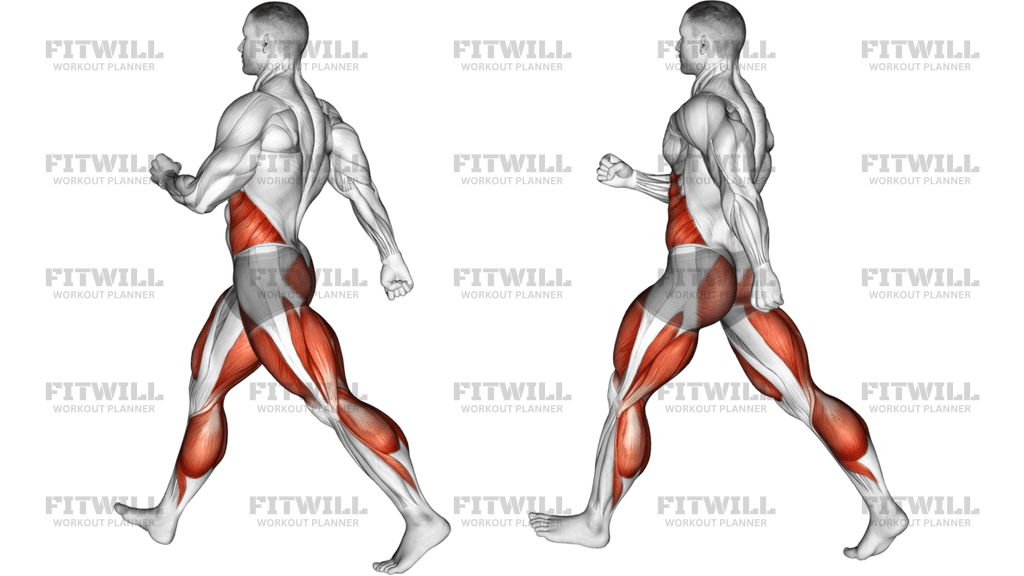
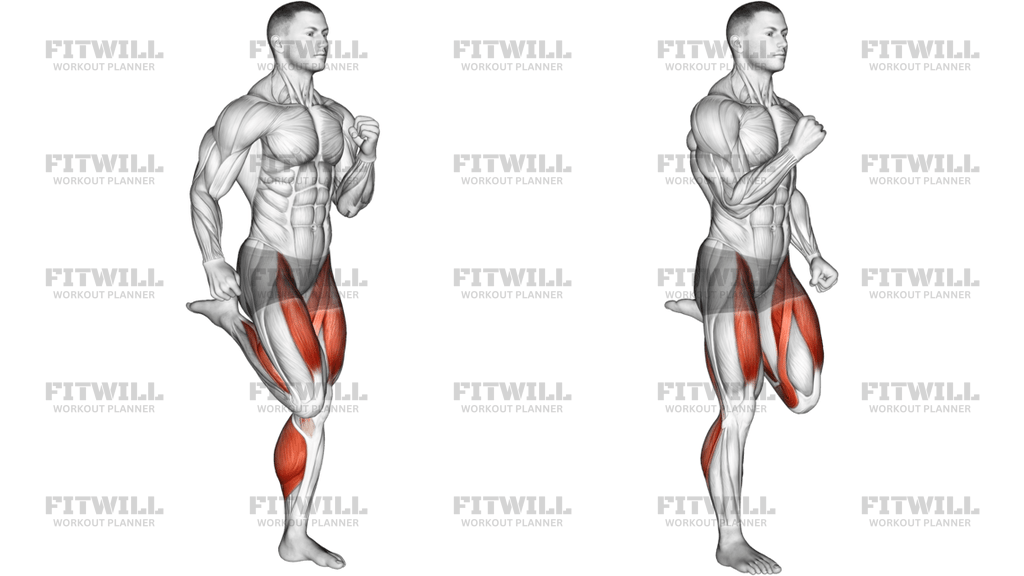
This movement trains the lower body to produce repeated, rhythmic foot strikes while the upper body stays organized. The calves, quads, glutes, hip flexors, and core all contribute, but the exercise works best when no single muscle takes over and the whole body stays coordinated. That makes Short Stride Run a practical option for warm-ups, conditioning blocks, athletic prep, and movement drills.
The setup matters because the quality of each step depends on where the feet land and how the torso is positioned. Stand tall with your feet under your hips, elbows bent, and hands relaxed at roughly chest height. Keep a slight forward lean from the ankles, not from the waist, and keep your weight toward the balls of the feet so you can move quickly without overstriding.
As you run, think fast feet and quiet landings. Each foot should strike just under the body, the arms should swing opposite the legs, and the shoulders should stay loose so the cadence can stay smooth. The motion should feel quick and elastic rather than bouncy or heavy, with the knees staying softly bent and the pelvis level as you alternate steps.
Short Stride Run is also easy to scale. Beginners can use a slower marching rhythm or a light jog in place, while more advanced lifters can use it for short intervals after strength work. If the feet start slapping the floor, the stride is too long or the pace is too aggressive, so tighten the steps and keep the effort crisp rather than forcing a bigger range.
[ Workout Log & Planner ]
Put your next workout in Fitwill
Keep your plan and training log ready when you are.


Instructions
- Stand tall with your feet under your hips, elbows bent, hands relaxed, and your eyes looking forward.
- Lean forward slightly from the ankles so your weight stays on the balls of your feet, not back on your heels.
- Set your ribs over your pelvis and keep your shoulders low and loose before you start moving.
- Begin alternating quick, short steps in place or with only a few inches of travel.
- Land each foot softly under your body instead of reaching the leg far in front of you.
- Drive the opposite arm forward and back as you keep the elbows bent and the hands relaxed.
- Keep the cadence brisk, the torso tall, and the knees softly bent as you repeat the steps.
- Breathe in a steady rhythm, then slow to a walk and reset when the interval is complete.
Tips & Tricks
- Think fast feet under your hips, not a long running stride that reaches out in front of you.
- If your heels are slapping the floor, shorten the step and stay lighter on the forefoot.
- Keep the arm swing compact; crossing the hands across your chest usually twists the torso and slows the cadence.
- A small forward lean is fine, but if your waist bends forward the drill turns into a posture collapse.
- Use a softer surface or supportive shoes if the repeated contacts feel harsh on your shins or arches.
- For conditioning, use short timed bursts instead of counting reps so you can keep the rhythm consistent.
- If your hip flexors fatigue first, lower the speed and focus on quick ground contact rather than lifting the knees higher.
- Stop the set when the steps get loud or the torso starts bobbing, because both usually mean the stride has gotten too big.
Frequently Asked Questions
What muscles does Short Stride Run work?
Short Stride Run mainly uses the calves, quads, glutes, hip flexors, and core to keep the rhythm quick and the body stable.
Is Short Stride Run the same as high knees?
No. Short Stride Run keeps the knee drive lower and the stride shorter, so the focus is on quick turnover rather than lifting the knees high.
Should my feet land flat during Short Stride Run?
No. Land softly under your body on the midfoot or forefoot so the steps stay light and quick.
Can beginners do Short Stride Run?
Yes. Start with a marching rhythm or very light jog in place, then build speed only if the landings stay quiet and controlled.
How should my arms move in Short Stride Run?
Keep the elbows bent and drive the opposite arm forward and back without swinging across the body.
Where should I feel Short Stride Run?
You should feel it mostly in the lower body and breathing, not in the lower back or neck.
Can I use Short Stride Run on a treadmill?
Yes, a slow jog with short steps works well, as long as you keep the stride compact and avoid reaching the foot too far ahead.
What is the biggest mistake in Short Stride Run?
Overstriding. When the foot lands far in front of the body, the drill gets louder, slower, and harder on the joints.