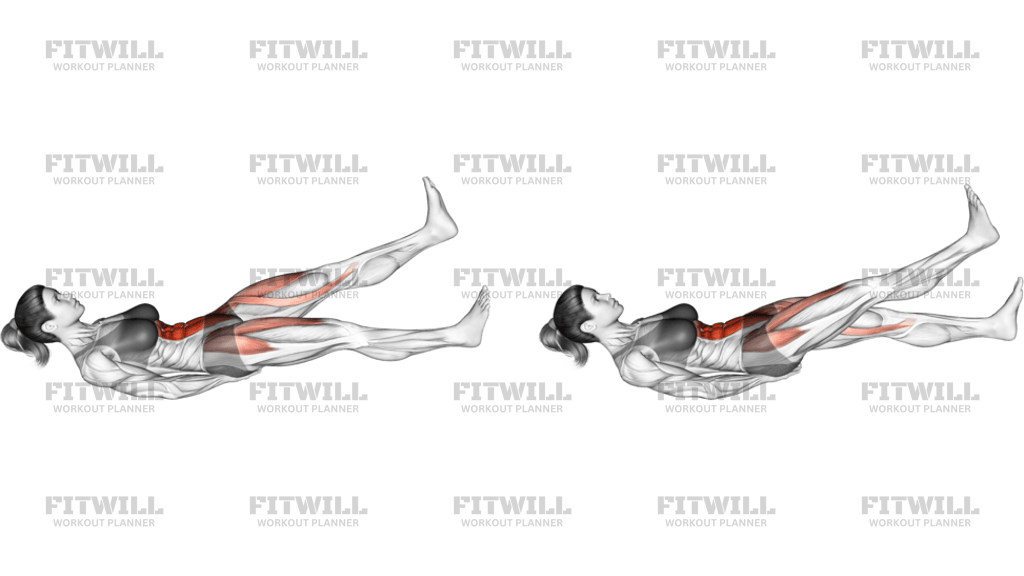
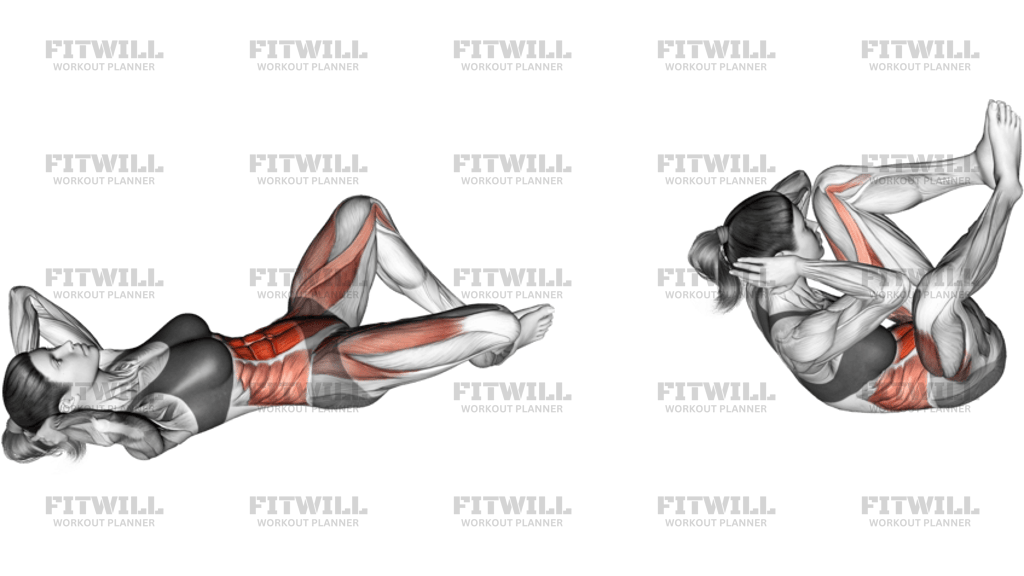
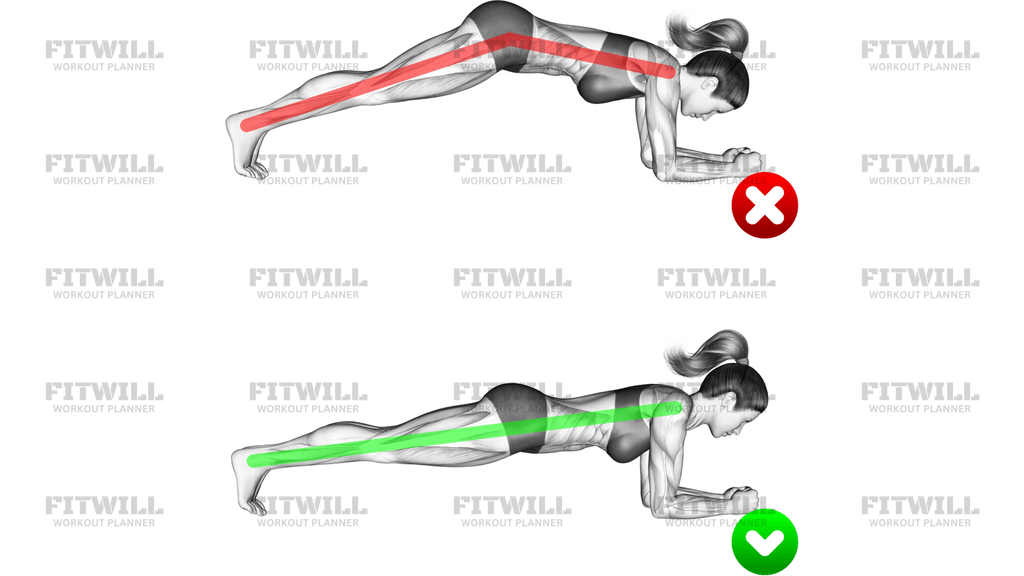
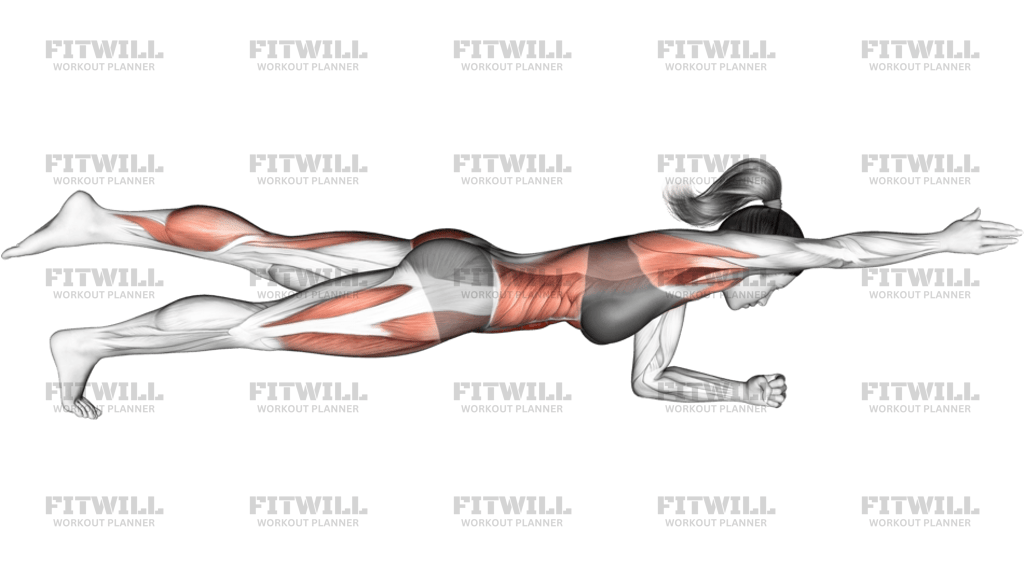
Reverse Plank With Leg Lift
Reverse Plank With Leg Lift is a body-weight strength and control exercise built from a reverse tabletop position. You support your body on your hands and one planted foot while the other leg lifts away from the floor, which asks the hips, glutes, hamstrings, shoulders, and trunk to stay organized at the same time.
The exercise looks simple, but the setup matters. When the hands are set too far behind the body or the hips are lifted too high, the lower back takes over and the leg lift turns into a swing. When the shoulders stay stacked, the ribs stay down, and the pelvis stays level, the lifted leg has to come from the glute and hip rather than momentum.
Reverse Plank With Leg Lift is useful as a core-and-posterior-chain drill, especially when you want more anti-rotation work than a standard reverse plank provides. It can fit into warmups, accessory blocks, or control-focused strength sessions. Because the base position already challenges the shoulders and wrists, the added leg lift should feel deliberate and steady instead of explosive.
Each repetition should look clean from start to finish. Press the floor away through both hands, keep the support-side heel grounded, and lift the free leg only as high as you can without letting the pelvis twist or the ribs flare. A smaller range with perfect alignment is more valuable than a higher leg swing that shifts the load into the low back.
This movement is also a good reminder that body-weight work can still be demanding. Beginners can start with a short reverse plank hold first, then add brief leg lifts once the support position feels stable. If the wrists, shoulders, or hamstrings limit the shape, adjust the hand angle, shorten the hold, or lower the lift rather than forcing a bigger range.
Fitwill
Log Workouts, Track Progress & Build Strength.
Achieve more with Fitwill: explore over 9600 exercises with images and videos, access built-in and custom workouts, perfect for both gym and home sessions, and see real results.
Start your journey. Download today!




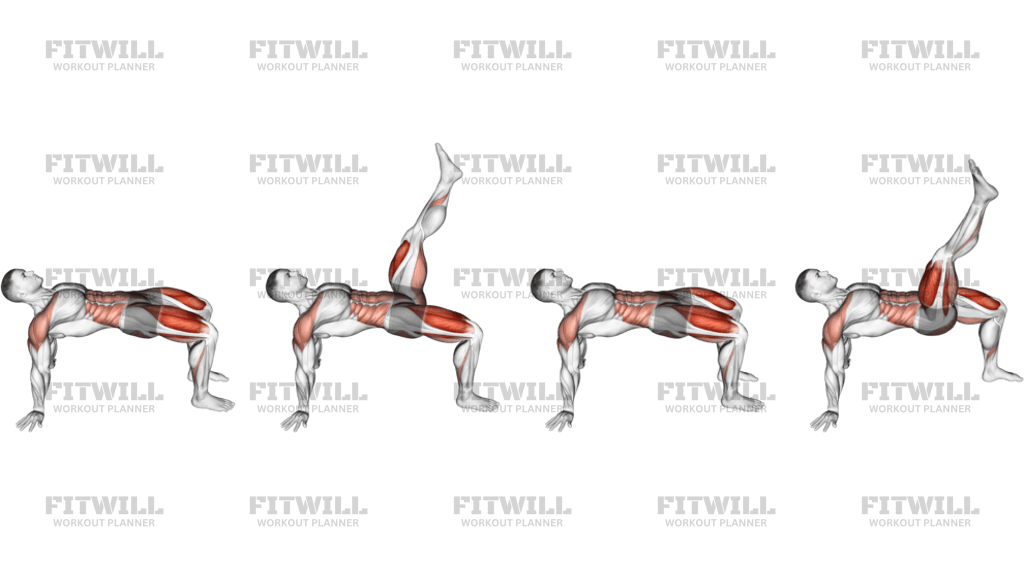
Instructions
- Sit on the floor and place your hands slightly behind your hips, with your fingers pointing toward your feet or turned slightly outward if that feels better on your wrists.
- Plant one foot on the floor with the knee bent and keep the other leg straight and relaxed, then brace your trunk before you lift.
- Press through both palms and the planted heel to raise your hips until your torso and thighs form a long line from shoulders to knee to ankle.
- Keep your shoulders stacked over your hands, your chest open, and your ribs pulled down so the position stays supported by the hands and foot rather than the lower back.
- Shift your weight evenly through the support hand and planted foot, then lift the free leg straight up without letting the pelvis rotate.
- Raise the leg only as high as you can while keeping the hips level, the knee straight, and the supporting shoulder steady.
- Pause briefly at the top of the lift, then lower the leg under control to the floor or to the starting hover position.
- Repeat for the planned number of reps, then lower your hips to the floor, bend both knees, and rest before switching sides or ending the set.
Tips & Tricks
- Keep your hands only a little behind your hips; if they drift too far back, the shoulders and wrists end up doing more work than the glutes.
- Turn the fingers slightly outward if the wrist extension feels sharp in the reverse support position.
- Think about lifting the leg from the glute, not throwing it upward from the low back or hip flexors.
- Keep the support-side heel heavy on the floor so the pelvis does not drift toward the lifted leg.
- The best top position is level, not high; if the hips twist, lower the leg before it reaches the visible limit of motion.
- Exhale as the free leg rises and keep the rib cage from flaring forward when the effort increases.
- If the hamstrings cramp, shorten the hold and lift the leg less aggressively instead of forcing a bigger range.
- Stop the set when the supporting shoulder starts to collapse or the wrists start to shift backward under load.
Frequently Asked Questions
What muscle does Reverse Plank With Leg Lift target most?
abs is the primary target muscle group.
Can beginners perform this exercise?
Yes, beginners can use it with light resistance and controlled technique.
How heavy should I train this movement?
Choose a load that allows clean repetitions without compensating with momentum.
What is a common mistake to avoid?
The most common issue is rushing reps and losing control of posture and range.
How many repetitions are usually recommended?
Moderate to higher rep ranges are commonly used, depending on the training goal.
Should I feel this in supporting muscles too?
Some support-muscle involvement is normal, but the main effort should stay on the target area.
Can I include this in a full-body routine?
Yes, it can fit well as accessory work within full-body or split routines.
How can I progress this exercise over time?
Progress by increasing load gradually, improving control, and keeping execution quality high.