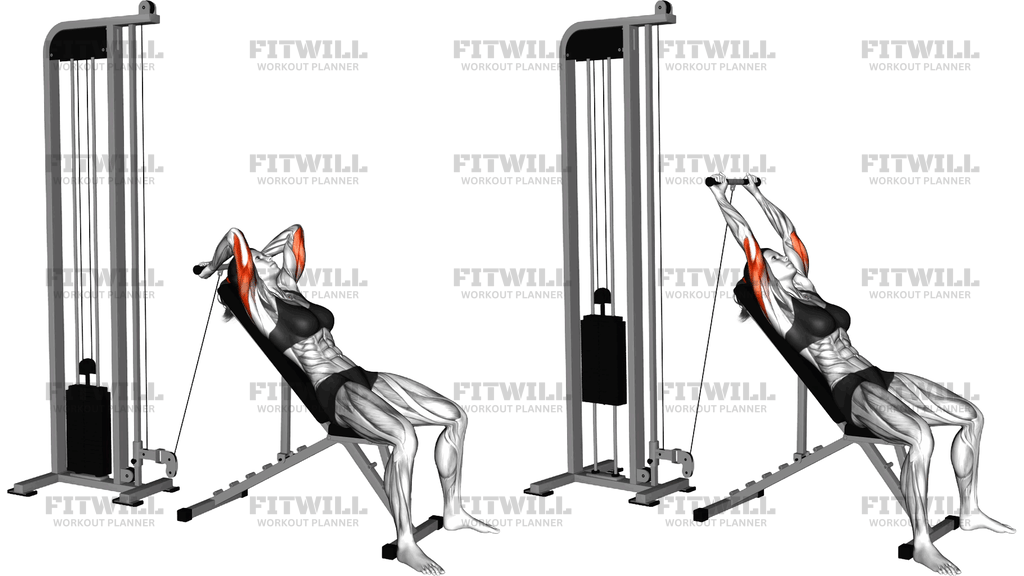
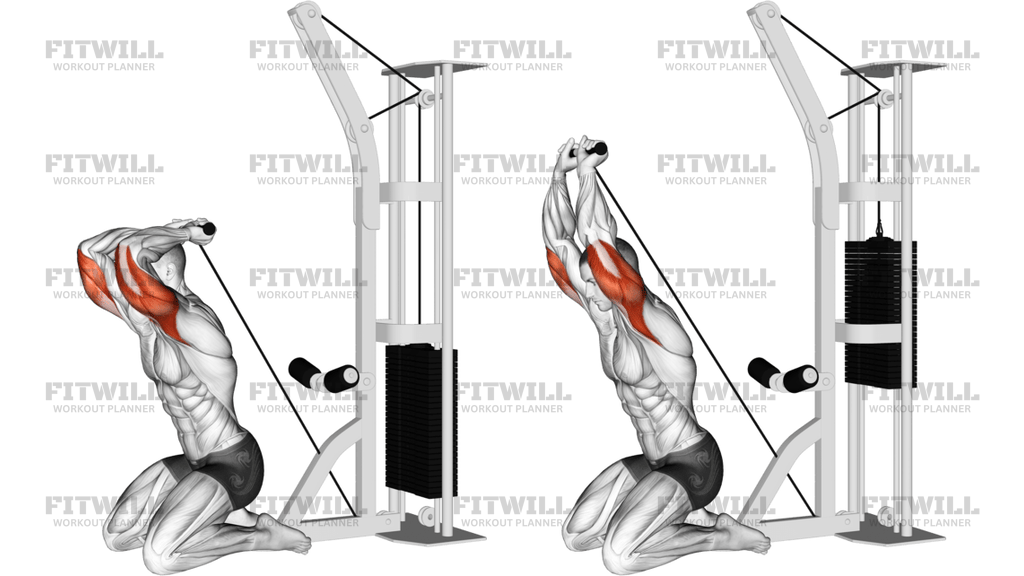
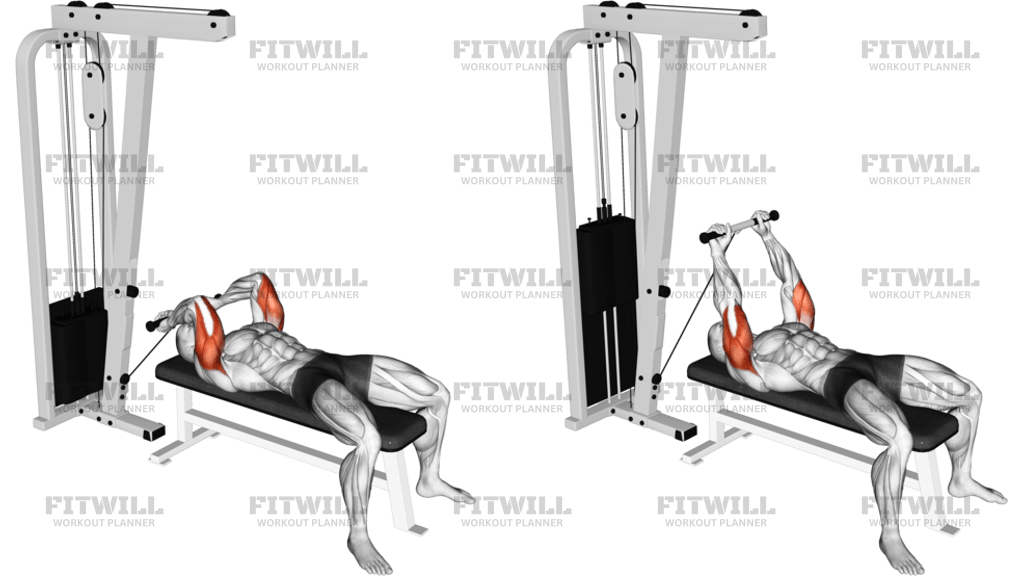
Cable Standing High Cross Triceps Extension
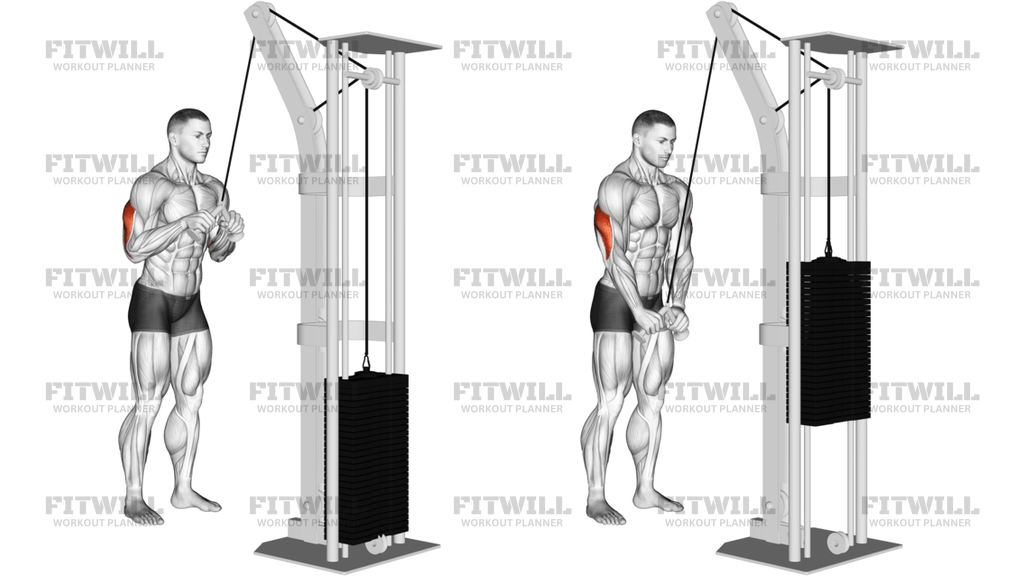
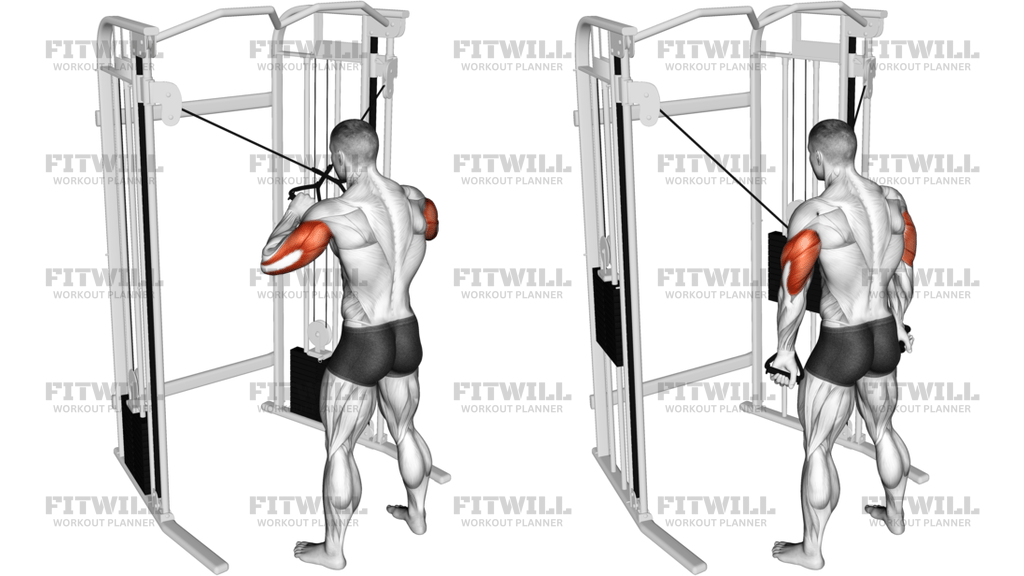
Cable Standing High Cross Triceps Extension is a single-arm cable triceps exercise performed while standing with a high pulley and a handle attachment. The cable starts high and crosses the front of the body, which creates a long diagonal line of tension through the triceps as you extend the elbow. The movement looks simple, but the cable angle matters: if you stand too close, the stack will want to pull your shoulder forward; if you stand too far away, you lose the clean line of resistance that makes the exercise useful.
The exercise is mainly for the triceps, with the forearm, shoulder, and trunk working to keep the arm fixed in space while the elbow opens and closes. In practical terms, the triceps brachii does the elbow extension, the forearm holds the handle steady, the front of the shoulder stabilizes the upper arm, and the core resists twisting as the cable pulls across your body. That makes this a good accessory movement for arm training, finishing work, or any program that wants strict elbow extension without a barbell or dumbbell.
The setup should create a clear starting position before the first rep. Stand tall, brace lightly, and hold the handle across the upper chest or near the opposite shoulder with the working elbow bent. From there, the upper arm stays mostly fixed while the forearm travels down and back against the cable. The best reps come from keeping the elbow pinned in its path instead of letting the shoulder swing the weight.
On the concentric phase, extend the elbow until the arm is straight and the triceps is fully contracted without locking aggressively into pain. On the return, let the handle come back under control until the elbow is bent again and the cable still has tension. Breathing should stay steady: exhale as you press the handle down and back, inhale as you let it return. The torso should stay quiet, with no leaning, twisting, or hip drive to help the rep.
Use this exercise when you want direct triceps work with a slightly different loading angle than a standard pressdown. The crossed cable path can make it easier to keep continuous tension through the whole range, especially at the top of the movement where some cable variations go slack. It is appropriate for beginners if the load is light and the setup is strict, but it rewards patience: slow reps, a stable stance, and a shoulder position that stays consistent from the first rep to the last.
[ Workout Log & Planner ]
Put your next workout in Fitwill
Keep your plan and training log ready when you are.


Instructions
- Set the cable pulley high and attach a single handle.
- Stand facing away from the tower and take a staggered stance so you can lean slightly into the cable without losing balance.
- Hold the handle across your upper chest or near the opposite shoulder with the working elbow bent and tucked in front of the torso.
- Keep your wrist straight and your shoulder packed down before you start the rep.
- Brace your ribs and keep your torso square to the machine.
- Press the handle down and slightly back by extending only the elbow.
- Finish with the arm straight and the triceps fully contracted, without letting the shoulder roll forward.
- Return the handle slowly to the start while keeping tension on the cable and the elbow in the same path.
- Exhale as you extend, inhale as the handle comes back in, and repeat for the planned reps.
Tips & Tricks
- Keep the working elbow pointed mostly forward and close to the ribs so the triceps does the work instead of the shoulder.
- Use a cable position that lets the handle travel diagonally down and back; if the line feels awkward, step forward or back until the resistance stays smooth.
- Do not let the torso rotate toward the stack when the handle gets heavy; the chest should stay square and quiet.
- A neutral wrist is better than a bent wrist because the forearm is already working to stabilize the handle.
- Stop the set if the shoulder starts shrugging up toward the ear on the finish.
- A lighter load with a clean lockout is usually more useful here than a heavier load that shortens the range.
- Let the handle come back just far enough to keep tension on the triceps; do not turn the return into a shoulder swing.
- If the cable keeps hitting your torso, move a little farther from the tower so the cross-body path stays clear.
Frequently Asked Questions
What muscle does Cable Standing High Cross Triceps Extension target most?
The triceps is the main target, especially during the elbow extension at the finish of each rep.
Why is the handle held across the chest before the press?
That setup puts the triceps on tension before the rep starts and gives you a clear diagonal path for the cable to follow.
Should my elbow move during the rep?
The elbow should stay mostly in place while the forearm moves. If the upper arm drifts a lot, the shoulder is taking over.
Can beginners use Cable Standing High Cross Triceps Extension?
Yes, as long as the load is light and the stance is stable. It is easier to learn if you keep the motion slow and the shoulder quiet.
What should I feel during the exercise?
You should feel the triceps contract hard as the handle moves down and back, with only light support from the forearm and shoulder.
How heavy should I go on this movement?
Use a load that lets you keep the same elbow path and body position on every rep. If you need to twist or lean to finish, it is too heavy.
What is the biggest form mistake?
The most common mistake is turning the rep into a torso twist or shoulder press instead of a controlled elbow extension.
Where does this exercise fit in a workout?
It works well as accessory arm work after pressing or pulling, or as a triceps-focused finisher when you want strict cable tension.