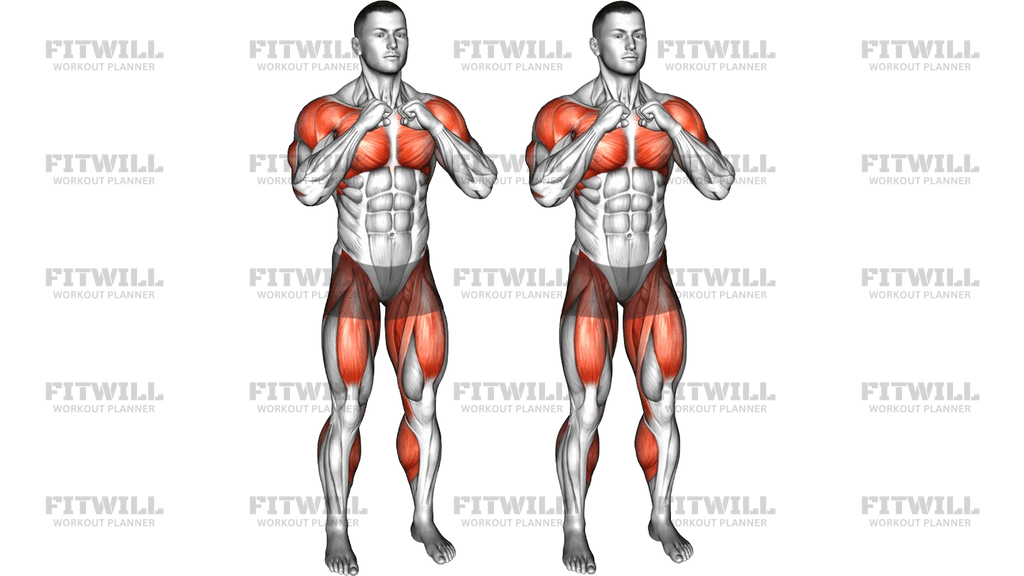
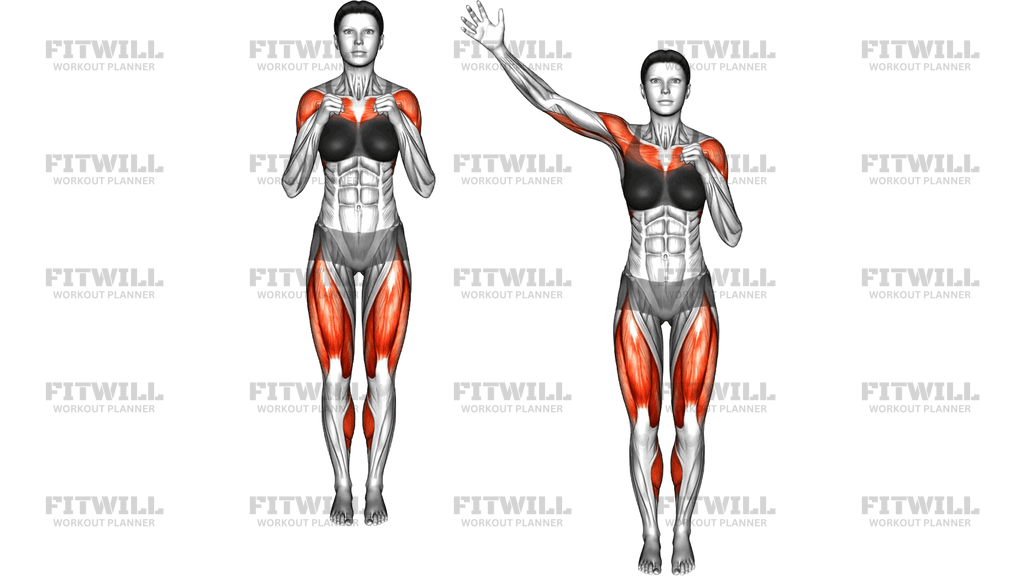
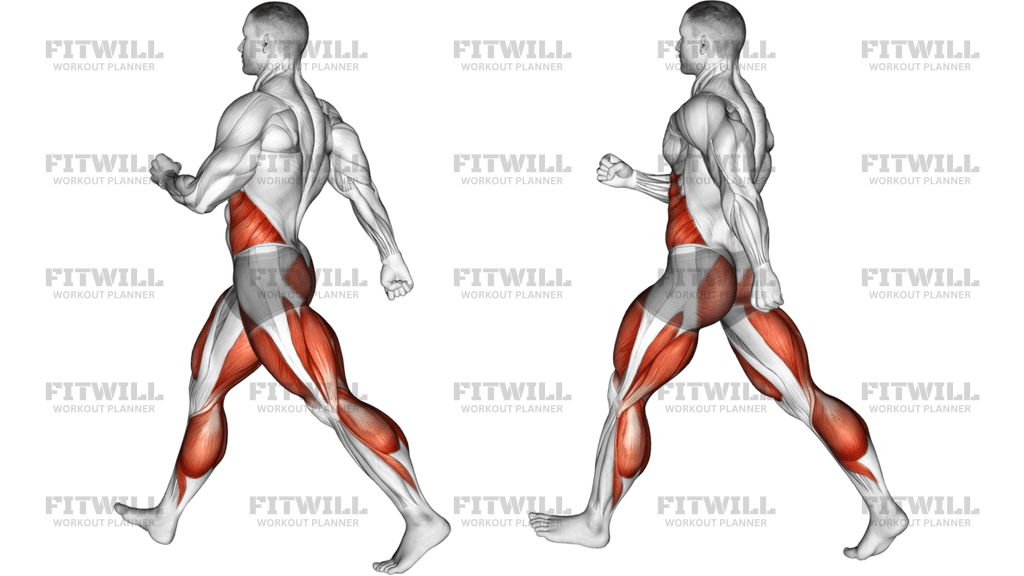
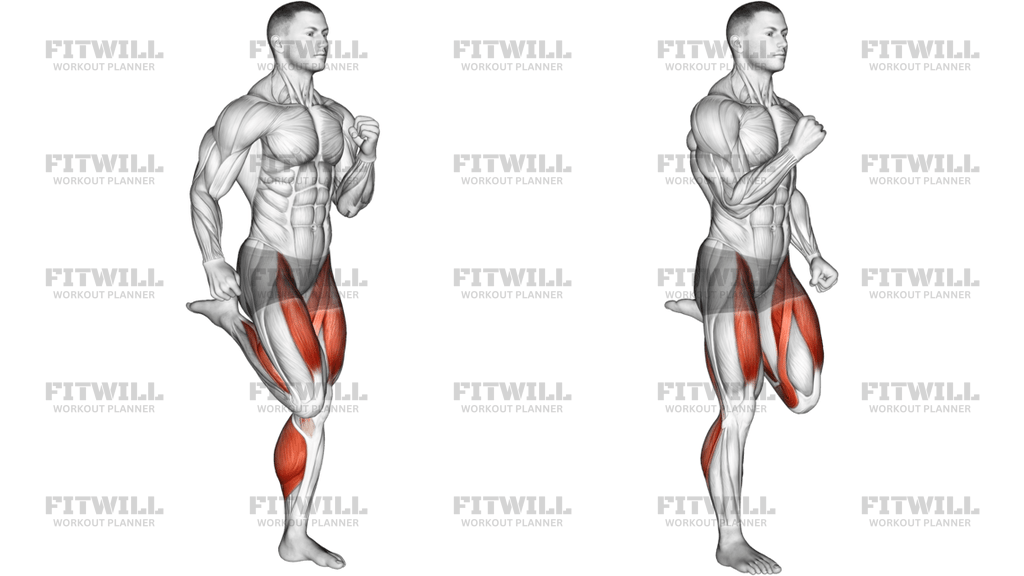
Jump Step-Up
Jump Step-Up is a bodyweight lower-body drill built around a quick, athletic drive onto a bench or box. It trains the legs to produce force fast while the hips, trunk, and standing foot stay organized, which makes it useful for conditioning, warmups, and speed-focused leg work. Because the movement is explosive, the quality of the setup matters as much as the effort itself.
The exercise asks one leg to load, drive, and stabilize while the opposite knee rises to finish the rep. That means the working side has to control the platform height, the landing, and the return step, while the upper body stays tall instead of folding forward. When the setup is right, Jump Step-Up feels springy and coordinated rather than sloppy or bouncy.
A solid platform matters more here than on a standard step-up. Use a bench or box that lets you place the whole foot on top without your knee collapsing inward or your pelvis twisting to cheat the height. The foot on the platform should stay flat and purposeful, and the floor leg should help only as much as needed to keep the movement smooth.
On each rep, drive through the full foot on the box, extend the hip and knee together, and finish by lifting the free knee to hip height or higher if balance allows. Land softly with control, then step down under control before the next rep. If the rep gets noisy, rushed, or unstable, lower the box height or slow the tempo until the landing and knee drive look crisp again.
Jump Step-Up works well in circuits, athletic warmups, and leg sessions when you want a fast bodyweight option that still loads the quads, glutes, calves, and core. It is beginner-friendly only when the box is low and the pace stays deliberate; higher boxes or repeated jump landings demand more balance and control. Keep the rep clean enough that each side could be repeated without leaning, collapsing at the hip, or bouncing off the platform. When fatigue builds, keep the same box height but shorten the set before the knee drive turns into a hop with no real leg drive.
Fitwill
Log Workouts, Track Progress & Build Strength.
Achieve more with Fitwill: explore over 9600 exercises with images and videos, access built-in and custom workouts, perfect for both gym and home sessions, and see real results.
Start your journey. Download today!




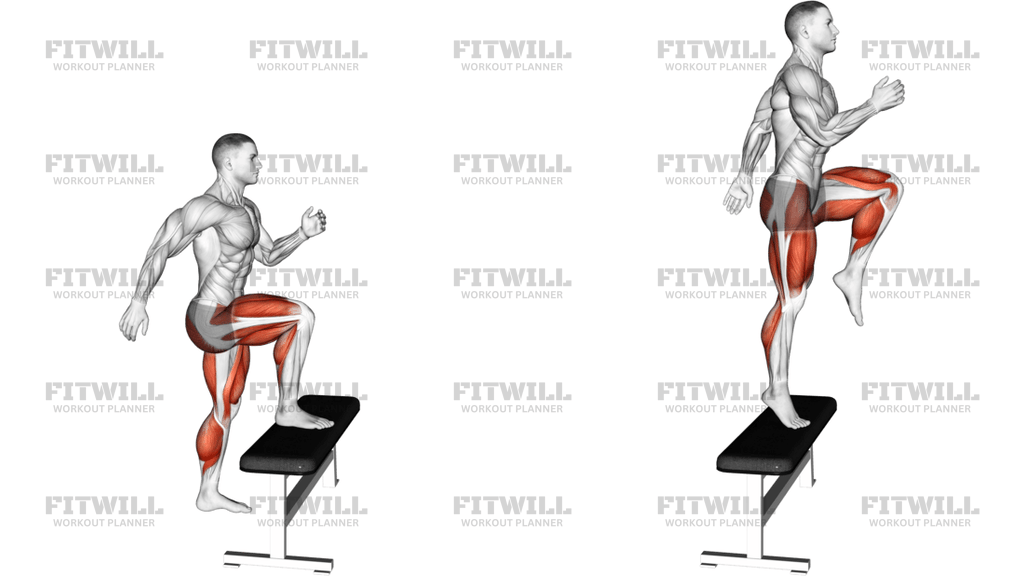
Instructions
- Stand facing a sturdy bench or box with one foot planted flat on the top surface and the other foot on the floor behind you.
- Set the working foot far enough forward that the whole foot fits on the platform, and keep your weight centered over the midfoot.
- Square your hips and chest to the platform, then keep your eyes forward and your torso tall before you start.
- Brace your trunk lightly, press through the full foot on the box, and begin the drive with the knee and hip of the planted leg.
- Extend forcefully until you are standing tall on the platform and the free knee is lifted in front of you.
- Keep the landing soft and controlled if both feet leave the surface, or finish the step-up with a crisp knee drive if you are stepping rather than hopping.
- Lower back to the starting position under control, placing the working foot back down before repeating the next rep.
- Breathe out as you drive up and reset your breath as you return to the floor before the next repetition.
Tips & Tricks
- A lower box usually works better than a taller one; if your hip has to twist to get on top, the platform is too high.
- Keep the whole working foot on the bench so you can push through the heel and big toe instead of balancing on your toes.
- Drive the knee up after the leg finishes extending, not before; leading with the knee too early turns the rep into a knee swing.
- Land quietly. If the top of the box sounds heavy or unstable, reduce speed before you add more reps.
- Let the torso stay tall instead of folding over the front thigh, which shifts the work away from the leg that is driving.
- Use the floor leg only as a light assist if needed; pushing hard off the back foot makes the rep less useful.
- If one side feels much less stable, cut the range and practice a clean step-up before you turn it into a jump.
- Stop a set when the planted knee starts caving inward or the free leg stops reaching a clean knee drive.
Frequently Asked Questions
What muscles does Jump Step-Up work?
It mainly hits the quads and glutes, with the calves and core helping you stay balanced as you drive onto the box.
Is Jump Step-Up good for beginners?
Yes, if you start with a low, stable box and use a controlled step-up before adding any jump or faster knee drive.
How high should the bench be for Jump Step-Up?
Use a height that lets your whole foot stay on the platform and your hips stay square. If you have to lean hard or twist to finish the rep, the box is too high.
Should Jump Step-Up feel like a jump or a step?
It can be trained either way, but the best version still keeps the landing controlled and the working leg doing most of the work.
What is the biggest mistake in Jump Step-Up?
Using the back leg to launch the body upward. The planted foot on the box should create the drive, not just help you bounce through the rep.
Do I need to alternate legs on each rep?
Alternating is fine, and many people do. Just make sure both sides get the same box height, knee drive, and control on the way down.
Where should I feel the working side during Jump Step-Up?
You should feel the front of the thigh, glute, and calf on the side that is on the box. If you feel it mostly in the lower back or the floor leg, the setup needs adjusting.
Can I use Jump Step-Up in conditioning work?
Yes. It fits well in intervals or circuits because it raises heart rate quickly while still training single-leg coordination and leg drive.